


Mossad Director David Barnea warned Tuesday evening that Iran is planning to deceive the world and “implement another bad nuclear deal,” and vowed that a poor agreement will not be allowed to take effect.
“We did not allow and we will not allow a bad deal to be implemented,” Barnea said. “A country that has committed itself to the destruction of Israel, that has deceived the world in developing nuclear weapons and enriched uranium to levels that have no explanation other than its desire for a military nuclear capability, is a country that will surge forward the moment it is able to. The idea of continuing to develop a nuclear bomb still lingers in their hearts.”
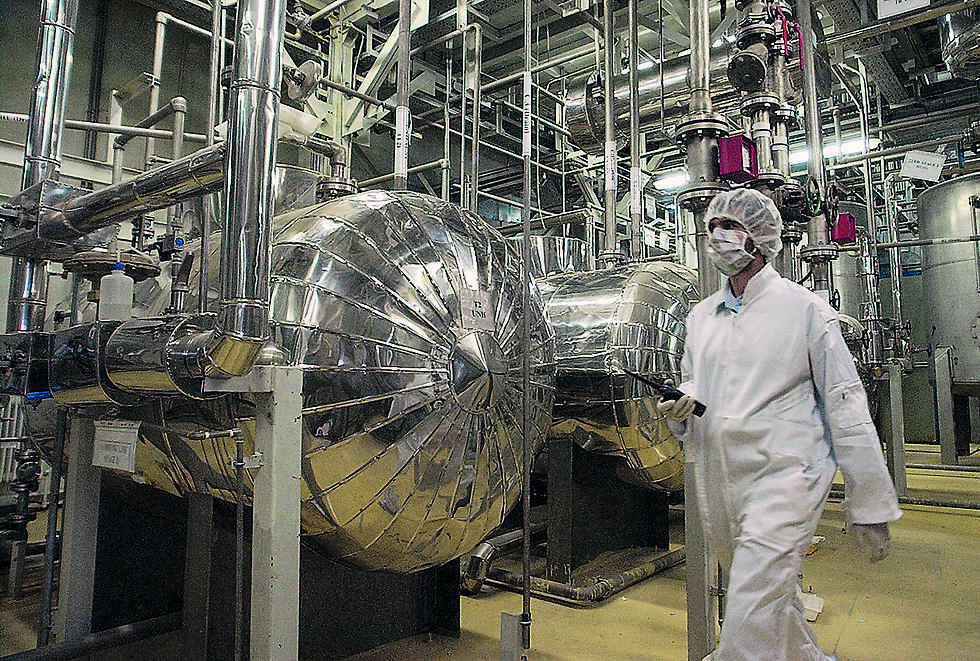
Barnea said Israel has a responsibility to ensure that Iran’s nuclear program, which he said has been severely damaged with close cooperation from the United States, “will never be activated.”
He also addressed what he described as Iranian efforts to target Israelis abroad following a terror attack at Sydney’s Bondi Beach in which 15 people were killed. “The criminal idea of terror targeting innocent civilians was and still is at the core of the security strategy of the current Iranian regime,” Barnea said. He added that “jihadist elements, ISIS and others, have also resolved to harm every Jew in the world.”
“Our hearts are with the families of the Australian victims,” Barnea said. “The aim of these terror attacks is to break our spirit. Our spirit will not be broken. We will continue to celebrate our holidays and live our lives in Israel and around the world. We will find the attackers and their Iranian handlers, and the jihadists wherever they flee, and we will hold them to account. Justice will be done and seen. They know this well. Light will overcome darkness.”
Israeli and Australian authorities have increasingly assessed that the Sydney attack was inspired by the Islamic State group and not directed by Iran.
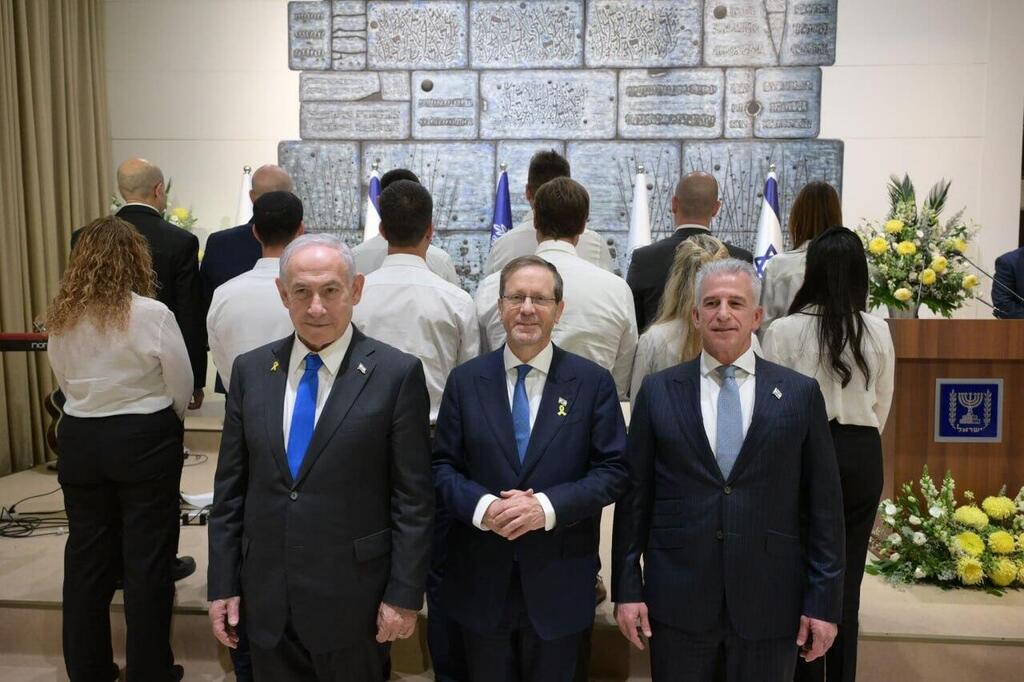
Prime Minister Benjamin Netanyahu, President Isaac Herzog and Mossad Director David Barnea
(Photo: GPO)
Barnea spoke at a ceremony awarding excellence certificates to 12 Mossad intelligence and special operations personnel at the President’s Residence in Jerusalem. The event was attended by Prime Minister Benjamin Netanyahu and President Isaac Herzog, meeting for the first time since the premier's pardon request in his corruption trial.
In a video released separately, Netanyahu addressed rising antisemitism and urged action from “Western governments.” “I call on Western governments to do what is necessary to fight antisemitism and provide the security and protection needed for Jewish communities around the world. And they should heed our warnings. I demand action — now,” he said.
Barnea added that “although the regime of the ayatollahs suddenly woke up to find Iran exposed and deeply weakened, Iran has not forsaken its aspiration to destroy the State of Israel.”
The excellence award, now in its 15th year, was given this year to four women and eight men, including operatives in enemy countries, recruitment and handler officers, case officers, operations personnel, cyber fighters and knowledge center staff.
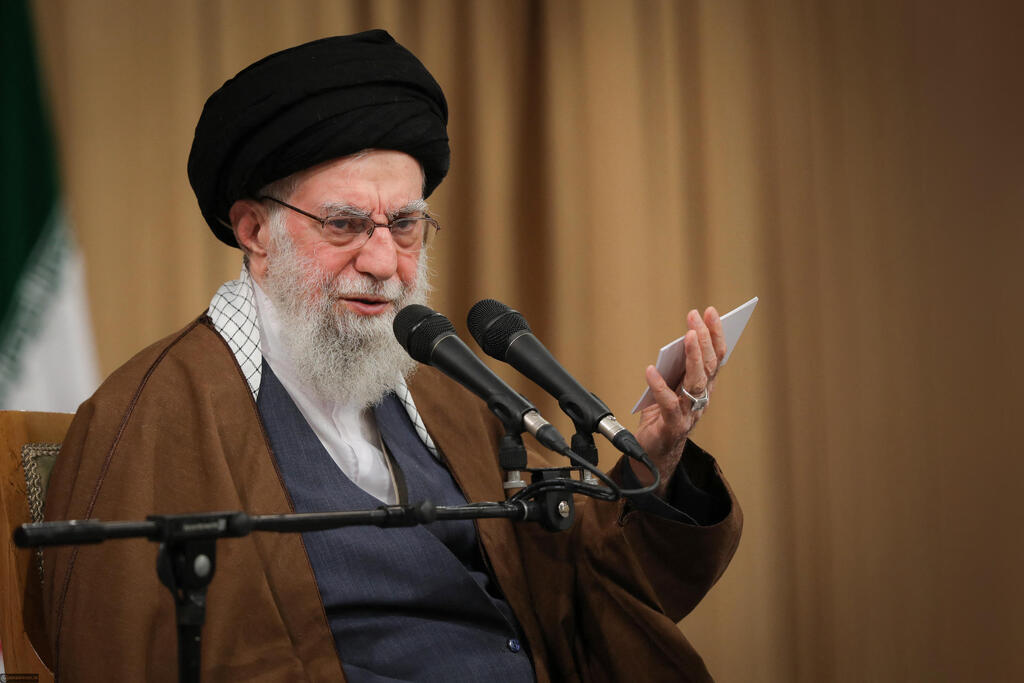
Iranian Supreme Leader Ayatollah Ali Khamenei
(Photo: KHAMENEI.IR / AFP, West Asia News Agency)/Handout via REUTERS)
The remarks came amid renewed international pressure on Iran following the collapse of nuclear negotiations and the reimposition of sanctions.
At the end of August, European powers informed the United Nations Security Council that they were activating the snapback mechanism, which reinstates all international sanctions that were in place against Iran prior to the 2015 nuclear agreement. A month later, the full range of UN sanctions was reimposed after Iran was accused of violating the terms of the nuclear deal and failing to reach a new agreement with the United States.
The restored sanctions — coming a decade after they were lifted — include a sweeping arms embargo, a ban on uranium enrichment and reprocessing, and a prohibition on the development or testing of ballistic missiles capable of carrying nuclear warheads. The measures also ban the transfer of ballistic missile technology, freeze Iranian assets worldwide and bar entry to Iranian individuals and companies in numerous countries. In addition, nations were authorized to search Iranian aircraft and ships to prevent the transport of banned goods.
Both the United States and European governments emphasized that diplomacy remains an option. U.S. Secretary of State Marco Rubio urged Tehran to "agree to direct talks in good faith," and called on all countries to "immediately implement the sanctions to increase pressure on Iran." In a joint statement, the foreign ministers of the United Kingdom, France and Germany said they remained committed to “seeking a new diplomatic solution that will ensure Iran never acquires a nuclear weapon.”
According to the International Atomic Energy Agency, Iran is the only non-nuclear weapons state to enrich uranium to a high level of 60 percent — just short of the roughly 90 percent purity required for a nuclear bomb. Tehran insists its nuclear program is intended solely for civilian purposes, primarily electricity generation, and denies pursuing military nuclear capabilities.
Under the 2015 nuclear accord, Iran had agreed to cap enrichment at 3.67 percent. The IAEA has reported that Iran currently possesses roughly 440 kilograms of uranium enriched to 60 percent. European experts warn that if enriched further to weapons-grade levels, that stockpile would be sufficient to produce between eight and 10 nuclear bombs.