


The Strait of Hormuz is currently at the heart of the dispute between Iran and the United States. An issue that was not part of previous rounds of fighting with Tehran has become the main source of daily escalations. Iran is attacking ships that did not receive its approval to pass through the strait or are using routes it does not recognize as authorized, while the U.S. is responding with strikes on strategic Iranian targets.
After Operation “Roaring Lion,” Iran established facts on the ground regarding control of the Strait of Hormuz. It created the “Persian Gulf Strait Authority” (PGSA), a body responsible on its behalf for approving all vessel crossings in the strait area, and is demanding full control going forward, together with Oman, over all crossings, including the collection of transit fees. Oman, for its part, has sent mixed messages. It is holding discussions with Iran over future management of the strait, but the issue of collecting fees, and whether they would even be called that, remains unclear.
Gallery
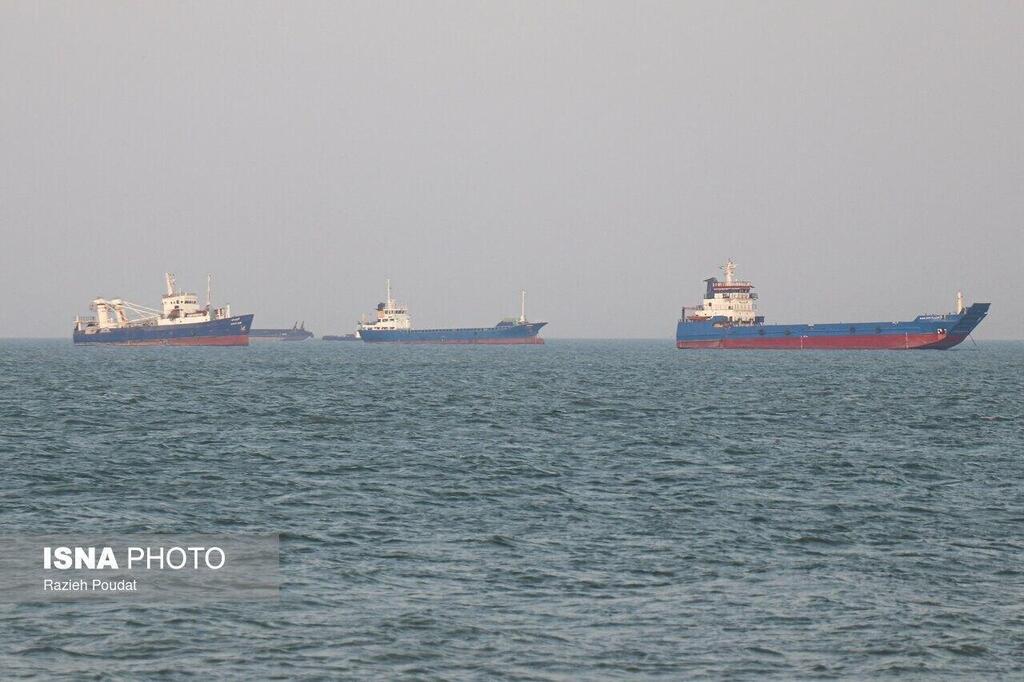
The Strait of Hormuz is currently at the heart of the dispute between Iran and the United States
According to a report by Bloomberg, in recent weeks Oman informed European officials that there is no way to return to the status quo that existed in the Strait of Hormuz before the war and that certain fees may be collected from passing ships. Its Foreign Minister Badr al-Busaidi, however, said last month that “Oman does not support imposing fees on ships passing through the strait, while remaining committed to the rules of international law.”
Members of Iran’s parliament’s National Security and Foreign Policy Committee have declared one after another in recent days that “Iran sets the terms in the strait” and that it “will manage the strait, with or without Oman.”
Relying on the memorandum of understanding
Iran is also relying on the fifth clause of the memorandum of understanding it reached with the United States, which allows for future control of the strait. The clause states: “The Islamic Republic of Iran will make arrangements using its best efforts for the safe passage of commercial vessels with no charge, for 60 days only, from the Persian Gulf to the Sea of Oman and vice versa. The traffic of commercial vessels will immediately start, and considering the need for removing the technical and military obstacles, and demining by the Islamic Republic of Iran will be instated within 30 days. The Islamic Republic of Iran will conduct dialog with the Sultanate of Oman to define the future administration and maritime services in the Strait of Hormuz in discussion with other Persian Gulf littoral states in line with the applicable international law and the sovereign rights of coastal states of the Strait of Hormuz.”
However, under international law, there is no legal framework allowing for the complete closure of the strait.
U.S. President Donald Trump announced two days ago that the United States would become the “guardian of the strait” and collect a 20% transit fee. Iran’s Foreign Minister Abbas Araghchi then responded that “Iran has always been the guardian of the Strait of Hormuz and will remain so forever,” adding: “The U.S. president is absolutely right. Any side that provides safe passage for ships through Hormuz should receive compensation for this service. Twenty percent is very high. We will be fairer.”
But yesterday Trump reversed his intention to impose a transit fee on the strait, and oil prices immediately declined afterward.
According to reports, the Strait of Hormuz originally contained three separate main shipping lanes. One passage area is located in the northern part of the strait and is controlled by Iran. There, at least when the strait is open, Iran allows certain ships to pass, but only through coordination with the “Persian Gulf Strait Authority.” Another route, which was used before the war, passes through the center of the strait. The third route is the southern passage, running along Oman’s coast, which Iran is currently preventing ships from using.
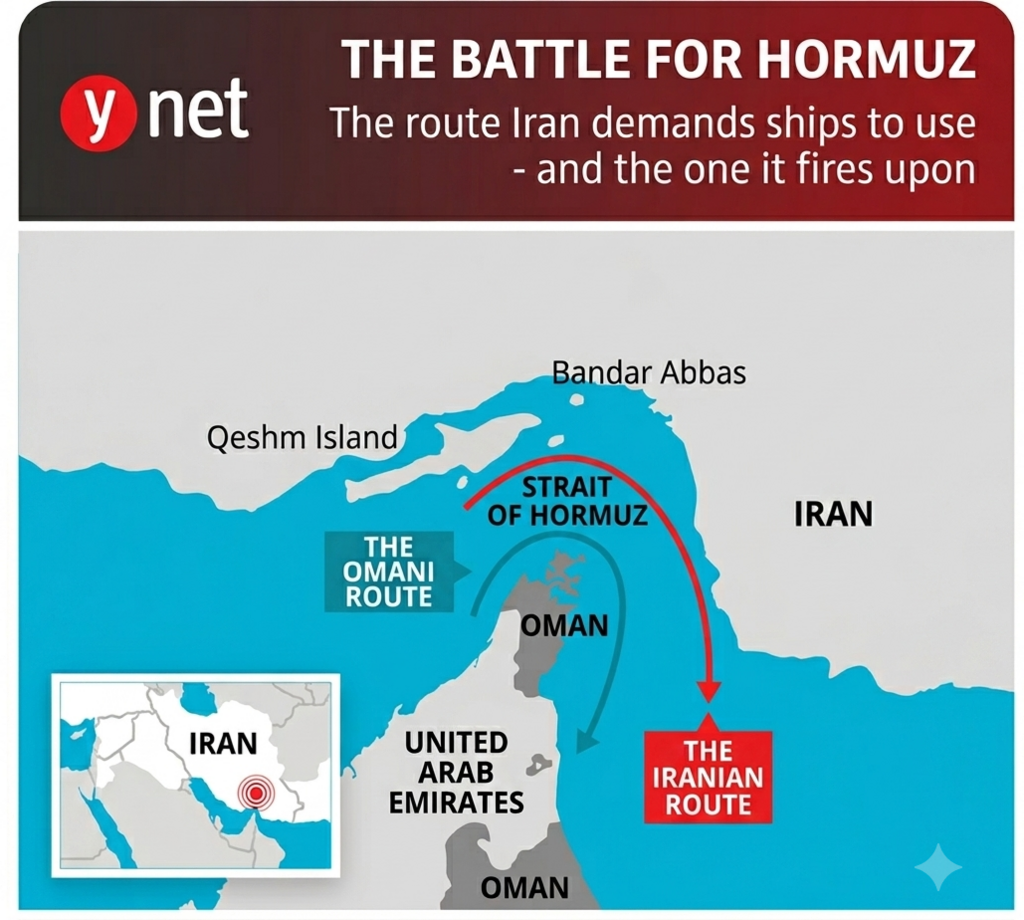
In June, Oman announced that it had opened a temporary maritime corridor for vessels passing through the Strait of Hormuz. Ships wishing to use it were required to coordinate with the International Maritime Organization. Iran, unsurprisingly, rejected the decision and said that any route south of Hormuz Island that was not arranged by Iran was unacceptable and extremely dangerous.
The islands in the crosshairs
Meanwhile, ships seeking to enter or leave the Persian Gulf through the strait remain stuck. The strait, which is only about 34 kilometers wide, has been repeatedly opened and closed depending on localized exchanges of fire and escalations between the United States and Iran in recent weeks.
The area around the strait also contains Iran’s strategic islands, which have come under attack, including by the United States. Larak, Hormuz and Qeshm are located at the direct entrance to the strait. Qeshm Island is particularly important because of its size. It also serves as a forward operating base for Iran due to its proximity to the coast and its connection to the port of Bandar Abbas, giving it a central role in logistical support and supply operations.
Larak Island is close to shipping lanes and provides monitoring capabilities, while Hormuz Island allows Iran to effectively control maritime passage. Other islands include Greater Tunb, Lesser Tunb and Abu Musa, which have long been disputed with the United Arab Emirates.
Kish Island, another important island, is located west of the strait and was attacked in recent days. Further west of the strait are Lavan and Sirri islands, which are used by the Iranian navy.