

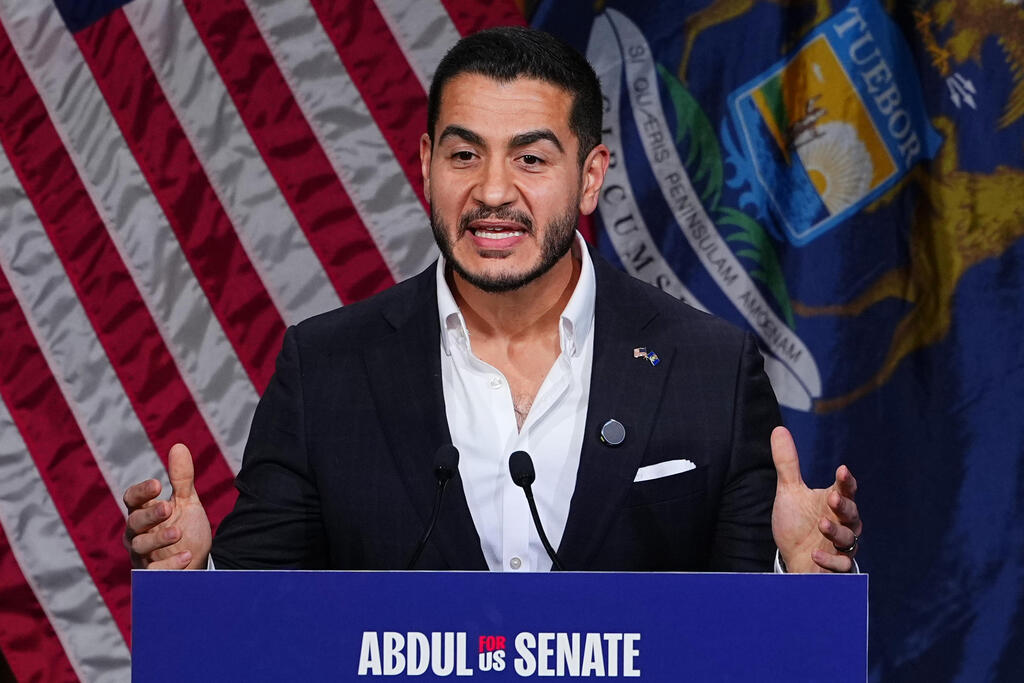
Abdul El-Sayed's victory in Michigan made him the first Muslim elected to the US Senate. But beyond that closely watched race, won by a Democrat sharply critical of Israel, the midterm elections also put a decades-old political relationship to the test: the alliance between American Jews and the Democratic Party. President Donald Trump suffered a major defeat as Republicans lost control of both the House of Representatives and the Senate, but the Democratic victories also underscored deep divisions over Israel.
According to the latest Siena College poll, just 61% of Jewish voters in New York wanted Democrats to win control of Congress in this year's elections, compared with 76% in 2018. Support for Republican control rose from 23% to 30% over the same period. Many other voters remain caught in the middle, struggling to find a place in the party that has long been their political home while remaining unwilling to forgive Trump over a range of other issues. For them, voting increasingly means choosing between two parties that disappoint them for opposite reasons.
At least 36 newly elected candidates associated to varying degrees with the progressive movement won seats in the House and Senate. Five of them are members of the Democratic Socialists of America (DSA), elected to the House for the first time. The progressive camp, however, is far from united in its positions on Israel, and not all its newly elected members support ending American assistance. These are the results of the races in which Israel became a central issue.
Georgia
That dilemma was particularly evident in Georgia, where Jewish Democratic Sen. Jon Ossoff faced Republican Rep. Mike Collins. Ossoff defeated his challenger and won a second term in a state Trump carried in the 2024 presidential election. Once considered one of Israel's allies within the Democratic Party, Ossoff angered some members of the Jewish community when he voted to block certain arms sales to Israel.

Democratic Sen. Jon Ossoff
(Photo: AP Photo/Brynn Anderson, File)
Collins, by contrast, presented himself as an unequivocal supporter of Israel. But his son-in-law had circulated antisemitic conspiracy theories, while former members of his staff were linked to Nazi imagery and far-right activists. During a debate, Ossoff accused Collins of having employed "half the Third Reich in your office." Collins disavowed the antisemitic statements.
Maine
A similar dilemma confronted Jewish voters in Maine, where veteran Republican Sen. Susan Collins faced Democrat Troy Jackson, who accuses Israel of genocide and opposes American military aid to the country. Jackson was forced to apologize after claiming that Jews in the state struggled to use the term genocide because of the trauma of the Holocaust. Collins, a longtime supporter of Israel in the Senate, enjoys the backing of AIPAC. Many Jewish Democrats, however, remain uncomfortable with her support for Trump's policies.
Michigan
Beyond El-Sayed's historic Senate victory, Democratic socialist Donavan McKinney won a House seat representing Detroit, defeating his Republican opponent. McKinney, who was endorsed by Rashida Tlaib, Ilhan Omar and Bernie Sanders, calls for an end to weapons shipments and military aid to Israel and accuses the country of committing genocide in Gaza. In the Democratic primary, he defeated incumbent Rep. Shri Thanedar, who had distanced himself from the Democratic Socialists of America following the October 7 Hamas attack.
New York
In New York's suburbs, a closely contested race featured two candidates who both support Israel. Republican Rep. Mike Lawler, a Catholic who had become a familiar figure in Hasidic communities north of New York City, conceded defeat to Democrat Cait Conley in the state's 17th Congressional District. Lawler, who invested considerable effort in courting ultra-Orthodox voters, announced his defeat despite a malfunction involving voting machines in Westchester County that delayed the counting of thousands of ballots.
Trump personally intervened on Lawler's behalf on Election Day. In a social media post, he praised Jewish voters in Monsey for supporting him in the presidential election and urged them to vote for Lawler, promising that the congressman would "never let you down." Conley, however, also opposes placing conditions on military aid to Israel, rejects allegations that Israel committed genocide in Gaza and has criticized the positions of New York City Mayor Zohran Mamdani. Lawler argues that her statements will not translate into action and that she will ultimately align herself with the Democratic Party's left wing in Congress.

Brad Lander, Darializa Avila Chevalier and Claire Valdez
(Photo: AP Photo/Richard Drew, Shutterstock, social media)
Mamdani also became a campaign issue in New York's gubernatorial race. Jewish Republican Bruce Blakeman accused Democratic Gov. Kathy Hochul of cooperating with an anti-Israel mayor and even suggested he would seek to remove Mamdani from office. Yet prominent leaders of major ultra-Orthodox communities endorsed Hochul, who ultimately defeated Blakeman and won another term. His effort to make her relationship with Mamdani a central campaign issue failed to prevent her reelection.
Mamdani himself was not on the ballot, but his political allies sought to turn his victory in New York City into influence in Congress. Three candidates he supported, Brad Lander, Darializa Avila Chevalier and Claire Valdez, were elected to the House of Representatives. All three, dubbed the "mini Mamdanis," call for an end to American military aid to Israel.
Chevalier, a former participant in the pro-Palestinian protest encampment at Columbia University, was arrested in September during a demonstration against Prime Minister Benjamin Netanyahu's visit to the United Nations. She declared that she would not allow a "war criminal" to move around New York without protest. Lander, who is Jewish and describes himself as a Zionist, nevertheless accuses Israel of genocide and apartheid. About two weeks before the election, he was detained by Israeli forces while participating in an olive harvest alongside Palestinians in the West Bank. Thus, even without Mamdani himself moving to Washington, his political approach will gain three additional voices in Congress.
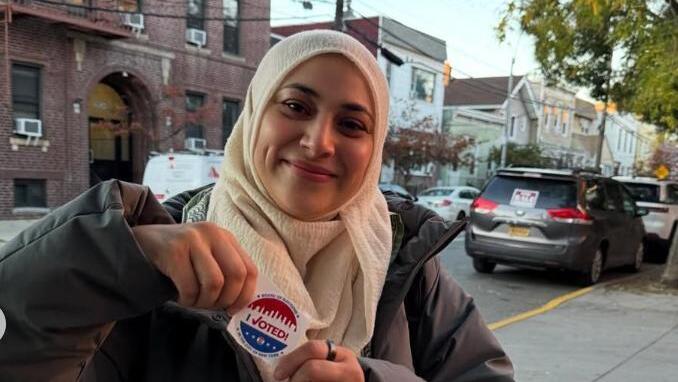
Aber Kawas
(Photo: Instagram)
Another Mamdani-backed candidate, anti-Zionist Palestinian American activist Aber Kawas, was elected to the New York State Senate from the 12th District in Queens. The daughter of Palestinian refugees, Kawas became the first Palestinian American and the first Muslim woman elected to the state's legislature. She defeated Republican Han-Kon To. Kawas has previously described herself as anti-Zionist, accused Israel of committing genocide in Gaza and expressed support for the Boycott, Divestment and Sanctions movement. Alongside Mamdani, she helped lead the "Not On Our Dime" initiative, which seeks to remove tax benefits from New York organizations that help finance Israeli settlements.
Pennsylvania
In Philadelphia, socialist politician Chris Rabb won a seat in Congress. Rabb calls for a complete arms embargo on Israel.
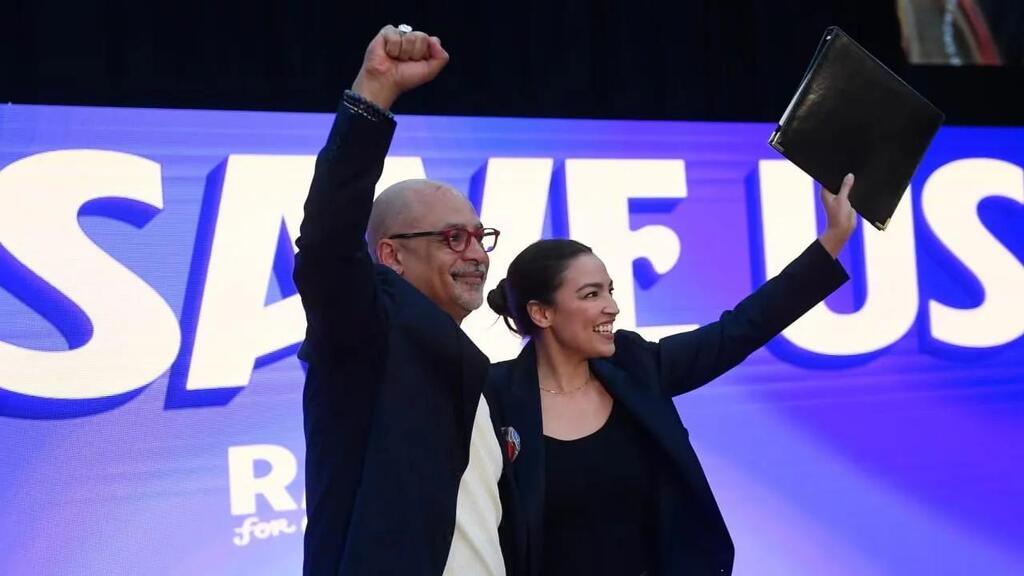
Chris Rabb and Alexandria Ocasio-Cortez
(Photo: Rabb for Congress)
He became embroiled in controversy after his Instagram account shared a post claiming that the massacre of Jews at Australia's Bondi Beach had been staged by Zionists. Rabb disavowed the publication and said a former employee had been responsible.
New Jersey
In New Jersey, Dr. Adam Hamawy, a plastic surgeon and former military doctor who treated wounded people in Gaza, joined the wave of newly elected candidates. Hamawy, who received the backing of Bernie Sanders and Alexandria Ocasio-Cortez, also opposes American funding for Israel's Iron Dome missile defense system and supports a comprehensive arms embargo.

Adam Hamawy: the former US military surgeon pictured with children in Gaza in 2024
During the 1990s, Hamawy had ties to Sheikh Omar Abdel-Rahman, who was sentenced to life in prison in the United States for involvement in a plot to carry out terrorist attacks in New York. Hamawy also testified for the defense during the cleric's trial. More recently, he rejected attempts to portray their relationship as close, condemned Abdel-Rahman's actions and described the renewed attention to his past as part of anti-Muslim attacks. His biography also includes an extraordinary chapter from his service as a surgeon in the U.S. military in Iraq, where he helped save the life of Sen. Tammy Duckworth after she was wounded in a combat helicopter crash.
Colorado
In Denver, Colorado, another candidate critical of Israel secured a victory. Melat Kiros, a young socialist who unexpectedly defeated longtime Rep. Diana DeGette in the Democratic primary, calls for ending all weapons shipments to Israel, including defensive weapons, and supports a one-state solution.
Kiros faced criticism after refusing to describe as antisemitic the 2025 firebomb attack targeting participants in a Boulder march in support of Israeli hostages. Thirteen people were injured in the attack, and one of the victims later died from her wounds. Among her opponents was Shimon Blau, an Orthodox Jewish physician who ran as an independent in an effort to prevent her election. Blau said he entered politics because of Kiros' positions and pledged to join the Democratic caucus if elected.
Washington, DC
Janeese Lewis George was elected mayor of Washington, becoming the first socialist mayor of the American capital. Lewis George has pledged to avoid official ties with Israel and events promoting Zionism. She is also expected to clash with the Trump administration over the powers of the city's local government.
Texas
In Texas, where Republicans have held power for three decades, Trump and Vice President JD Vance invested considerable effort in trying to save their party's Senate candidate, Attorney General Ken Paxton. They failed. Democrat James Talarico defeated Paxton, delivering a historic victory for his party in the state. Talarico is studying for the ministry and campaigns against what he calls "Christian nationalism." He has also criticized Israel's war in Gaza.
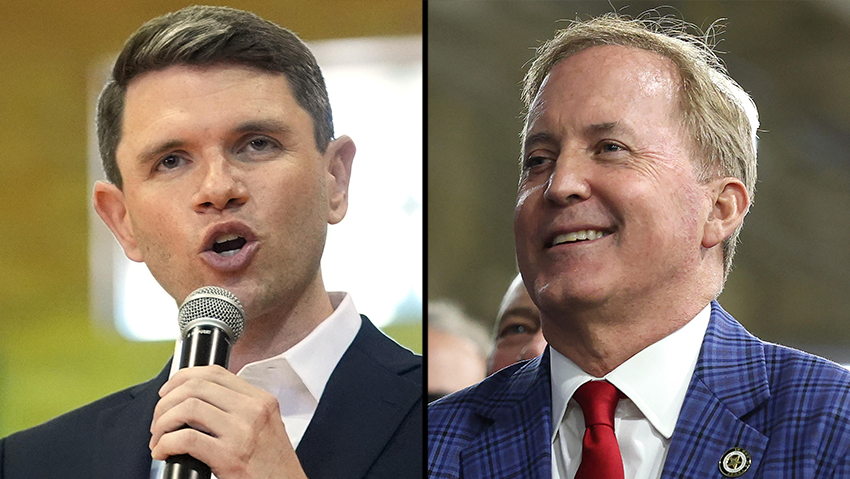
Ken Paxton and James Talarico
(Photo: Kevin Dietsch / GETTY IMAGES NORTH AMERICA / AFP, AP Photo/Julia Demaree Nikhinson)
Paxton, a prominent supporter of Israel who was endorsed by Trump, backed the display of the Ten Commandments in public schools. His defeat became one of the biggest surprises of election night. Trump and his allies tried to portray Talarico as a radical disconnected from Texas, particularly over his statements on gender and religion. Democrats, meanwhile, highlighted the corruption scandals associated with Paxton.
Florida
In Florida, home to one of the largest Jewish communities in the United States, incumbent Republican Sen. Ashley Moody, a prominent supporter of Israel in Congress, defeated Democrat Angie Nixon. Nixon, who is associated with the Democratic Socialists of America and was endorsed by Alexandria Ocasio-Cortez and Bernie Sanders, accused Israel of genocide in Gaza, called Netanyahu a "war criminal" and declared her opposition to sending any money or weapons to Israel. Moody, Florida's former attorney general, has acted against the boycott movement targeting Israel and supported continued American military assistance. Her victory kept the Senate seat in Republican hands.
In another Florida district, two Jewish candidates competed over who could claim to be the more loyal supporter of Israel: Democratic Rep. Jared Moskowitz and Republican challenger Scott Singer, the former mayor of Boca Raton. During a debate at a synagogue, which both attended wearing kippahs, they agreed that Israel had not committed genocide and that American military aid should not be restricted. Their disagreements centered instead on the American war with Iran and the Democratic Party's progressive wing. "We agree on 99% of the issues," Moskowitz complained. He also enjoys AIPAC's support. Moskowitz ultimately defeated his Jewish Republican rival, retaining his seat despite changes to the district's boundaries that had been designed to benefit Republicans.
Ohio
Former Democratic Sen. Sherrod Brown returned to the Senate after defeating Republican Jon Husted, who had been appointed to the seat vacated by Vice President Vance. The race brought together two pro-Israel candidates backed by rival Jewish organizations. J Street supported Brown, while AIPAC backed Husted. Both support military aid to Israel and opposed efforts to restrict American weapons sales to the country. But the organizations supporting them represent different approaches. AIPAC is associated with broad security support for Israel, while J Street advocates a two-state solution and criticism of the Israeli government's policies.
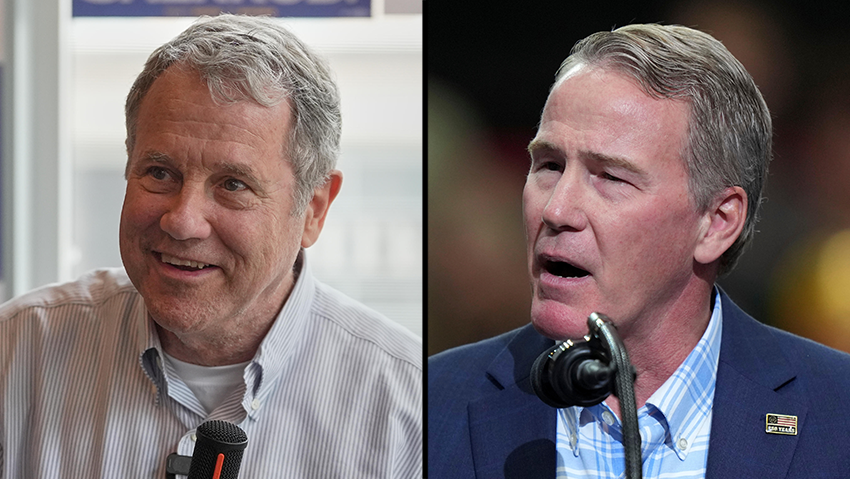
Jon Husted and Sherrod Brown
(Photo: AP Photo/Joshua A. Bickel, AP Photo/Sue Ogrocki, File)
According to campaign finance data, Husted raised more than $500,000 through AIPAC, while Brown received more than $800,000 from J Street supporters. The race also featured an embarrassing controversy involving antisemitism. Husted was forced to dismiss a campaign staffer after it emerged that the employee had previously used a photograph of SS soldiers as his Facebook profile picture. The staffer said he participated in historical reenactments and condemned Nazi ideology.
Rhode Island
In Providence, Rhode Island, voters approved Proposal 7 by a majority of more than 76%. The measure seeks to restrict municipal investments in companies and countries linked to serious human rights violations. Although it does not explicitly mention Israel, it was promoted by pro-Palestinian activists and is directed at Israel and countries accused of genocide, apartheid and illegal occupation. The measure is binding, but its implementation could face legal obstacles after a city legal adviser determined that it was probably unenforceable.
Illinois
In six additional areas of Illinois, voters approved local referendums calling for the repeal of legislation restricting the investment of public pension funds in companies that boycott Israel. The measures passed in Champaign, Cunningham, Normal, Peoria, Kickapoo and Medina, in addition to Oak Park, where the initiative won the support of approximately 65% of voters.
Illinois was the first U.S. state to enact legislation opposing the BDS movement. Pro-Palestinian activists are now seeking to challenge the law through local initiatives. Jewish communities mobilized against the proposals, after an earlier effort to promote a similar resolution in Oak Park was blocked. All the referendums are advisory only. Even though the proposals passed, they do not change the law, which can be repealed only by state legislators. The victories nevertheless give boycott supporters a political result they can present to lawmakers.
California
The expansion of the socialist left is also apparent in mayoral races in major cities. In Los Angeles, one of the closest contests of election night pitted incumbent Mayor Karen Bass against City Council member Nithya Raman, with final polls showing the candidates tied. Raman, who has described events in Gaza as genocide, nearly lost the support of her socialist organization on the eve of the election because she refused to commit unequivocally to a boycott of Israel. Only the day before the vote did the national leadership of the Democratic Socialists of America narrowly decide against withdrawing its endorsement.
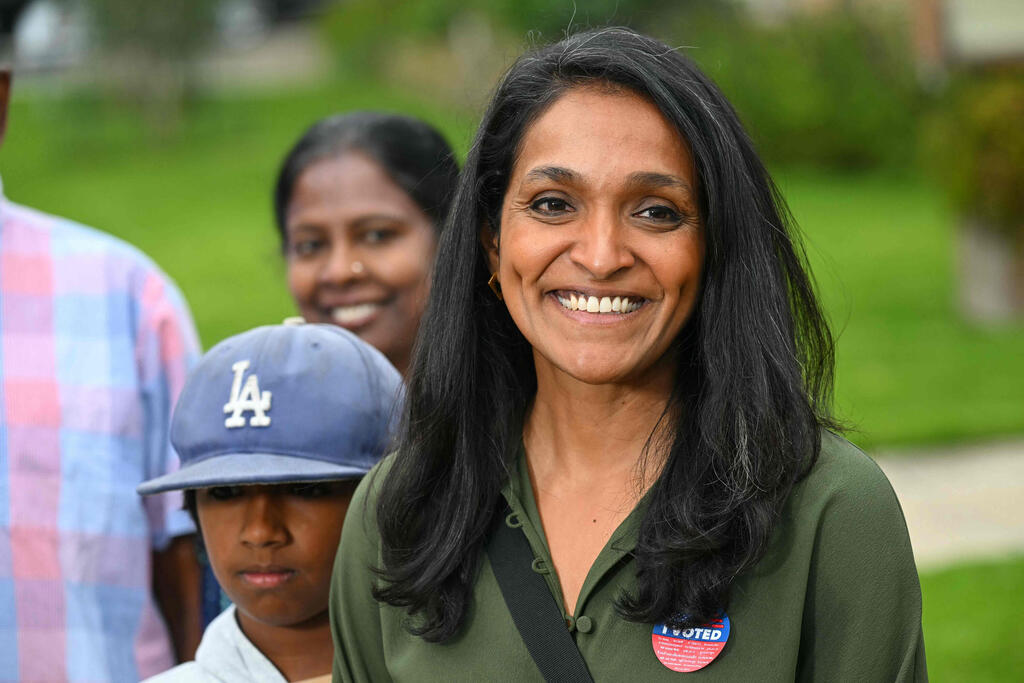
Nithya Raman
(Photo: Patrick T. Fallon / AFP)
Bass was leading Raman by approximately 1.7 percentage points in the count described in the report, although the initial results offered encouragement to Raman. Ballots counted so far had come largely from older and more conservative voters, who tend to support Bass, while later ballots from younger voters were expected to benefit Raman.

Scott Wiener: Pro-Palestinian activists confronted the Jewish lawmaker during the San Francisco Democratic primary
(Photo: X)
In San Francisco, meanwhile, the question was how far to the left on Israel Democratic candidates needed to move. Two Democrats were competing for the House seat being vacated by retiring Rep. Nancy Pelosi: Scott Wiener, a Jewish state lawmaker who describes himself as a Zionist, and Connie Chan, who was endorsed by Pelosi herself. Both accuse Israel of genocide in Gaza and oppose American funding for the IDF, but Chan demands a halt to all weapons shipments, while Wiener supports allowing Israel to purchase defensive systems using its own funds.
For pro-Palestinian activists, even Wiener does not go far enough. Earlier in the year, he had initially resisted describing the war in Gaza as genocide, only to adopt the term days later. The local Jewish establishment, by contrast, supports Wiener despite his criticism of Israel.