


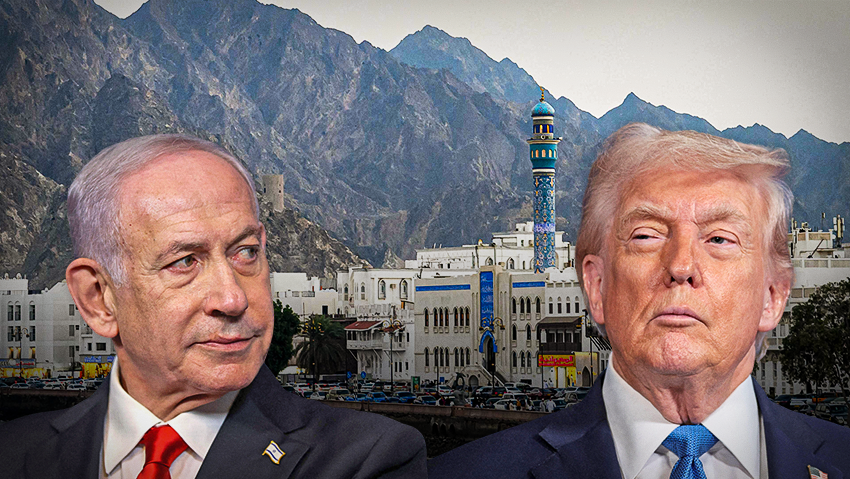
Prime Minister Benjamin Netanyahu has moved up his visit to Washington and will meet with US President Donald Trump as early as this coming Wednesday. From Netanyahu’s perspective, the goal is to ensure that Israeli interests are safeguarded in the negotiations between the United States and Iran. In Jerusalem, there is concern about a scenario in which an agreement would be limited solely to the nuclear issue and ignore the other threats posed to Israel by the Islamic Republic.
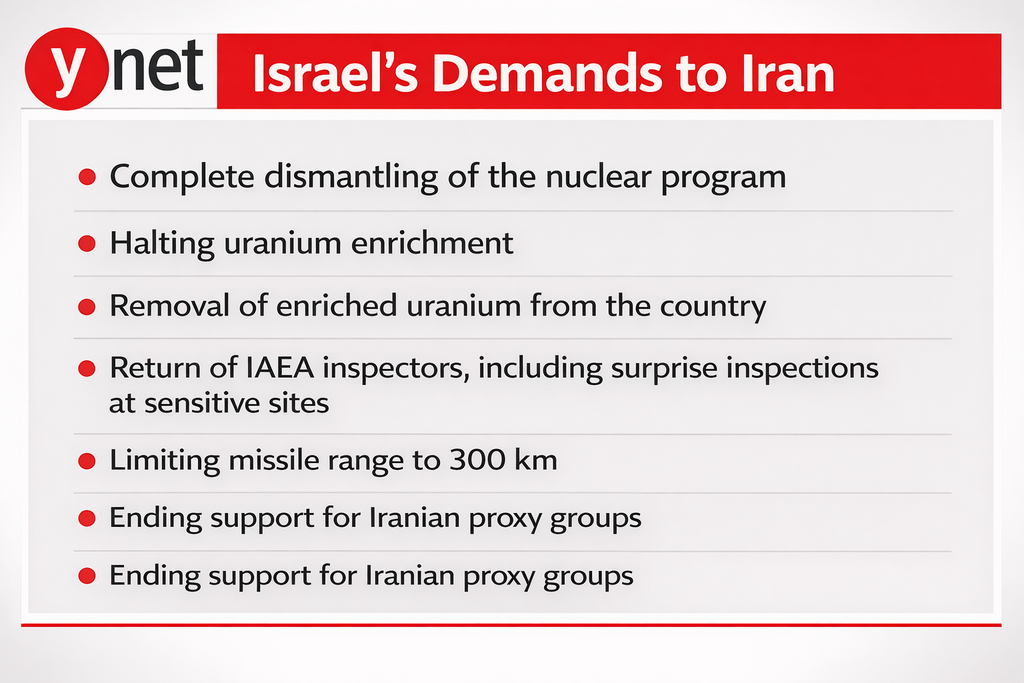
Israel wants the talks to lead only to an agreement that includes the complete dismantling of Iran’s nuclear program, including a halt to uranium enrichment and the removal of enriched uranium from Iranian territory. Beyond that, Israel has a series of additional demands that Netanyahu is expected to present to Trump, following an “airlift” of senior Israeli security officials who have met with their American counterparts at various levels.
Among other things, Israel is demanding that inspectors from the International Atomic Energy Agency return to Iran for “close, genuine and high-quality” monitoring of its nuclear program, including surprise inspections at suspected sites. In addition, Israel believes any agreement must include limiting the range of Iranian missiles to 300 kilometers, so they cannot threaten Israel. Israel also wants the agreement to stipulate that Iran will no longer be able to provide support to its proxies in the Middle East, including Hezbollah in Lebanon and the Houthis in Yemen.
A senior political source said the reason Netanyahu urgently advanced his visit to the United States was “to influence the acceptance of Israel’s conditions in the negotiations, with an emphasis on ballistic missiles.”
However, each of Israel’s demands — perhaps with the exception of the nuclear issue — is effectively a “nonstarter” for Iran. It remains unclear how feasible they are, or how strongly the United States will insist on them, even though they were raised in the talks held in Oman. In Jerusalem, officials learned from American sources that the talks on Friday lasted eight hours and were largely indirect, even though Steve Witkoff and Jared Kushner shook hands with Iranian Foreign Minister Abbas Araghchi and his team. The discussions focused mainly on setting the terms for negotiations, without a breakthrough. The United States agreed to another meeting, but made clear to Tehran that it expects to hear a substantive Iranian proposal this time, rather than further stalling.
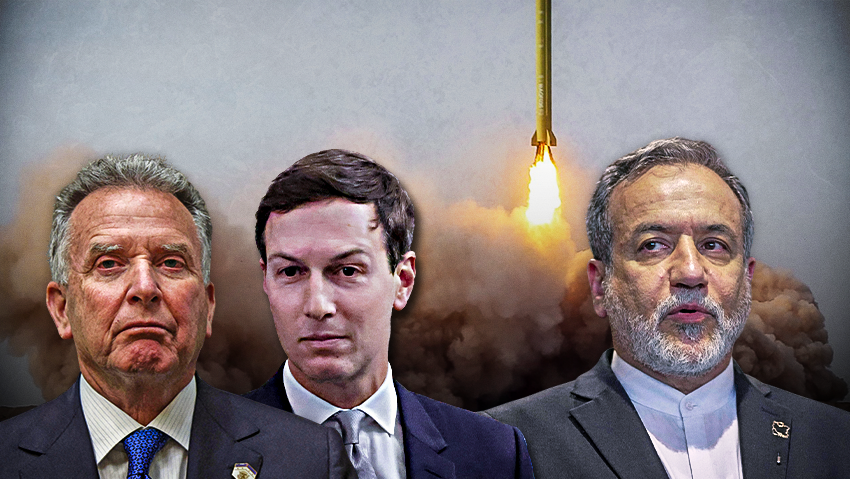
Witkoff, Kushner, Argachi
(Photos: Dawoud Abu Alkas/RS, Evelyn Hockstein/Reuters, Hassan Ammar/AP)
Ahead of that next meeting, officials in Jerusalem hope the United States will not “spread itself too thin” at the expense of Israel’s red lines. In the meantime, the Americans are continually signaling to Iran what is at stake if the talks fail: following the discussions, Witkoff and Kushner flew to the US aircraft carrier Lincoln, which has arrived in the region, and the commander of U.S. Central Command, Adm. Brad Cooper, took part in the talks as well, to underscore that the military option remains on the table.