

Senior IDF officials say U.S. President Donald Trump did not block an Israeli strike on Iran, contradicting reports that Washington had intervened to prevent a renewed military confrontation ahead of the U.S. midterm elections.
"Trump did not stop us from attacking Iran because an attack was never on the table. There was an increase in alert levels and heightened military readiness, in line with American preparations," the officials said. According to them, there is no reason to strike Iran before the elections unless Israel detects preparations by Tehran to launch an attack.

However, alongside the military preparations, senior defense officials are concerned about statements coming from Israel's political leadership. At a time when the IDF is trying to maintain a high state of readiness without triggering an escalation, Prime Minister Benjamin Netanyahu and Defense Minister Israel Katz continue to speak publicly about the possibility of an attack.
On Wednesday, Netanyahu said Iran was "once again trying to develop its bombs of death," while Katz said Thursday that "Bennett, Lapid or Golan will be responsible for any terrorist attack or strike." The military is uncomfortable with such statements. Commanders have no control over the messages issued by political leaders, yet they will be responsible for managing any consequences on the ground.
Iran, meanwhile, is also listening. Public statements about a possible Israeli attack could prompt Tehran to raise its own alert level and prepare for retaliation. Israel could then interpret those Iranian preparations as a warning sign and respond by increasing its readiness further, creating a potentially dangerous cycle of action and reaction. In such circumstances, a misunderstanding of the other side's intentions could lead to an escalation that neither country necessarily intended. That is precisely the danger of miscalculation.
Preparations within the Israeli Air Force are continuing. According to published reports, dozens of fighter jets participated this week in a training mission simulating an attack on Iran, flying as far as the vicinity of the Iranian border.
Such exercises are part of routine operational preparations intended to maintain the Air Force's capabilities, assess enemy vulnerabilities, identify effective flight routes and preserve the element of surprise. While they demonstrate continued readiness, they do not, in themselves, indicate that a decision has been made to launch an attack before the elections.
Trump: Iran is 'fabricating fake attacks'
For now, Trump appears unwilling to launch an attack on the Islamic Republic, at least before the November 3 U.S. midterm elections. In a new social media post Thursday, the president did not threaten military action. Instead, he accused Iran of "fabricating fake attacks."
"Iran is doing everything it can to drive up oil prices ahead of the U.S. midterm elections," Trump claimed. "They are even making up fake hits, mines, and everything else, because more oil is now passing through the Strait of Hormuz than even before the conflict began."
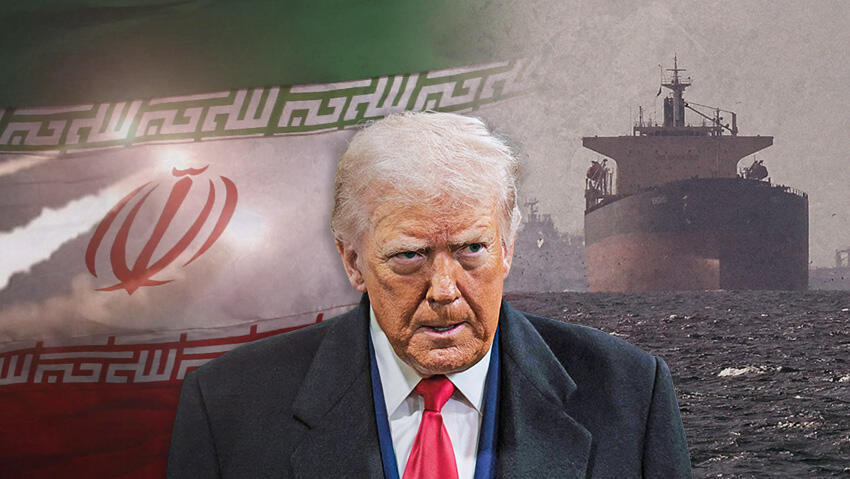
US President Donald Trump: Iran is 'fabricating fake attacks'
(Photos: Anna Moneymaker/AFP, Shutterstock, Reuters/Stringer)
Iranian state television claimed Thursday that seven oil tankers had been struck or hit naval mines in the Strait of Hormuz overnight. If confirmed, the incidents would apparently represent the largest number of vessels damaged in the strait in a single day since the war with Iran began on February 28.
Citing a statement from the Islamic Revolutionary Guard Corps' navy, the Iranian report said four tankers had come under attack and three others had struck naval mines. It also warned that the Revolutionary Guards could target U.S. military bases in the region if Washington attempted to facilitate tanker traffic through alternative routes in the strait.
Lloyd's List Intelligence, a company specializing in shipping data and analysis, said tanker operators willing to risk the passage have been transporting oil from Gulf states through the strait at night. The vessels reportedly use a route near Oman's coast protected by the U.S. military, with their tracking systems and mobile phones switched off. The oil is subsequently transferred to other tankers waiting in the Gulf of Oman before being shipped to customers in Asia.
Iran unveils what it calls a 'suicide drone production line'
Alongside its warning that American military bases could be targeted, Iran's state broadcaster released footage carrying another implied threat. The video purportedly showed what it described as the Iranian military's "suicide drone production line," unveiled for the first time. Iranian army commander Amir Hatami appeared in the footage, which authorities claimed featured the country's most advanced drone.
Iranian military's suicide bomber production line revealed for the first time from Iran


The developments follow a Financial Times report published Wednesday claiming that Trump had blocked an Israeli attack on Iran ordered by Netanyahu for the weekend of October 10, nearly two weeks ago.
According to the report, the IDF had prepared for several days of fighting against Iran, with planned targets including civilian infrastructure such as power stations, nuclear facilities and other sites associated with the Iranian regime. The operation, which Netanyahu had reportedly pushed for, was ultimately halted because Trump opposed a resumption of hostilities before the U.S. midterm elections. Netanyahu has denied the report, while senior IDF officials now say no such attack was planned.
Meanwhile, the New York Times reported overnight that the U.S. and Israeli militaries have developed detailed plans to resume strikes on Iran after the American midterm elections, including a "short and intense" operation. According to assessments cited in the report, a three-day assault could inflict enough economic damage on Iran to push it back into negotiations.
Iranian officials, however, said they were aware of the American and Israeli military plans and were developing new targets and tactics of their own.
Among the potential targets threatened by Iran are data centers and undersea internet cables. Iranian officials have also warned that any renewed confrontation "will not be short."
Peyman Salehi, a political commentator in Tehran, said that if Iran were attacked, "some of its response plans would include striking major oil refineries in Saudi Arabia, including facilities belonging to the national oil company Aramco, because such a move would lead to an immediate and sharp increase in oil and energy prices."
"The war has made it clear to us that the best leverage against Trump is to drive up oil and energy prices, because that would hurt the American people," he added.