


U.S. President Donald Trump announced Monday night that, at the request of Gulf leaders, he had decided to postpone “by two or three days” planned strikes on Iran. But behind his statement lie several factors, chief among them his effort to reach an agreement.
Trump prefers a deal to renewed fighting, though not at any price. For that reason, any delay in a strike is now seen by him as a necessary move, even if it projects weakness and confusion to the Iranians.
In addition, if Trump fails to reach an agreement with Iran, the repeated delays in resuming fighting increase his legitimacy at home and abroad. In effect, Trump now appears to be the one seeking an agreement and trying to prevent war, while Iran continues pushing toward renewed fire.
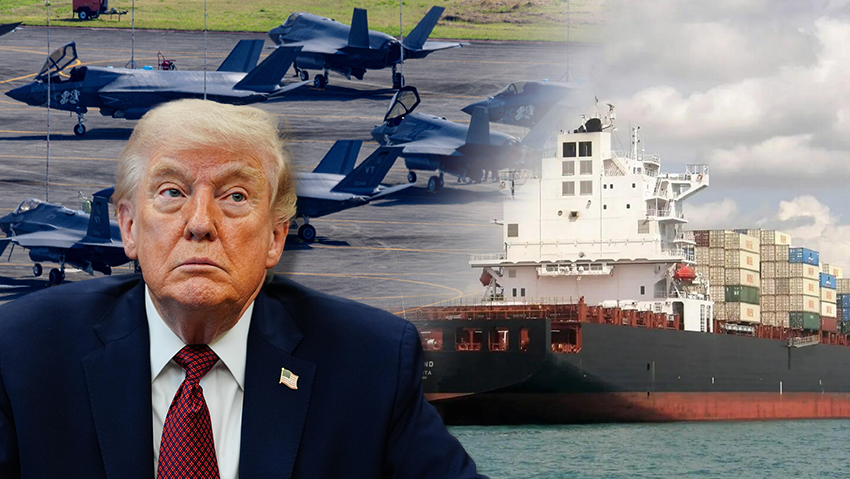
Agreement or deception? What led Trump to postpone an attack on Iran?
(Photos: Hans Rosenkranz, Marinetraffic.com, U.S. Navy, Julia Demaree Nikhinson/AP, Eva Marie Uzcategui/Reuters)
Some argue that Trump is actually trying to mislead Iran by delaying the strikes, but senior officials believe there is no advantage in that, since Tehran has no ability in any case to prevent an effective strike on any site. The ayatollahs’ regime can respond wildly and cause regional and global economic damage, but it will not be able to stop attacks aimed at it. Therefore, Trump gains nothing by delaying them by a few days.
In practice, Tehran is not exactly helping Trump climb down from the tree on this issue — and is almost forcing him to strike. The latest delay Monday night shows that the American president is in a dilemma, perhaps even distress. Given the number of threats he has issued in recent days in posts and tweets, the announcement that he was delaying the strike at the request of Arab leaders shows he is in no rush to attack, and Iran understands that immediately. At the same time, Trump’s conduct may also be worrying, since he could settle for any Iranian concession and present it as a victory ahead of ending the war.
In any case, many in Israel still believe the chances of a strike are higher than the chances of successful negotiations. The Iranians are digging in and showing no flexibility in the talks, at least not outwardly, and a few more days will not change that: They are not willing to give up the nuclear program, and Trump cannot settle for less.
One Israeli official said that, even now, if Iran again rejects the U.S. president’s proposal, it is far from certain Trump will attack. “With Trump, nothing is certain,” he said.
Another Israeli official added: “With Trump, there is no logic, mainly because it is Trump. In Trump’s view, the delay actually projects strength, goodwill and perhaps another attempt to persuade the Iranians.”
Israel, meanwhile, is preparing for all possibilities and understands that, in the end, everything is in Trump’s hands. Israel is preparing for a resumption of U.S. fighting and at the same time, Foreign Minister Gideon Sa’ar’s departure Tuesday evening at the head of a delegation for a diplomatic visit to the Czech Republic may indicate that Israel understands the American strike will not happen immediately.
truce
by TaboolaPromoted LinksYou might also be interested in
Israeli breakthrough: First-of-its-kind drug for autism approaches next stage
NeuroNOS
After two overtimes: San Antonio defeated Oklahoma - and took home the game.
sport
You'll be amazed when you realize how much you can save on car insurance.
Car insurance 9
Trump in a dilemma - and perhaps in distress: the reasons for postponing attacks on Iran, and preparations in Israel
After a series of threats and cancellations of deadlines, Trump announced the postponement of the strikes - in the hope of reaching an agreement. Even if the negotiations do not mature, this will help him strengthen his legitimacy as someone who tried to avoid war at almost any cost while Iran pushed for renewed fire. Also: the preparations in Israel, and the belief that the chance of an attack is higher than the chance of the negotiations succeeding.
Itamar Eichner
Itamar Eichner |
14:44
19 comments
Tags
Donald Trump
The Second Iran War
US President Donald Trump announced last night (Monday) that, at the request of the leaders of the Gulf states, he had decided to postpone the attacks he had planned on Iran "by two or three days," but behind his statement lie quite a few reasons that led to this, chief among them - his attempt to reach an agreement. Trump strives for an agreement over the resumption of fighting, but not at any cost, and therefore any delay in the attack at this time is a necessary move in his eyes, even if it projects weakness and confusion to the Iranians.
US Cold War planes at base in Puerto Rico
Agreement or deception? What led Trump to postpone an attack on Iran( Photo: Hans Rosenkranz, Marinetraffic.com, US Navy, AP Photo/Julia Demaree Nikhinson, REUTERS/Eva Marie Uzcategui )
by TaboolaSponsored Links.
Walt and Cebus are breaking up. What should we do now?
Wolt
Employees want Cebus? You did it.
Cibus
Not waiting to finish their degree: 64% of students work in the field while they are graduating
The Open University
Additionally, if the US president fails to reach an agreement with Iran, the repeated postponements of the resumption of hostilities increase his internal and external legitimacy. In effect, Trump now appears to be striving to promote an agreement and prevent war, while Iran continues to push for renewed hostilities.
Meanwhile, some claim that Trump is actually trying to mislead Iran in his decision to postpone the attacks, but senior officials believe that there is no advantage to this, since in any case Tehran does not have the ability to prevent an effective attack on any site. The ayatollah regime can respond savagely and cause regional and global economic damage, but it will not be able to stop the attacks that will be directed at it, so Trump will achieve nothing by postponing it for a few days.
In Tehran, they are actually not really helping Trump get off the ground on this issue - and are almost forcing him to attack. The latest postponement last night indicates that the American president is in a dilemma and perhaps even in distress. Considering the number of threats he has made in recent days in his posts and tweets, the announcement of the postponement of the attack at the request of the Arab leaders indicates that he is in no hurry to attack, and Iran immediately understands this. At the same time, Trump's behavior may also be worrying, as he may be content with any agreement from the Iranians and present it as a victory towards the end of the war.
In any case, many in Israel still believe that the chance of an attack is higher than the chance of the negotiations succeeding. The Iranians are entrenched in their positions and are not showing flexibility in negotiations, at least not externally, and even a few more days will not change the situation: they are not willing to give up the nuclear weapons, and Trump cannot be satisfied with anything less.
Trump to Fox News: Iran will not have a nuclear weapon
(Video: From X)


Meanwhile, U.S. military officials told The New York Times earlier Tuesday that the regime in Tehran had shown significant resilience and an ability to cause substantial damage to the region and the global economy.
In the six weeks since the exchange of fire ended, according to various reports, Iran used the time to dig out dozens of bombed ballistic missile sites, move mobile launchers and, according to a U.S. military official who spoke with the Times, adjust its tactics for the possibility of renewed strikes.
“Many of Iran’s ballistic missiles were placed in deep underground caves and other facilities carved into granite mountains that are difficult for American strike aircraft to destroy,” the official said. As a result, “the United States often bombed the areas around the sites, collapsing and burying them — but did not destroy them. Iran has dug out a significant number of sites.”
According to the official, Iranian commanders, perhaps with Russian assistance, studied the flight patterns of American fighter jets and bombers. He also warned that last month’s downing of an F-15E and the strike that damaged an F-35 revealed that U.S. flight tactics had become too predictable, allowing Iran to defend against them more effectively.
Perhaps most important, the military official said, although five weeks of intensive bombing eliminated Iranian leaders and commanders, the war left behind a tougher and more resilient adversary. The official added that the Iranians had repositioned their remaining forces, which are deeply convinced they can successfully resist the United States, whether by effectively blocking the Strait of Hormuz, attacking energy infrastructure in neighboring Gulf states or threatening American aircraft.