


U.S. Vice President J.D. Vance is on his way to Israel for the first time since taking office and will visit, among other stops, the American command center established to monitor the implementation of the ceasefire agreement between Israel and Hamas.
Meanwhile, officials in the Trump administration have expressed concern that Prime Minister Benjamin Netanyahu may dismantle the deal, telling The New York Times they are “increasingly worried.” According to those officials, Vance’s visit is also intended to supervise Netanyahu’s actions.
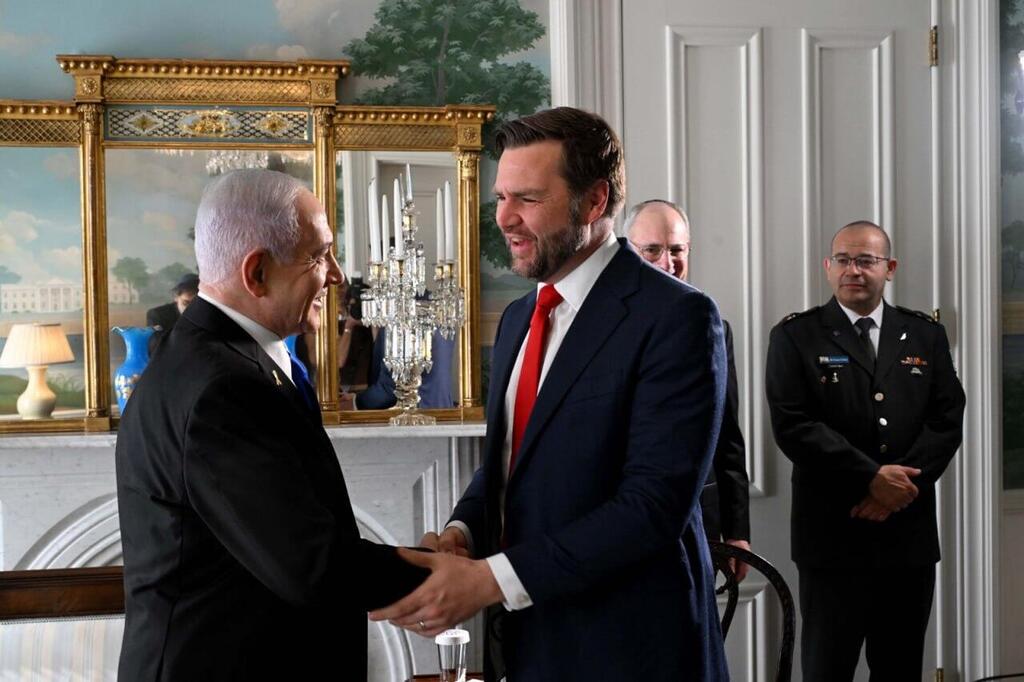
Israeli officials said earlier Monday that Vance is considered highly involved in the administration’s foreign policy and has taken part in discussions on Iran and other regional issues. “His arrival sends a message that the Americans are managing this process with full force,” one official said.
According to officials close to Trump, the current strategy is for Vance, along with Steve Witkoff and Jared Kushner, to prevent Netanyahu from resuming a full-scale assault on Hamas in Gaza. “The White House is fighting to preserve the agreement,” they said.
Witkoff and Kushner have already made clear to Netanyahu that they expect Israel to honor the ceasefire, except for cases of self-defense by Israeli troops stationed in the Strip. For now, the United States is backing Israel’s claim that Hamas is violating the agreement regarding the return of the bodies of Israeli hostages and accepts Israel’s assertion that Hamas is using delay tactics.
At the same time, President Donald Trump warned Monday that he would allow Israeli forces to “eradicate” Hamas if the violence continues.
“We made a deal with Hamas that they’re going to be very good, they’re going to behave, they’re going to be nice,” Trump told reporters at the White House. “And if they’re not, we’re going to go and we’re going to eradicate them if we have to. They’ll be eradicated — and they know that.”
Trump described the current fighting in Gaza as a “rebellion” within Hamas, saying that some of its members “got very rambunctious,” but that the group’s leadership remains committed to the deal. He said the United States is taking “many steps” to preserve the ceasefire but added, “Israel would go in within two minutes if I asked them to.”
Trump warns: Israeli forces to 'eradicate' Hamas if the violence continues
(Video: White House)


The depth of American involvement in the process — with Israel now operating almost as a U.S. client state — was reflected in the rare visit of Witkoff and Kushner to the IDF’s Kirya base in Tel Aviv. With authorization from the political echelon, the envoys met with Military Intelligence Chief Maj. Gen. Shlomi Binder, Planning Directorate head Maj. Gen. Eyal Harel, and Strategic Affairs Minister Ron Dermer.
The sides discussed the IDF’s preparations for implementing and maintaining the ceasefire. Israeli intelligence officials presented the Americans with information on Hamas’s violations since the start of the agreement and shared updated intelligence on the hostages and conditions inside the Gaza Strip. Israeli officials described the meeting as “very good.”
The goal of the meeting, according to Jerusalem, was to ensure ongoing cooperation between the sides and confirm that Israeli intelligence remains accessible to its American partners. Defense sources said the Americans are eager to “tie up loose ends” ahead of the second phase of the deal — the introduction of a foreign military force, made up of several thousand troops, to oversee Hamas’s disarmament and the demilitarization of Gaza.
Israeli officials said Israel has supplied information to the U.S.-led international monitoring mechanism to accelerate searches for hostages. Israel expects Hamas to fulfill its obligations and return the bodies it is holding. Israel is conditioning the start of Gaza’s reconstruction on Hamas’s disarmament and the return of the hostages’ remains.
Israel has also expressed concern about the fate of Hamas’s strategic tunnel network that still exists in parts of the Strip and has demanded that the international force ensure its destruction or sealing. Jerusalem has given a green light to a U.S. proposal to begin a pilot project in Rafah focused on clearing and sealing tunnels.
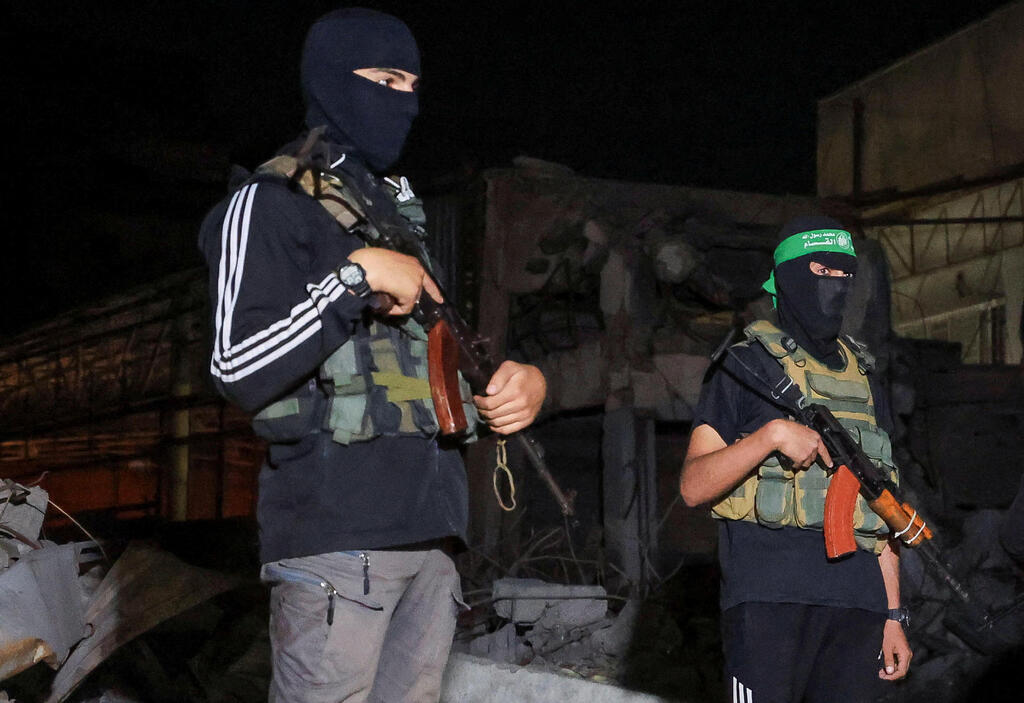
(Photo: REUTERS/Dawoud Abu Alkas)
Although American officials continue to back Israel’s position on Hamas’s violations and share a commitment to maintaining the ceasefire, in practice, it is Washington’s policy that dictates events on the ground. On Sunday, after Trump ordered the resumption of humanitarian aid to Gaza, Israel reversed its earlier position, announcing that crossings would reopen and airstrikes would halt. The Rafah crossing, however, will remain closed until the issue of the hostages’ remains is resolved.
Earlier Monday, Netanyahu met in Tel Aviv with Witkoff and Kushner, both key architects of the ceasefire deal. Following the meeting, and amid continued Hamas violations, no decision was made to reopen the Rafah crossing in southern Gaza. There are no current plans to open it Tuesday.
Vance said Sunday that the “best-case scenario” would be a series of “fits and starts” between Israel and Hamas. “Hamas is going to fire on Israel,” he said. “Israel is going to have to respond. Some of Hamas’s cells will probably honor the ceasefire, and many of them will not. To properly disarm Hamas, we’ll need Gulf Arab states to get forces in there to apply some law and order and security keeping on the ground.”