

Israel's political-security cabinet is expected to convene this week for the first time since the approval of the hostage deal and the Donald Trump‑brokered plan. Over recent months it has become evident that Israel has in practice become an American “protectorate”: decisions are made in Washington, instructions are issued from there and Jerusalem is forced to fall in line.
Adding to this is a rare visit to the Kirya (Israel’s defense headquarters) by American envoys Steve Witkoff and Jared Kushner — the architects of the hostage deal — indicating the depth of U.S. influence on developments in Israel. At the same time, an Israeli security delegation that included representatives from the Shin Bet and the Israel Defense Forces visited Cairo Monday to discuss the “day after” in Gaza and its reconstruction.
Witkoff and Kushner's interview for '60 Minutes"'
(The program "60 Minutes" will be broadcast on yes and yes vods VOD)


Sources in Israel say that the Americans are backing Israel in confronting violations by Hamas, and that there are understandings about maintaining the cease‑fire and a commitment to its continuation. But, in fact, it is the American line that is dictating reality. Just Sunday, for example — after Trump ordered the resumption of humanitarian aid to Gaza — Israel made a U‑turn and announced the reopening of crossings and a halt to airstrikes, while keeping the Rafah crossing closed pending clarification of the missing hostages' bodies issue.
Against this backdrop, U.S. Vice President J.D. Vance is expected to arrive in Israel Tuesday for the first time in his role. According to diplomatic sources, he is highly involved in foreign‑policy matters, having participated in discussions on Iran and other regional issues. “His arrival sends a strong message that the U.S. is fully engaged in this effort,” one source said.
Gallery

Vice President JD Vance will arrive in Israel on Tuesday
(Photo: Doug Mills/The New York Times via AP, Pool)
However, the vice president will not visit the Gaza Strip. U.S. sources said the possibility was considered but has been dropped for now. Instead, Vance plans to land Tuesday and visit the U.S. command center overseeing implementation of the agreement, where about 200 U.S. soldiers are stationed. He may monitor the situation in Gaza via screens from the command center or from the Israeli Defence Ministry base in Kirya, Tel Aviv. He is also expected to travel to Jerusalem on Tuesday — possibly meeting with Witkoff and Kushner — and then meet with Prime Minister Netanyahu in a bilateral session followed by a wider meeting. He will also meet President Isaac Herzog and hostage families. On Thursday he may visit the Western Wall or a church in Jerusalem and depart later that day.
Rare meeting at the Kirya

Cabinet meeting attended by Witkoff and Kushner
(Photo: Maayan Toaf/GPO)
Meanwhile, the U.S. envoys Steve Witkoff and Jared Kushner held a rare visit Monday at the Kirya in Tel Aviv, where they met with Shlomi Binder, Head of Israeli Military Intelligence, AMAN; Eyal Harel, head of Planning Division; and Ron Dermer, minister for Strategic Affairs. The meeting — authorized at the political level — reviewed Israeli preparations for implementation of the ceasefire agreement and how to preserve it. AMAN presented intelligence on Hamas violations since the agreement began, and detailed Israeli knowledge about the location of deceased hostages and the situation in the Gaza Strip. The meeting was described as “very good."
Binder reportedly discussed intelligence matters in depth, and during the meeting they drilled down on the "day after" in Gaza. The aim, Israeli sources say, was to ensure cooperation between the sides, guarantee that Israeli intelligence is accessible to U.S. partners, and confirm that the work with the Americans is close and aligned. Security sources noted that the Americans insist on “tying up loose ends” before moving to phase two of the deal — which includes the entry of a foreign military force (comprising thousands of troops) to oversee the disarmament of Hamas and the demilitarization of Gaza.
Also presented at the meeting was Israeli intelligence on the location of most of the deceased hostages held by Hamas — and on the fact that Hamas clearly knows where they are. Israeli officials further outlined the problematic on‑the‑ground situation, including rows of terrorists beyond the “yellow line” defined by Trump that have attacked IDF soldiers — such as the incident in Rafah in which two soldiers were killed. lt was agreed in the meeting that Israel “must and has to” act in self‑defense, yet remains bound to uphold the ceasefire agreement.

Steve Witkoff Jared Kushner followed by paparazzi in Tel Aviv
(Photo: Amir Meiri)
In discussions with the U.S. envoys, Israel conveyed a clear message: it has provided data to the U.S.‑led monitoring mechanism to expedite the search for hostages; it expects Hamas to fulfil commitments and return the hostages; it conditions the start of Gaza’s reconstruction on the return of the dead and Hamas’ willingness to disarm; it is concerned about what will become of the strategic tunnel network still in large sectors of Gaza — and demands that the international force guarantee their destruction or sealing; Israel has green‑lit the U.S. proposal to begin a pilot for rehabilitation and tunnel‑destruction in Rafah.
US involvement in Israeli security
The U.S.-led command for implementing the Trump peace plan has already begun operating from the Israel Defense Forces base in Kiryat Gat. The international headquarters, which leads phase two of the plan, is intended to coordinate among states, organizations and parties engaged in the plan’s implementation — emphasizing Gaza’s rehabilitation and the entry of foreign troops. At the helm is U.S. three‑star General Patrick Frank, with a British major‑general as his deputy. The Israeli representative will be Yaki Dolf, currently commander of the Northern Corps. Previously, Dolf commanded the Judea & Samaria Division and before that served as Military Secretary to the Minister of Defense. Some 200 U.S. troops, as noted, have already arrived and participate in the headquarters which will supervise the entry of foreign forces into Gaza — including contingents from the United Arab Emirates, Indonesia, Azerbaijan and Egypt; possibly also Qatar and Turkey.
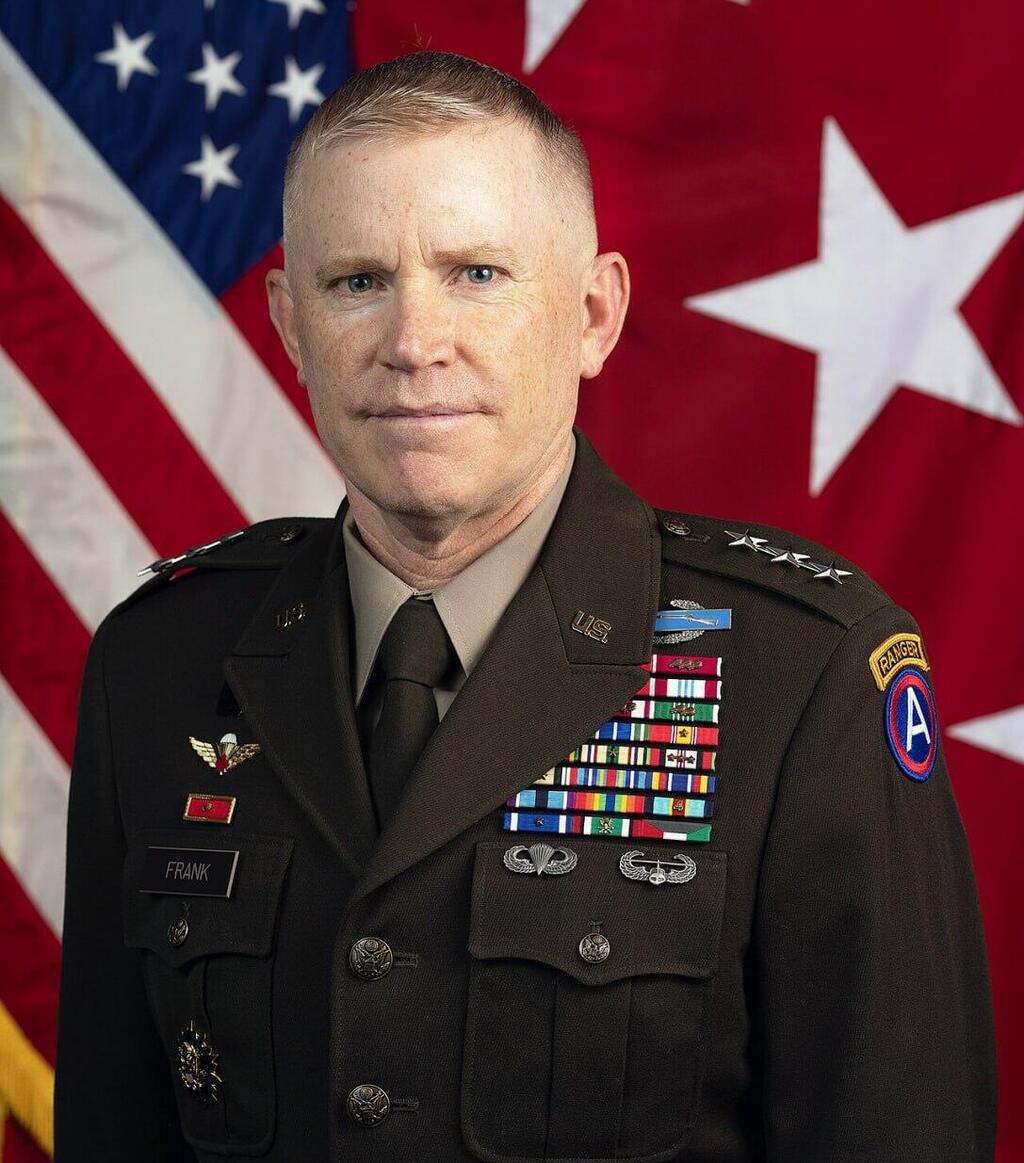
US General Patrick Frank
(Photo: US Army)
Yet the high‑profile visit by Witkoff and Kushner, like previous measures, highlights a longer pattern of deep U.S. involvement in Israel’s policy and security decisions. Trump’s envoy Adam Boehler reportedly met clandestinely with Hamas; Witkoff — together with Kushner — shook hands with Hamas senior negotiator Khalil al‑Hayya and attended a condolence meeting over the death of his son in an Israeli strike in Doha.
Meanwhile, Trump orchestrated the public apology call from Israeli Prime Minister Netanyahu to Qatari PM Mohammed al‑Thani, arranged in understated fashion, and simultaneously embraced Turkish President Recep Tayyip Erdoğan — who continues to incite against Israel — while Washington contemplates selling F‑35 fighter jets to Turkey and authorized the Turkish NGO IHH to participate in Gaza’s reconstruction.
Although the deal forced by the Americans did return 20 living hostages in one set of exchanges - which Israel acknowledges, in practice it has proved riddled and careless. The issue of returning the dead remains vague, and the demilitarization plan has not been assured. Hamas continues to claim it does not know where all the bodies are, and the Americans — unlike Israeli intelligence — appear willing to believe them. But the Kirya meeting may mark the beginning of a change of dynamics.
Against this backdrop, it is possible that Vance’s visit and the upcoming security‑cabinet meeting will reaffirm one reality: Israel is no longer simply a “strategic partner” of the United States — it is part of its direct sphere of influence. Much like Trump’s interest in Greenland and his wooing of Canada, it seems Israel has long ceased to be merely an ally — it is already inside.