

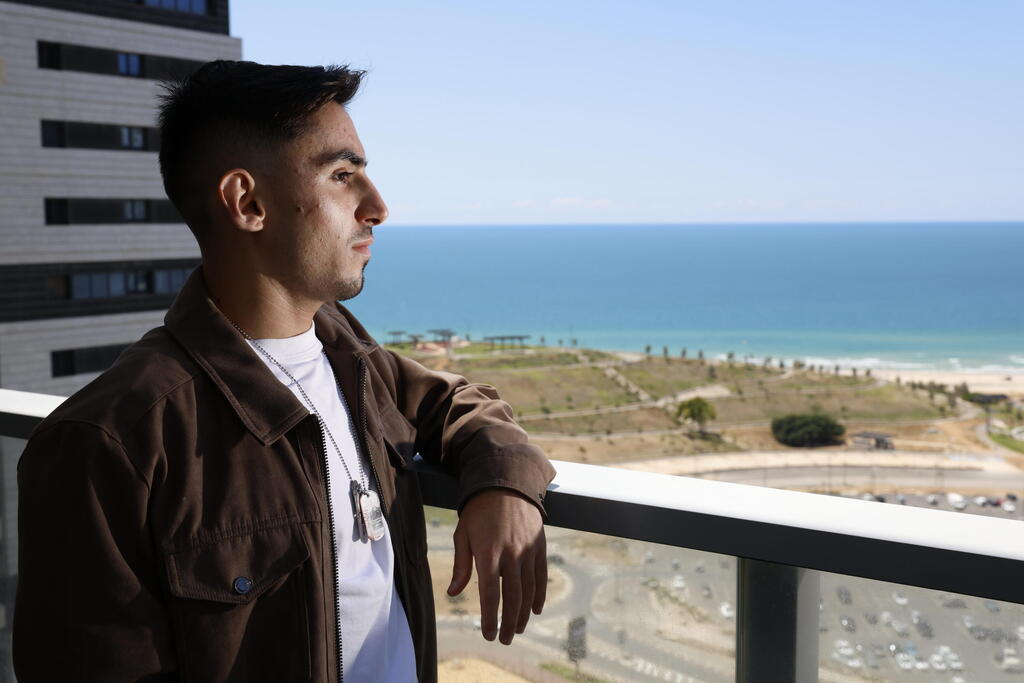
Freed hostage Rom Braslavski said Wednesday that his first reaction to learning that the Islamic Jihad terrorist who held him captive in Gaza had been killed was to burst into tears.
“I am not a person who cries a lot, and certainly not easily, but my first reaction was crying,” Braslavski told ynet, describing the moment he was informed that Talal Jaber Mohammad Abd al-Aal had been eliminated. “He comes back to me in the worst flashbacks, he appears in my nightmares. I will never forget his face, I will never forget his hands.”
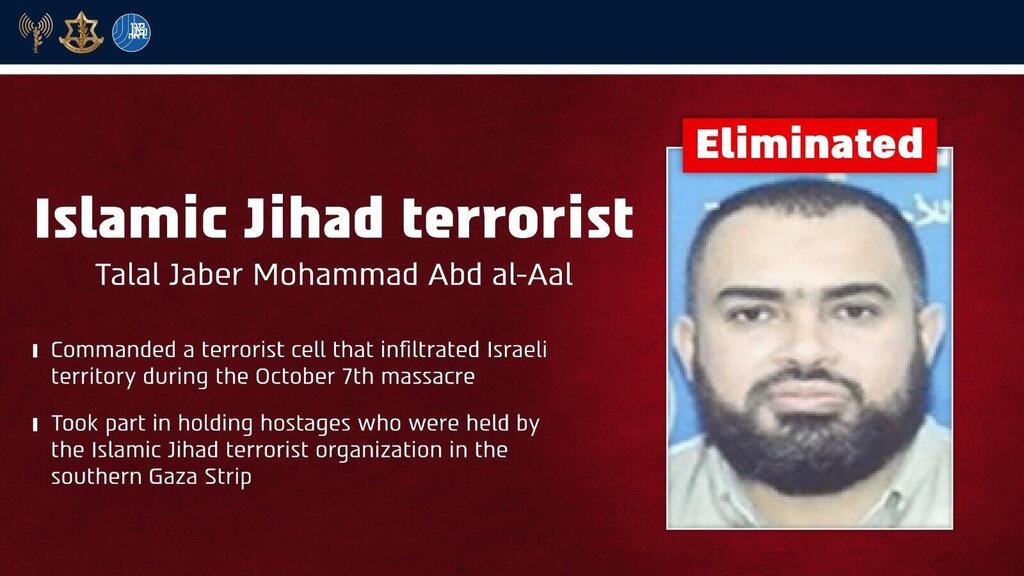
The IDF and Shin Bet said Tuesday that Abd al-Aal, an Islamic Jihad terrorist who commanded a cell that infiltrated Israel during the October 7 massacre and later took part in holding hostages in the southern Gaza Strip, was killed Sunday in a strike in southern Gaza.
According to the military and Shin Bet, Abd al-Aal had held several positions in Islamic Jihad. The IDF said precautions were taken before the strike to reduce harm to civilians, including the use of precise munitions and aerial surveillance.
For Braslavski, the announcement was deeply personal. He said Abd al-Aal was known to him in captivity as Abu Youssef and was one of the terrorists responsible for the worst abuse he endured.
“When you see the face of the man responsible for the death of your soul, Abu Youssef was his name there, the man who gave the order to begin the routines, the severe torture, and when I see his picture like all the other ‘eliminated’ pictures, it is the most terrible thing in the world for me,” he said. “I am not a person who cries a lot, certainly not easily and certainly not someone who films it. But my first reaction was crying. It simply moved me so much to see his face as someone who had been eliminated.”
Braslavski said Abd al-Aal was not merely a rank-and-file terrorist. “At first I imagined how the people with him reacted. He was a very senior commander in Islamic Jihad, not just an operative. This is an enormous achievement,” he said. “People say ‘closure,’ ‘revenge,’ but this is something beyond that. I cannot describe it.”
The interview came a day before Israel marks 1,000 days since the October 7 massacre.
“My October 7 continued every day, again and again,” Braslavski said. “As far as people are concerned, we have moved on. They say, ‘Look how nicely he is dressed, how nicely his hair is arranged,’ but no one knows what is happening inside. No one is with us when we wake up screaming at night. No one is with us when we get flashbacks in the middle of life.”
(Photo: IDF)
Braslavski said he is currently recognized as a disabled IDF veteran with 100% disability. “Post-trauma is a terrible thing for combat trauma victims, for disabled IDF veterans. I am a disabled IDF veteran,” he said. “So my public advocacy is to show the world what an invisible disability looks like.”
Asked about reports in recent weeks that Hamas is rebuilding its strength in Gaza, Braslavski said he was speaking not as a military analyst or politician, but as someone who had seen Gaza and the October 7 attack from inside captivity.
“I was inside Gaza. I saw October 7 with my own eyes. I saw the terrorists with my own eyes. I saw Hamas organizing from within. I know every detail, every city, every point and every stone in Gaza,” he said.
“The only solution, and I said this also to the personal aides of U.S. President Donald Trump when they asked me what we need to do with Gaza, is to open our eyes and place a magnifying glass over them, with tight supervision from inside and outside,” Braslavski said. “But if we continue dreaming, what happened on October 7 will return, and it will be much worse.”
After the IDF announced Abd al-Aal’s killing, Braslavski published the terrorist’s photo and wrote that he had received a phone call that “shook” his life.
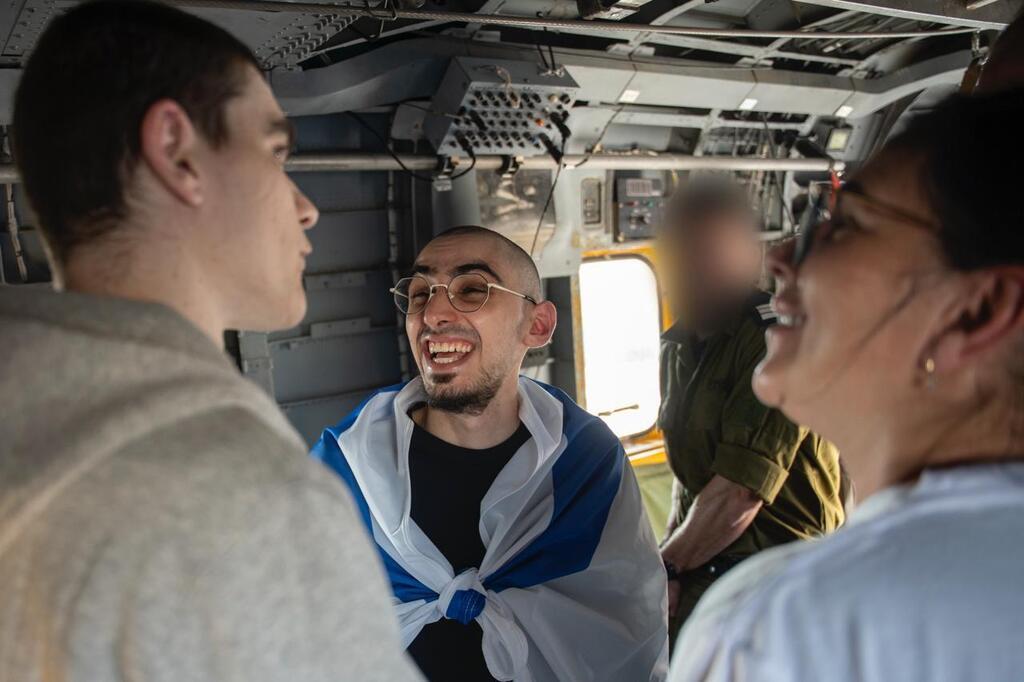
Braslavski after his release from captivity
(Photo: IDF)
“This is the most emotional day of my life,” he wrote at the time. “I received a real phone call that shook my life and changed it from one end to the other. I am in tears and in a level of emotion that is hard for me to describe.”
In a longer post, Braslavski said Abd al-Aal had commanded the cell that held him for a year and had personally abused him.
“This is Talal Abd al-Aal, or as I know him, Abu Youssef,” he wrote. “This is the man who weighed 100 kilograms and jumped on my neck while I was malnourished. This is his face. This is his hand. This is him.”
About a month ago, Braslavski told ynet that months after his release, the torture and humiliation he endured in captivity still returned in nightmares. During nearly two years in Gaza, he said, he was held in Deir al-Balah, first in apartments used as hideouts and later inside a large tent camp for displaced Gazans.
For long periods, he said, his hands and feet were tied, and he was forced to stand for hours facing a wall, blindfolded, with stones placed in his ears so he could not hear.
“You get used to the beatings,” he said then. “But that humiliation, that was the lowest moment of my captivity.”