


Progress in talks between the United States and Iran, mediated by Qatar, was known in Israel. But the U.S. president’s post claiming that “all parties involved approved (the deal)”, along with Iranian signals suggesting a “high chance we will approve the agreement”, clearly caught Israel off guard.
An Israeli official said it did not appear that Mojtaba had approved the deal, at least not formally. Shortly afterward, however, Trump said that to his understanding the Iranian Supreme Leader had given his approval. “It seems Trump is eager for calm during the World Cup,” the official added, referring to the breakthrough on the day the tournament opened, hosted by the United States alongside Mexico and Canada.
President Trump on the situation with Iran
(Video: From the social network X)


In an initial response from the Prime Minister’s Office following Netanyahu’s call with Trump, Israel effectively confirmed that a deal is nearing completion without publicly opposing it. “President Trump spoke this evening with Prime Minister Benjamin Netanyahu about the emerging memorandum of understanding with Iran to enter negotiations,” the statement said.
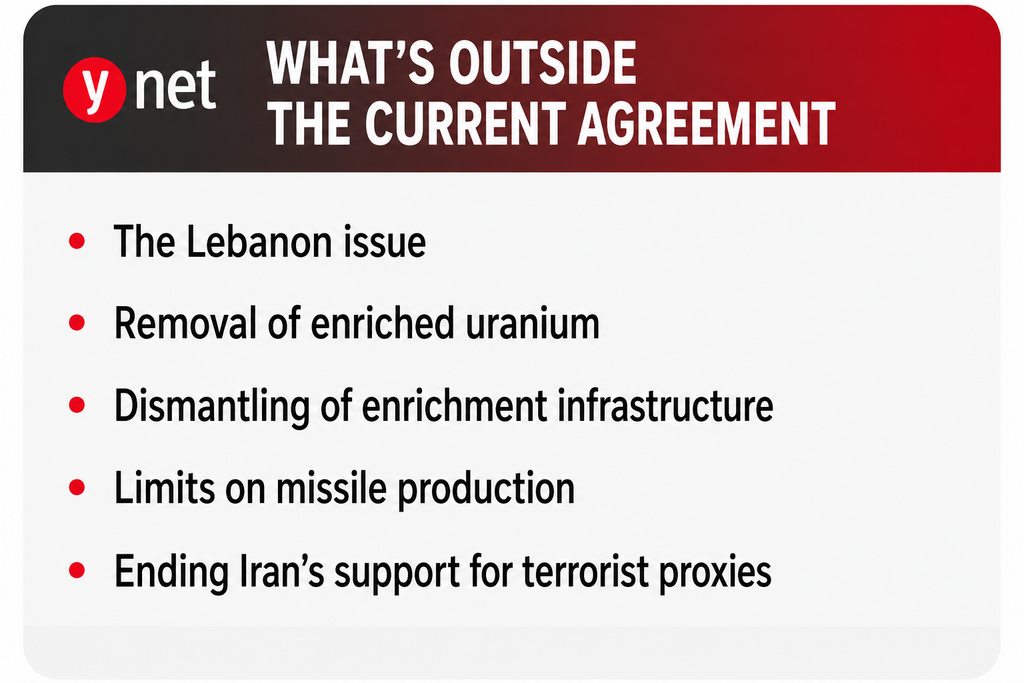
The Prime Minister’s Office also said that although Israel is not a party to the understanding, Netanyahu expressed appreciation for Trump’s commitment that the final agreement would include removal of enriched material, dismantling of enrichment infrastructure, limits on missile production and an end to Iran’s support for regional terror proxies. In practice, Netanyahu’s remarks suggest that, contrary to Trump’s claims, there is no settled agreement yet on enriched uranium, nuclear facilities, missiles or proxies.
Gallery
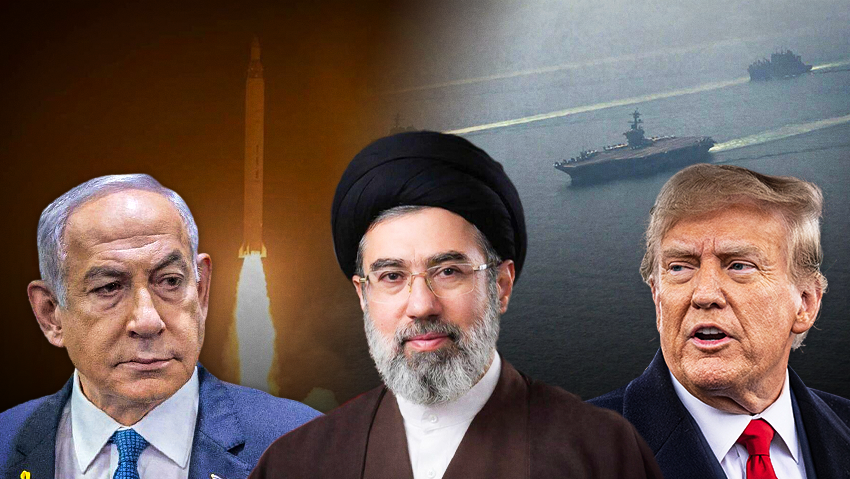
Progress in talks between the United States and Iran, mediated by Qatar, was known in Israel
(Photo: lev radin/shutterstocL, Chaim Goldberg/Flash)
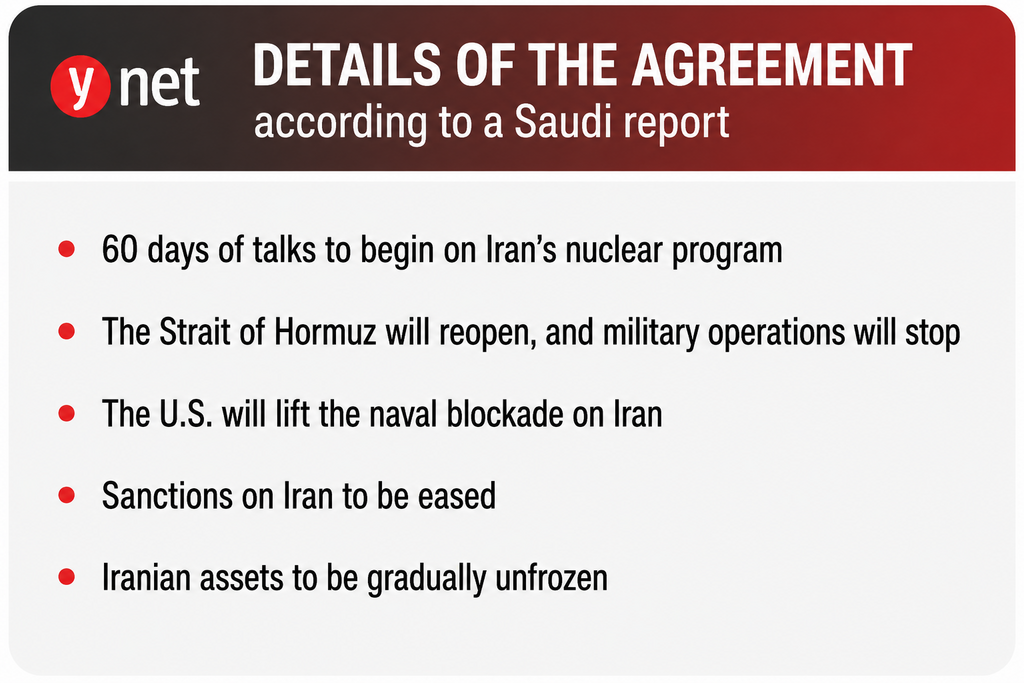
Israel did not want this agreement and still hopes the talks will collapse and that Mojtaba will not approve it. Its details remain an enigma. Iranian sources claimed the United States had backtracked on its demands, and it is unclear whether Trump has indeed held to his original conditions. The framework is a 60-day negotiating window for a nuclear deal, with a possible additional 60-day extension, but the chances of reaching a final agreement within that timeframe appear slim. For comparison, the Obama-era deal took a year and a half of negotiations, and even now missile and proxy issues appear to be excluded.
The key unresolved question is how much money Iran will receive. As far as is known, a compromise has been reached: Iran will not receive cash, but will be able to purchase medicine and food using funds held by Qatar. The Americans insist that frozen assets will not be released before the uranium stockpiles are addressed, but that issue will be negotiated later.
In effect, this is a framework deal promising a ceasefire, the opening of the Strait of Hormuz and an Iranian commitment not to pursue nuclear weapons. For Trump, that may be enough to declare victory and enter the World Cup period in relative calm. Israel is expected to try to influence the negotiations during the 60-day window, but given how surprised it was by the framework, it is doubtful whether it will have a seat at the table.
What is clear is that Iran has once again proven itself a master of negotiation. It wanted to buy time and secure funding. It appears to have gained time, and the major test is whether it will also secure money or only humanitarian assistance. Another question concerns Lebanon: some in Israel believe a deal with Iran could push Hezbollah, under Tehran’s direction, to accept a withdrawal north of the Litani River and bring the war to an end.
During the day on Thursday, Israel assessed that Trump was preparing to increase military pressure to force Iran to accept his terms, with his unusual public threat to seize the oil-rich island of Kharg serving as evidence. But on Thursday evening, after cancelling a planned strike on Iran following two days of continuous overnight exchanges, Trump said the Kharg operation was off the table.
Behind the scenes, significant progress was reported in talks mediated by Qatar. Iranian news agency Fars also said the breakthrough began with Qatar’s entry into mediation. Israel was aware of progress but did not fully understand where U.S.-Iran relations were heading and was clearly surprised. Israeli officials do not rule out that Trump’s pressure worked and pushed Khamenei to swallow the “poisoned chalice” of a temporary 60-day framework that would require opening the Strait of Hormuz.