


In the quiet outskirts of Tel Aviv, an active-duty soldier in the Israel Defense Forces (IDF), who, for security reasons, will be referred to only as “Y”, is between rounds of duty after completing more than 300 days of service since October 7.
He recounts what he saw during one of the most contested incidents of the war, challenging headlines that claimed Israeli soldiers opened fire on starving civilians.
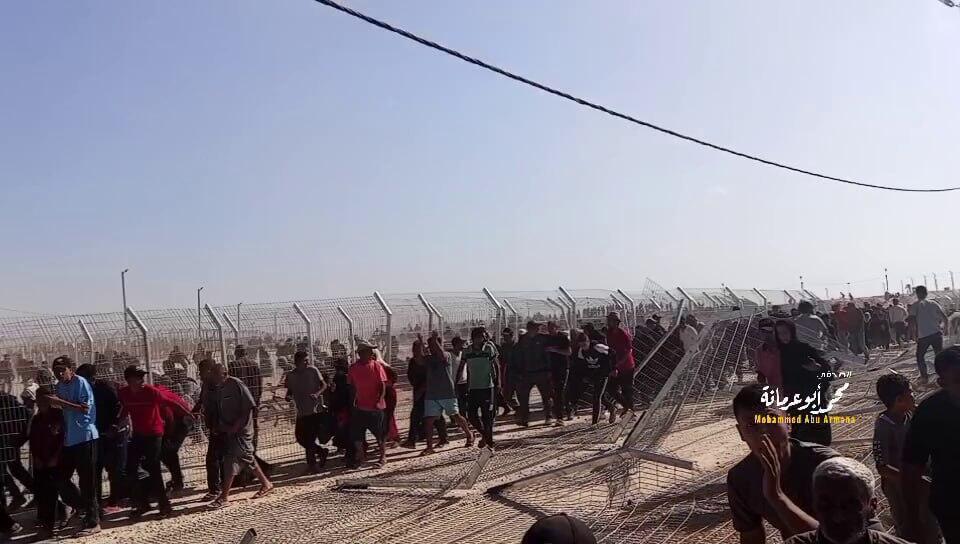
Another IDF reservist who was present at the scene also confirmed “Y’s” account of the incident, including the sequence of events and the nature of the crowd that approached the distribution site.
Access to Gaza has been limited, and the foreign press has been unable to enter the area to tell the story accurately. Since the soldier gave this account, Israel’s Coordinator of Government Activities in the Territories (COGAT) has challenged Hamas’ claim of widespread starvation in Gaza with a statement on Thursday that “there is no famine in the Gaza Strip,” while acknowledging “there are issues of access to food” in certain “pockets” in Gaza.
Photos were circulated on social media showing 1,000 humanitarian aid trucks stalled outside the Gaza Strip. While the UN claims that Israel’s bureaucracy prevents distribution, Col. Abdullah Halabi of COGAT told Yahoo News, “The State of Israel allows the entry of humanitarian aid beyond the standards of international law, without restriction. As long as the international community makes an effort to bring in the aid, we will allow them to bring it in.”
The IDF announced Thursday that, in response to the humanitarian situation in Gaza, it will renew the airdrop of aid into the Gaza Strip. The effort was coordinated by COGAT and the Israeli Air Force and included seven aid pallets containing flour, sugar and canned food provided by international organizations. In addition, the IDF said it will facilitate the movement of aid trucks within Gaza.
While the IDF has acknowledged that mistakes occur amid the fog of war and that serious incidents are subject to internal review, “Y” emphasizes that his account is based solely on what he witnessed during his deployment. “I’m not saying everything always goes right—we’re people, and people make mistakes,” he notes. “But where I was, I didn’t see what the news are claiming. I saw something very different.”
The soldier’s latest deployment placed him not in combat with enemy terrorists, but guarding one of the war’s most controversial flashpoints: a humanitarian corridor intended to deliver aid to civilians in Gaza.
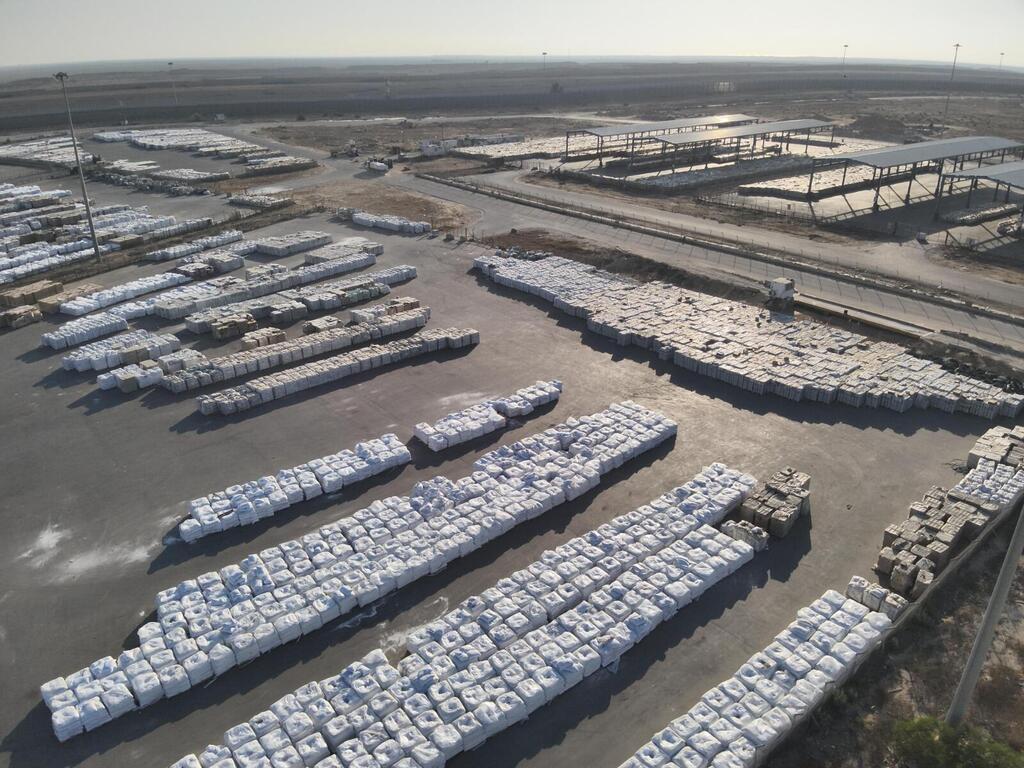
Large quantities of humanitarian aid stalled at the Gaza border
(Photo: COGAT)
“This was the worst thing I’ve ever done,” says “Y.” “It was disgusting. You see people fight each other over food. Trampling, throwing sand, stealing. It’s chaos. We’re not trained for that. We’re infantry. We’re supposed to fight terrorists, not manage riots.”
Assigned to a corridor, one of the three safe distribution sites in southern Gaza, “Y” was part of the Israeli effort to allow aid trucks into the enclave without empowering Hamas. The system was coordinated with U.S. aid officials and monitored by drones to weaken Hamas’s control over food distribution and, in turn, pressure the group to agree to a ceasefire and release hostages.
“It made sense strategically,” he explains. “Take away their grip on aid, make life easier for civilians and isolate Hamas. But on the ground, it turned into chaos.”
According to “Y,” thousands of civilians pour into the compound daily. “It’s the size of a football field, surrounded by sand berms and barbed wire. People arrive on foot, in cars, on motorcycles or on horses. They carry sacks. There are no lines. No supervision. It’s a stampede. They push, they stab, they throw sand at each other. Sometimes they trample the weak. We tried to bring some order, but the system collapsed from the start.”
What shocked “Y” most was how fast the humanitarian operation turned into disorder. “The site was supposed to have minimal friction. Instead, it became a magnet for chaos. People beat each other, shoved kids aside, filled bags with sugar and rice, then sprinted out while gangs waited to rob them.”
He says that on several occasions, those trying to loot aid would hide among the crowd, then attempt to breach the sand barriers in groups. “They timed it. Always just before or just after the drones passed over. It wasn’t spontaneous.”
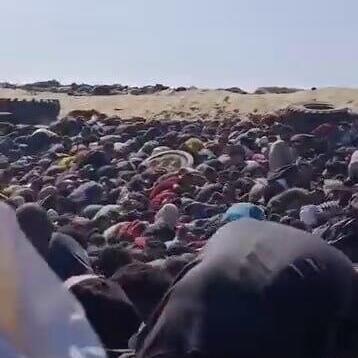
Palestinian masses congregating outside a US-operated distribution center in Gaza
The danger didn’t end inside the compound. Outside, “Y” says, Hamas terrorists and criminal gangs waited to rob those who managed to secure food. “They take it from civilians and resell it. We’ve arrested people doing it. Some are Hamas. Some are just opportunists. But it’s organized. It’s how Hamas keeps people dependent.”
He directly rejects reports of starvation in Gaza. “There is no one collapsing from hunger. That’s a blood libel. If there’s malnutrition in Gaza, it’s because Hamas wants it. They have the food, and they block it. They want the photos of skinny children. That’s their weapon.”
He draws comparisons rarely heard in the international press. “Saudi Arabia bombed the Houthis for 10 years and sent 5,000 trucks of aid, but there was no global outrage. Israel has been bombing Hamas, a terrorist organization, for 21 months and has sent more than 23,000 aid trucks into Gaza but is somehow accused of starving Gaza.”
Israel’s security establishment, meanwhile, maintains that it has not restricted the flow of humanitarian aid into Gaza. Since May 19, the government reports that nearly 4,500 aid trucks have entered the Strip via two channels: through U.S.-operated distribution centers that supply weekly food packages, and through UN-coordinated deliveries of flour, baby food and ingredients for bakeries and communal kitchens.
Officials report that 50% of the aid goes through each channel, and that more than 1.5 million food packages and 2,500 tons of baby food have reached civilians. As of this week, however, the contents of some 950 trucks remain uncollected on the Gazan side of crossings, with Israel blaming UN agencies for delays in distribution.
That frustration peaked on July 20, when international headlines reported that Israeli troops had opened fire on civilians waiting for food. “Y” says he was there and that nothing about that morning resembled the story broadcast to the world.
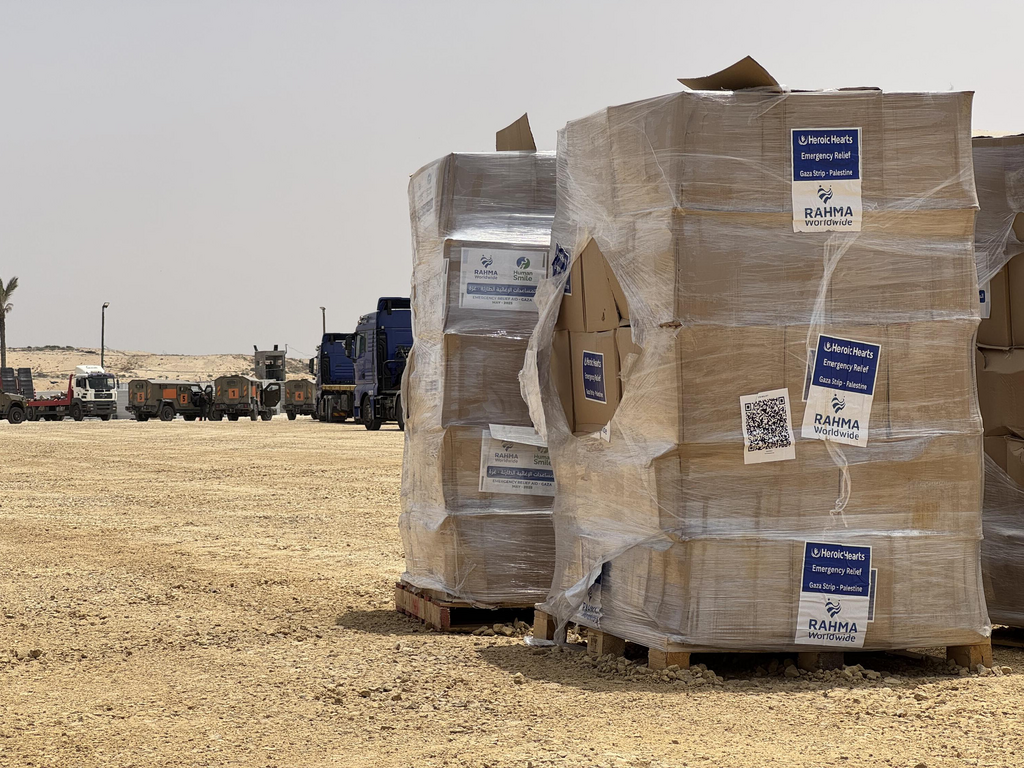
Humanitarian aid parcels at a US-operated distribution center in Gaza
(Photo: Gaza Humanitarian Foundation)
According to his account, the incident began the night before. On July 19, around 10 p.m., eight to ten aid trucks arrived at the site. The delivery was standard procedure, meant to prepare for morning distribution. But soon after, a crowd began to approach.
“They weren’t supposed to be there. It was closed. They saw the trucks and came to loot,” he says. “We fired warning shots. No one was hurt. They left, for the time being.”
The army had posted the opening times on Palestinian Facebook groups. Drones circled overhead, broadcasting in Arabic: “The site will open at 9 a.m. Do not approach.” “Y” says the instructions were clear, constant and public.
Around 2 a.m., a small team was sent to a forward position one kilometer from the corridor, at a junction of several dirt paths. Their role was to intercept any suspicious movement before it reached the aid zone.
At approximately 4:30 a.m., four Gazan men came into view. Voices echoed in the dark. Then came chants of “Allahu Akbar.”
“That’s when it became obvious; this wasn’t just a spontaneous crowd,” he says. “It was coordinated.”
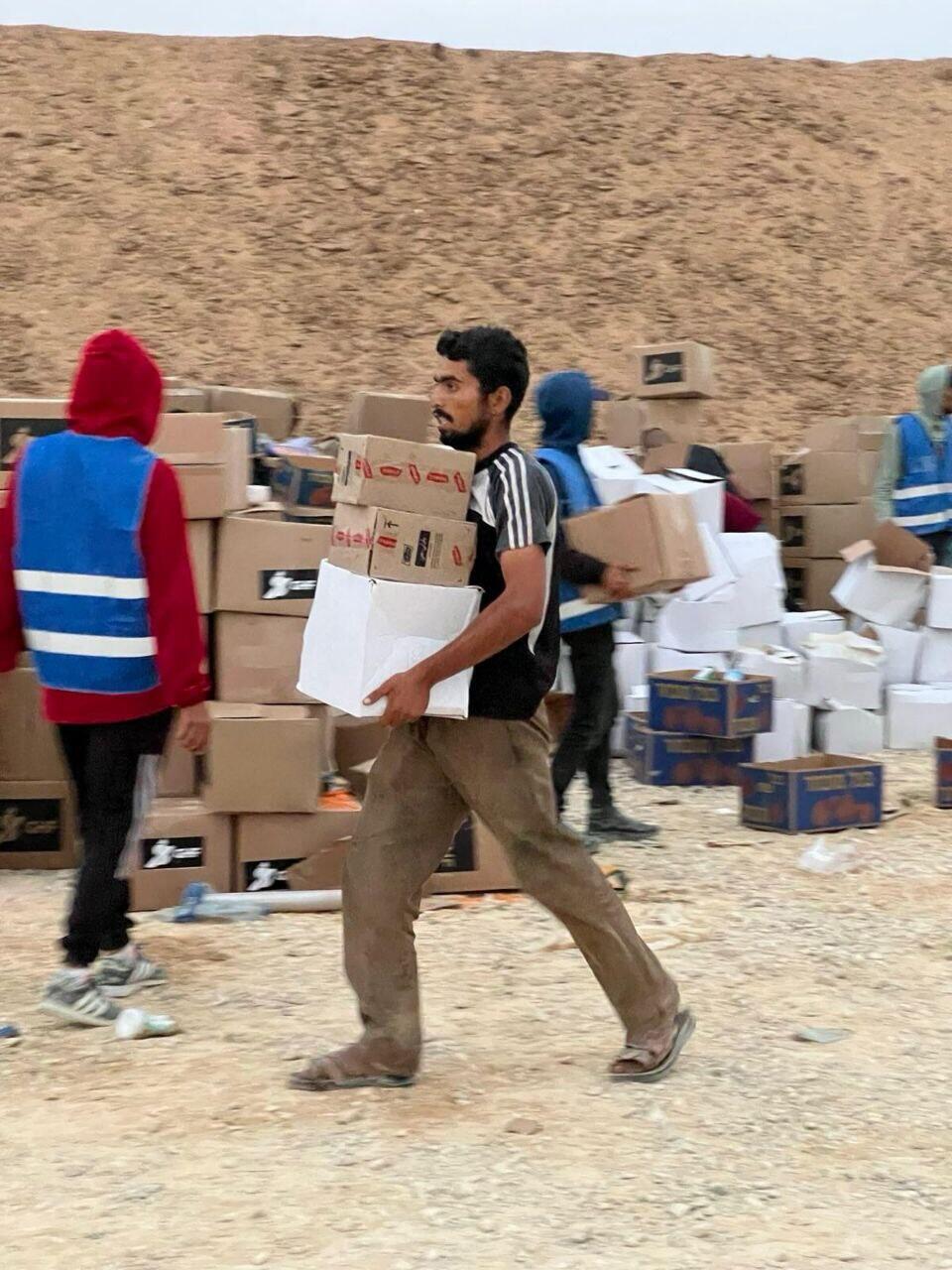
Palestinians collecting humanitarian aid parcels at a US-operated distribution center in Gaza
(Photo: Gaza Humanitarian Foundation)
The four Gazan men emerged from behind a building. A warning shot was fired ten meters in front of them. They kept running. “Then four became a hundred. Then a thousand. All adult men. No women. No children. Just men running straight at us.”
The soldiers were surrounded on three sides, with the food trucks behind them. “We heard AK-47 fire from behind the crowd. We didn’t see who fired it, but we heard it clearly,” he says.
With the mass approaching within 100 meters, a standing order was given: defend the position. “Nothing stopped them, not the drones, not the megaphones, not flash grenades or warning shots. In the end, we fired. There was no other choice.”
“Hamas had two goals,” he says. “Steal the food and provoke a tragedy they could film.” According to “Y,” the same group had tried to storm the site at 10 p.m. and again at 2 a.m. “They came back stronger. More people. More vehicles. Gunfire behind them. They knew what they were doing.”
“Y” describes intense restrictions placed on Israeli soldiers guarding the corridor. “We weren’t allowed to engage unless it was life-threatening. That’s how Hamas exploited it. They knew we had limits. They sent the crowd ahead like a shield. And when things exploded, the cameras were already rolling.”
The moral complexity, he says, is unbearable. “We had to choose between protecting the mission and being slaughtered on a rooftop. And then we get called war criminals.”
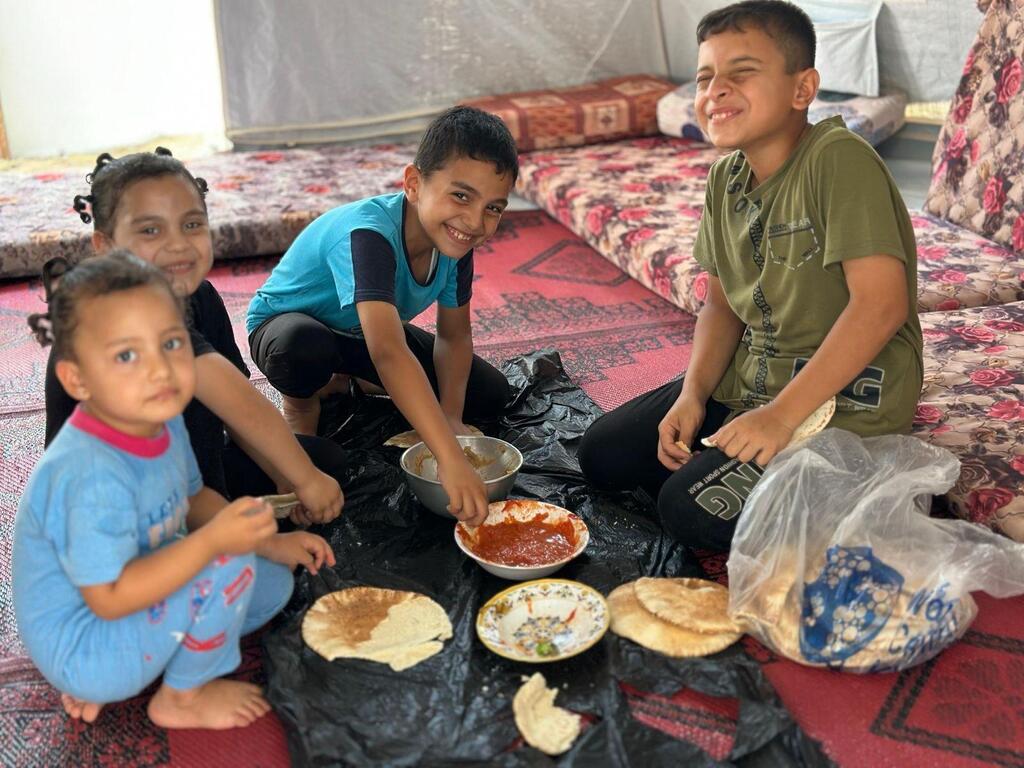
Photo released by World Central Kitchen (WCK) showing the opening of local kitchens in the Gaza Strip, with food lines in Gaza City amid claims of a hunger and malnutrition crisis in the territory
(Photo: COGAT)
What angers him most is how quickly the story was rewritten. “By midday, headlines were saying we shot starving civilians. That’s not what happened. It wasn’t a line for food. It was a violent attempt to overrun the corridor.”
Telegram channels later published the names of the dead. “All adult males. No women. No children.”
The soldiers held their positions for over thirty minutes. At one point, a small force was actively defending the rooftop. “If they had broken through, we would’ve been overrun. There was no alternative.”
Get the Ynetnews app on your smartphone: Google Play: https://bit.ly/4eJ37pE | Apple App Store: https://bit.ly/3ZL7iNv
Asked how he felt watching the international coverage, “Y” didn’t hesitate. “People want to believe lies. It helps justify their hate. But it only hurts the Palestinians. Because every time this propaganda is believed, Hamas gets stronger.”
“Y” is convinced the entire event was staged. “They wanted a bloodbath. Something to sell to the media. And they got it.”
On the proposal to restore distribution control to United Nations Relief and Works Agency for Palestine Refugees in the Near East (UNRWA), his response is just as blunt: “UNRWA is Hamas. There’s no difference between them. Giving them back control is handing it straight to the terrorists.”
In his view, there is only one path to end the current cycle. “Ceasefire and hostage return,” he says. But that, he insists, “can’t mean full withdrawal. There has to be a buffer zone. We can’t allow another October 7.”
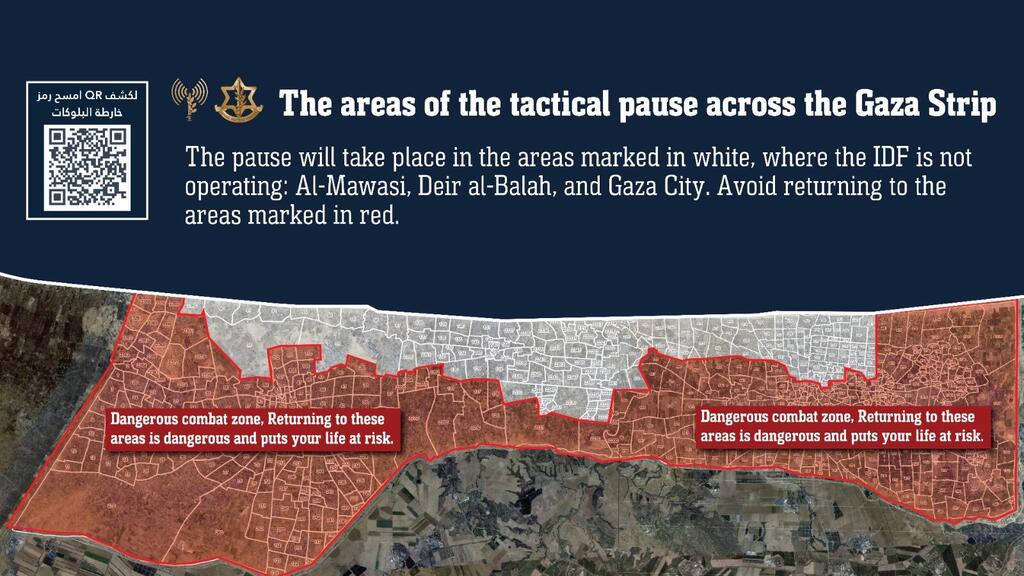
A map distributed by the IDF shows regions in Gaza designated for a daily tactical pause in military operations to allow the flow of humanitarian aid. The white-shaded areas, including Al-Mawasi, Deir al-Balah and Gaza City, are considered safe zones, while red-shaded areas remain active combat zones
(Illustration: IDF)
“Y” doesn’t expect the headlines to change. “The lies will continue. The world will keep blaming us. But we’ll keep doing the job, because someone has to.”
Then, without raising his voice, he adds: “They weren’t hungry. They were coming for the trucks.”
Meanwhile, the Foreign Press Association released a statement expressing concern over the humanitarian crisis, including reports of starvation in the Gaza and calling on Israel to allow the flow of humanitarian aid into the Gaza Strip.
The IDF released a statement that starting Sunday, it would work with COGAT to increase humanitarian aid coming into the Gaza Strip, coinciding with a 10-hour pause in military operations in the densely populated areas of Al-Mawasi, Deir al-Balah and Gaza City daily until further notice.
In addition, Jordan and the United Arab Emirates are reportedly planning to restart humanitarian airdrops into Gaza in coordination with the IDF.