


Prime Minister Benjamin Netanyahu on Friday said Israel is “considering alternative options to bring our hostages home,” while U.S. President Donald Trump declared at the White House that Hamas “want to die and it’s very, very bad. It got to a point where you’re going to have to finish the job.” About 50 hostages remain in Gaza, 20 of them believed to be alive.
Emily Damari, one of the hostages freed in the previous deal, described the horrors she endured during her captivity in an interview with the UK's Daily Mail, saying she speaks out only to help free those still held captive, including her close friends, twin brothers Gali and Ziv Berman.
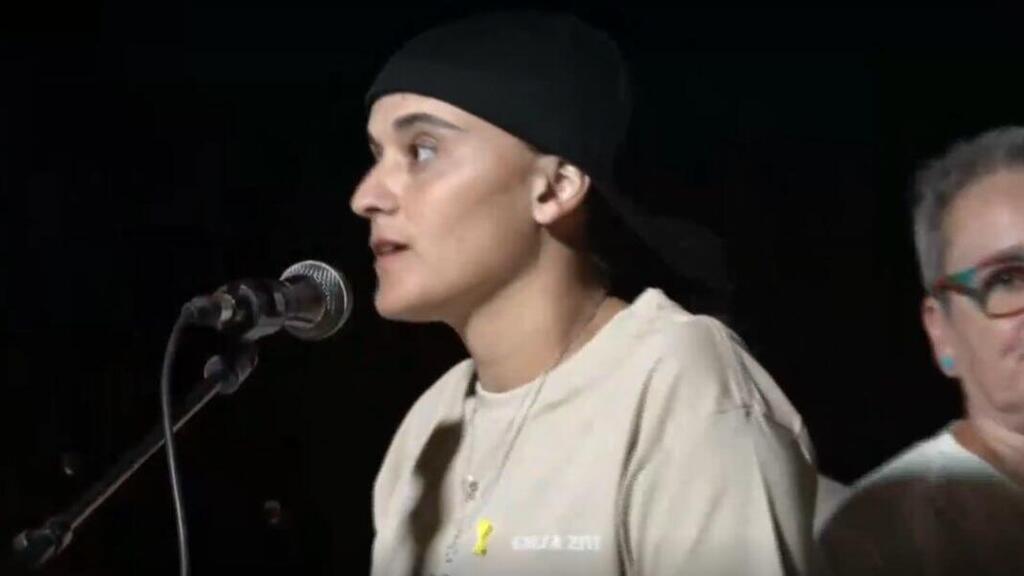
“They are probably in a cage,” she said. “They are abusing them. There isn’t a lot of water. It is probably unimaginably hot for them.” Visibly angry, she added: “Come on already! What is taking so long?” Earlier on Friday, four female IDF lookouts who were also freed released a video pleading for another deal.
Damari revealed that Hamas terrorists confined her and other hostages in small cages. “Sometimes there would be up to six of us at a time, squeezed in a tiny cage just two meters by two meters (6.5 feet by 6.5 feet),” she recalled. “The silence down there… it murders the ears. You go crazy in it.”
‘I said: Shoot me!’
On October 7, Damari was at her home in Kibbutz Kfar Aza when Hamas attacked. “I sent Gali a message: ‘I’m not ok.’ I couldn’t move because my body was just ice. I was shaking – it was insane,” she said. Gali risked his life to run through heavy fire to reach her.
Hours later, 10 armed terrorists stormed into her house while she and Gali lay face down on the bed, holding each other. “I hugged Gali and both of our faces were on the pillow,” she said. “Then they shot my left hand.” Seconds later they shot her dog, Choocha, dead and dragged them outside, searching for her car to drive back to Gaza.
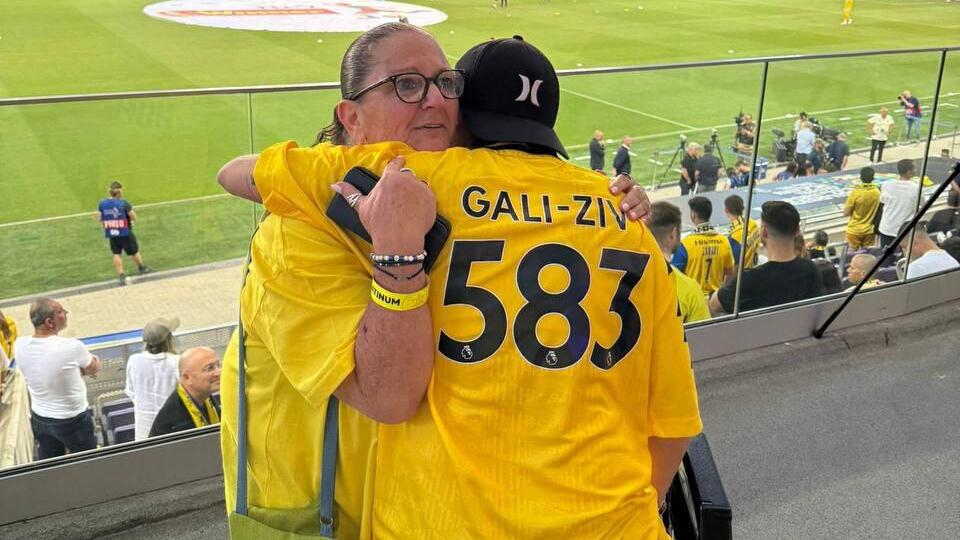
Emily Damari with Gali and Ziv Berman's mother
“One of them said he was taking me to a hospital. I realized it wasn’t going to be an Israeli hospital, so I told them, ‘No, no, shoot me!’ I didn’t want to be kidnapped – I would prefer to die. I took his gun, put it to my head and said, ‘Shoot me! Shoot me!’” she said.
“Then someone put his gun on Gali’s head, so I immediately said, ‘No, no, don’t kill him.’” When they reached Gaza, Gali was separated from her and she hasn’t seen him since.
Get the Ynetnews app on your smartphone: Google Play: https://bit.ly/4eJ37pE | Apple App Store: https://bit.ly/3ZL7iNv
Life in captivity: Cages, tunnels and constant fear
Damari was initially taken to Gaza’s Al-Shifa Hospital, where a man who called himself “Dr. Hamas” amputated parts of her fingers. “Whether he did it intentionally or through incompetence, I’ll never know,” she said, “but it left me in constant, searing pain.”
She and other hostages were then kept in the home of a Hamas operative, alongside his wife and six children — including a 14-year-old boy carrying a gun. “I had only the clothes I was kidnapped in and was allowed to shower once,” she said. Their stay ended when the house was bombed and collapsed.

Romi Gonen and Damari in Israel
(Photo: via Instagram)
After 40 days with Ziv, she was told she was “going home,” only to be taken instead into Hamas’ tunnel network. “It is like a city,” she said. “I walked in and said: ‘Oh my God, it’s huge!’” In the tunnels she saw five women, including an eight-year-old girl, crammed into a tiny cage.
One was 24-year-old Romi Gonen, shot during her abduction from the Nova music festival. “It was stinky, hot, humid, damp. You don’t get used to it,” Damari said. The floor was wet and crawling with cockroaches. They were allowed to use a hole in the ground as a toilet once or twice a day.
Damari hid her sexual orientation, fearing it would cost her life. “Being lesbian would have been worse for them than me being Jewish or Israeli – they would kill me,” she said. Guards would ask why she wasn’t married; she deflected by joking that her “three brothers wouldn’t let her date.”
‘John Cena’ and the struggle to survive
To keep her sanity, Damari created a strict exercise routine. “I would do sit-ups every morning. The most I did was 600,” she said. Her captors nicknamed her “John Cena” after the American wrestler.
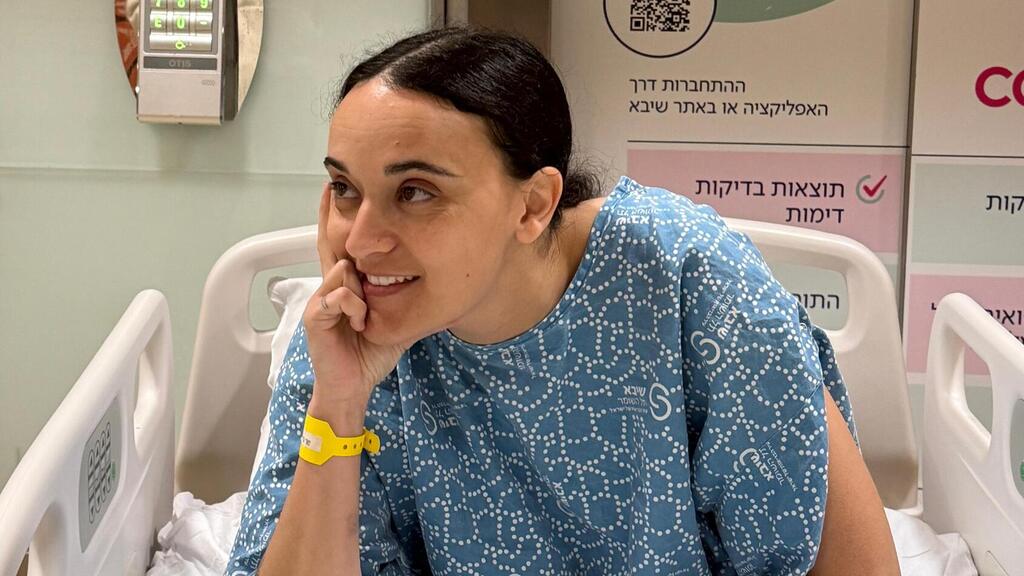
Damari in the hospital after her release
(Photo: Courtesy)
“The terrorists would call me Sajaya, it means you are very confident, very strong. I did everything just to survive,” she said. At one point she even convinced a guard to hand her his weapon. “I thought of killing him. But the other girls said, ‘Yeah, but then what? We all die.’”
After 13 months in captivity, Damari and Romi made a suicide pact. “I said, I’m not staying here. Either I’m going to escape or I’m going to kill myself,” she said. She confronted a guard, warning: “If you don’t get us out of here, you are going to have two dead hostages.” Eventually, she was freed on January 19, but six months later, 50 hostages still remain in Gaza.
Hostage families urge U.S. action
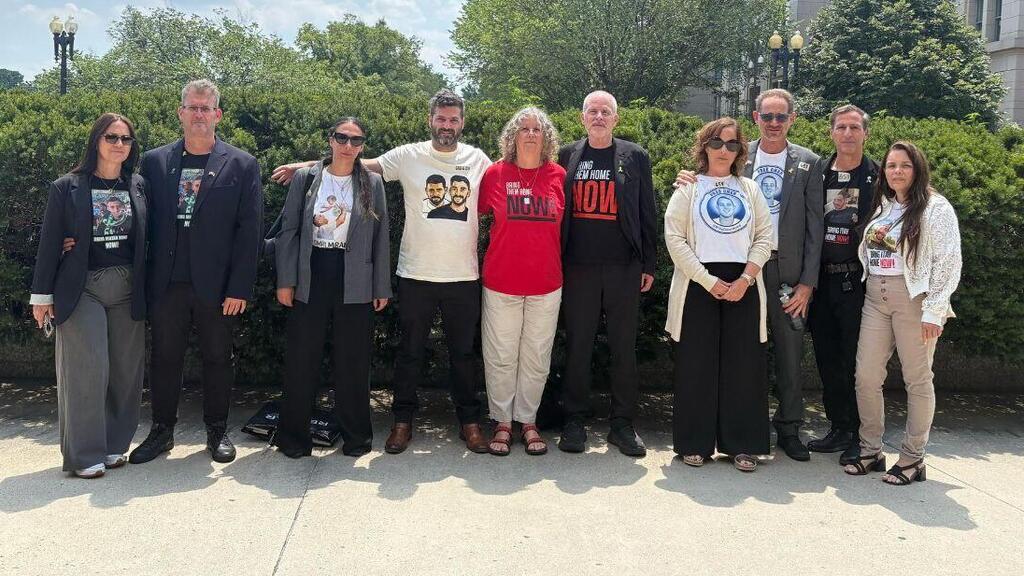
Hostage families' representatives in Washington
In Washington, hostage families' representatives met with U.S. Secretary of State Marco Rubio, voicing fear that missing the current opportunity for a deal would seal the hostages’ fate. Rubio reassured them: “I repeat our absolute commitment to secure a deal that brings every hostage home and ends the fighting.”
The families issued a joint statement stressing their trust in U.S. President Donald Trump’s team and warning of a repeat of the August 2024 tragedy, when six hostages were murdered after failed negotiations. “We cannot let such a disaster happen again in August 2025,” they said.