


Israel's election for the 26th Knesset ended without a clear winner, but the political deadlock is already drawing reactions in Washington, Europe and the Middle East. As Benjamin Netanyahu and Gadi Eisenkot seek a path to forming a government, world leaders and diplomatic officials are assessing how the results could affect the war with Iran, the future of the Gaza Strip and relations with the Palestinians.
U.S. President Donald Trump has already indicated that he would not rule out becoming involved in efforts to establish a unity government, Palestinian Authority President Mahmoud Abbas has proposed resuming peace negotiations, and Germany has warned that urgent humanitarian measures in Gaza must not be delayed until coalition talks are completed.
Gallery
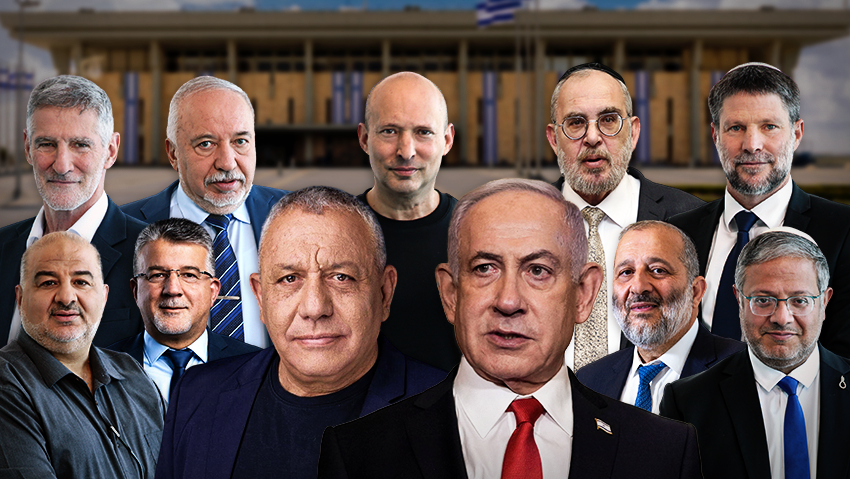
(Photo: Shutterstock, Shalev Shalom, Elad Malka, Joint List Spokesperson's Office, Reyan Preuss, Alex Kolomoisky, Oliver Contreras/AFP)
Netanyahu's bloc won 53 seats, the Jewish parties in the bloc opposed to him secured 48, while Ra'am and the Joint List together won 19 seats, an unprecedented achievement for the Arab parties. Neither bloc holds the majority needed to form a government, and President Isaac Herzog will have to task one of the candidates with doing so. In the meantime, until a new government is established, Netanyahu will continue to lead a caretaker government that may face significant security and diplomatic decisions.
Trump weighs whether to intervene
One of the leaders closely following developments in Jerusalem is President Trump, who publicly endorsed Netanyahu ahead of the election and subsequently claimed that his support helped the prime minister achieve a better-than-expected result. Although Likud remains the largest party, Netanyahu's bloc lost the majority it held in the outgoing Knesset, and his ability to remain in office now depends on negotiations with parties that ran against him.
Asked in a post-election interview with Axios whether he intended to intervene in efforts to form a Netanyahu-led unity government, Trump said he had not yet considered the possibility but added, "I'll look at it." Reuters noted that a broad government led by Netanyahu could serve the American interest in political stability in Israel, while stressing that neither side currently appears willing to reach such an arrangement.
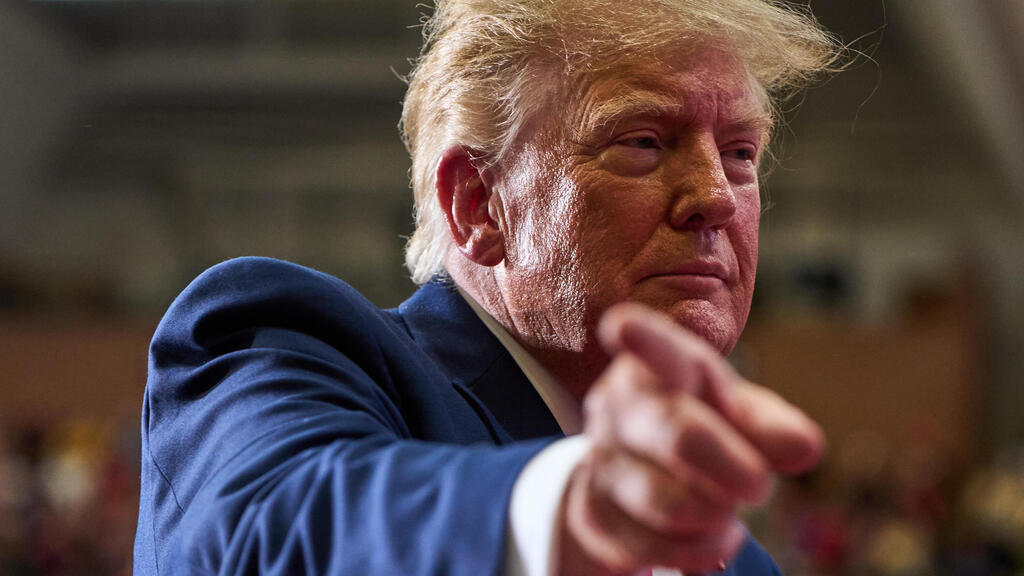
US President Donald Trump; could renewed war with Iran affect the composition of Israel's next government?
(Photo: AP Photo/Julia Demaree Nikhinson)
The central issue for Washington is Iran. Trump and Netanyahu have recently raised the possibility of renewing strikes against the Islamic Republic amid the prolonged conflict and the prospect of further escalation after the U.S. midterm elections on Tuesday, Nov. 3. Reuters noted that Israel's political uncertainty comes at a sensitive time for the U.S. administration, which is also grappling with the economic consequences of the war and the stalemate in diplomatic efforts over Gaza. However, replacing Netanyahu would not necessarily bring a fundamental change in Israel's security position toward Iran. Jonathan Panikoff, a former senior U.S. intelligence official who is now a researcher at the Atlantic Council, told Reuters that a different Israeli leadership would also likely support escalation against Iran if Trump decided to resume strikes.
Meanwhile, Tehran is also preparing for the possibility of renewed fighting. A report published Friday by the French newspaper "Le Monde" said Iranian President Masoud Pezeshkian had instructed government ministries and executive agencies to remain on alert in light of regional developments. At the same time, Foreign Minister Abbas Araghchi is continuing talks with mediating countries in an effort to prevent escalation. An Iranian analyst who spoke to the newspaper assessed that Tehran believes renewed strikes could serve Netanyahu's political interests, because another military confrontation could shift the public debate in Israel away from the coalition crisis and toward security issues, potentially encouraging the formation of a unity government.
Europe: 'We cannot wait for a new government'
Europe is also closely watching Israel's political developments, although reactions have varied. On Wednesday, the European Union issued a measured diplomatic statement congratulating Israeli citizens on the high voter turnout, describing it as a sign of the vitality of Israeli democracy. The EU expressed its willingness to work with the next government while maintaining open dialogue on cooperation, areas of disagreement and efforts to promote regional stability and peace.
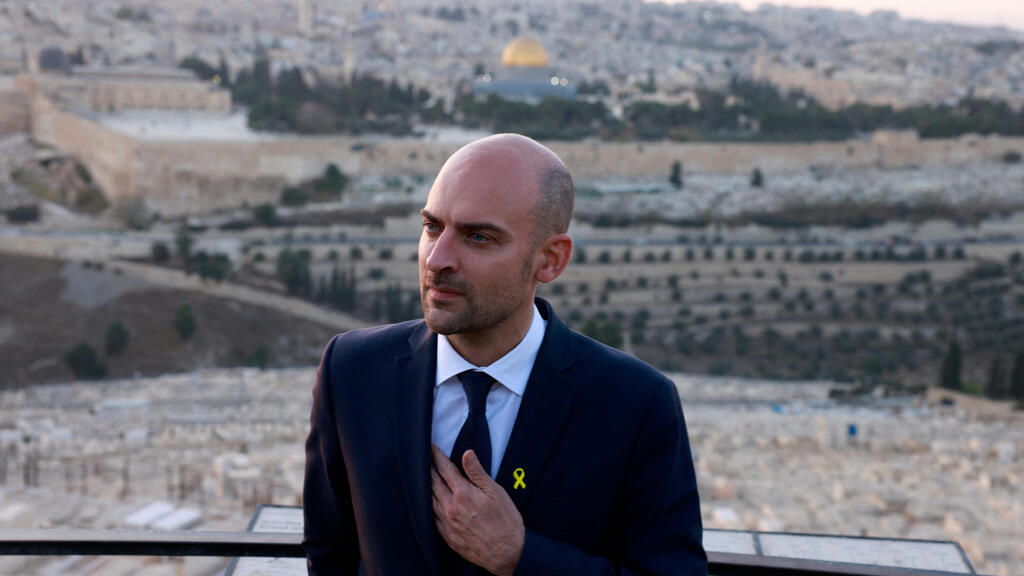
French Foreign Minister Jean-Noël Barrot during a visit to Jerusalem in 2024
(Photo: Menahem Kahana / AFP)
France, meanwhile, made clear that even a change of government would not alter its policy toward Israel and the Palestinians. Foreign Minister Jean-Noël Barrot was asked in an interview with France 2 whether an Eisenkot victory could improve relations between the two countries. He replied that French policy would remain unchanged. France, he said, would continue working to ensure Israel's security while also promoting a two-state solution. Barrot also addressed the Arab parties' electoral gains, saying their increased strength in the Knesset could influence the next government's decisions. However, he stressed that Paris would not wait for political change in Jerusalem before continuing to pursue its positions, including measures to restrict trade with settlements in the West Bank.
In Germany, concerns are growing over the consequences of prolonged coalition negotiations. A report published Friday by Deutsche Welle (DW) said the government in Berlin was avoiding expressing a preference for a particular coalition but wanted to ensure that Israel's political crisis would not delay urgent measures in Gaza. German Development Minister Reem Alabali-Radovan warned that the approaching winter was likely to worsen the humanitarian situation in the territory and called for aid organizations to be allowed to expand their operations without waiting for the conclusion of political negotiations in Israel. She also addressed settler violence in the West Bank, saying it must be stopped even during the caretaker government's term.
Meanwhile, Jürgen Hardt, a foreign policy expert from Germany's Christian Democratic Union (CDU), told DW that he would prefer an Israeli government closer to the political center. He said the Arab parties' electoral gains could open new coalition possibilities, including a minority government led by Eisenkot that would rely on their external support. However, he emphasized that the decision ultimately rests with Israel's elected representatives.
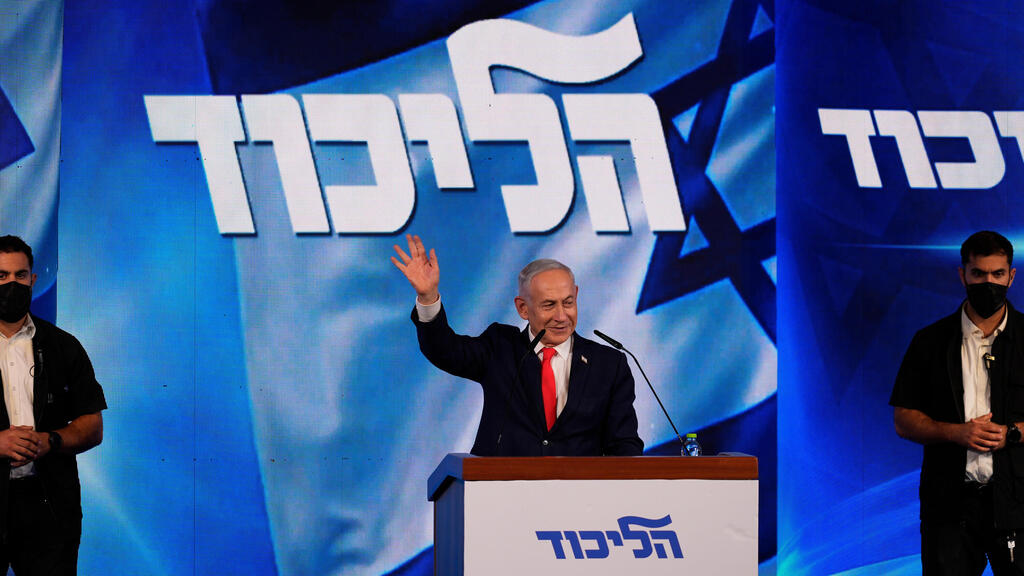
Benjamin Netanyahu
(Photo: AP Photo/David Goldman)
Concerns about the consequences of a prolonged caretaker government have also been raised by European think tanks. Beth Oppenheim, a researcher at the European Council on Foreign Relations (ECFR), warned in an analysis published Thursday that Netanyahu could exploit the period of political uncertainty to resume the military campaign against Iran or expand military operations in the West Bank. She argued that European countries should act now, together with the United States and Arab states, to prevent further escalation and advance the Gaza ceasefire plan.
Abbas proposes peace talks: 'We hope we can begin a dialogue'
The election produced a different outcome from the one some Palestinian leaders in Ramallah had hoped for. Nevertheless, Palestinian Authority President Mahmoud Abbas chose to publicly express his willingness to resume negotiations. During a visit to Cyprus on Thursday, where he met President Nikos Christodoulides, Abbas expressed hope that the formation of a new Israeli government would allow the sides to return to the negotiating table.
"For many years, we have extended our hand to the Israeli side to achieve peace, so that Israel and Palestine can live in security, stability and peace," Abbas said. He added, "We hope that immediately after a new Israeli government is formed, we can open a dialogue together."
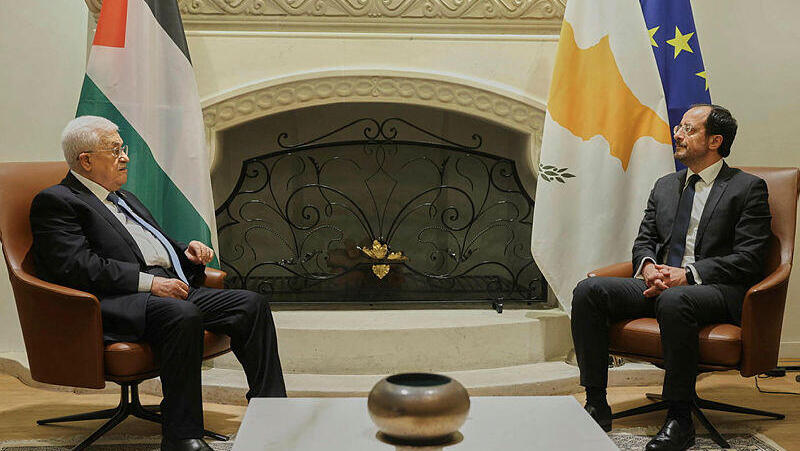
Mahmoud Abbas meeting with the president of Cyprus
(Photo: AP)
Abbas also asked Cyprus to help mediate between the sides, explaining that its good relations with both Israel and the Palestinians could enable it to play a meaningful role. The Cypriot president, for his part, expressed his willingness to help advance regional stability. It is important to note that despite Abbas' remarks, Eisenkot also opposes the establishment of a Palestinian state, although he advocates a different policy toward the Palestinian Authority and supports action against settler violence.
Arab states remain skeptical
A sharper response came from Qatar following allegations that it had interfered in the Israeli election. Qatari Foreign Ministry spokesperson Majed Al-Ansari strongly denied Thursday that Doha had financed activities intended to influence the vote. He accused political and media figures in Israel of trying to drag Qatar into the country's internal political struggles. "These accusations are both ridiculous and dangerous," Al-Ansari said. He added that if all the allegations made in recent years about Qatar's political influence in Israel were true, Doha "would already control the entire country."
The spokesperson stressed that Qatar does not interfere in Israel's political competition and would continue its role as a regional mediator. He called on the next Israeli government to respect international law, advance a resolution to the Palestinian issue and recognize the Palestinians' right to self-determination and an independent state along the 1967 borders, with East Jerusalem as its capital. Meanwhile, Israel's Central Elections Committee clarified that allegations of systematic election irregularities were unfounded and that the security investigation into suspected foreign interference would not change the election results.
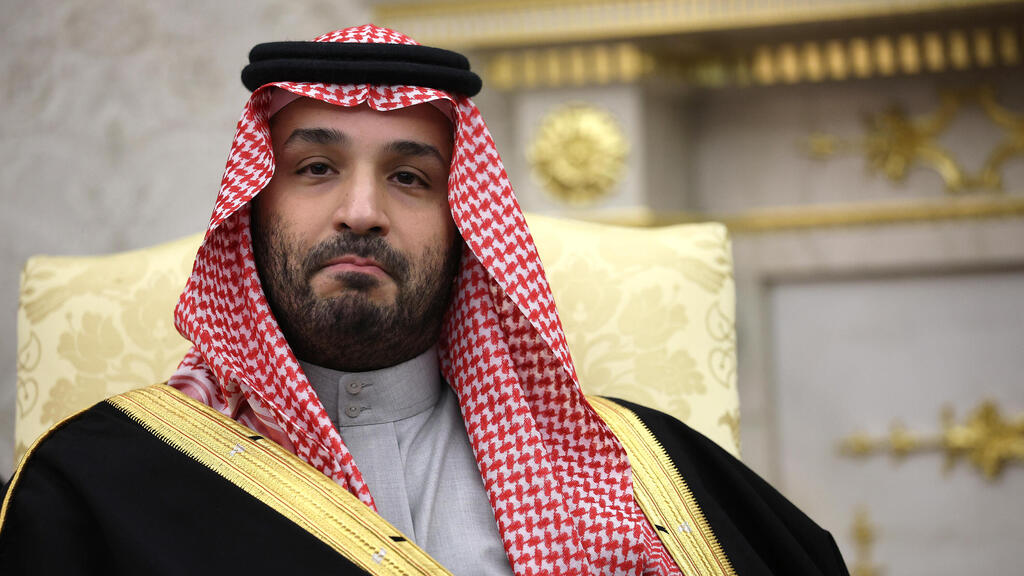
Saudi Crown Prince Mohammed bin Salman; even a change in Israel's government would not guarantee a breakthrough in normalization
(Photo: Win McNamee/Getty Images)
Other Arab countries have shown little enthusiasm for the possibility of a change in Israel's leadership. An analysis published Wednesday by Germany's DW noted that even a more moderate Israeli government would be unlikely to bring a rapid change in Israel's position on Palestinian statehood or its military presence in Lebanon and Syria. However, experts interviewed by the network said a government that did not include Netanyahu's far-right partners could make it easier to advance regional security arrangements, including the possibility of renewed negotiations on a security agreement with Syria and progress in talks on an Israeli withdrawal from southern Lebanon.
One of the region's most significant questions concerns the future of normalization with Saudi Arabia. Riyadh has repeatedly made clear that it will not move toward normalization without progress on the Palestinian issue. According to experts quoted by DW, even a change in the composition of Israel's government would not guarantee a breakthrough, although it could make it easier for Arab countries to engage in diplomatic and security talks with Jerusalem.
'Netanyahu and Eisenkot are not the same'
The debate over the significance of Israel's election has also reached the opinion pages of the European press. In an article published Friday in "Le Monde," French columnist Alain Frachon argued that despite similarities between Netanyahu and Eisenkot on several major security issues, their differences could have significant implications for Israel's future and its relations with the world. Frachon noted that both leaders oppose the establishment of a Palestinian state but emphasized their differing approaches to the Palestinian Authority, settlements, Trump's Gaza plan and the status of Israel's democratic institutions.
He argued that the outgoing government's policies had contributed to Israel's international isolation, while Eisenkot was presenting an approach that could allow for some restoration of relations with Israel's Western partners.
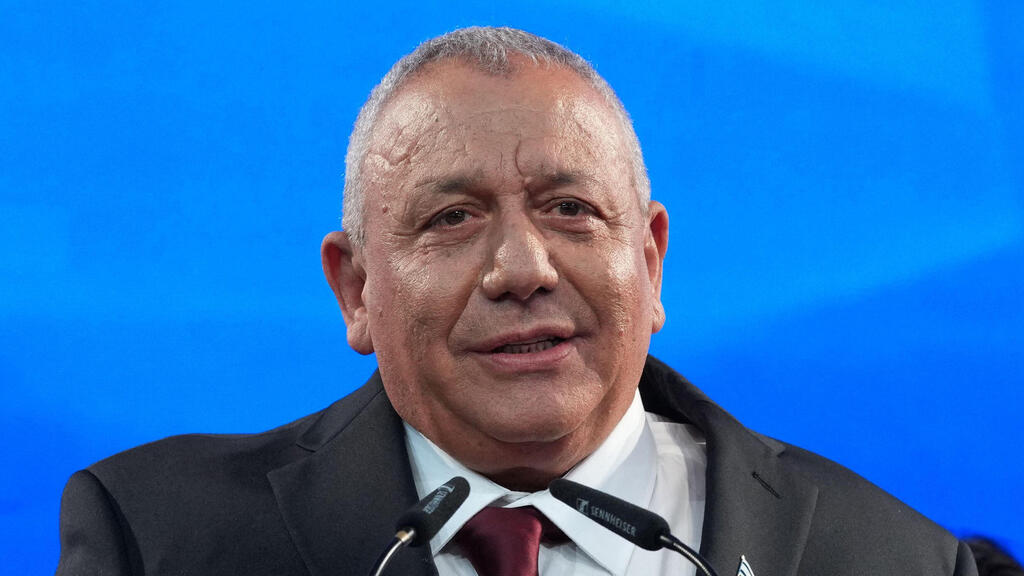
Gadi Eisenkot; the question is not just who will lead the next government, but what kind of coalition will be formed
(Photo: Maya Levin/AFP)
This analysis does not necessarily reflect the position of the French government, which, as noted, has made clear that its policy will not change according to the identity of Israel's next prime minister. It does illustrate, however, that the debate in European capitals is focused not only on who will lead the next government but also on the nature of the coalition that emerges and the policies it adopts.
For now, Israel's political deadlock has left its international partners in a state of uncertainty. Washington faces decisions concerning Iran and Gaza, Europe fears further escalation and delays in advancing humanitarian measures, and Ramallah hopes the next government might make it possible to resume negotiations. The question of who can secure 61 Knesset seats remains unanswered, but it is already clear that the political outcome in Jerusalem will shape not only Israel's future but also its relations with the world in the years ahead.