


Qatar on Thursday rejected allegations that it had attempted to influence Israel's election results by transferring money, accusing Israeli politicians and media figures of spreading disinformation to drag Doha into Israel's post-election political disputes.
"We reject the allegations made by certain Israeli politicians and their media associates, who have launched yet another disinformation campaign aimed at dragging Qatar into Israel's political disputes following this week's elections," said Qatari Foreign Ministry spokesman Majed al-Ansari. "They accuse us of buying Netanyahu, buying the left, and now buying the Arab vote. If all these claims were to be believed, Qatar would probably own all of Israel."
Gallery
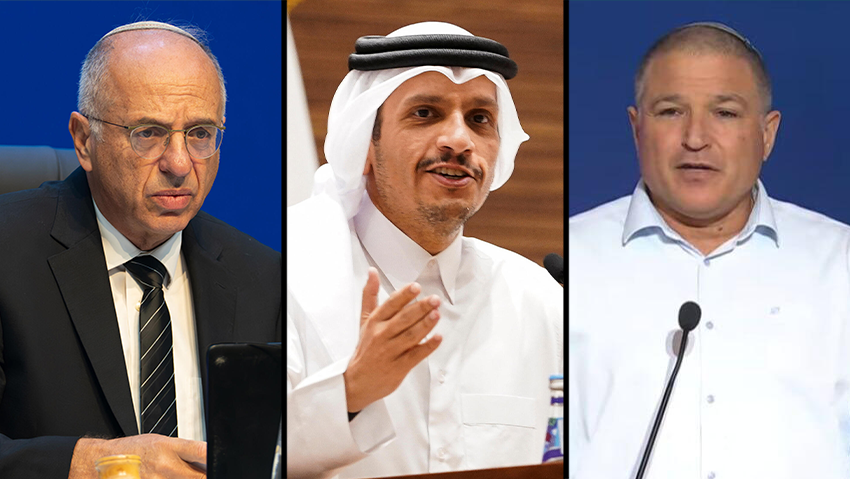
From left: Zini, Qatari Prime Minister Al-Thani and Justice Solberg
(Photos: Central Elections Committee, Nathan Howard/Pool Photo via AP, Roy Yadovsky)
In a post on X, al-Ansari described the allegations as both "ridiculous and dangerous," saying the repeated references to Qatar reflected an excessive obsession with his country among certain Israeli political and media figures.
"Do not use Qatar as a scapegoat for political failures," he wrote. "Instead of trying to divert attention toward Qatar, they would be better off focusing on voters, improving people's daily lives and repairing the damage they have caused in the region."
Qatar also emphasized that the matter concerned Israel's internal affairs.
"Any government emerging from these elections must uphold international law and relevant United Nations resolutions, engage seriously and sincerely with the Palestinian issue, and respect the inalienable rights of the Palestinian people, foremost among them the right to self-determination and an independent state along the 1967 borders, with East Jerusalem as its capital," the statement said. "This requires responsibility and accountability."
Election chief orders Shin Bet investigation into suspected foreign interference
The controversy began with a letter sent by Central Elections Committee Chairman Supreme Court Justice Noam Sohlberg to Shin Bet Director David Zini.
"The integrity of elections is at the heart of democracy," Sohlberg wrote. Although he stressed that he was unable to assess the credibility of the suspicions, he said the allegations required a thorough investigation because they involved possible foreign actors.
"Given that these suspicions concern foreign elements, there is an obligation to investigate them properly in order to safeguard the integrity of Knesset elections, prevent illegal activity intended to undermine democratic institutions and prevent subversion," he wrote.
Sohlberg instructed Zini to make every effort to provide investigative findings within a week. "I instruct you to do everything in your power to examine these suspicions thoroughly and use the Shin Bet's authority to identify evidence that substantiates or disproves them," the justice wrote. "Only in this way can we ensure public confidence in the election and the integrity of the democratic process."
Citing the legal deadlines for filing election appeals, Sohlberg asked Zini to present any available findings within the coming week.
Yesh Atid lawmaker Vladimir Beliak subsequently demanded that the Central Elections Committee's leadership convene to review the evidence underlying Sohlberg's decision to order an investigation.
Responding on Sohlberg's behalf, acting committee Director General Dean Livne emphasized that the election itself had been conducted lawfully. "The Knesset elections were conducted in accordance with the law. The integrity of voting at polling stations was carefully protected, and to the best of our knowledge, claims of systematic violations of election integrity are baseless," Livne said.
He added that statements made by the police commissioner and Shin Bet director on Election Day and afterward supported that assessment.
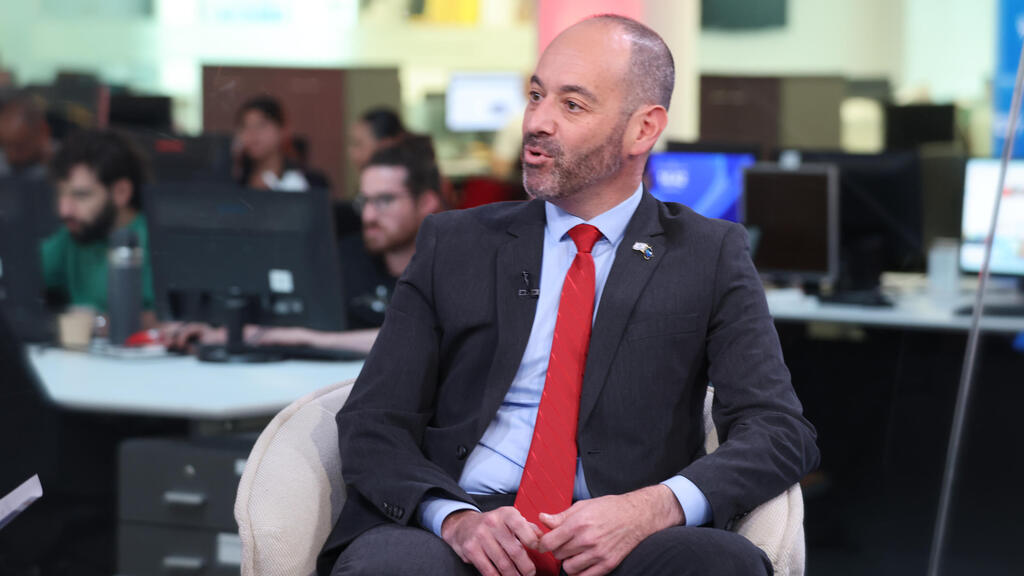
Acting Central Elections Committee Director General Dean Livne: Election was conducted lawfully
(Photo: Yariv Katz)
Livne explained that Sohlberg had written to Zini after receiving sensitive classified intelligence in his capacity as chairman of the Central Elections Committee. "The information raised suspicions that required further examination to determine whether there was substantiated evidence," he said. "Immediately upon receiving the information, the committee chairman instructed that the investigation be expanded."
Because the investigation is ongoing and the intelligence is highly classified, Livne said there was no justification for convening a meeting of the committee's leadership.
Why wasn't the suspected interference stopped before the election?
Questions have also emerged about why the Shin Bet did not act before Israelis went to the polls.
As an intelligence agency responsible for preventing threats to national security, the Shin Bet possessed information about the possibility of unlawful money transfers before the election, two official sources connected to the case confirmed to ynet.
However, Central Elections Committee officials said the Shin Bet participated in every security assessment held in the days preceding the vote and never informed the committee of any such suspicions or intelligence. Had the information been shared, officials said, the agency would immediately have been asked to act to prevent interference in real time and protect the integrity of the election.
"The obvious question is how the service could have possessed what was allegedly solid and deeply troubling intelligence before the election, yet failed to act or launch an investigation before voting took place," one official said.
Zini initiated a meeting Wednesday with Prime Minister Benjamin Netanyahu, briefing him on the case and presenting intelligence materials and suspicions that he described as "well-founded."
Yashar! chairman Gadi Eisenkot, leader of the largest political bloc opposing Netanyahu, received a briefing on the matter from Sohlberg on Wednesday and met Zini on Thursday. "During the meeting, Eisenkot was briefed on suspicions concerning foreign involvement in Israel's elections," his office said. "Eisenkot expressed his support for the Shin Bet and law enforcement authorities in conducting a swift and transparent investigation."
Likud links two separate investigations
Meanwhile, police had arrested seven suspects by Thursday morning in a separate election bribery investigation involving envelopes associated with the Arab party Ra'am that were discovered in the Negev. Tens of thousands of shekels in cash were found in the homes of some suspects.
That investigation is separate from the suspected Qatari funding case. It is being handled by the National Fraud Investigations Unit within Lahav 433, rather than by the Shin Bet. Three suspects were arrested on Election Day, while four others were arrested Thursday and taken for questioning.
Likud, which has been running a campaign challenging the legitimacy of Arab parties, sought to connect the two investigations. The party dubbed the controversy "Ra'amgate" and alleged that the election had been stolen. "This is an earthquake. They stole the election in Israel!" Likud said in a statement.
The party described Sohlberg's remarks about suspected foreign involvement and voter bribery benefiting Arab parties as an unprecedented political shock.
"This is an attack on democracy intended to bring about a foreign takeover of the Knesset, the Islamization of Israel and the overthrow of right-wing rule, leading to the IDF's withdrawal and defeat on every front, first and foremost Iran," the statement said.
However, the two investigations remain distinct, and no evidence has been publicly established connecting the alleged Qatari transfers to the separate election bribery case in the Negev.
Ra'am denies involvement: 'We have nothing to do with this'
Ra'am chairman Mansour Abbas denied that his party had any connection to either investigation.
"Ra'am welcomes the decision by Central Elections Committee Chairman Justice Noam Sohlberg to investigate suspicions of improper attempts to influence the election through foreign funding," Abbas said in a statement. "Safeguarding election integrity and the rule of law is a civic and democratic obligation that we have made a central principle of our party."

Monsour Abbas celebrates at Ra'am Party headquarters
(Photo: Mahmoud Illean/AP)
Abbas insisted that Ra'am had no connection to the allegations and pledged full cooperation with law enforcement authorities. "Ra'am has nothing to do with the affair in question or with any other affair, and we declare that we will cooperate fully with all law enforcement authorities to establish the truth," he said.
Abbas also directed a personal message at Netanyahu, using his nickname, "Abu Yair," and accusing him of employing Qatari agents in his office.
"And to Abu Yair, who employs Qatari agents in his office, we have one message in response to the campaign of incitement and delegitimization he is conducting against Arab citizens: 'There will be nothing because there is nothing.' But unlike you, in our case it is the truth, not another lie."
Over the past 24 hours, Likud has submitted materials to the Central Elections Committee that it says include firsthand recordings of individuals from Arab communities admitting to bribing voters with fuel vouchers and cash.
Police, however, rejected Likud's claims Thursday morning, saying there was "no evidence whatsoever" supporting the allegation that the election had been stolen.
The Central Elections Committee has likewise emphasized that voting was conducted lawfully and that it has no evidence of systematic manipulation of the results, even as the Shin Bet continues investigating suspicions of foreign interference.