


"The moment the first missile missed, a second one should have been launched," a senior IDF official said Saturday evening following the investigation into the failed interception of a missile fired from Yemen, which struck Tel Aviv, causing extensive damage.
The official added that the same approach should have been applied in Thursday's attack, when a Houthi missile caused significant damage to a school in Ramat Efal.
Gallery

The crater in a public park in Tel Aviv's Jaffa caused by the Yemen missile explosion
(Photo: Jack GUEZ / AFP)
Ynet has learned that in the past, the Arrow air defense system has fired a second missile against ballistic missiles like those fired by the Houthis toward Israel.
The Israeli air defense array’s recent hiccups necessitate a reassessment of interception policies. According to sources familiar with the issue, the last two incidents did not involve an upgrade in Houthi capabilities or weaponry. However, the Yemeni terror group is believed to be learning and improving, which demands a similar response from the IDF.
Until now, defense officials have been cautious about launching a second interceptor due to practical concerns: each Arrow missile costs millions of dollars, alongside other operational considerations that remain classified. Still, no such policy is set in stone.
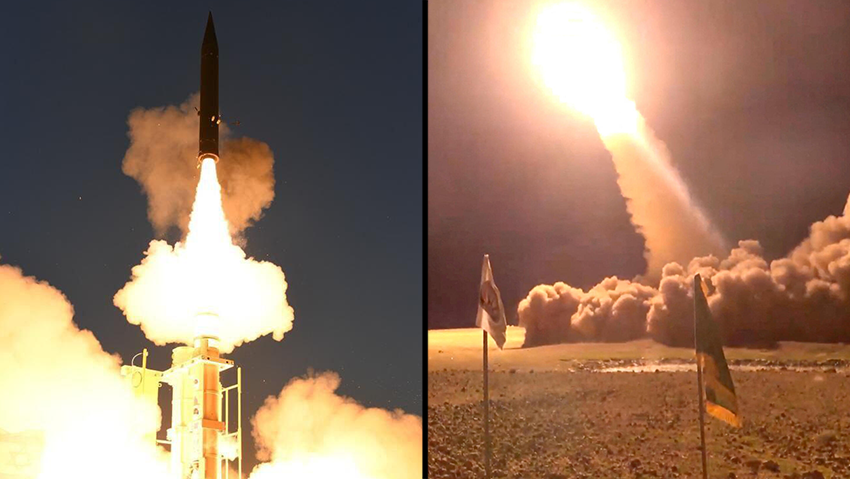
Footage from a test of the Arrow defense system interceptor; missile launch from Yemen on overnight Thursday
(Photo: Defense Ministry, HOUTHI MILITARY MEDIA/REUTERS)
Get the Ynetnews app on your smartphone: Google Play: https://bit.ly/4eJ37pE | Apple App Store: https://bit.ly/3ZL7iNv
"We should have acted differently, and we will adopt a broader interception policy," a senior defense official said. "We've made progress in threat analysis. Misses can happen, but the solution is launching an additional interceptor. Both today and Thursday, it’s likely that a second missile would have hit the target."
Military Intelligence had assessed that the Houthis would escalate their attacks on Israel following the Israeli Air Force’s strikes in Yemen, a prediction that has already materialized. The IDF now expects the pace of missile and drone launches to increase further.
On Saturday afternoon, another drone, likely launched from Yemen, was intercepted after entering southern Israel near the Gaza border. A dramatic video captured an attack helicopter firing on the drone, which exploded mid-air.

The Houthis in a show of support for Gaza, Friday in Sanaa
(Photo: REUTERS/Khaled Abdullah)
Earlier in the week, another Houthi drone was intercepted off the coast of Tel Aviv on Thursday, while both a missile and a drone were shot down on Monday.
According to the IDF, the Houthis have fired over 200 missiles and 170 drones at Israel since the war began, most of which were intercepted or failed to reach Israeli territory. Learning from past attempts, the Houthis have altered their drone routes. Whereas they previously approached central Israel via the sea, drones are now entering through the Sinai Peninsula into Gaza and then targeting southern Israel.
Meanwhile, Israel is seeking a more effective response, focusing on identifying so-called “centers of gravity” to neutralize. However, no definitive targets have been identified yet.
Footage of Israeli airstrikes on Yemen
(Video: IDF)


Attention is now shifting to January 20, when Donald Trump is set to assume office, raising hopes that his administration might increase pressure on the Houthis. While the United States, alongside Britain, launched airstrikes in Yemen this week, the Houthis appear undeterred. The concept of “deterrence” holds little weight in the Houthi playbook.
The IDF itself cannot yet engage in full-scale combat against the Houthis, making international coalition-building essential. Such a coalition would address a threat that impacts global shipping lanes and the world economy. It is unlikely that a challenge with global ramifications can be resolved by debating whether Israel launches one or two Arrow missiles.