

Senior commanders in the U.S. military have warned Defense Secretary Pete Hegseth that large-scale operations against Iran cannot be sustained indefinitely, and that continuing to concentrate forces in the Middle East could undermine the U.S. military’s ability to respond to threats elsewhere in the world, including defending the United States itself, The Washington Post reported Sunday, citing officials familiar with a classified assessment prepared for the defense secretary.
Gallery
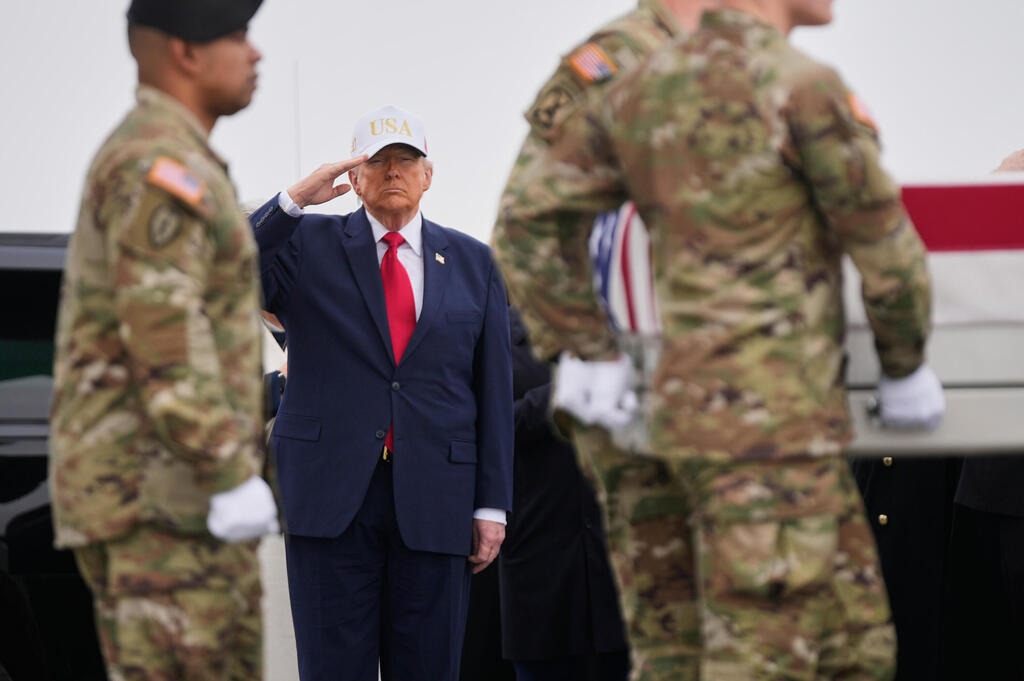
US President Donald Trump salutes the casket carrying the body of a US serviceman killed in the Middle East
(Photo: Mark Schiefelbein/AP)
The warnings were delivered to Hegseth by the heads of the Army, Navy and Air Force, as well as the commanders of U.S. commands responsible for Europe, Asia and Latin America. They were included in the August 14 edition of the “Secretary of Defense Orders Book,” a classified document detailing the availability of U.S. ships, aircraft, troops and weapons systems around the world, and used by the Pentagon in decisions on force deployments.
The warning comes after about six months of fighting with Iran, as U.S. President Donald Trump pressures Tehran to reopen the Strait of Hormuz and accept Washington’s terms for ending the conflict. Trump continues to make clear that all options remain on the table, including renewed strikes, and U.S. Central Command, or CENTCOM, has for months kept more than 50,000 troops on alert in case the president orders further military action.
According to the report, some of the forces deployed to the Middle East have already been ordered to remain in the region through September, while others are expected to stay into 2027. The Air Force is also preparing for a prolonged presence: According to two officials who saw the document, many of the units sent to the Middle East for bombing missions and around-the-clock operations are expected to remain in the region into 2027.

US Defense Secretary Pete Hegseth
(Photo: Manuel Balce Ceneta/AP)
The possibility that the deployments could be extended again prompted several senior commanders to voice explicit objections. The commanders of U.S. European Command, Indo-Pacific Command and Southern Command, along with the Navy’s top officer, submitted what the Pentagon calls a “non-concur” — meaning they oppose the defense secretary’s decision to extend the allocation of their forces to the campaign, though they would carry out the order if it remains in effect.
The main reason for the opposition is that forces, ships, aircraft and equipment originally intended for operations in Europe, Asia and Latin America were transferred to the Middle East to support the campaign against Iran. According to the officials, that has reduced the commands’ ability to carry out missions and continue the training needed to maintain operational readiness.
One official familiar with the assessment described the overall message from the military leadership as “too much, for too long.” The official said discussions about the risks stemming from force deployments are routine, but this time the picture commanders presented to Hegseth was “bleaker” than usual — and several generals and admirals were especially direct and forceful in opposing the continued transfer of resources to the Middle East, with no clear indication of how or when the campaign will end.
Navy issues particularly stark warning
The most serious situation, according to the report, is in the U.S. Navy. Adm. Daryl Caudle, chief of naval operations and the Navy’s highest-ranking officer, warned that the force cannot sustain its current level of support for the Iran campaign over the long term — particularly because there is no expected end date.
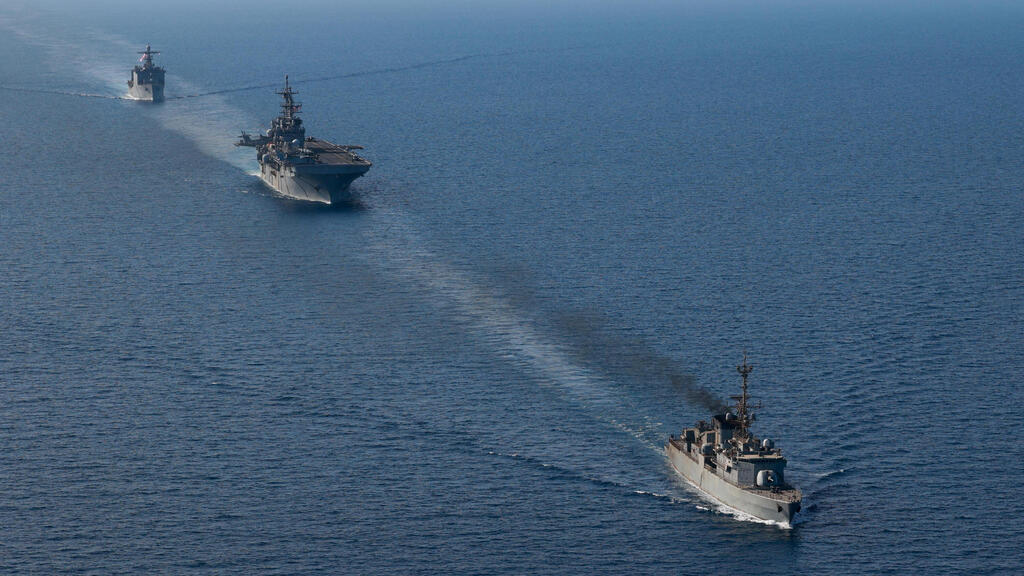
US military warships in the Red Sea
(Photo: Reuters / U.S. Naval Forces Central Command)
The Navy has been required to provide dozens of vessels for the campaign: initially for U.S. strikes and defense against Iranian counterattacks, and later to enforce Trump’s blockade of Iranian ports as part of efforts to force Tehran to reopen the Strait of Hormuz. As a result, the deployments of several ships and their crews have been extended by months.
Caudle warned Hegseth that only slightly more than a quarter of the U.S. destroyer fleet is now in a condition that allows it to deploy operationally — a sharp decline from the situation before the war. According to the assessment, if demands on the Navy remain at the same level, the impact on ship maintenance could jeopardize fleet availability in the event another conflict breaks out elsewhere in the world.
Caudle has also spoken publicly about the difficulty of extending deployments, saying at a recent event in Norfolk that the situation was “very challenging for sailors.” He said he generally opposes such extensions and “pushes back hard” against them, but added that ultimately “the enemy gets a vote too” on how long operational activity lasts.
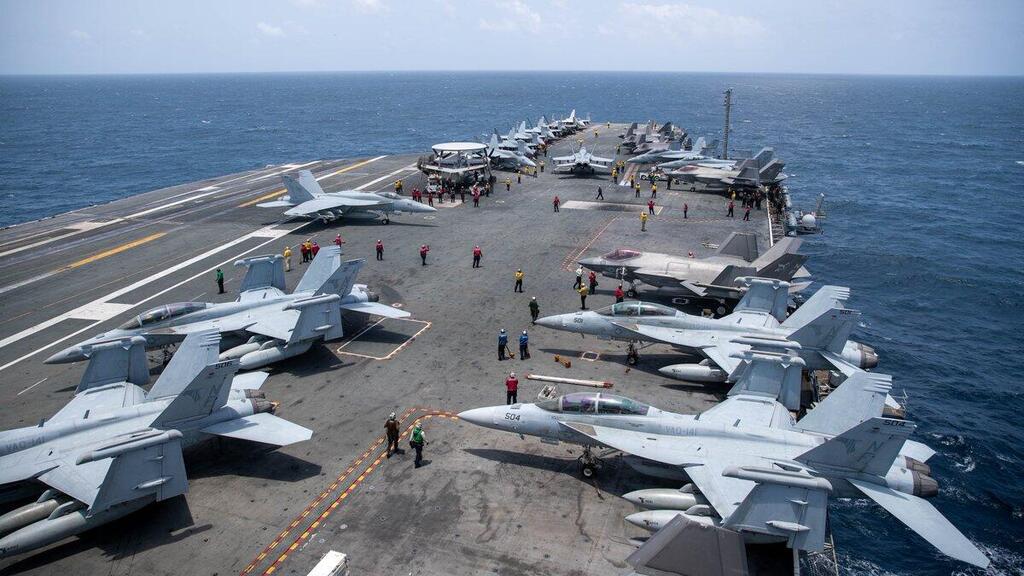
George Washington Aircraft Carrier in the Arabian Sea
(Photo: CENTCOM)
The commanders of European Command and Southern Command also warned that the transfer of ships and intelligence and surveillance aircraft to Central Command has already harmed their ability to fulfill missions related to defense of the U.S. homeland. Adm. Samuel Paparo, commander of Indo-Pacific Command, objected to the scale of support his command is being asked to continue providing to the campaign, including a carrier strike group and destroyers.
The cost is particularly evident in Asia. The aircraft carrier USS George Washington, permanently based in Japan and a central element in deterring China, was moved to the Middle East to replace the USS Abraham Lincoln, which has been on an extended deployment since November and is expected to complete more than 300 days at sea before returning to base.
At the same time, Washington’s allies in the region have expressed concern that the depletion of U.S. missile and interceptor stockpiles will hurt America’s ability to deter China and North Korea in the event of a regional crisis. The impact is no longer theoretical: Last week, the United States canceled an amphibious landing exercise with South Korea planned for September because of the strain the Iran campaign is placing on U.S. forces.
Interceptor, Tomahawk and drone stockpiles depleted
The heads of the Army and Air Force did not oppose the deployment extensions requested by Hegseth, but they too warned of the risks involved. About 2,000 soldiers from the 82nd Airborne Division, rushed to the region in March following the outbreak of the war, are expected to remain in the Middle East at least through September, and the Army assesses that their mission could be extended even further. The division is considered a key force in the event of a U.S. ground operation in Iran.
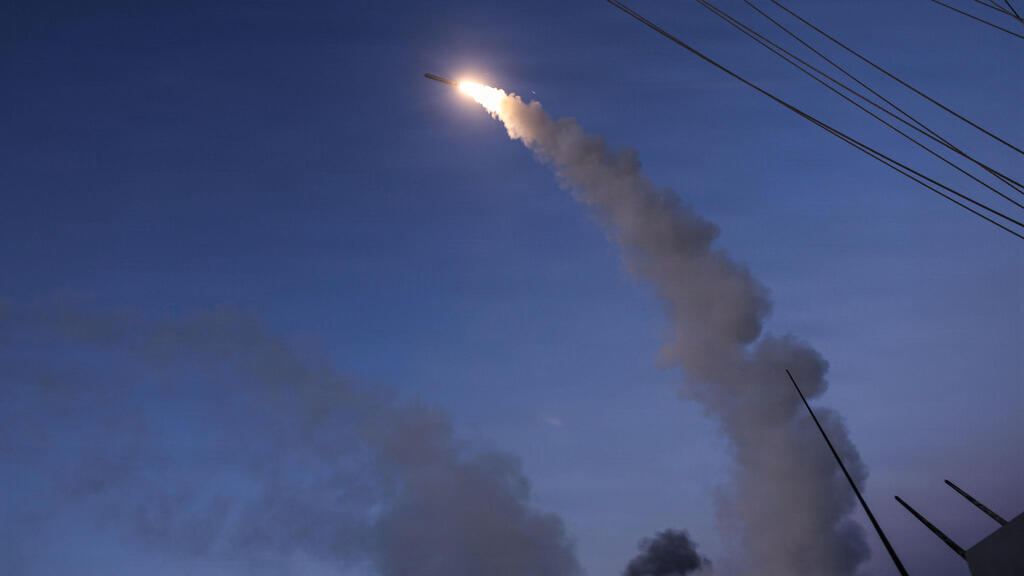
A Tomahawk missile was fired from a US destroyer
(Photo: AFP / US NAVY and US CENTRAL COMMAND / Handout)
Units operating Patriot air defense systems also are expected to remain in the region beyond the original plan. Interceptor stockpiles for the systems were depleted during the war, after interceptors had already been transferred to Ukraine, and the shortage is limiting the Trump administration’s ability to escalate the fighting again because Iran still retains the capability to strike U.S. bases across the Middle East.
The war has also depleted stocks of THAAD interceptors and long-range Tomahawk cruise missiles. According to The Washington Post, about 25% of the Pentagon’s Reaper drone fleet was lost during the fighting, while U.S. bases in the region sustained billions of dollars in damage. The Trump administration, for its part, says reports of ammunition shortages are inaccurate.
The shortage has already caused tension at the highest levels of the administration. Earlier this month, the Post reported that Trump confronted Hegseth during a meeting at Camp David and demanded explanations for the severe shortage of ammunition and interceptors, which officials say is already limiting U.S. military options against Iran. According to the report, the president expressed frustration that the problem had still not been resolved after believing the Pentagon had already addressed it.
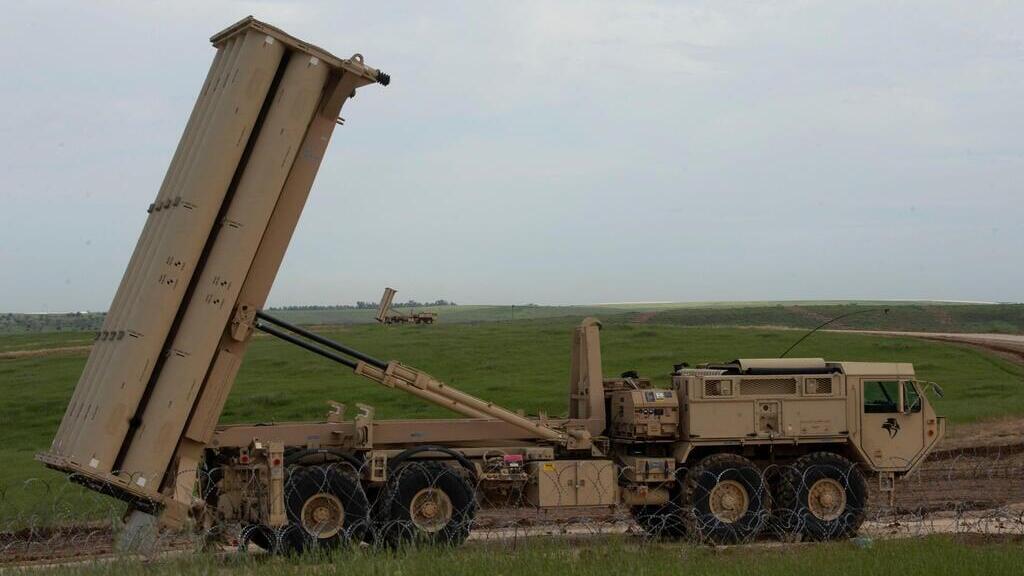
THAAD missile defense system
(Photo: AFP / Handout / DVIDS / US Army)
The scale of the fighting illustrates the extraordinary pressure on U.S. stockpiles. According to figures published this month by The Washington Post, between February 28 and April 7 alone, U.S. forces struck more than 13,000 targets in Iran while simultaneously confronting more than 8,500 missiles, drones and other threats launched at them. The Pentagon has since turned to defense manufacturers with demands to dramatically accelerate weapons production, but industry officials have warned that in some cases it will take years to replenish the stockpiles.
Tensions inside the Pentagon over the continuation of the campaign are not new. Even before the fighting began, Joint Chiefs of Staff Chairman Gen. Dan Caine warned the White House that the United States did not have enough munitions — or enough support from its allies — to wage a large-scale, prolonged campaign. This month it was also reported that European Command chief Gen. Alexus Grynkewich warned the Pentagon that he did not have enough naval forces to defend Israel and the United States simultaneously against missile attacks.
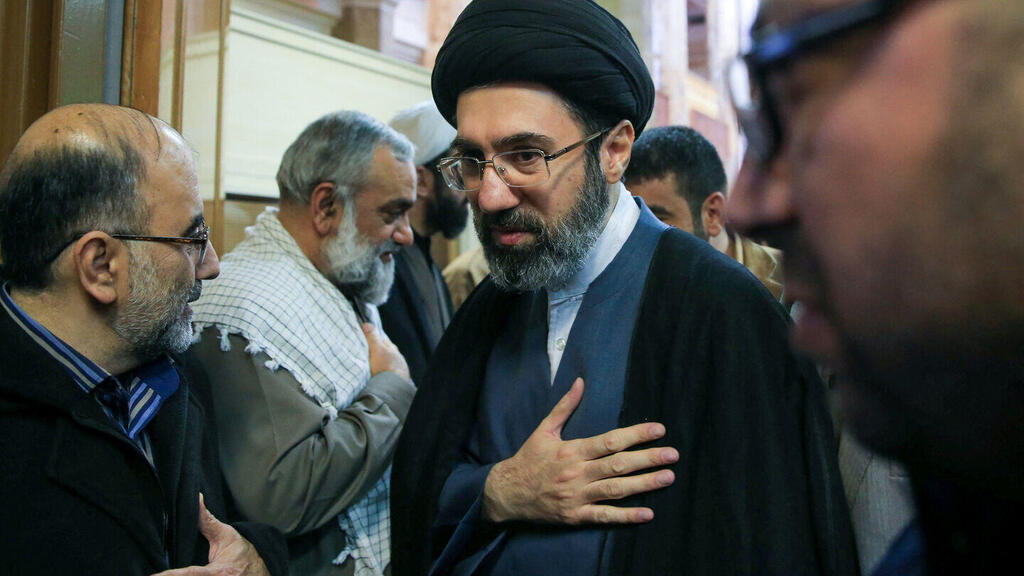
Iran's Supreme Leader Mojtaba Khamenei. Iran is well aware of the price the campaign is exacting from the US.
(Photo: Rouhollah Vahdati/ISNA/WANA (West Asia News Agency)/AFP)
Pentagon spokesman Sean Parnell told the Post that “decisions regarding the scale and duration of force allocations are made in accordance with the latest threat assessment, the priorities set by the president and the advice of the chairman of the Joint Chiefs of Staff and the various combatant commanders.”
“The Pentagon does not publicly discuss internal operational processes or the risk assessments presented by commanders,” he said.
Officials in Washington assess that Tehran is also well aware of the price the campaign is exacting from the United States. According to the Post, Iran’s leadership is aware of the war’s unpopularity among broad segments of the American public, as well as the depletion of the Pentagon’s weapons stockpiles — factors that could strengthen its resolve not to give in at this stage to Washington’s demands.