

Ro Khanna, the 49-year-old U.S. congressman who said he was detained by armed settlers while visiting a Palestinian village in the West Bank, has in recent years become one of the most prominent and intriguing members of the House of Representatives. As the Democratic representative of California’s 17th Congressional District, which includes the heart of Silicon Valley, Khanna moves between unqualified support for the modern technology economy and a role as a leading progressive voice capable of connecting with the working class.
Ro Khanna is detained in the West Bank
(Video: From Ro Khanna's Instagram page)


He also has managed to build good relations with Republicans in Congress and cultivate an independent image as someone who can get along with everyone. A year and a half into U.S. President Donald Trump’s second term, Khanna has reached the point where he is even considering a presidential run. His chances are slim, but it is doubtful he would have come to Israel had he not been thinking about running for president — or at least for the Senate.
Khanna was born in Pennsylvania to an immigrant family from India. His grandfather was a prominent activist in India’s independence movement alongside Mahatma Gandhi. Khanna holds a bachelor’s degree in economics from the University of Chicago and a law degree from Yale University. Early in his career, he worked as a lawyer specializing in intellectual property and technology, and later served as deputy assistant secretary of commerce in the Obama administration.
Ro Khanna seen visiting the Palestinian village of Turmus Aya
(Video: Reuters)
He holds clearly anti-war positions. He supports reducing the U.S. defense budget and opposed the war with Iran from the start, including leading legislation that demanded Trump immediately halt all military operations, arguing that the war was illegal and had not received congressional approval. The proposal failed in March by a very narrow margin, 219-212.
His positions on the Israeli-Palestinian conflict are complex, but have shifted sharply over the past two years. Khanna defines himself as someone who “supports Israel’s right to exist and the principles of Zionism,” backs a two-state solution and unequivocally condemned the October 7 attack. On the other hand, he is advancing legislation to reduce U.S. aid to Israel and has publicly said he views Israel’s actions in the Gaza Strip as “genocide.”
Gallery
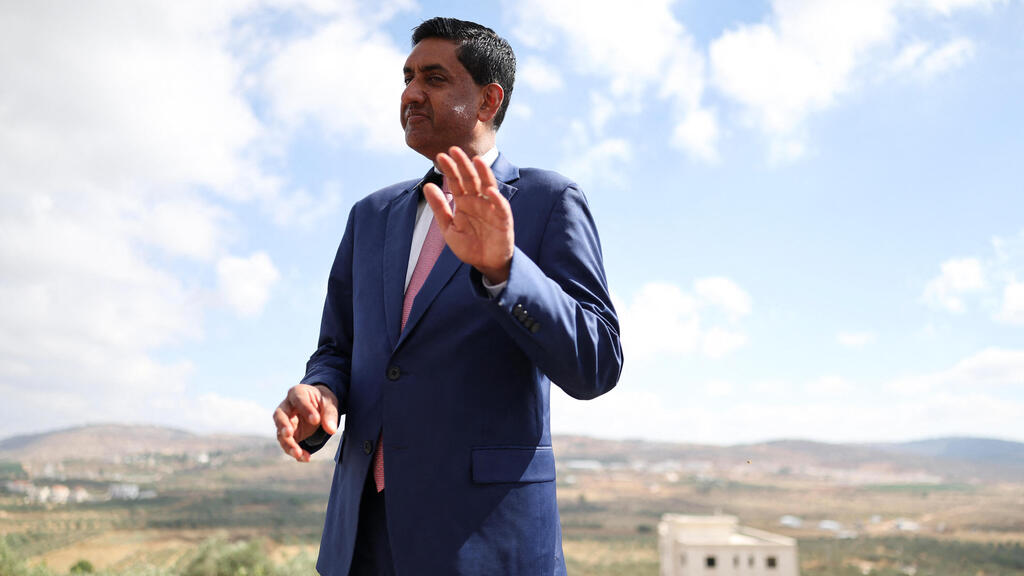
Rep. Ro Khanna supports reducing the U.S. defense budget and opposed the war with Iran from the start
(Photo: Ammar Awad/Reuters)
He also criticized his own party after the Democrats’ postmortem report on their defeat in the 2024 presidential election omitted the war in Gaza and Joe Biden’s unqualified support for Benjamin Netanyahu as one of the reasons for the loss. Last month, Khanna became the first member of Congress to sign a formal pledge not to accept donations or political support from AIPAC, the pro-Israel lobby in Washington. He also led a letter by members of Congress to the White House and the State Department demanding that the U.S. unilaterally recognize a Palestinian state.
In 2016, Khanna won election in California and entered the House of Representatives as Trump entered the White House. Against the backdrop of the paralyzing shock that gripped the Democratic Party, Khanna quickly became a prominent voice in the opposition to Trump. He served as co-chair of Bernie Sanders’ 2020 presidential campaign, cementing his status on the American left, but he also has the ability to maintain good ties with the Democratic establishment and Silicon Valley business leaders.
Khanna defines himself as a “progressive capitalist,” presenting a blend of left-wing positions with a pragmatic approach to business. He supports higher taxes on corporations and regulation of the major technology companies located in the district he represents, while also working to bring technology jobs and investment to rural and disadvantaged areas in the United States. He is a fierce opponent of political funding from corporations and lobbyists, and refuses to accept campaign donations from them.
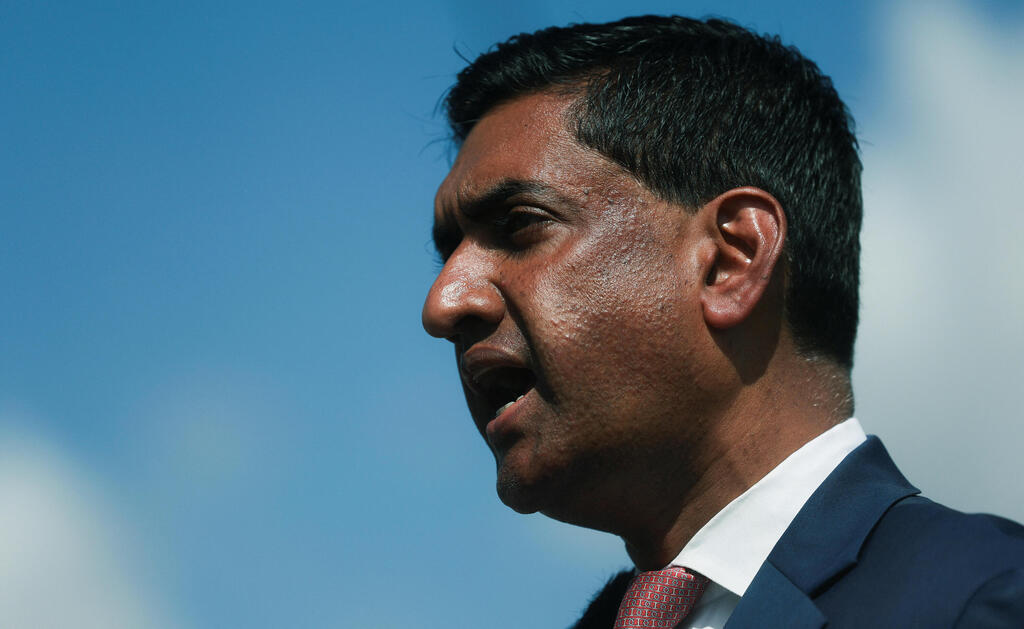
He condemned October 7, but has accused Israel of 'genocide'
(Photo: Ammar Awad/Reuters)
Khanna also has earned respect on the Republican side. He led the House investigation into the Secret Service failures that preceded the attempted assassination of Trump in the summer of 2024. He became a nationally known figure when he spearheaded the legislative fight to release the Jeffrey Epstein files together with former Republican congressman Thomas Massie, who subsequently lost the Republican primary in Kentucky.
Khanna and Massie initiated the “Epstein Files Transparency Act,” which forced the U.S. Justice Department to release millions of pages of classified documents, including testimony from survivors and interrogation records. As part of the committee’s work in Congress, Khanna supports active steps to investigate anyone who visited Epstein’s island or maintained ties with him after he was already known as a convicted sex offender. He has also publicly supported issuing a subpoena requiring Trump to testify before Congress about his past ties with Epstein.
Cameron Kasky, Khanna’s aide who was detained with him, is one of the survivors of the 2018 Parkland school shooting and a co-founder of March for Our Lives, which advocates for stricter gun control laws. Kasky, now 25, serves as a digital strategy adviser in Khanna’s office. He and another survivor of the attack, David Hogg, are well-known activists who hold strongly progressive views. Hogg ran for chair of the Democratic National Committee and, after losing, founded a political organization that supports progressive candidates. Kasky speaks almost exclusively about the war in Gaza, and his views on the issue are well to Khanna’s left.