


Iran has intensified missile strikes against targets in Iraq's autonomous Kurdistan region in recent days, alongside attacks on Gulf states and Jordan, according to regional reports and security analysts, targeting what Tehran says are U.S. military assets and Kurdish opposition groups.
The strikes have focused primarily on areas around Erbil and Sulaymaniyah. Iran has long viewed Iraq’s Kurdish region as a base for exiled Iranian Kurdish opposition groups, and during the recent U.S.- and Israeli-led fighting against Iran, reports said Washington had encouraged Kurdish forces to prepare for a possible ground offensive into Iranian territory.
Iranian drone strike US base in Erbil, Iraq


Iraqi media outlets aligned with the Iran-backed Shiite axis have published videos and photographs that they say show the recent strikes in Iraqi Kurdistan.
Although Iran-backed Iraqi militias were initially suspected of carrying out the attacks because of their previous strikes on Kurdistan and U.S. interests in Iraq, the Islamic Resistance in Iraq, an umbrella organization for several major pro-Iranian militias, denied responsibility.
"We have not carried out military attacks against U.S. bases in Iraq or the region in recent days," the group said in a statement issued early Saturday. It warned, however, that it remains directly involved in confronting the United States and threatened to attack "all American interests and bases" in Iraq and across the region if Washington expands its military campaign against Iran.
"This time it was Iran itself that carried out the attacks," Danny Citrinowicz, a former head of the Iran branch in the IDF Intelligence Directorate and now a senior researcher at the Institute for National Security Studies, told ynet. "Missiles were launched toward the Kurdish region."
Iran has justified the strikes as attacks on American military facilities and Kurdish opposition groups it accuses of operating from neighboring Iraqi territory.
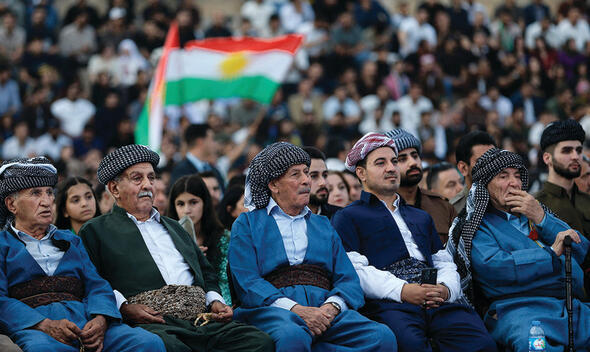
Arab media reported over the weekend that the attacks briefly disrupted flights at airports in Erbil and Sulaymaniyah due to security concerns, before operations resumed.
Asked Monday why Iran was attacking Iraq's Kurdish region despite repeatedly saying its retaliation was directed only at the source of attacks against Iran, Foreign Ministry spokesman Esmaeil Baghaei defended the strikes.
"Iran's defensive operations target American military bases and facilities used to plan, prepare and conduct military operations against Iran, as well as assembly points, military installations and bases used by anti-Iranian elements located in neighboring countries," Baghaei said.
"These actions are taken to protect Iran's security as well as the shared security of Iran and Iraq. We have a security agreement with Iraq, and we are acting to ensure that Iraqi territory and the Kurdistan region are not exploited to organize, plan or prepare hostile armed operations against Iran."
The attacks come at a sensitive political moment in Iraq, where the government is attempting to consolidate control over weapons held by armed groups, a process strongly backed by the United States. Several Shiite militias have agreed to integrate more closely into the political system, while others continue to reject the initiative.
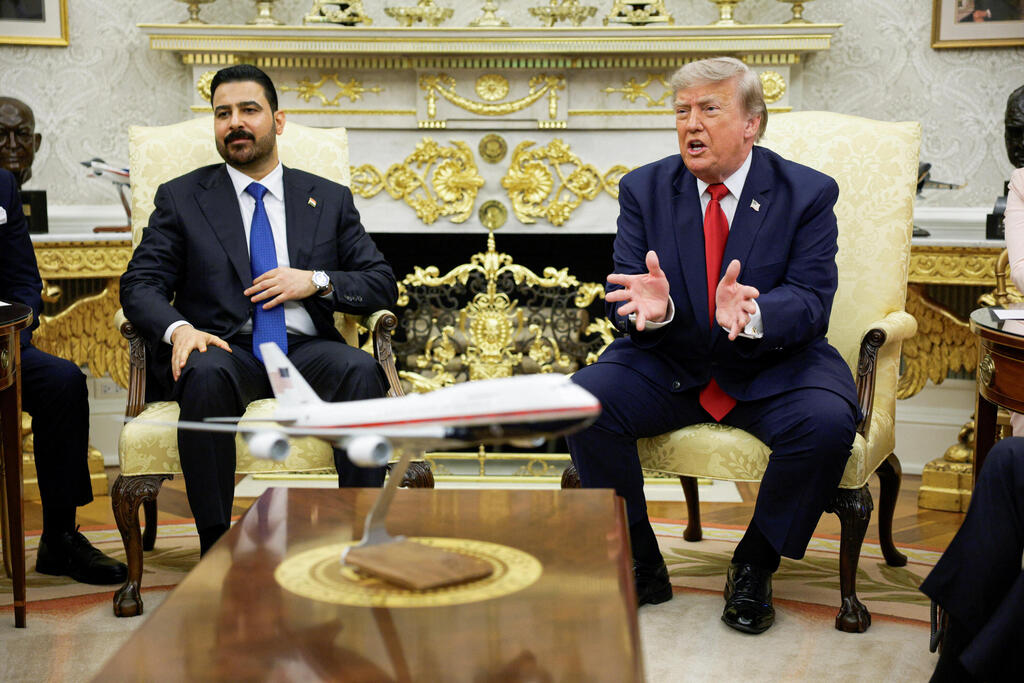
Iraqi Prime Minister Ali al-Zaidi and US President Donald Trump
(Photo: REUTERS/Evan Vucci)
The tensions have also coincided with Iraqi Prime Minister Ali al-Zaidi's first visit to Washington since taking office, where he met President Donald Trump. The visit angered many pro-Iran factions in Iraq, particularly after Trump raised the 2020 U.S. drone strike that killed Iranian Revolutionary Guard Gen. Qasem Soleimani in Baghdad.
According to Iraqi officials, Trump asked al-Zaidi whether the killing had ultimately benefited Iraq. Al-Zaidi avoided directly answering, saying he had not been involved in politics at the time and that his visit was intended to focus on the future rather than the past.
Following the visit, the Islamic Resistance in Iraq announced a $10 million reward for anyone who kills Trump.
Kurdish media reported this week that since the latest conflict with Iran began on Feb. 28, Iraq's Kurdistan region has been hit by roughly 920 drone and missile attacks, killing about 30 people and wounding more than 100.