

Between the days of Selichot and the sound of the shofar on the eve of Yom Kippur, there are images that refuse to leave the mind. One of them, taken on the eve of Yom Kippur 2023, less than two weeks before the October 7 attack and subsequent war, now looks like a chilling prophecy.
The photo shows three Armored Corps soldiers from the 401st Brigade standing at attention and saluting the graves of brigade soldiers who fell in the 1973 Yom Kippur War. The three had been sent by their unit as part of an IDF remembrance and commemoration project intended to connect generations, remember and honor the fallen.
Gallery
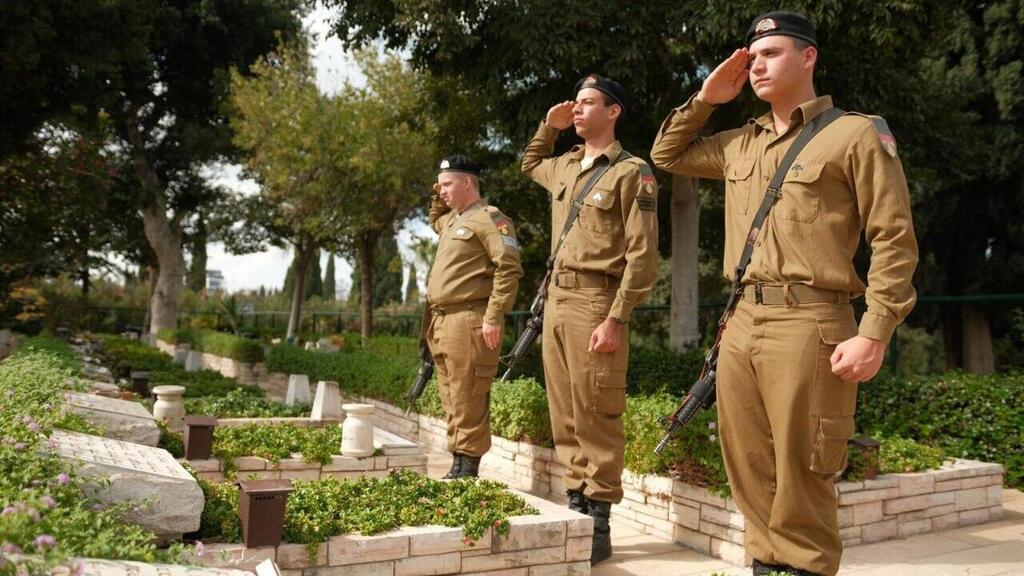
Itay, Ofir and Gabriel salute the 401st Brigade's fallen in 2023; only Gabriel survives
(Photo: IDF)
They stood there, proud in uniform and black berets, with no way of knowing what fate awaited them only a short time later.
Of the three who stood that day before the row of cold marble headstones, Staff Sgt. Itay Saadon, 21, from Har Halutz, who served as a tank commander in the 52nd Battalion, was killed in battle in the northern Gaza Strip in November 2023.
Nearly a year later, in October 2024, his friend in the photograph, Staff Sgt. Ofir Berkovich, 20, from Modi’in-Maccabim-Reut, also of the 52nd Battalion, was also killed in the same sector.
The third soldier in the photograph, Staff Sgt. Gabriel, is the only one still alive.
“My memory of that day is very blurry,” Gabriel said in a special interview with Ynet and Yedioth Ahronoth. He remembers the special dynamic between himself, Itay and Ofir.
“Looking back, I understand just how chilling this picture is. I’m the only one left from it. The terrible news that Itay had fallen, during the first weeks of the ground operation in Gaza, was impossible to comprehend. I felt as though my world had collapsed. I didn’t know how to react, but I understood that I was in the middle of a war and that we had to keep going. To this day, it is hard for me to put into words what you feel in a situation like that. When Ofir was also killed, almost a year later, the feeling became even harder.”
“It’s a chilling coincidence. I’m the only one left alive from that picture,” Gabriel said. “If more people had been photographed there, it would not have felt like such a personal coincidence for me.
“On the one hand, you look at it and smile — what a beautiful picture of us standing there and saluting at the grave. On the other hand, it is very sad when you know what happened to the people in it.
“My message to anyone who has lost friends is that, no matter where you are, stay open and share what you are feeling, even when it is difficult. Whether it is now, in Gaza or in Lebanon — open up to the people around you. That is what helps you get through it more easily.”
The parents of Staff Sgt. Ofir Berkovich first saw the haunting photograph during the shiva mourning period for their son, when a casualty officer brought it to their home.
Ofir, whom his parents described as a child full of joy, tremendous energy and a love of extreme sports, summed up his outlook on life in a unit project called “Tankers’ Quirks” with a short sentence: “You have to collect as many experiences as possible and live.”
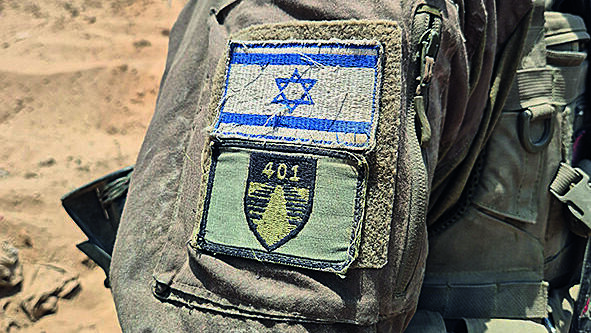
The Israeli flag and below it the emblem of the 401st Brigade
(Photo: Lior Ben Ari)
His father, Baruch, recalled the day he drove his son to the cemetery where the photograph was taken.
“Ofir emphasized that he had been specially chosen for this assignment and that he had prepared himself mentally for it,” he said. “He felt there was something honorable about visiting the grave of a fallen IDF soldier.”
His mother, Simona, described the painful emotions the photograph stirred.
“At first, I couldn’t bring myself to look at it. We are trying to hold on to life, and this picture is another tangible confirmation that your child is no longer here.
“This connection between past, present and future reflects our fate — apparently we are destined to live by the sword. What happened 50 years ago is continuing today, and all that remains is to hope for the best.”
The photograph also sends chills through the Saadon family.
Liat, Itay’s mother, recalled another picture he sent her that day, in which he stood alone in front of the grave.
“I remember the picture of him standing in front of the grave, and what I thought at the time — that I would have preferred him to visit wounded soldiers rather than graves. Today, when I am on the other side, I understand the profound meaning of that act.”
Itay, who dreamed of becoming a pilot when he was younger, found his place as a tank commander in the armored corps.
According to his mother, members of the company liked to joke about the special way he communicated with Ofir, whom he commanded, and how the two would sometimes communicate through notes.
“When I saw the picture with Gabriel standing alongside them, the only one who remained alive, I was very afraid for him. Those were days of fighting, and we were truly afraid that, God forbid, something might happen to him. It is important for me to tell Gabriel how happy I am that he is here with us,” Liat said emotionally.
She also stressed what she sees as an important point about Israeli society.
“At the military level, there is a deeply rooted tradition, and we are very much embraced. But in society as a whole, I sometimes feel that there is less attention being paid to bereavement," she said. “People want to return to routine, and that is natural and understandable in a society that has known so much loss. Still, I am certain that soldiers from the 401st Brigade will always come to Itay’s grave and that this bond will be preserved over the years.”
On this eve of Yom Kippur, the photograph of Ofir, Itay and Gabriel has become more than a chapter in a unit’s memory. It has become a symbol of Israeli society as a whole.
The IDF and the brigade’s investment in commemorating the soldiers who fell in 1973 brought the soldiers of 2023 to stand before their graves, without knowing that many of them would go on to write the next chapter in the book of remembrance with their own blood.