


An important American publication tried on Sunday to explain how Israel was able to gain air superiority over Iran within 48 hours while Russia was unable to do the same in Ukraine after 3.5 years of war.
The IDF's achievement in the sky over Iran, including over its capital, allows its warplanes to drop bombs from within Iranian airspace instead of relying on expensive long-range missiles.
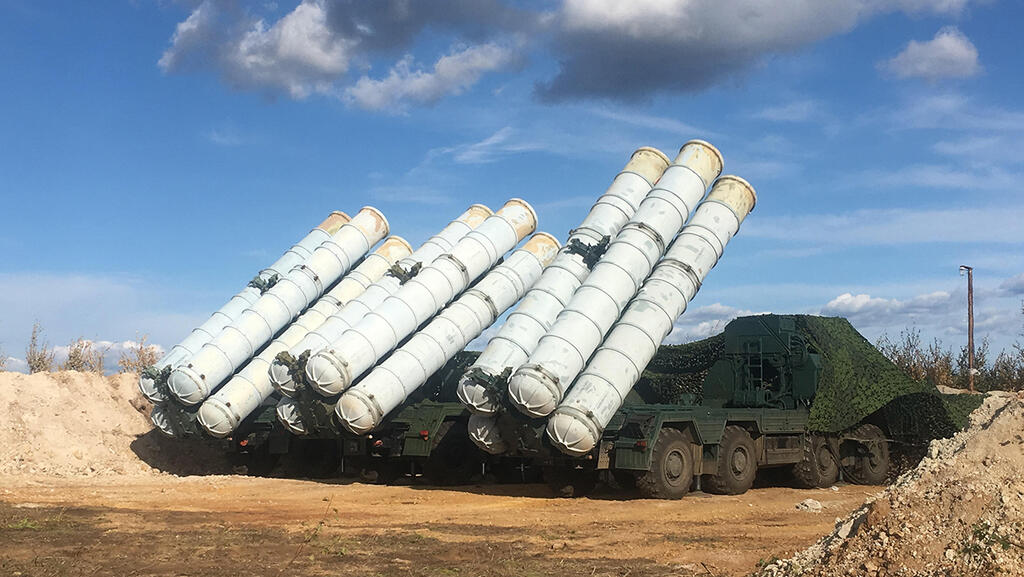
Russian S-300 missile defense system
(Photo: EAP)
"On Sunday, Israel was exploiting its advantage, saying it had taken out dozens of surface-to-air missiles in western Iran and killed the intelligence chief of the Islamic Revolutionary Guard Corps, along with his deputy," The Wall Street Journal wrote.
Military experts interviewed by the paper explained that air superiority is key. No side was able to achieve it in the Russia-Ukraine war and the result was stagnation and a war of attrition, one expert said.
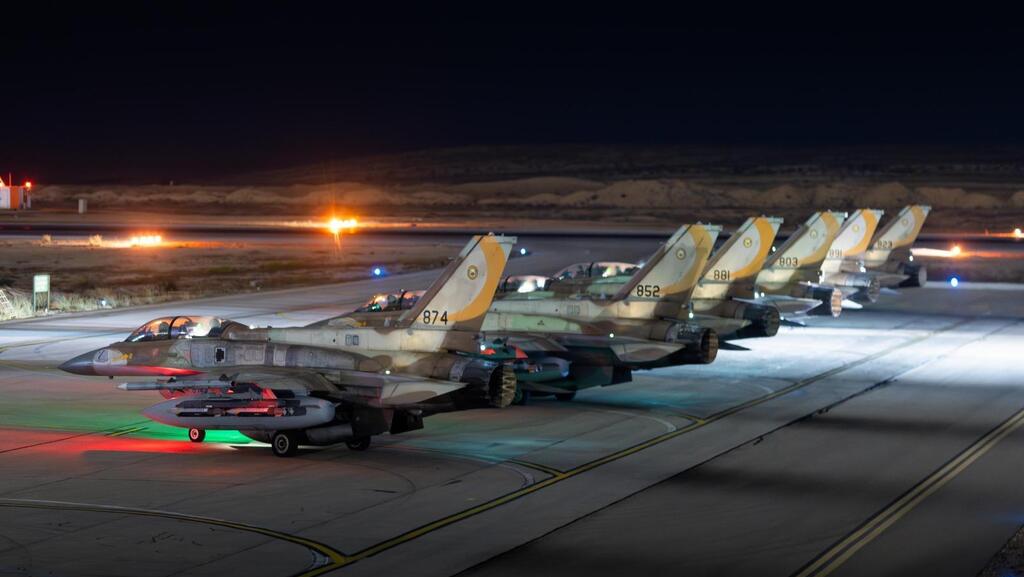
The paper explained that the initial strike was carried out using the U.S.-made IDF Air Force's F-35 stealth bombers that were enhanced with Israeli modifications. "Now that most of Iran's air defenses have been suppressed, older warplanes such as F-15 and F-16 are joining the fight. Israel has also started dropping short-range JDAM and Spice guided bombs, which are cheaper and much more abundant than missiles, to devastating effect."
The analysts who spoke to the Journal agreed that Israel learned from the Russian mistakes and the Ukrainian successes, but said that the Israeli Air Force had better attack capabilities than the Russians to begin with, and Ukraine had been able to defend its airspace better than Iran had been.
“Iran never relied on air defenses alone to ward off attacks like this. The idea was always to use deterrence,” said Fabian Hinz, a military expert at the International Institute for Strategic Studies.
"Iran’s air defenses were a much easier target set than Ukraine’s air defenses in almost every respect,” said Michael Kofman, a senior fellow at the Carnegie Endowment and an expert on Russian and Ukrainian militaries. “The asymmetry in qualitative capability between Israel’s air force and Russia is also vast and can be easily observed.”
Edward Stringer, a retired British air marshal, attributed the IDF's success to "the overall culture, sophisticated training and innovation of the Israeli air force, combined with its integration into intelligence and cyber capabilities."
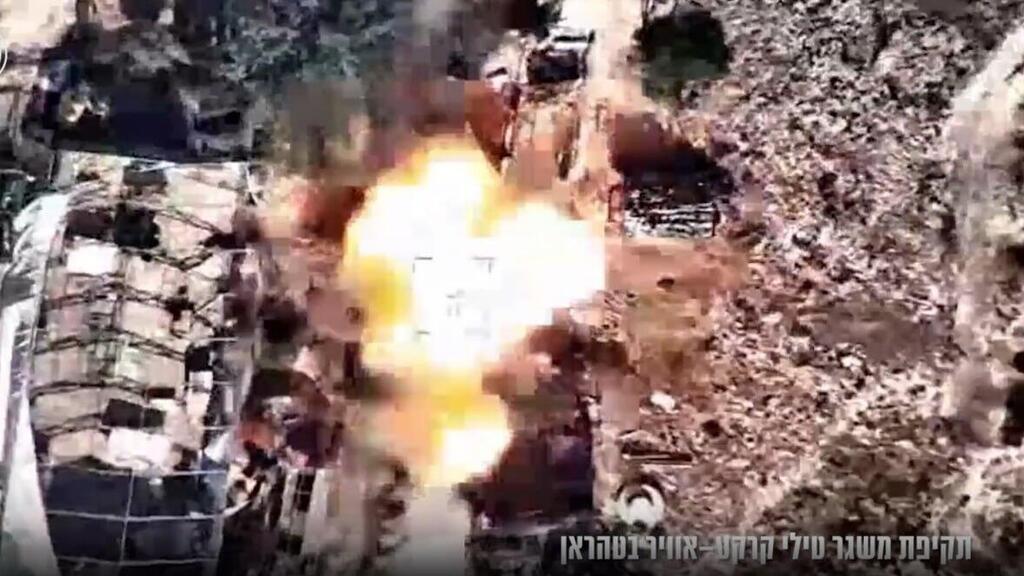
IDF strikes a ballistic missile launcher in Tehran
(Photo: IDF)
According to the WSJ report, both Iran and Ukraine had old and ill-equipped air forces, but the Iranians also failed in ensuring their aerial defenses. This was a fatal strategic miscalculation, the publication said. Iran opted to rely on its arsenal of surface-to-surface missiles and on its regional proxies.
But Hezbollah in Lebanon was badly defeated by Israel last year and after the fall of the Assad regime in Syria, Israel destroyed Syrian air defenses, clearing a path for its aircraft to reach Iran.
The Wall Street Journal's comparison of the two conflicts showed that Ukraine's Soviet-era S-300 and Buk System outperformed Iran's mishmash of S-300, Chinese batteries and locally made air-defense systems.
Get the Ynetnews app on your smartphone: Google Play: https://bit.ly/4eJ37pE | Apple App Store: https://bit.ly/3ZL7iNv
Ukraine, thanks to a 2022 warning from American intelligence that Russia was planning an invasion, spread its mobile anti-aircraft batteries across the country and kept some hidden. They survived the Russian attack, forcing the Russians to rely on cruise and ballistic missiles to attack targets deep in Ukrainian territory.
Iran had been taken by complete surprise, despite public threats.
“Basically, what Israel did with Iran is what Russia wanted to do with Ukraine, geopolitical analyst Michael Horowitz said. "They thought they could pull off some cloak-and-dagger thing, and infiltrate and decapitate the Ukrainian regime but it turned out that the Ukrainian society has a resilience and cannot be so easily penetrated—whereas when it comes to Iran, the regime is so unpopular that it’s easy to find people there who will agree to work with Israel.”