

French authorities continued preparations Thursday evening for a major day of nationwide protests planned for Saturday by groups opposing the country's economic conditions, exactly one week after the previous wave of demonstrations on October 17 descended into widespread violence. During those riots, crowds attacked police officers and government buildings and looted hundreds of shops and businesses across France.
President Emmanuel Macron announced that authorities would prohibit demonstrations organized by what he called "illegitimate" groups, referring to far-left organizations that the government blames for last weekend's unrest. Marseille and Lyon, France's second- and third-largest cities, have both announced blanket bans on demonstrations within their jurisdictions Saturday. However, activists may challenge the restrictions in court, arguing that they violate their constitutionally protected right to protest.
Gallery
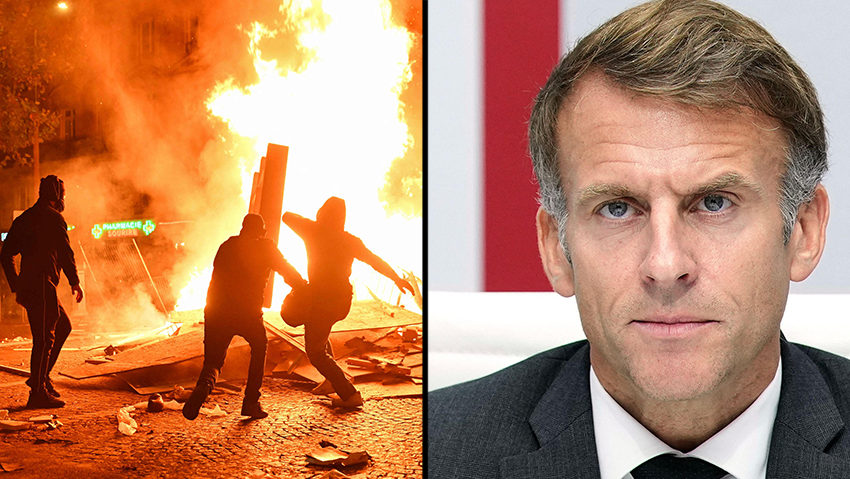
French President Macron in a discussion at the Elysee Palace about preparing for another day of protests
(Photo: Guillaume Saligot / AFP, Teresa Suarez / POOL / AFP)
The calls for nationwide demonstrations are being led by France's main student union, UNEF, and members of the Yellow Vest movement, which emerged during protests against the rising cost of living and Macron's economic policies in 2018.
Fearing another outbreak of widespread violence, Macron's government has promised a "massive deployment" of police officers. The administration acknowledged that it had been inadequately prepared for the previous demonstrations, when nearly 1 million people took to the streets, far exceeding official estimates.
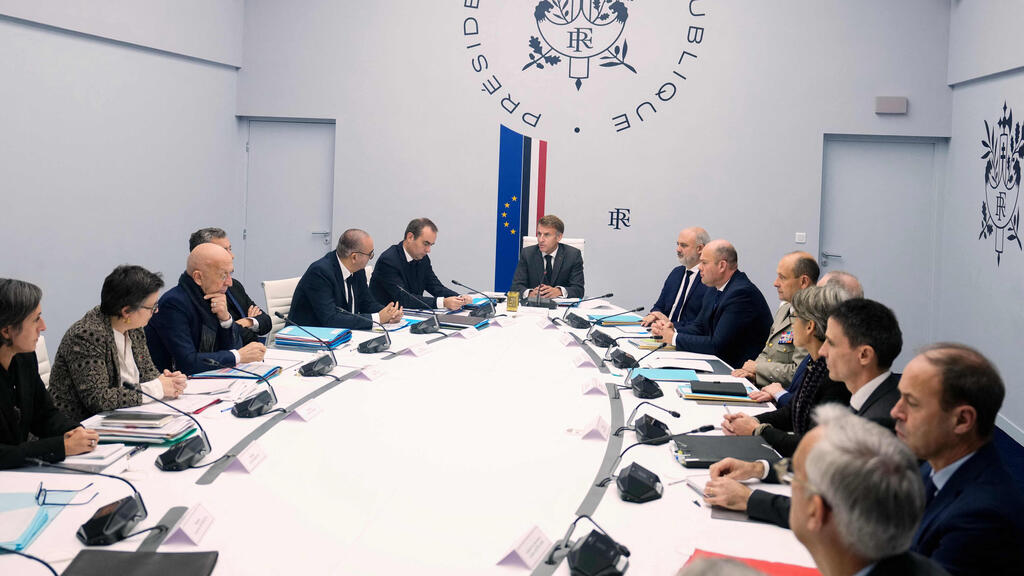
French President Macron in security meeting following riots
(Photo: Teresa Suarez / POOL / AFP)
Some military personnel will also assist, including soldiers from Operation Sentinelle, the counterterrorism force deployed to patrol French cities following the wave of Islamic State terrorist attacks in France and elsewhere in Europe beginning in 2015. The soldiers will secure sensitive sites, freeing additional police officers to manage demonstrations and prevent looting.
Authorities in Paris also attempted to prevent demonstrations Thursday over concerns that they could turn violent, but a court overturned the police ban. Thousands subsequently gathered in the capital for a stationary protest rather than the march originally planned. No major incidents were reported. One sign carried by demonstrators read: "We don't need tear gas for our future to look bleak."
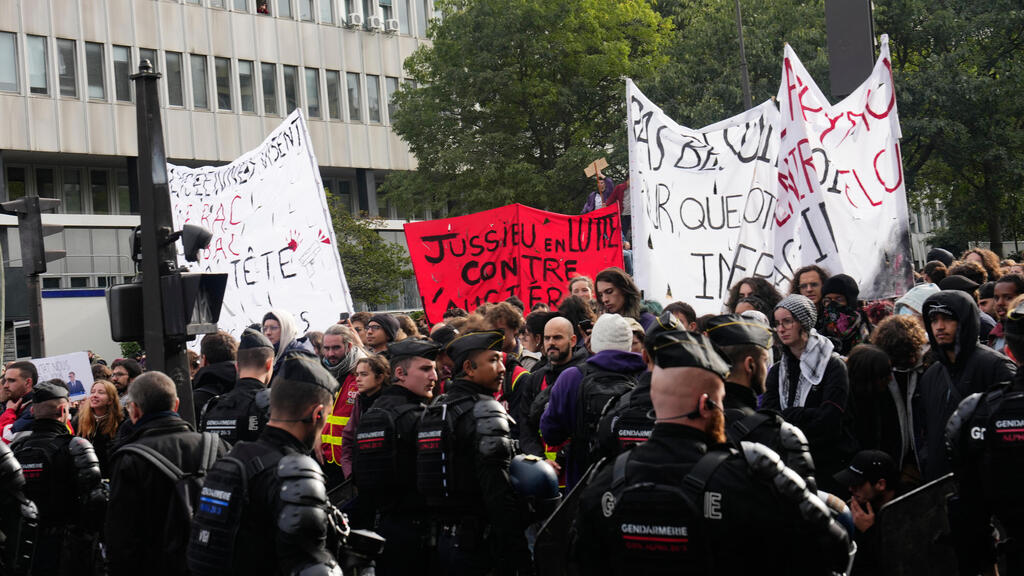
A demonstration in Paris on Thursday, allowed by the court
(Photo: Teresa Suarez/AP)
Meanwhile, Macron convened a special security meeting at the Élysée Palace, where he again accused far-left organizations of orchestrating last weekend's riots in an effort to create anarchy in France. "Last Saturday, we witnessed political and subversive acts by far-left groups whose objective is to bring down the republic," Macron said.
The president explained that the government's strategy for the coming days would be to reject demonstration requests submitted by "individuals or groups without legitimate authorization."
"The rules are simple, and I think they are simply a matter of common sense," he said. "The general recommendation is that no demonstrations take place in the coming days. For those who nevertheless wish to demonstrate, if they are trade unions, prefects will propose alternative routes." Macron was referring to routes considered less dangerous for business owners, many of whom fear further looting.
Riots in France: Limoges city hall catches fire and collapses
(Video: from X)


Looting in the streets of Marseilles
(Photo: From X)
Justice Minister Gérald Darmanin called for tough measures against anyone violating protest bans, including stripping offenders of their voting rights. He also proposed restricting social media access for people involved in violence, looting or attacks on police officers.
In recent days, relative calm has returned to Paris and other French cities, partly following the introduction of partial curfews. On Thursday evening, authorities in the capital announced an extension of the nighttime curfew covering the Place de la République area and the Les Halles district, from 11 p.m. to 6 a.m. local time, until Monday morning.
The French Culture Ministry also announced that several of Paris' most prominent museums, including the Louvre and Musée d'Orsay, would remain closed Saturday. The Grand Palais, Picasso Museum and Musée de l'Orangerie will also close for the day.
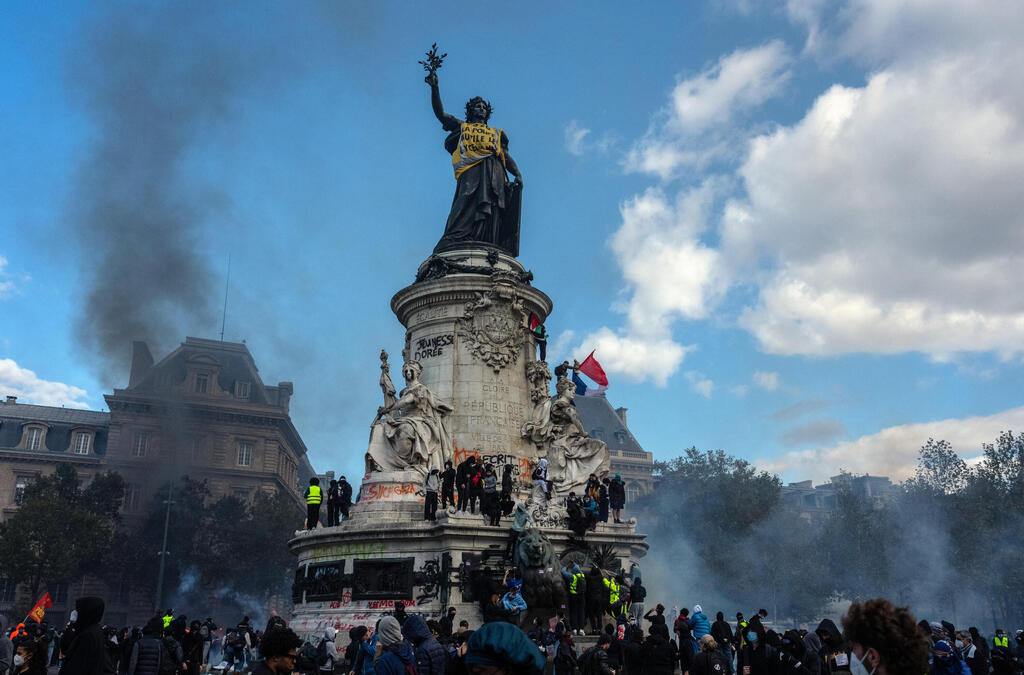
Statue in Place de la République in Paris, which protesters climbed last weekend and hung a yellow vest
(Photo: Carl Court/Getty Images)
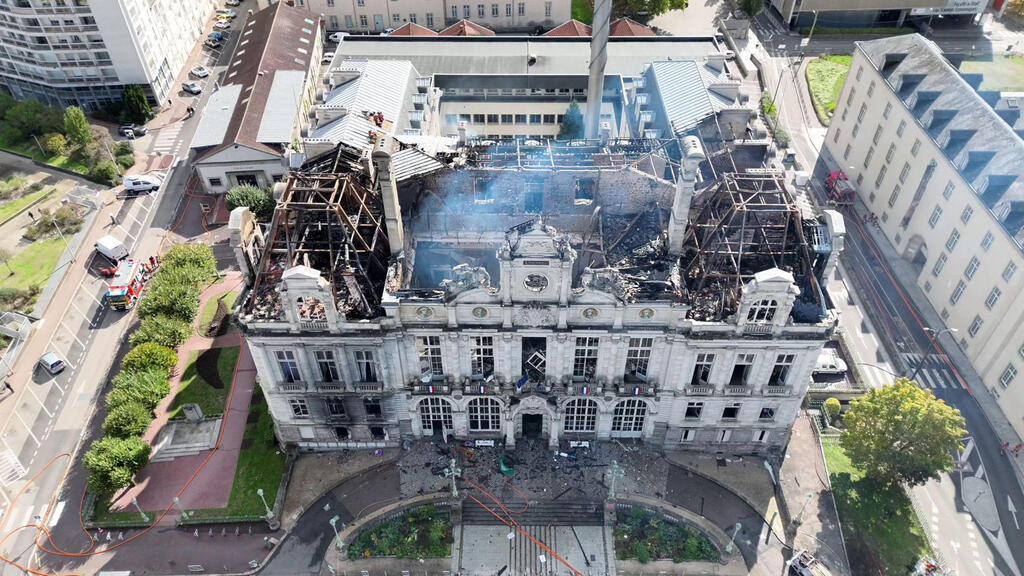
The historic Limoges city hall building, which was burned by rioters and its roof collapsed - along with the bell tower
(Photo: SDIS 87 / AFP)
The ministry instructed institutions under its supervision to take all necessary measures to ensure "visitor safety," "employee protection" and "the preservation of works of art." Organizers of Art Basel Paris, the international art fair, also announced that the event would be closed over the weekend.
Paris City Hall urged residents and visitors to "exercise the utmost vigilance" Saturday because of "the risk of further violence by rioters who have no connection to the social protest movement."
Shopkeepers across the capital are also preparing for renewed unrest. Last weekend's riots damaged 450 businesses in Paris alone, with 228 of them looted. Many owners have begun boarding up storefront windows with wooden panels in an attempt to protect their premises against break-ins and theft.
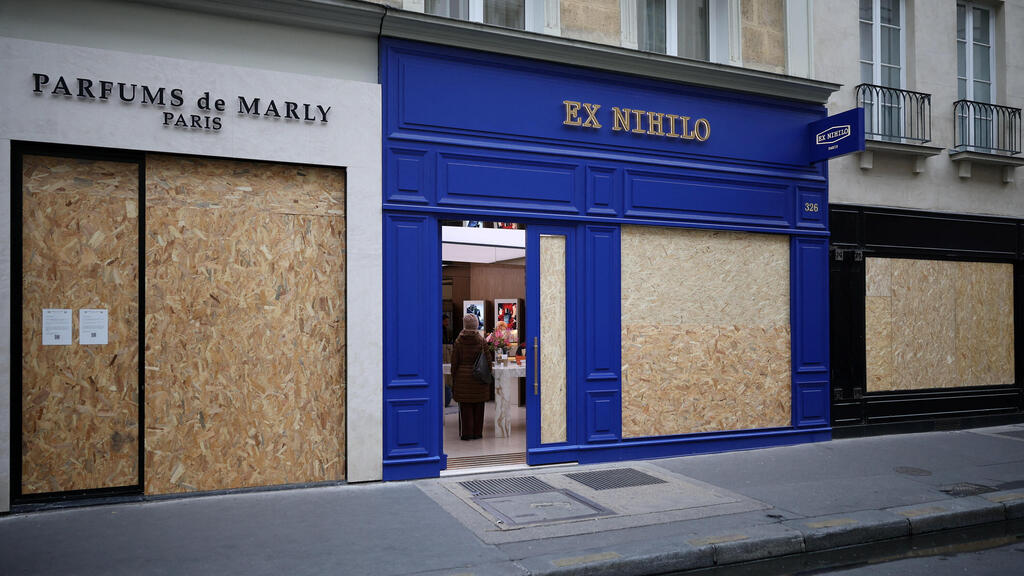
Store windows boarded up in Paris as they prepare for another weekend of violence
(Photo: Stephane Mahe/Reuters)
Along Boulevard de Magenta, which connects Gare de l'Est railway station with Place de la République, workers spent Thursday installing protective boards over shopfronts. There, as elsewhere in the city, the makeshift barriers have also become gathering points for efforts to support local businesses.
One poster urged residents to join a neighborhood WhatsApp group intended, among other things, to "prevent break-ins." Another called for donations to a fund supporting "Ali Hussein and his devastated team" after their shop was looted.
French news agency AFP reported that growing fears of further violence have also prompted many Paris business owners to purchase weapons for self-defense.
Yves Goulet, who owns a gun shop in Paris, told AFP that sales had "increased tenfold" since the riots and that he had already sold out of guns that fire rubber bullets. According to Goulet, shopkeepers are "arming themselves because they are terrified," while some customers told him they had been "trapped inside their stores with the looters."
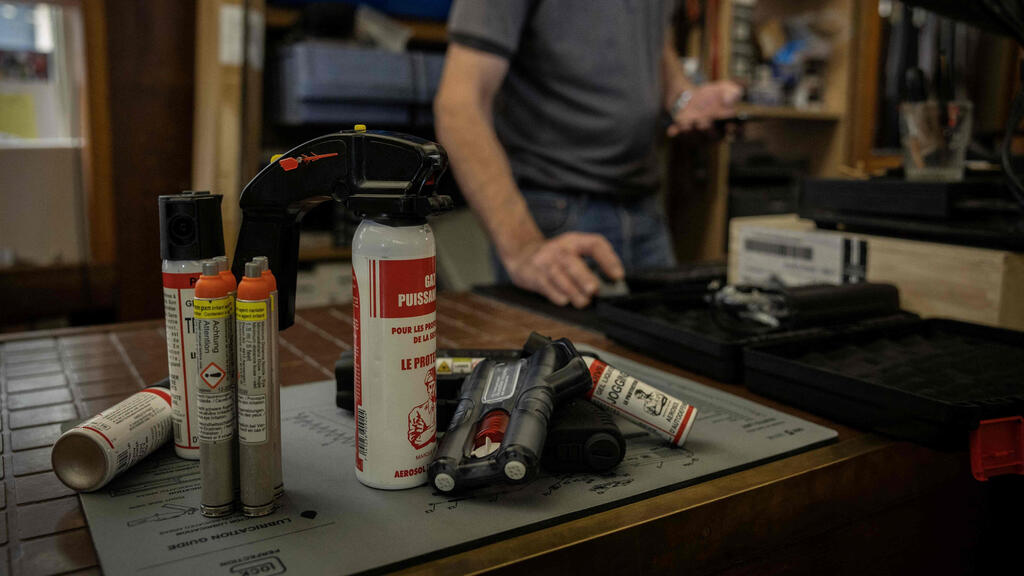
Sales of tear gas canisters has risen dramatically
(Photo: Guillaume Baptiste / AFP)
Michael, a Paris optician whose name was changed to protect his identity, purchased pepper spray from another weapons shop. He said he bought it "in case looters enter the store," explaining that it would give him at least "some measure of protection."
Other business owners told AFP they hoped authorities would be better prepared this time and prevent another breakdown of law and order. "Last Saturday was a nightmare. I was afraid I would be killed," said hairstylist José Gedge. "But I refuse to believe for even a moment that this Saturday will look the same."
Gedge expressed confidence that authorities had "learned lessons" from the previous unrest. He spoke to reporters in front of his salon's glass door, which had been smashed by rioters and temporarily repaired with wooden boards that still allowed cold air to blow inside.
Emmanuel Renal, 60, who owns a paint and home improvement supply store near Gare de l'Est, remains traumatized by last weekend's events. Since Monday, he has been sleeping inside his shop, which is now half empty. "I doubt we'll be open next Saturday," he said. "I still don't understand why the looters came to steal paint and tools."
Last weekend's riots began after large demonstrations against the rising cost of living and deteriorating conditions in educational institutions. The protests were largely led by radical left-wing activists and included significant participation from immigrant communities.
Rioters attacked police officers and threw stones at them, assaulted passersby, set fire to garbage bins, cars and buildings, and looted or damaged approximately 3,000 businesses in Paris, Marseille, Lyon, Nice, Nantes, Limoges and numerous other cities.
More than 2,700 people were arrested during the unrest, and nearly 1,000 police officers were injured, some seriously. Macron and Prime Minister Sébastien Lecornu acknowledged intelligence and preparedness failures that left police overwhelmed by the scale of the violence.
The demonstrations that preceded the riots brought together high school and university students, trade unions and members of the Yellow Vest movement.
They followed weeks of student protests that began last month in schools in impoverished suburbs north of Paris, driven by teacher shortages and poor educational conditions. Those demonstrations were also marked by numerous violent incidents, and similar unrest subsequently spread to other European countries, including Belgium.
In France and abroad, some commentators have emphasized the involvement of immigrants and the children of immigrants from Africa, Arab countries and Muslim-majority nations in both the demonstrations and the violence.
Such allegations have circulated since the student protests earlier this month. U.S. President Donald Trump also claimed that the unrest was evidence of an alleged attempt by Islam to take over France.
Macron rejected those claims, calling them an "absolute lie," and has instead emphasized the role of far-left organizations in the riots.
Prime Minister Lecornu, along with right-wing figures in France, has accused Jean-Luc Mélenchon, leader of the far-left France Unbowed party, of allegedly fueling the violence as a show of political strength ahead of next year's presidential election. Polls cited in the report project that Mélenchon would reach the decisive second round against far-right leader Marine Le Pen but would then lose by a wide margin.