

Days after reports surfaced that Iran’s ayatollah regime cut internet access and disrupted Starlink’s satellite internet service — widely used by protesters and activists but considered illegal in the country — U.S. President Donald Trump personally contacted SpaceX CEO Elon Musk, urging him to improve Starlink’s reliability in Iran.
Trump’s direct appeal to Musk was driven by a desire to circumvent the regime’s internet blackouts and help Iranian citizens maintain communication with the outside world. According to reports, SpaceX had already begun addressing the outages before Trump called Musk.
Gallery

Donald Trump and Elon Musk are working to keep communications with Iranian protesters open
(Photo: Alex Brandon/ AP)
Completely disconnected from the outside world
About a week ago the Iranian government severed internet and phone connections nationwide amid a violent crackdown on protests against the regime. Multiple reports indicate thousands of people have been killed during the unrest.
In recent days the situation has worsened, with the regime reportedly deploying military‑grade jamming technology aimed at Starlink’s satellite network. Although the service has not been fully disabled, the interference has caused packet loss ranging from 30 % to 80 %, making the connection unstable and at times nearly unusable.
SpaceX engineers have been working for days to counter the disruption. NasNet, a group helping Iranians connect to Starlink, reported that it collaborated with Starlink’s technical team on a software update that reduced packet loss to about 10 %. However, the group stressed that the situation remains a “cat‑and‑mouse game” and warned that conditions could worsen again.
Trump himself addressed the issue publicly. During a flight aboard Air Force One, he told reporters he wants to see Starlink restored in Iran. “Maybe we can get the internet working again, if that’s possible,” he said, adding that he plans to speak with Musk. “As you know, he’s very good at these things, he has a great company.” White House spokesperson Karoline Leavitt later confirmed that Trump had indeed spoken with Musk about internet services in Iran.
The Iranian regime has never approved Starlink’s operations in the country, making possession and use of the satellite dishes illegal. Over the weekend authorities reportedly began locating and confiscating Starlink dishes in western Tehran.
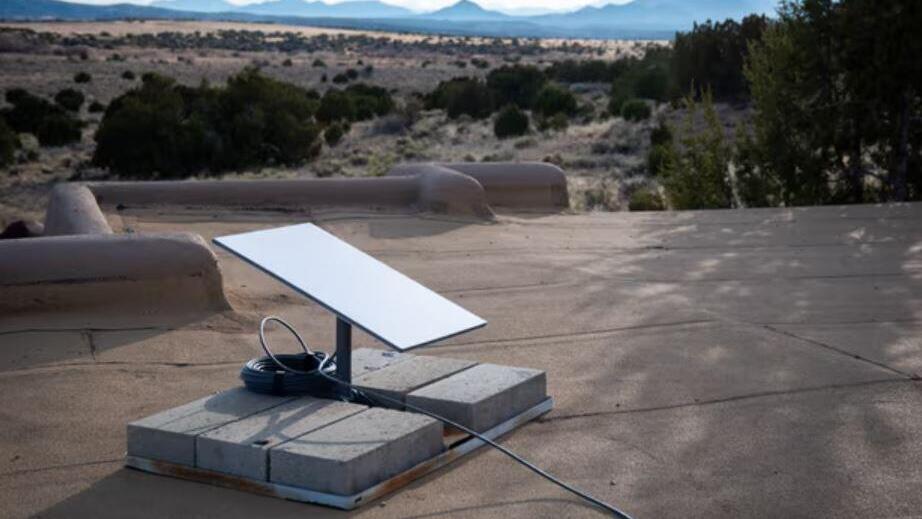
Iranian authorities have been locating nad confiscating Starlink satellite dishes
(Photo: Bloomberg/Getty Images)
At the same time, the United States continues to support the company’s activities in Iran indirectly: during an earlier protest wave in 2022, the Biden administration issued a general license allowing U.S. companies to provide internet services to Iranian citizens.
Sophisticated disruption
Analysts say Iran’s interference with Starlink has become more advanced and now focuses on blocking the upload of content to prevent the spread of information, images and videos about the protests and alleged regime atrocities. Ahmad Ahmadian, CEO of the U.S. nonprofit Holistic Resilience, told foreign news agencies that he believes military‑grade jamming tools are being used, especially against video and outbound reporting from Iran.
Internet monitoring group NetBlocks reported that Starlink access in Iran has been reduced, but not eliminated. According to the group, Iran’s connectivity to the outside world stands at roughly one percent of normal levels. “Iran has been cut off for over 130 hours,” the organization told Reuters, “and while some phone calls are reconnecting, there is no secure way to communicate, leaving the public disconnected from the world.”
Trump speaks about Iran during a visit to a Ford plant in Michigan
(Video: White House Pool)


Cloudflare’s monitoring data paints a similar picture. David Belson, head of Data Insight at the company, said Iran’s internet traffic “has essentially dropped to zero” in recent days. Although there were brief connections on January 9, “since January 10 there have been no meaningful changes: Iran remains almost entirely cut off from the global network, with traffic levels a fraction of what they were.”
Despite the disruptions, Starlink usage appears to continue. A donation page raising funds to send terminals to Iran and cover subscription costs claims that more than 100,000 people are already using the service to circumvent the regime’s blocks.
NasNet announced that Starlink service is now being provided for free. After weeks of effort, negotiations, and discussions with the Starlink team and U.S. authorities, access was granted at no cost “to serve the revolution.” Users are advised to power up their devices discreetly, mask their Starlink IP addresses, and change their wireless network names to avoid detection.