

Israel and Lebanon are expected to hold talks in Rome next week on implementing the framework of understandings reached between the sides in Washington. A U.S. official said Thursday that the pilot phase, under which the IDF is to withdraw from one area and the Lebanese Army will move in, is expected to begin within days.
"The first pilot zone will launch in a matter of days, and further pilot zones are being mapped out and planned. CENTCOM is coordinating with both countries to move forward," the U.S. official said. "We will soon begin outreach to international partners to help the Lebanese government effectively restore sovereignty in these zones and across their country more broadly."
Gallery
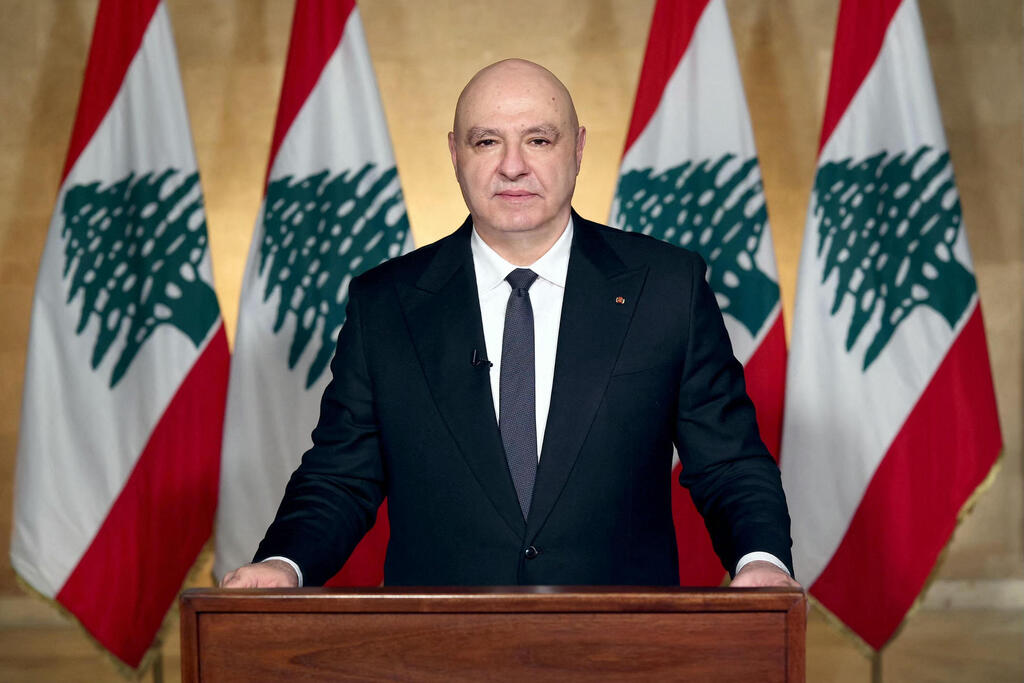
Joseph Aoun Aoun is linking Lebanon's continued participation in talks with Israel to the start of an Israeli withdrawal from southern Lebanon
(Photo: AFP PHOTO / LEBANESE PRESIDENCY)
CNN reported Thursday, citing a source familiar with the matter, that Aoun is linking Lebanon's continued participation in talks with Israel to the start of an Israeli withdrawal from southern Lebanon. Aoun is scheduled to travel to Washington on July 21 for a meeting with President Donald Trump. During a meeting Thursday with U.S. Ambassador to Lebanon Michel Issa, Aoun said pressure should be placed on Israel to halt its military operations in southern Lebanon.
In an interview with the Saudi newspaper Asharq Al-Awsat, Aoun was asked what Lebanon expects from the White House meeting.
"First, we want the Lebanese issue to remain on the American agenda, and we want to solidify its position there," he said. "There's no need to reiterate the importance of having a good relationship with the United States, and of capitalizing on President Donald Trump's expressed desire to help us. His role is vital and we are counting on it."
He added: "We are facing an extremely difficult and complex situation, and we know very well the United States is the only side capable of exerting pressure on the Israeli government to prevent it from targeting the southern suburbs of Beirut, the infrastructure, or expanding the occupied territories in southern Lebanon. No other party is capable of playing this role.
"We want the U.S. administration to help us regain all of our land. We will not relinquish an inch of our land or a single citizen. The issue of sovereignty is not open to compromise or interpretation. It is at the forefront of our national principles, which we are committed to upholding. We want the land returned and to be under the sole control of the Lebanese Army."
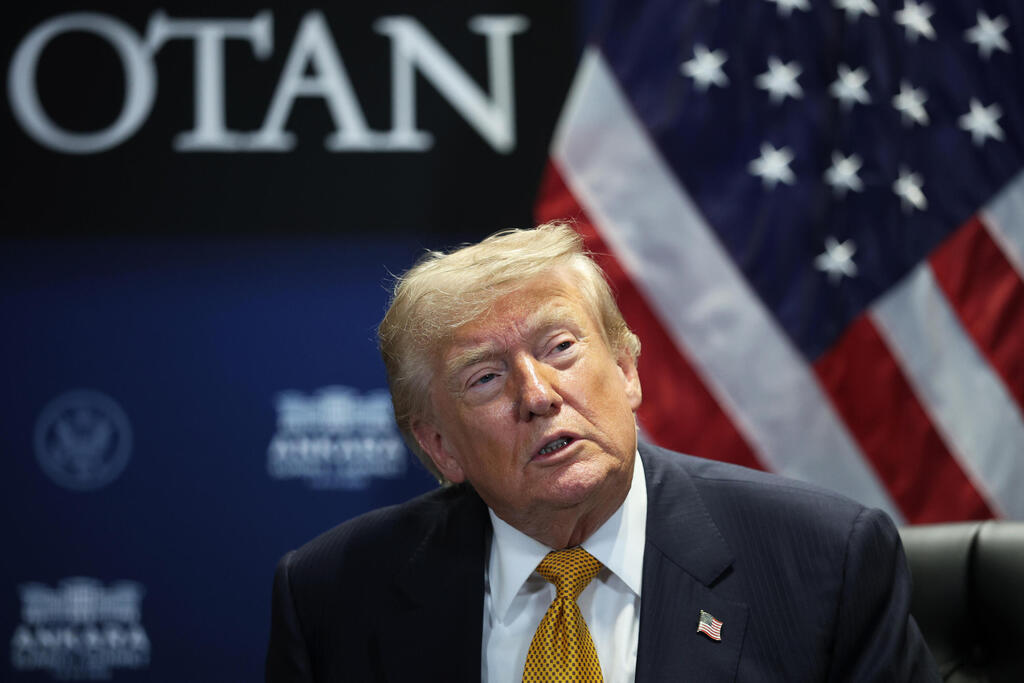
Donald Trump. 'They're getting along with Lebanon'
(Photo: Win McNamee/Getty Images)
Addressing criticism over direct negotiations with Israel, Aoun said: "We were not in a position to choose between ideal options. The war threatened to escalate, along with the expansion of the occupied territory. The scenes of displacement were harrowing, as were the scenes of destruction. There was a risk of widespread devastation to Beirut and its infrastructure. We were, in reality, faced with only one option, especially given the significant imbalance of power. We had no choice but to request assistance from the United State."
He added: "Lebanon's decisions must be made within its legitimate institutions. Lebanon must defend its interests, sovereignty, and stability, which is why we said we would not accept anyone else negotiating on our behalf or in our name, nor becoming a bargaining chip in others' calculations"
Aoun also addressed reports of Trump's proposal for a meeting between him and Prime Minister Benjamin Netanyahu at the White House.
"The idea of this meeting is fundamentally ruled out, but social media and others sometimes indulge in baseless scenarios," he said.
On tensions with Hezbollah, Aoun said: "We did not choose to sever ties with anyone. Our offices are open to everyone without exception. There is an objection to a choice made by the state to shorten the period of occupation and the suffering of the people. Whoever has another option to achieve this goal should present it, and we will discuss it. The option of continued war is not an option."
Aoun also referred to the inclusion of the Lebanon ceasefire in the first section of the U.S.-Iran memorandum of understanding.
"We welcome any assistance that aligns with Lebanon's interests. America is the only one capable of exerting pressure on Israel or persuading it. And Iran is the only one capable of influencing Hezbollah and its decisions. Of course, while affirming that Lebanon is the one negotiating on all matters related to it."
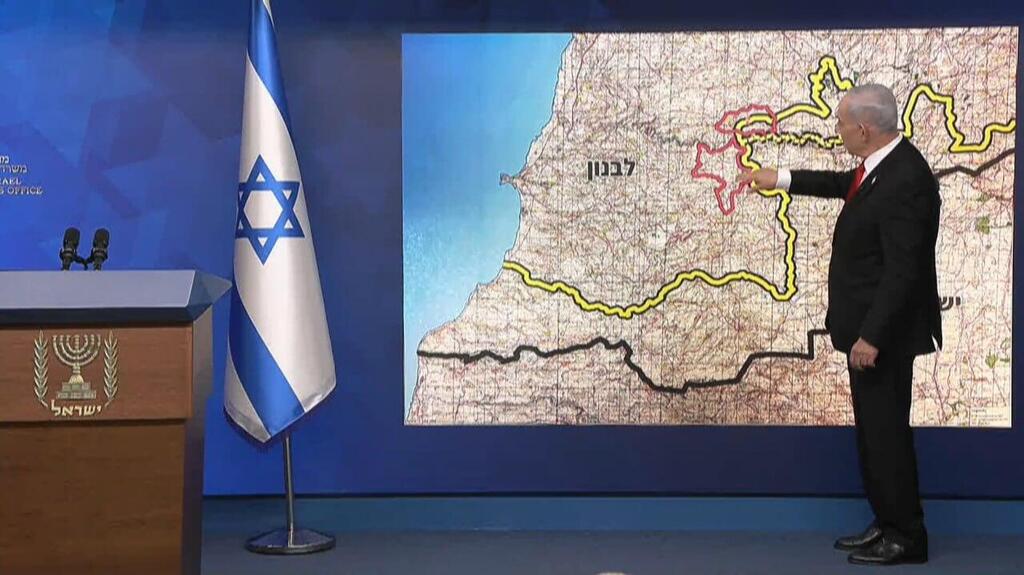
Prime Minister Benjamin Netanyahu also said Israel would not withdraw
(Photo: GPO)
Israeli Defense Minister Israel Katz indicated Thursday that Israel does not intend to withdraw, at least not completely.
"The IDF is currently deployed in security zones in Gaza, Lebanon and Syria and will not withdraw from them," Katz said during a graduation ceremony for the Israeli Air Force flight course. "It is our right and our duty to protect the residents of the Galilee and the citizens of Israel from jihadist threats seeking to destroy the State of Israel. We are continuing, with full force, to destroy terrorist infrastructure along the first line of villages as part of Operation Silver Plow."
Prime Minister Benjamin Netanyahu also said Israel would not withdraw.
"We will remain in the security zone in southern Lebanon for as long as necessary to ensure the security of our residents in the north," he said.
On Wednesday, Trump was asked on the sidelines of the NATO summit in Ankara whether Israel should withdraw IDF troops from southern Lebanon.
"I talked to Bibi about that. Yeah, I think they're going to. I think they want to," Trump replied. "They're getting along with Lebanon. They’re signing deals with Lebanon. First time ever."
Katz responded Thursday morning to Trump's remarks, saying: "We did not ask anyone's permission to enter Lebanon, and we do not need anyone's permission to remain in Lebanon."