

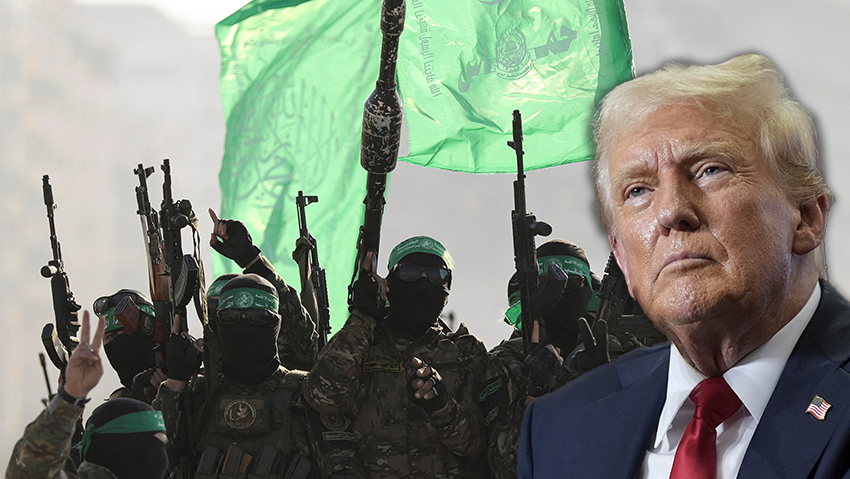
“This group is not a bunch of innocents dreaming airy dreams. It dreams — but not naively," according to a senior official involved in the newly launched Board of Peace. "The development and reconstruction of Gaza will not happen without the dismantling of Hamas and the demilitarization of the Gaza Strip. Trump’s preference is for this to happen in good faith and with agreement under significant pressure from mediators, but everyone understands that if it doesn’t go the easy way it will go the hard way, and Hamas will be disarmed by Israel. That is the starting point of the plan.”
The Board of Peace was unveiled Thursday by U.S. President Donald Trump at the World Economic Forum in Davos. Trump, his son‑in‑law Jared Kushner, and special envoy Steve Witkoff presented their ambitious plan for rebuilding Gaza and transforming it into a prosperous tourism and industry hub.
Trump's son-in-law Jared Kushner presents the "new Gaza"
(Video: The White House)


In his speech in Switzerland, Kushner called on parties “to work with Hamas” on disarmament, but acknowledged that Hamas might refuse — and emphasized that such a refusal would block the territory’s reconstruction. Kushner also revealed that Israeli‑Cypriot businessman Yakir Gabay essentially drafted the reconstruction plan, working cooperatively with international partners — including Palestinians, Egyptian and American business figures, and former British Prime Minister Tony Blair. Gabay played a central role in matters related to real estate and infrastructure development in Gaza.
In the presentation Kushner delivered in Davos, he said the next 100 days will focus on continuing humanitarian aid to Gazans and improving the conditions of hundreds of thousands of refugees. Against the backdrop of criticism in Israel over the inclusion of Qatar and Turkey on the intermediary committee linking the Peace Council with the new Palestinian technocratic government in Gaza, Kushner appealed:
“Many people are trying to escalate — just relax for 30 days. I think the war is over; let’s try our best to work together. Our goal here is peace between Israel and the Palestinian people. Everyone wants to live in peace and dignity — let’s invest in the effort to advance those working toward that.”
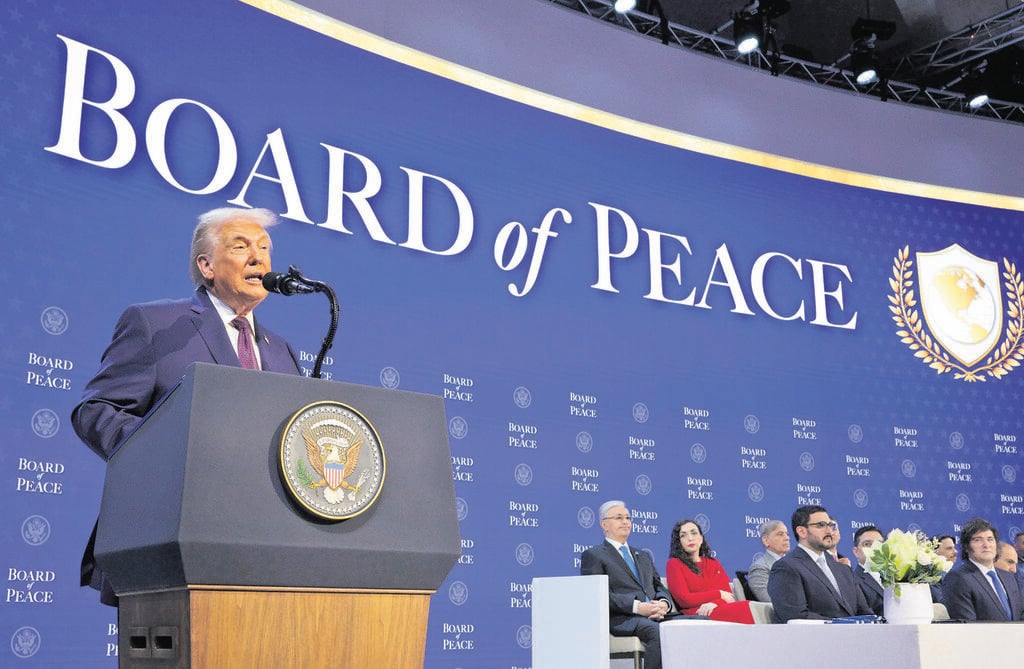
President Donald Trump introduces the Board of PEace in Davos
(Photo: Chip Somodevilla/Getty Images)
In a conversation with ynet Thursday evening, the senior Board of Peace official said the coming 100 days will be critical in assessing whether Hamas truly intends to disarm. “It won’t necessarily be finished after 100 days, but it’s important to understand the trend and see that it’s actually happening. We estimate that actual disarmament will occur within three to five months,” he said.
He noted that the very fact that Muslim and Arab states, including Turkey and Qatar, have signed a document stating that Hamas must disarm and Gaza be demilitarized, is a “huge achievement” for Israel. “If it goes well, Gaza’s reconstruction path will be faster. If it goes badly, it will take longer — but everyone understands that if Hamas does not disarm, Israel will do it, and then the reconstruction plan will resume. It will not be stopped.”
According to the official, the body expected to lead the demilitarization and disarmament process is the “National Committee for the Administration of Gaza,” the new technocratic Palestinian administration many of whose members are associated with the Palestinian Authority. “It is the direct governing body, and its responsibility is to dismantle Hamas,” he said.
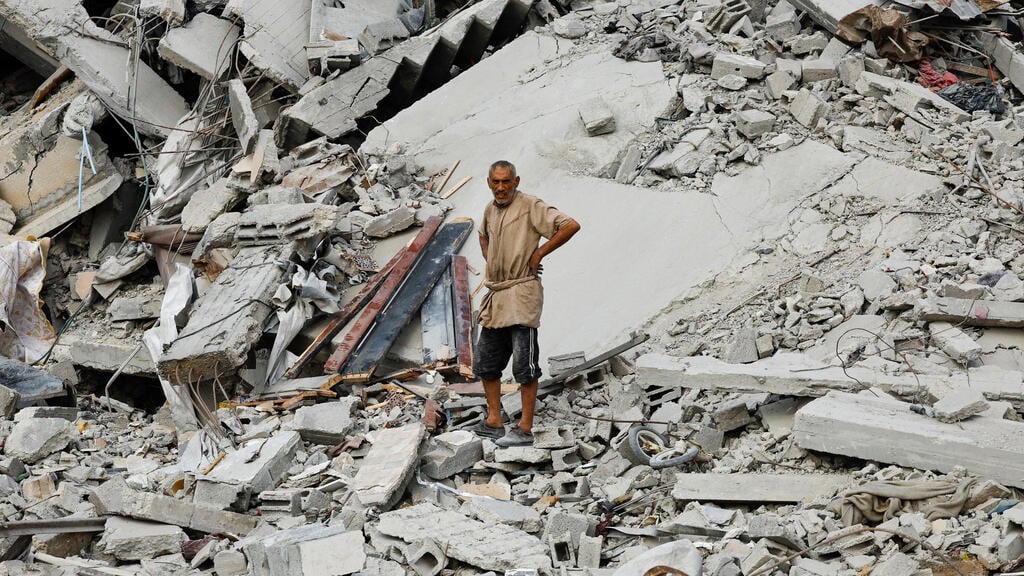
Jabaliya in the northern Gaza Strip
(Photo: Mahmoud Issa/Reuters)
What are the chances Hamas will disarm?
“To tell you it’s certain? No. It’s hard to predict an organization like Hamas. But there is a very reasonable chance it will succeed. When people talked about the hostages deal, everyone was sure Hamas wouldn’t release all living captives, and in the end all were released. They were also sure it wouldn’t return the remains of the fallen — and it returned 27 out of 28, with only Ran Gvili remaining. Many miracles happened, and that was because we worked wisely with enormous backing from Trump.”
What would the disarmament process look like?
“First, Hamas will need to surrender its heavy weapons - rockets, machine guns - and identify all tunnels to be dismantled. Then it will have to turn in Kalashnikov rifles. We start with the most dangerous threats — missiles, production labs and tunnels. This is a strategically critical issue, and then we move to light arms. Everything now is a priority to see disarmament begin. It all depends on that.”
The official was also asked when the International Stabilization Force (ISF) — the foreign troop contingent that, under Trump’s peace plan, is to gradually take responsibility for areas of the Gaza Strip from which the IDF will withdraw — would be established. Several countries have signaled willingness to join, but no formal announcement has been made amid concerns about engaging Hamas. The official acknowledged that this force would not necessarily be the body to forcibly disarm Hamas if voluntary disarmament fails.
“The establishment of the stabilization force is more or less complete,” he said. “It’s more relevant to form it when it’s clear Hamas is cooperating with the disarmament process. The ISF will not necessarily be the body that disarms Hamas by force if that’s required. Naturally, the only body that can do that is Israel. The plan will be implemented regardless. Many countries want to join the ISF — there is no shortage of nations or troops. We are now heading into the 100‑day phase, a test of Hamas’s intentions to disarm. We want to see that Hamas is serious, and then it will move forward rapidly.”
Will Hamas be integrated into governance and enforcement bodies?
“In my opinion, there will not be integration; instead, a new police force will be established with no connection to the old one. All the leaders on the technocratic council were appointed with the agreement of all parties and Israel — they have no ties to Hamas. So there will be no incentive to bring in Hamas members. They understand Hamas is the root of the problem.”
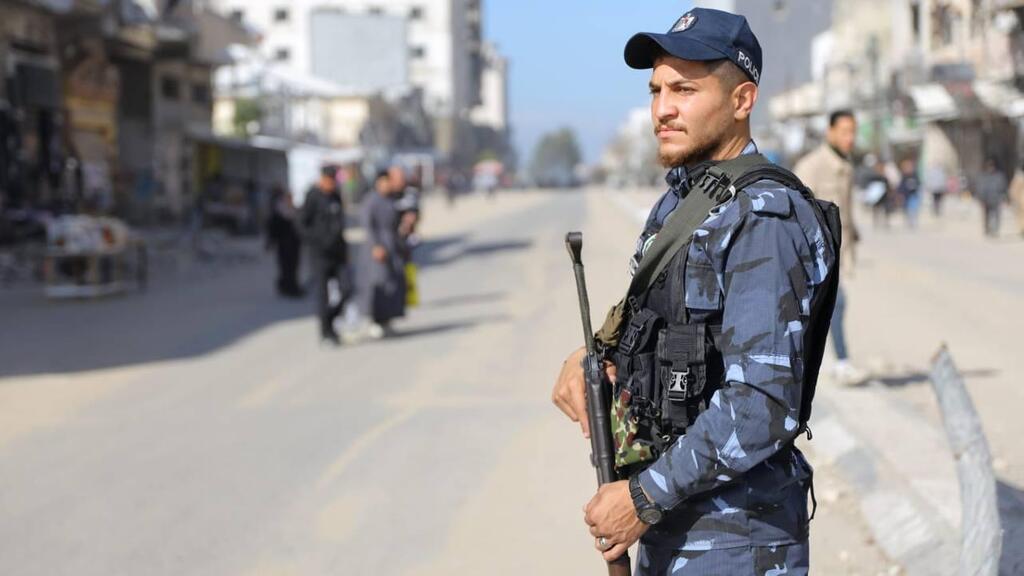
A Hamas policeman in Gaza, last year.
The official added that discussions are underway on reopening the Rafah crossing, and there is “hope” an agreement will be reached next week. “There is good intent from all sides. Overall, it looks positive. Almost every task at every stage — all tasks have succeeded.”
These remarks come after Israel’s denial Thursday afternoon of a statement by Palestinian technocratic prime minister Ali Shaath that the crossing would open in both directions next week; an Israeli official quickly countered that it would not open until the return of the last hostage held in Gaza, Ran Gvili, but later a political source confirmed the issue will be discussed in the Cabinet.
When asked by ynet whether opening Rafah before Gvili’s return could weaken Israel’s last leverage against Hamas, the senior Peace Council official said: “We are not giving up on Ran Gvili in any way. We are making supreme efforts to find him. Based on the information I have, they are making real and sincere efforts to find him. This is the issue closest to Witkoff’s heart. There is a desire to do this and to find him. From what I’ve been told, Hamas has a good will to locate Gvili and return him.”
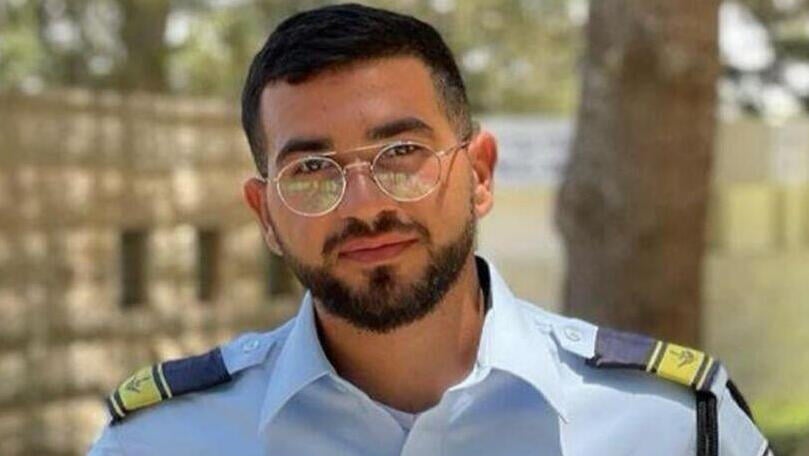
Ran Gvili is the last hostage remaining in Gaza
(Photo: Israel Police )
In Kushner’s Davos presentation, the gradual reconstruction process of the Gaza Strip was outlined, beginning with Rafah — and Trump’s son‑in‑law estimated that “New Rafah,” as depicted in the presentation, could be built within two to three years. The senior Board of Peace official also told ynet that reconstruction will start in Rafah “but quite soon after and in parallel” continue in Khan Younis. He stressed, “Nothing will happen until it is clear that disarmament has begun. It will only start when it is seen that Hamas is serious about disarmament.”
Was the inclusion of Qatar and Turkey in the Board of Peace a punitive measure against Israel for refusing to open Rafah?
“This is not punishment. Their inclusion is simply part of integrating all regional actors for this issue. Everyone, including Muslim and Arab states, signed that Hamas must disarm. In practice, everyone is cooperating on this. Overall, we moved from a situation where the U.N. was entirely against Israel — to a Board of Peace that the U.N. decided to hand responsibility over to, and that supports Israel’s goals of disarmament, demilitarization and reconstruction — and ultimately regional peace and expansion of the Abraham Accords. It’s exactly the opposite of how the U.N. acts today. It is a great achievement for Israel to have such a body — not to mention its chair is the president with the greatest ever support for Israel, Donald Trump.”
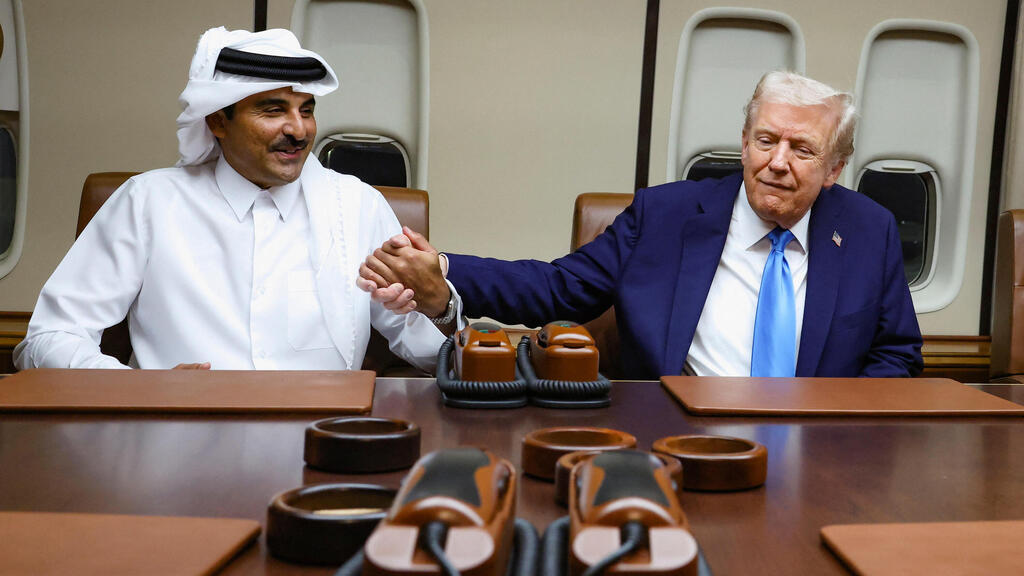
Donald Trump with Qatar's Emir Tamim bin Hamad Al-Thani on Air Force One
(Photo: Evelyn Hockstein/Reuters)
The Board of Peace, which Trump hopes to expand into a body that resolves other global conflicts and rivals the U.N., has not been joined by major European powers — due partly to concerns about undermining the U.N. and the fact that the council charter gives Trump vast authority.
When asked if the board was “disappointed” that European leaders did not join, aside from right‑wing Hungarian Prime Minister Viktor Orbán, the official responded: “If Europe wants to join — welcome. But it’s not critical. It’s more important to us that Middle Eastern and Arab Muslim states are on the council, because they are more relevant to achieving peace in Gaza and the region. It increases the chances that these states will join the Abraham Accords — and therefore Israel should only welcome it.”