

The complicated situation in the Middle East continues to haunt U.S. President Donald Trump during his historic visit to China. The New York Times reported Wednesday that the United States obtained intelligence indicating that Chinese companies discussed transferring weapons to Iran through third countries in order to conceal the origin of the assistance. One of the countries involved is in Africa.
According to the report, the intelligence community reached differing conclusions about whether the weapons had already been transferred through third countries, but as far as is known, no Chinese weapons have been used in the war involving Iran, the United States and Israel. Iranian Foreign Minister Abbas Araghchi stated in March that Tehran had received military assistance from China and Russia, though he did not provide details.
Gallery
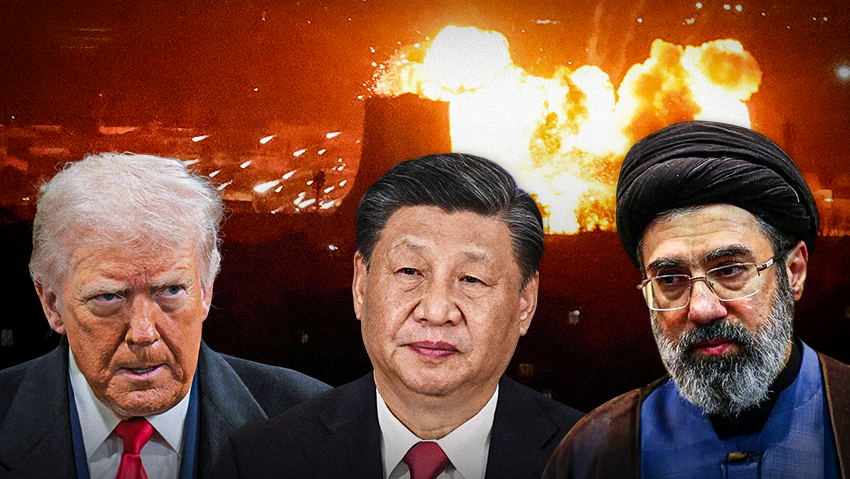
(Photos: Anna Moneymaker/AFP, Sputnik/Vladimir Astapkovich/Kremlin via Reuters, Atta Kenare/AFP)
The New York Times expressed doubt that Trump would raise the issue of Chinese aid to Iran during his talks in Beijing. According to that assessment, Trump’s effort to restart relations with what he has called “the world’s No. 2 power” is more important to him, and he may avoid discussing the issue entirely during the visit.
Prime Minister Benjamin Netanyahu said this week in an interview with CBS’s “60 Minutes” that “China provided Iran with a certain degree of support and certain components for missile production,” adding that he “did not like it.” In the interview, Netanyahu declined to elaborate ahead of the planned summit between Trump and Chinese President Xi Jinping.
A spokesman for China’s Foreign Ministry denied Netanyahu’s claims, saying: “China has clarified its position many times. As a major and responsible country, China always faithfully fulfills its international obligations. We are committed to promoting de-escalation and advancing peace talks in order to end the conflict, and we oppose accusations that are not based on facts.”
Meanwhile, as negotiations for an arrangement between Washington and Tehran remain effectively frozen, Iran has escalated its threats and demands. According to an Iranian report in a media outlet affiliated with the regime, billboards in Tehran on Wednesday displayed Iran’s five conditions for ending the war: “The removal of all sanctions, payment of war compensation by the enemy, establishment of Iranian control over the Strait of Hormuz, release of frozen funds and a declaration ending the war on all fronts.” Those conditions are, of course, far removed from Washington’s demands of Tehran.
Prime Minister Benjamin Netanyahu appears on '60 Minutes'
(Video: '60 Minutes' airs on Yes)


“There may be new confrontations with the United States,” Ebrahim Rezaei, spokesman for the Iranian parliament’s National Security and Foreign Policy Committee, told Qatar’s Al Jazeera channel. He added: “We are preparing a new law regarding navigation in the Strait of Hormuz. We forced America to retreat and it is responsible for the escalation. Iran’s nuclear doctrine is peaceful, but if we face an existential threat, that doctrine could change.”
According to Rezaei, “If the pressure on us continues, we may increase uranium enrichment levels to 90%. We are prepared for all scenarios. We have no nuclear negotiations with America.
“We want to end the war and will not accept an extension of the ceasefire. Discussion of reducing enrichment levels was before the last war, and we do not intend to make concessions to the enemy. Trump has no choice but to surrender to our people. Trump must deal either with our negotiations or with our missiles,” he added.
Vance’s optimism — and Lavrov’s attack
One figure who expressed optimism about the stalled negotiations was U.S. Vice President JD Vance. “I think we are making progress. The fundamental question is whether we are making enough progress to meet the president’s red line,” he told reporters at the White House.
"And the red line is very simple. He has to feel confident that we are putting in place enough safeguards so that Iran never has a nuclear weapon," he added.
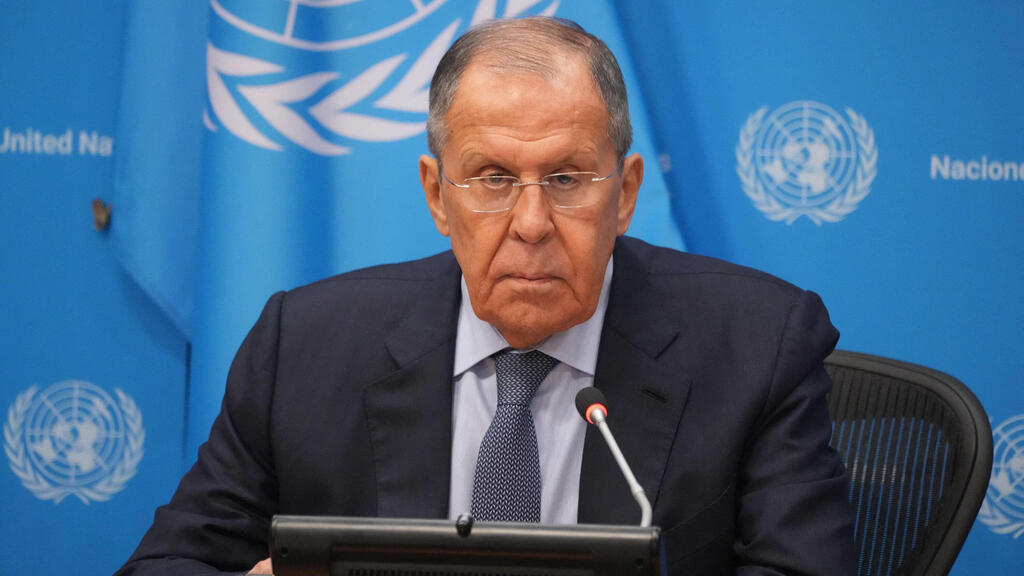
Russia's Foreign Minister Sergei Lavrov
(Photo: Bryan R. Smith / AFP)
A combative tone is blowing not only from Tehran, but also from Moscow, the Islamic Republic’s ally. Russian Foreign Minister Sergey Lavrov claimed Wednesday in an interview with Indian media that the true goal of the United States and Israel is to prevent reconciliation between Shiites and Sunnis, thereby preventing the Muslim world from focusing on the Palestinian issue.
“What is being done now is intended to ensure that this reconciliation never happens," according to Lavrov. "It is meant to portray Iran, one of the main Shiite countries, as a pariah and to cause its neighbors in the Arab world to ‘betray’ the Palestinian cause in exchange for normalization with Israel.”
First published: 00:08, 05.14.26