

Cornell University has suspended a Jewish professor who holds anti-Israel views and is a well-known anti-Israel activist on campus after he attempted to block an Israeli student from enrolling in a course he taught on Gaza, the university said.
The course, one of the most contentious at the Ivy League school, is titled "Gaza, Indigeneity, Resistance" and examines “indigeneity,” “resistance” and “genocide” in the context of Gaza and the Israel-Palestinian conflict.
Gallery
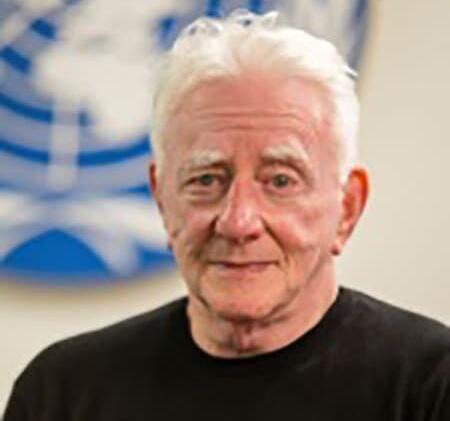
Cornell Professor Eric Cheyfitz, a senior lecturer in American studies who researches colonialism and indigenous peoples
(Photo: Cornell University website)
The instructor, Professor Eric Cheyfitz, a senior lecturer in American studies who researches colonialism and indigenous peoples, is known for sharp public criticism of Israel and for defending Hamas since the Oct. 7, 2023, terror attack, according to critics. His suspension followed a complaint filed by an Israeli student after Cheyfitz told the student he was not permitted to take the class. The university opened a disciplinary investigation.
Cornell told Ynet that it is “committed to protecting members of our community from discrimination” and that after the complaint the faculty member “acknowledged actions that violated federal civil rights law and fell short of the university’s expectations for interactions with students. Based on the findings of the investigation, the faculty member is not teaching this semester and significant disciplinary action has been recommended.” The university declined to say whether the course will be reinstated, whether Cheyfitz will be permanently dismissed or what specific sanctions will be imposed.
Cheyfitz resumed teaching the course last spring despite protests from Jewish groups, public figures and Cornell’s president. The official syllabus frames the classes around arguments of “settler colonialism” and Palestinian “indigenous resistance,” and references the International Court of Justice ruling in January that said some of Israel’s actions may amount to genocide.
Cheyfitz also organized open study sessions outside class in which he promoted his views on “settler colonialism” in Israel and “the destruction of indigenous peoples,” critics say, and has long been active in anti-Israel campus organizing. He has served as a faculty adviser to the anti-Zionist group Jewish Voice for Peace, the report said.
Since the war began in Gaza, Cheyfitz has posted a string of incendiary remarks on social media that drew sharp criticism, including calling Israel a “terrorist state” the day after the October 7 massacre, alleging Gaza “has become an extermination camp run by Jews,” accusing Israel of “poisoning” Palestinian water supplies and describing Hamas as a “liberation movement.” He has also questioned whether Hamas’ retaliatory violence is not “a cogent strategy of resistance to Israel’s crushing power,” according to critics.
Those comments prompted angry appeals to Cornell administrators from faculty and Jewish groups, and the course became a flashpoint in debates over academic freedom and campus discrimination. Critics say Cheyfitz injected his political views into courses and campus life in an extreme way.
Professor Menachem Rosensaft of Cornell Law wrote to the university president that Cheyfitz’s course and statements “encourage political and dangerous division” and risk sparking antisemitism on campus. In his letter Rosensaft compared the course to teaching “flat earth” and said it could incite students to violence against Israeli and Jewish classmates.
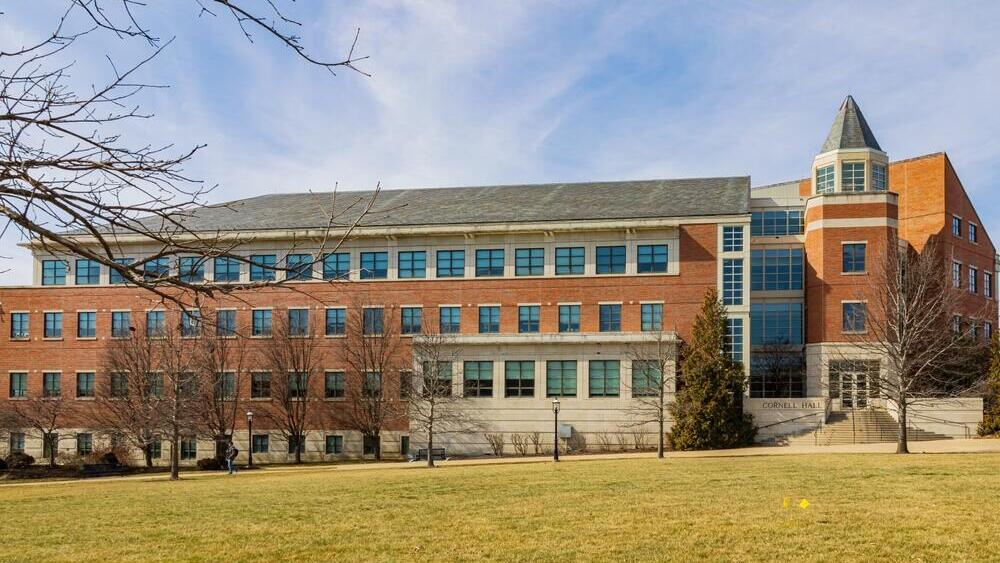
Cornell University
(Photo: Shutterstock)
Cornell President Michael Kotlikoff said he “shares those concerns” and was disappointed by what he described as a lack of transparency and objectivity in the course. But he noted that university rules grant faculty broad academic freedom and that the school could not cancel the class or dismiss a professor without formal procedures.
Kotlikoff said the course is “unusual” in Cornell’s curriculum because it is taught in a program that does not focus on the Middle East but on indigenous peoples, and he expressed worry that students seeking the region’s history might receive a distorted view. He said Cornell courses should provoke thought and present multiple perspectives “not convey preformed opinions about a complex conflict.”
The episode comes amid another controversy at Cornell over the return of Professor Russell Rickford, a history instructor who described the Hamas attack in a public event as “exciting” and “energizing.” Rickford was temporarily suspended after public outrage but the university later allowed him to return to teaching.
Cornell is also in ongoing talks with the Trump administration over the restoration of hundreds of millions of dollars in federal research grants that were cut amid accusations the university failed to address antisemitism on campus. The school faces mounting political and public pressure.