

Defense officials said Sunday they do not currently expect an imminent missile attack from Iran, even as tensions between Tehran and Washington continue to escalate following days of U.S. airstrikes.
Officials said Israel remains on high alert, though not at its highest level of readiness. They cautioned, however, that the situation could deteriorate rapidly in the coming days and that Iran may reconsider its efforts to avoid drawing Israel directly into the expanding conflict.
Iranian missiles trigger sirens across Jordan


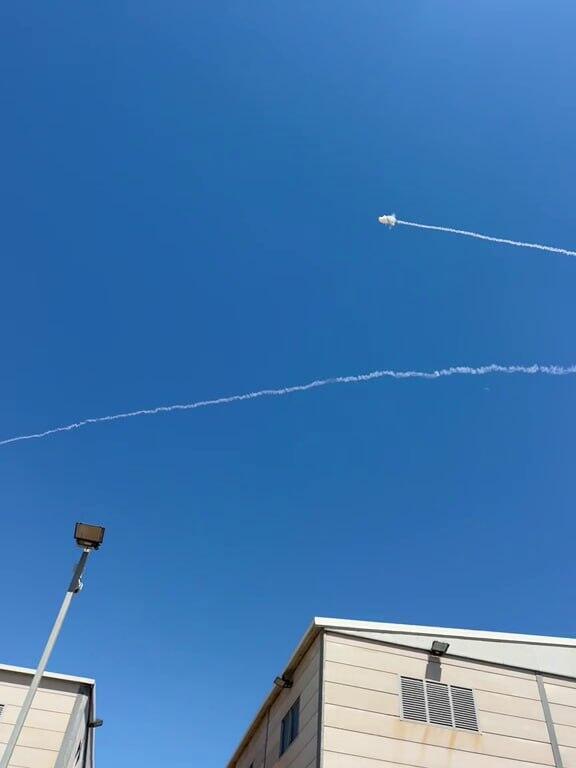
Officials believe Sunday's launch of four missiles toward the Jordanian port city of Aqaba may have been part of an Iranian effort to test the limits of the confrontation. The missiles were intercepted by U.S. forces, and Israel launched Iron Dome interceptor missiles against large pieces of debris that risked crossing into Israeli airspace.
The IDF had earlier warned that launches toward Jordan could result in debris falling inside Israel. Interceptions were visible from the southern resort city of Eilat, where residents reported hearing explosions. Military officials said interceptor fragments that posed a threat to Israeli territory were destroyed outside the country's borders. No injuries were reported after debris fell in northern Eilat.
Defense officials said that, until now, Iran had appeared reluctant to target Israel directly for fear of broadening the conflict. That assessment, they said, may now be changing as fighting between Iran and the United States intensifies.
The latest escalation follows eight consecutive nights of U.S. strikes on Iranian targets, launched after two American troops were killed in an Iranian attack.
Meanwhile, U.S. aerial refueling aircraft continue arriving in Israel at a rate of five to eight aircraft a day, according to Israeli defense officials. They said a record number of American tankers are expected to be stationed in Israel this week, exceeding even the deployments seen during Israel's most recent direct military confrontation with Iran.
Defense Minister Israel Katz said Sunday that Israel would respond forcefully to any Iranian missile attack.

Interceptions of Iranian missiles over Jordan as seen from Eilat
"We have made it clear that if Iran launches missiles at Israel, we will strike back with great force, without conditions or restrictions," Katz said during a visit to the national logistics center of ZAKA, a volunteer emergency response and disaster victim recovery organization.
"The first priority is to strike the launchers," he added. "We are prepared both defensively and offensively."
Over the past week, the United States has carried out a series of strikes on Iranian infrastructure around the strategic port city of Bandar Abbas, home to the Islamic Revolutionary Guard Corps' main naval base on the Strait of Hormuz. Iranian media reported that the attacks targeted roads, railways, tunnels, communications infrastructure and bridges.
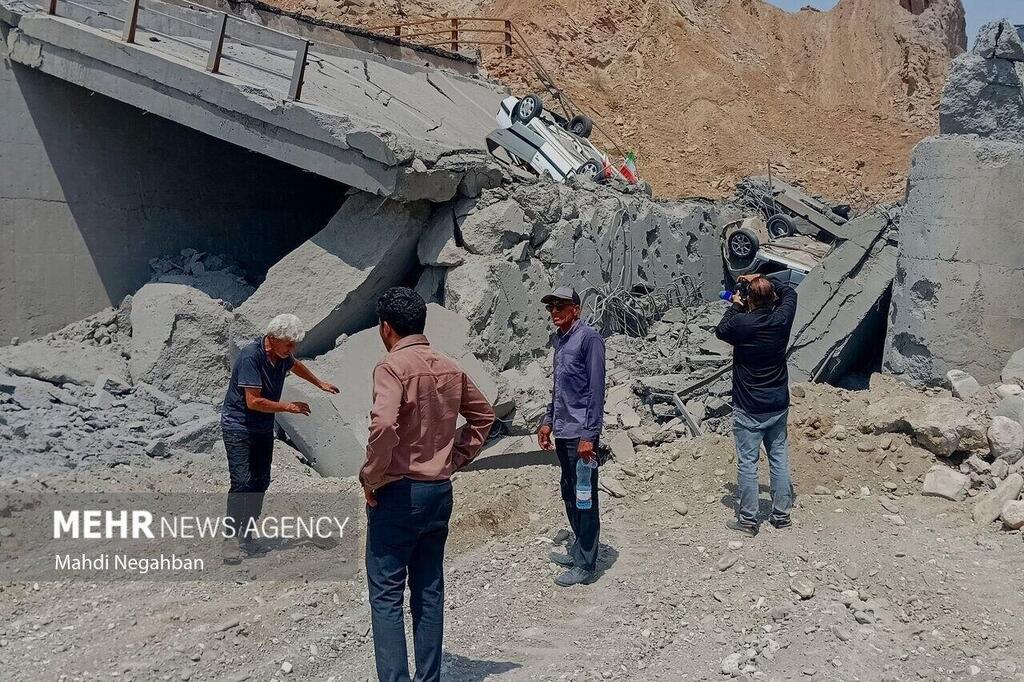
A bridge in Iran's Bandar Abbas struck by US forces
Iranian leaders have accused Washington of violating the memorandum of understanding aimed at reducing tensions.
On Saturday, Supreme Leader Mojtaba Khamenei said the United States had demonstrated "the worthlessness of the U.S. president's signature" by violating the agreement. Calling the United States "the Great Satan," he warned that "the Iranian nation and the Axis of Resistance have unforgettable lessons" for Washington if it continued to pursue war.
Iranian Deputy Foreign Minister Kazem Gharibabadi also accused Washington of breaking its commitments.
"We negotiated, but unfortunately the Americans themselves committed acts of aggression in violation of their obligations under the memorandum of understanding," he said. "We are now faced with the need to defend our country. The Americans have already received a clear message that such acts of aggression will get them nowhere."
Pakistan's foreign minister, Ishaq Dar, called on all sides to abide by the memorandum and avoid further escalation.