

Only several dozen terrorists remain, according to IDF assessments, in a besieged neighborhood in western Rafah in the southern Gaza, located on the Israeli-controlled side of the so-called Yellow Line, which divides the city.
Most of the terrorists trapped there, many hiding in tunnels the IDF has not yet located, have been killed or surrendered, mainly in Israeli Air Force strikes or while attempting to emerge above ground and run toward the Yellow Line, according to the IDF. In a limited number of cases, terrorists also emerged to fight and managed to wound Israeli forces.
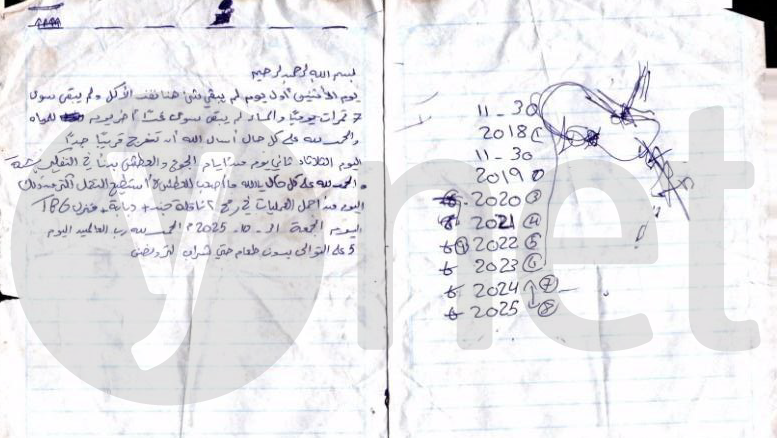
Israeli troops searching tunnels where terrorists had been hiding found that a small number had written notes describing their situation. The handwritten notes, written neatly on small pieces of paper and collected and examined by the IDF’s intelligence exploitation unit, included a late-October entry in which one terrorist wrote: “Monday was the first day when nothing was left. Only seven dates remained for the day. There is water only for tomorrow. Tomorrow is the last day of water. In any case, praise be to God. I pray to Allah to bring salvation very soon.” Alongside the text, the terrorists drew a sketch that intelligence officials believe indicated the entrances to the circular tunnel in which he was staying.
Footage from about a month ago shows Hamas terrorists surrendering to Israeli forces in Rafah
(Video: IDF)


According to the IDF, the terrorists who kept the improvised underground diary stopped receiving supplies about two and a half months ago, with the start of the ceasefire and the deployment of Israeli forces along the Yellow Line, which splits Rafah in two. About a month ago, the IDF announced it had killed their commander, the local battalion commander who had been with them in the tunnels, as well as one of the company commanders, further reducing their chances of survival.
Some of the notes, which include spelling and grammatical errors present in the original documents, suggest the writers were considering surrender, intelligence officials said. One terrorist wrote: “Tuesday. Second day of hunger and thirst and we thought seriously. In any case, praise be to Allah. How hard the thirst is, I can’t stand it anymore.” Another note read: “Nothing is left. Food is finished except for seven dates. I hope we get out of here soon. How hard the thirst is and I can’t bear it anymore. Fifth consecutive day without food or drink.”
Alongside expressions of despair, the terrorists also sought to encourage themselves when comrades went above ground with RPG launchers and rifles to attack Israeli troops. One note said: “Today is one of the most beautiful days of activities in Rafah. Two armored personnel carriers plus a tank plus a TBG house (anti-tank missiles). Today is Friday, praise be to God, Lord of the worlds. Today is the fifth consecutive day without food. Even drinking water is only a liter and a half.”
The IDF said that, contrary to what it described as Hamas’ portrayal of the trapped Rafah Brigade terrorists as “heroes,” the terrorists “are weak and cannot survive for long. The terror organization does not care for them and leaves them to die there of thirst and hunger.”
The elimination of the Hamas battalion commander in eastern Rafah
(Photo: IDF)
Rafah
(Photo: AP Photo/Jehad Alshrafi)
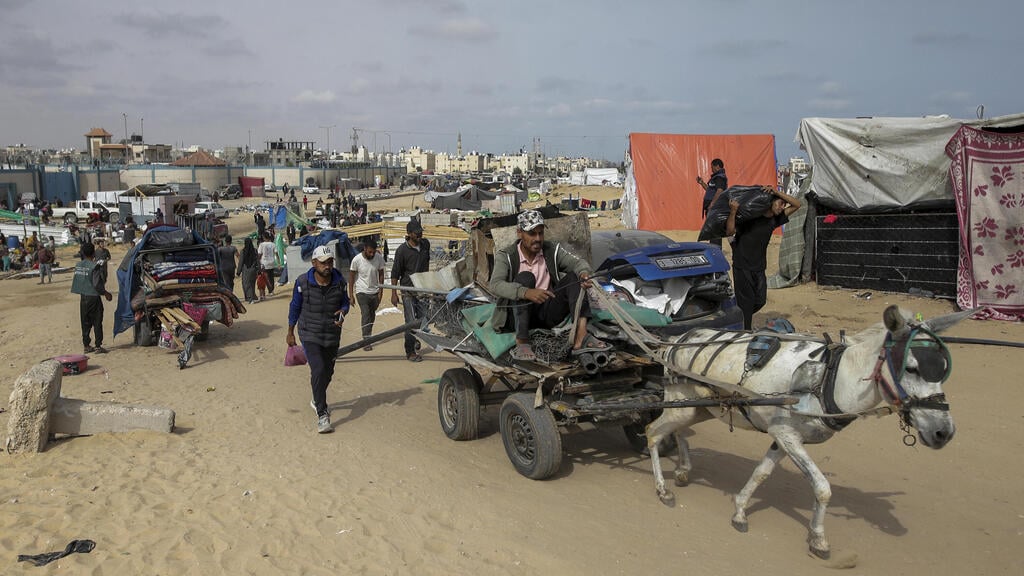
Throughout the war, Hamas battalions operated couriers whose role was to move between tunnel shafts and fighting tunnels to distribute food, water and handwritten messages with orders and operational instructions, the military said. These couriers were usually unarmed, older and sometimes elderly, and at times moved with donkey carts to appear nonthreatening. Some of the notes they carried, especially early in the ground offensive, included lessons learned and summaries of fighting days, similar in essence to after-action reviews conducted in Israeli units. Hamas relied on handwritten notes to avoid electronic eavesdropping and instructed operatives to limit the use of phones and radios, also because there is no cellular reception underground.
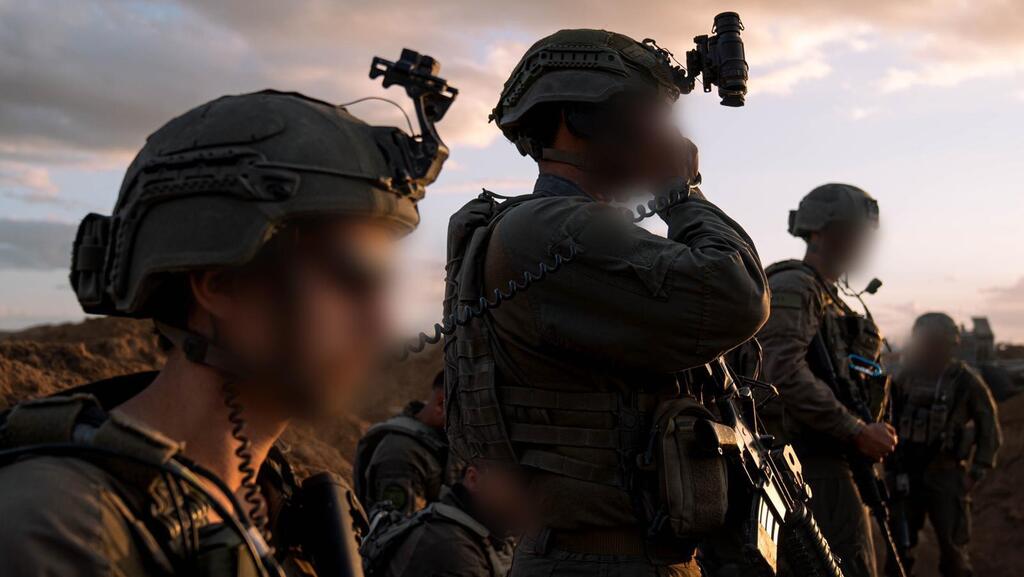
Israeli forces continue to encircle the last remaining tunnels on their side of Rafah, the IDF said. A similar pocket is under Israeli control in eastern Khan Younis, where some of the last living hostages who were later released had been held.
The military said additional tunnels and shafts remain to be exposed and destroyed on the Israeli-controlled side of the Yellow Line. As a result, engineering activity, including the leveling of Palestinian buildings almost every night, will continue in the near term. The work is intended to prepare the area should a second phase of U.S. President Donald Trump’s so-called 20-point plan to build new neighborhoods for Gaza residents be implemented, the IDF said.
The military in Rafah
(Photo: IDF)
On the opposite side of the Yellow Line, Hamas is rebuilding week by week and still possesses many kilometers of tunnels and underground command centers and weapons depots, which Israeli officials describe as its main military asset. Hamas has so far refused to acknowledge it would agree to dismantle its underground network as part of any deal with Israel. The IDF acknowledged earlier that the group succeeded over the past year in channeling tens of millions of dollars to its military wing.
Separately, an officer from the Golani Brigade was lightly wounded at midday when an explosive device was detonated against a Namer armored vehicle in Rafah, in an area under Israeli control east of the Yellow Line, the IDF said. The officer was taken to Soroka Medical Center in Be'er Sheva and his family was notified.
Following the incident, the office of Prime Minister Benjamin Netanyahu issued a statement in English saying, “Israel will respond accordingly.” The statement, which was not released in Hebrew, also said: “The Hamas terror organization continues to violate the ceasefire and President Trump’s 20-point plan. Their ongoing and continuing public refusal to disarm is an ongoing flagrant violation and again today their violent intentions and violations were confirmed by their detonation of an IED that wounded an IDF officer.
"Hamas must be held to the agreement that they signed on, which includes removal from governance, demilitarization and de-radicalization."
Senior Hamas official Mahmoud Mardawi commented on the officer’s injury, claiming the explosion was caused by munitions left behind by Israel and said the group had informed mediators. The military rejected the claim, saying the blast was caused by an improvised explosive device and not unexploded ordnance.