

Iran’s mullah regime has increased its launches of ballistic missiles toward Israel in the fourth week of the second Iran war, forcing the country’s air defense array to adopt a policy that includes relatively broad use of different types of interceptors.
Israel’s primary defensive response to the ballistic missiles fired by Iran — whether carrying warheads with about half a ton of explosives or warheads containing dozens of submunitions that create an effect similar to cluster bombs — is the Arrow 3 interceptor, produced by Israel Aerospace Industries.
Gallery
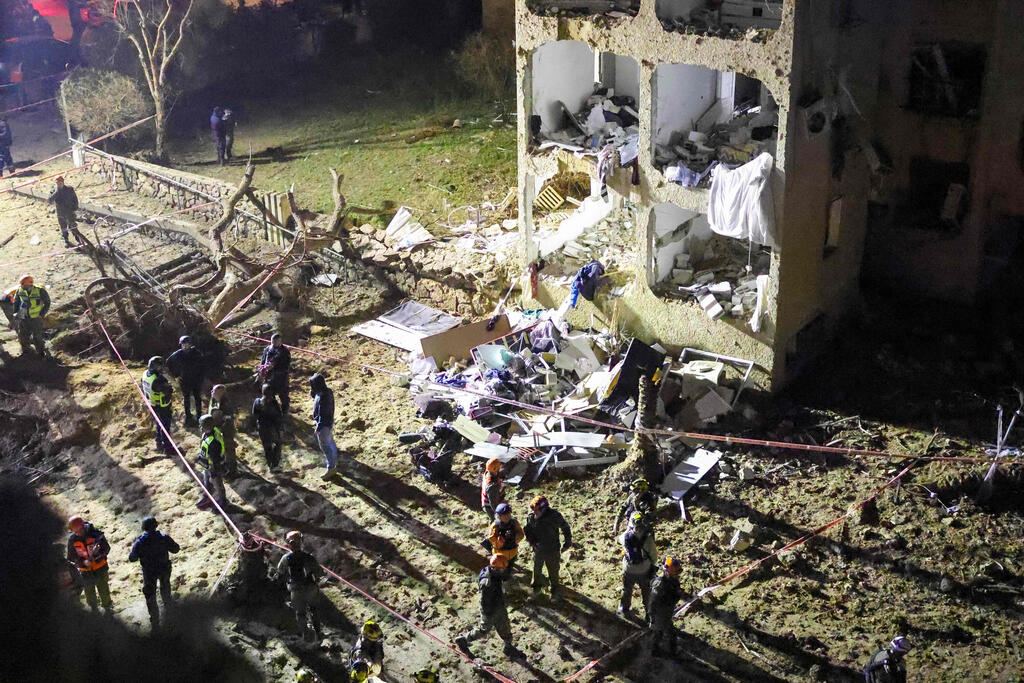
Impact site of Iranian ballistic missile on Arad in southern Israel, Saturday
(Photo: Ilia YEFIMOVICH / AFP)
Arrow 3 is designed to intercept threats outside the atmosphere, at very high altitude and far from Israeli territory. In most cases, when the system is used against incoming missiles, the debris from the interception — as well as submunitions carried in cluster-type warheads — burns up as it reenters the atmosphere.
The “fireworks-like clouds” seen in Israeli skies in recent weeks are created when dozens of submunitions are released from such warheads at an altitude of about 7 to 8 kilometers (4 to 5 miles). They reflect a missed chance to intercept the missile at higher altitude, as well as the limited ability to intercept each submunition individually.
Asked about this by ynet's sister publication Calcalist, former Air Defense Commander Brig. Gen. (res.) Ran Kochav said: “It is possible to try to intercept large fragments or a small portion of the submunitions. It’s better than nothing.”
Israel used David’s Sling interceptors against the Iranian missiles fired Saturday night at the southern cities of Dimona and Arad, where the strikes caused extensive damage and wounded dozens. Made by Rafael Advanced Defense Systems, David’s Sling is designed to counter medium-range threats in Israel’s multilayered air defense system, sitting between Iron Dome and Arrow and intended mainly for heavy rockets and cruise missiles.
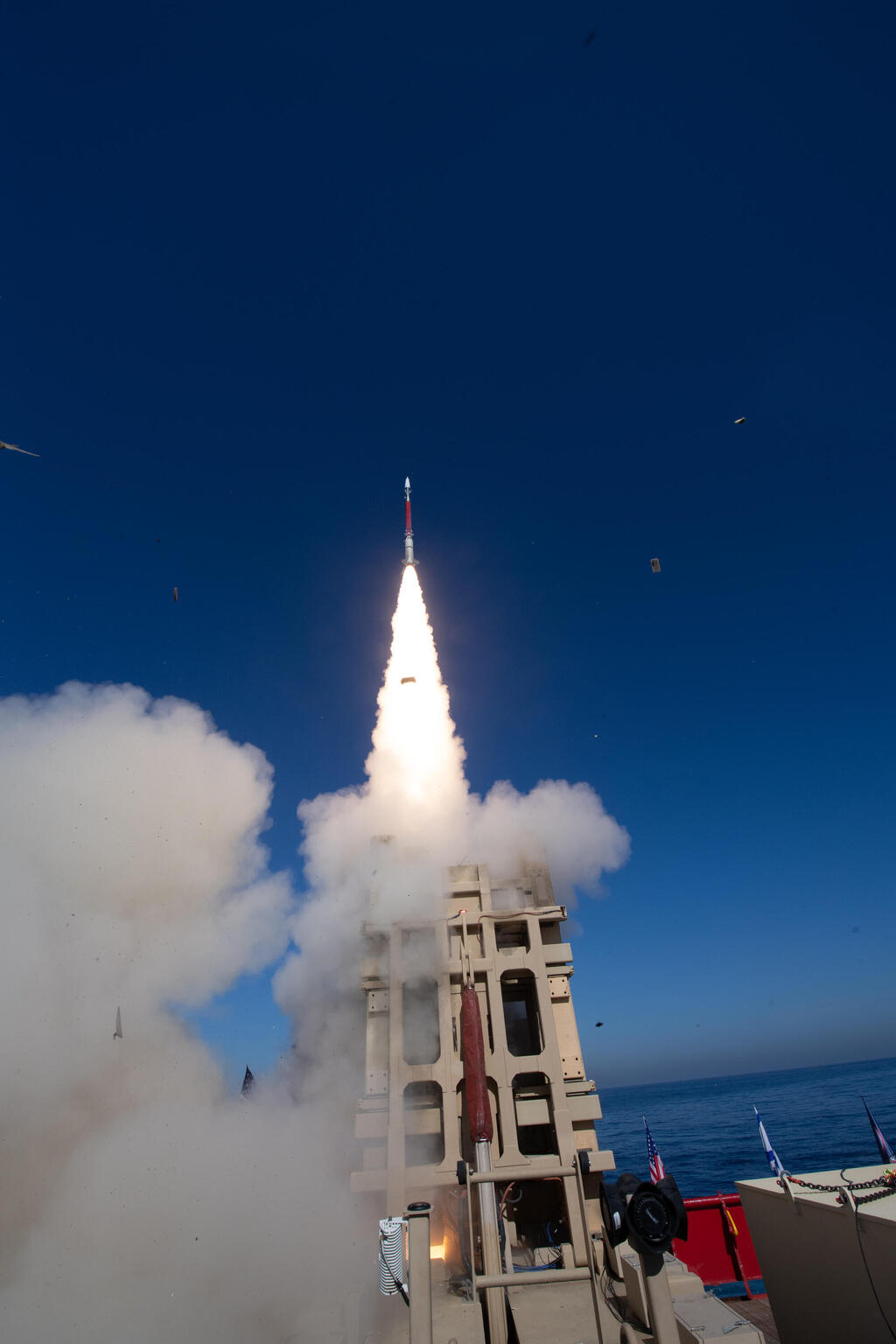
David's Sling missile defense system
(Photo: Defense Ministry)
Last month, the Defense Ministry and Rafael said they had successfully completed a series of tests of significant upgrades to the system, based largely on lessons from the first Iran war last June. At the time, they said the improved system provided “new capabilities across a wide range of challenging scenarios.”
An upgraded David's Sling
The recent upgrades to David’s Sling are meant to expand the system’s operational range so it can also be used against ballistic missiles from Iran, reducing reliance on Arrow 3 interceptors. Such efforts to broaden David’s Sling’s engagement range began during the first Iran war last year.
But on Saturday night, attempts to intercept missiles fired at Dimona and Arad using David’s Sling failed. The Israeli Air Force said Sunday that this did not reflect a systemic failure, noting that the missiles launched by Iran were of the Qader family and that Iran had fired the same model at Israel in the past, when they were successfully intercepted using the same system.
The decision over which defense system to activate against incoming fire is made by the air defense array, under a policy set by the Air Force commander. That policy is influenced in part by interceptor stockpiles, the availability of active batteries and other operational considerations.
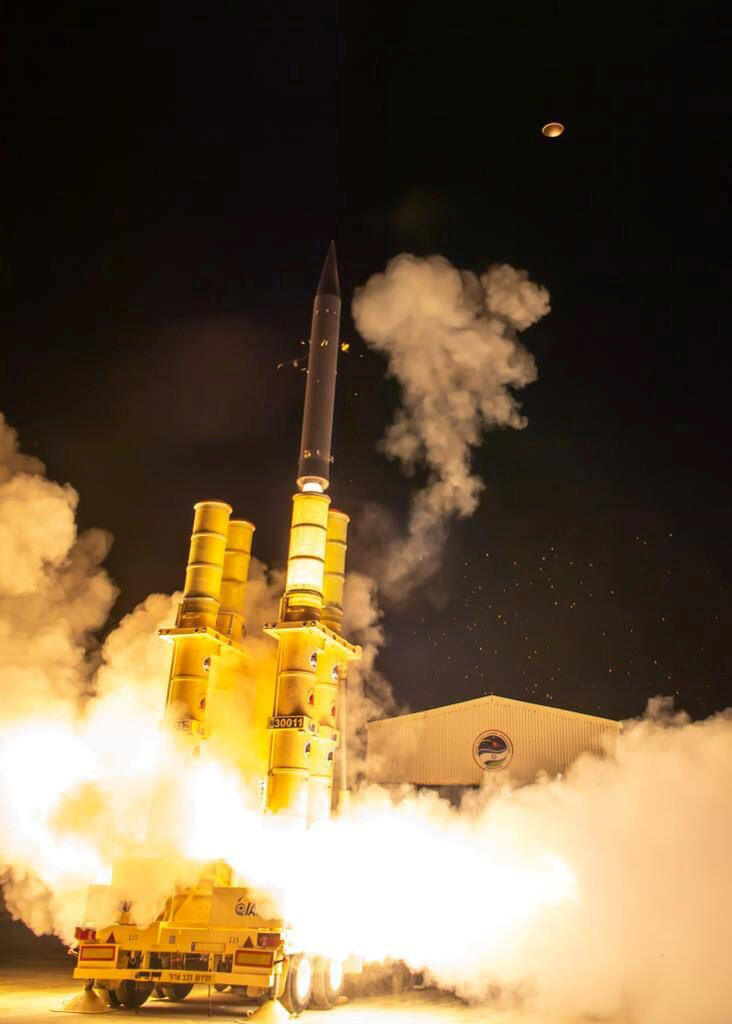
Arrow 3 missile defense system
(Photo: Defense Ministry)
A David’s Sling interceptor costs about 1 million shekels ($320,000), while an Arrow 3 interceptor costs a little over 2 million shekels ($650,000). Still, officials say the choice to use David’s Sling in these cases was not necessarily financial. It was rather tied to the air defense array’s available reserves, against the backdrop of the prolonged war and continued Iranian fire at sensitive sites and the civilian rear.
Security officials have criticized in recent days the effort to expand David’s Sling’s use against ballistic missiles, saying it ignores the high damage potential created by interceptions at relatively low altitude, including multiple impact sites caused by debris, shrapnel or submunitions.
One security official told Calcalist that “the ultimate answer is the Arrow 3 system, and that is what it was developed for. You can try to expand David’s Sling’s capabilities as much as you want, but to defend against Iranian missiles, you need to intercept them outside the atmosphere,” the official said. “A situation has been created in which all of Israel is full of shrapnel impact scenes, and those damages are hardly being counted at all.”
Israel does not disclose how many air defense interceptors it has in stock or the pace at which they are produced, though production has been ramped up significantly since the war that began on Oct. 7, 2023. All production lines for these systems are operating around the clock in the defense industries, with some geared toward supplying interceptor missiles ordered by foreign customers.
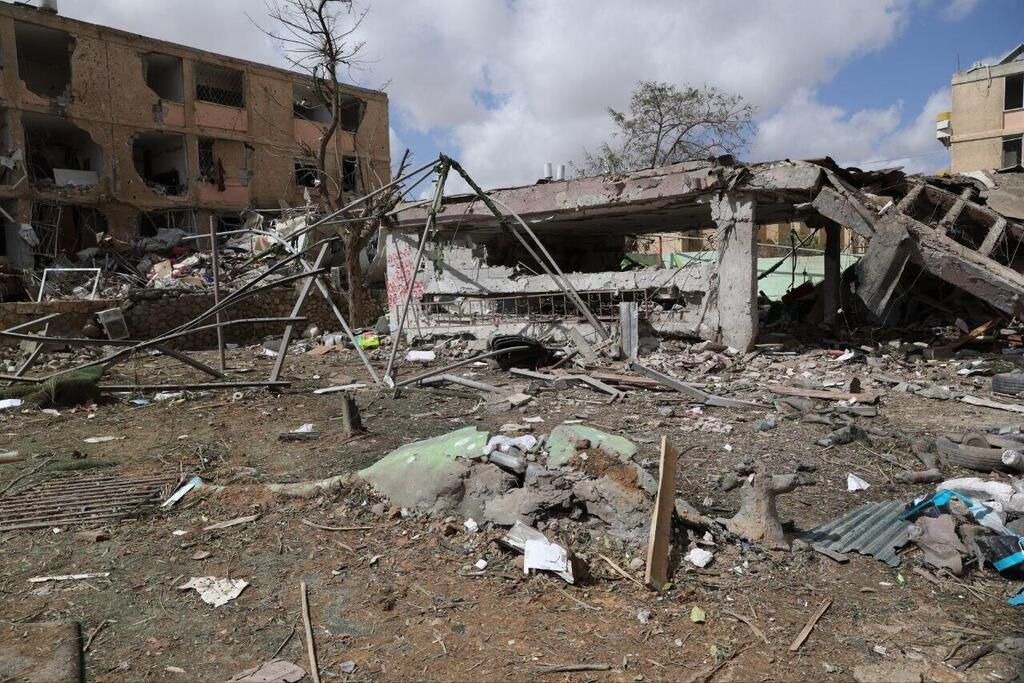
Impact site of Iranian ballistic missile on Dimona in southern Israel, Saturday
(Photo: Alex Kolomoisky)
Even so, security officials say the current stocks of interceptors available to the air defense array are the result of procurement decisions made years ago, because the time required to manufacture a defensive interceptor is longer than the time needed to produce an offensive missile. Even if Israeli and U.S. defense industries together are producing more defensive missiles than the total number of missiles Iran is making at the same time, many of those interceptors are not relevant to the ballistic missile threat.
“Everyone is producing at a crazy pace, and all the defense industries are bending over backward to increase stockpiles,” one security official told Calcalist. “But you have to take into account that what you fire today is what you ordered from someone two or three years ago. It is a story of a long logistical tail, including early procurement of raw materials, engines and seekers. And yes, Israel must acquire many more Arrow 3 missiles.”
Since the start of the war, the IDF has not reported the size of each barrage fired at Israel, the number of interceptions or which defense systems were used in each case. On Sunday, against the backdrop of the failed interceptions Saturday night in Arad and Dimona, the Air Force said that since the start of the current war, Iran has fired about 440 ballistic missiles at Israel and that 92% of them had been successfully intercepted.
Overestimation of damage to Iran
The military said residents of Dimona and Arad received advance warnings several minutes before the missile impacts, and that despite Home Front Command shelter-in-place orders, many of the injured did not do so — a factor the army said helps explain the relatively high number of casualties at both sites. Prime Minister Benjamin Netanyahu repeated that claim during a visit to one of the scenes.
Military officials also said that since the start of the current fighting with Iran, Tehran has not launched any types of missiles or munitions that were not already known to the defense establishment.
At the same time, military assessments in recent weeks have pointed to significant damage to Iran’s launch capabilities, suggesting a possible reduction in the number of missiles fired at Israel. However, the continued launches from Iran, alongside daily strikes on infrastructure and the civilian rear, indicate that these assessments may overstate the operational achievements of the United States and Israel, while an end to the war does not appear to be in sight.