


Attorney General Gali Baharav-Miara will begin consultations ahead of a meeting initiated by President Isaac Herzog to discuss the possibility of a plea deal with Prime Minister Benjamin Netanyahu in his corruption cases. Whether she believes in the process or not, at this stage, the attorney general will have to respond to the president’s request to agree to mediation. She will not be able to cite any substantive reason not to do so.
The process takes place before a mediating judge who is not part of the panel hearing the main case. Its purpose is to bridge the parties’ positions and reach a plea deal that would end the trial. Unlike regular mediation, criminal mediation is led by a judge who has undergone special training in the field. Because mediation is based on communication and listening between the sides, unlike court proceedings conducted through lawyers arguing before a judge, it is essential that the mediating judge be attentive and know how to manage the process properly. The parties can pursue a deal while the trial continues.
Gallery
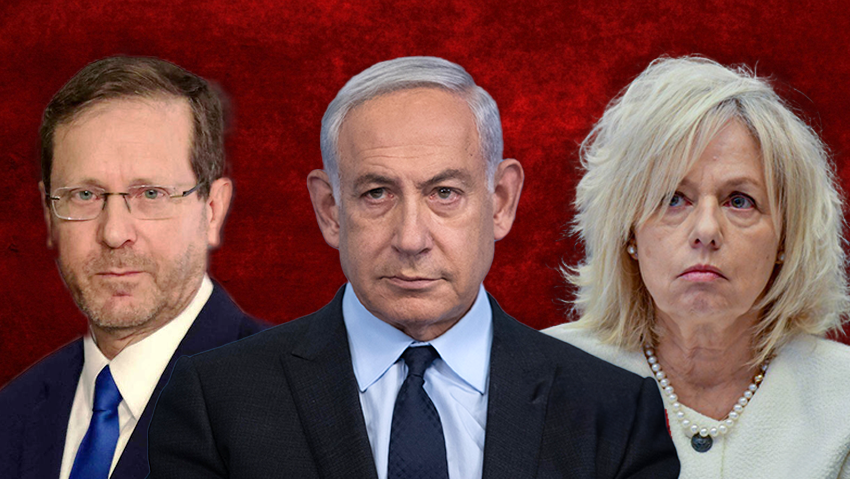
President Isaac Herzog, Prime Minister Netanyahu, Attorney General Baharav-Miara
(Photo: Rafi Kotz, Alex Kolomoisky, AFP)
Until now, Baharav-Miara’s position has been unequivocal: In 2023, she rejected a proposal by the Jerusalem District Court panel hearing the case to hold criminal mediation aimed at narrowing gaps and reaching a plea deal that would end the trial roiling Israeli society and politics. The attorney general argued at the time that the format was designed to drag out the proceedings. In her view, if Netanyahu wanted a plea deal, he should have his lawyers engage directly with the prosecution team without preliminary legal steps.
Once the attorney general rejected the judges’ proposal, the trial continued to move at a snail's pace — partly due to security concerns and partly because of delays by Netanyahu himself. Herzog’s push for a mediation framework is aimed at delaying or avoiding, for now, his decision on whether to grant Netanyahu a pardon.
Ahead of mediation or talks on the substance of a deal, the parties’ opening positions are very far apart. Baharav-Miara is in no way prepared to accept a formula that would not impose moral turpitude on Netanyahu. That means that if prosecutors seek a finding of moral turpitude as part of the deal, the prime minister would be barred from running for office for many years.
At this stage, Netanyahu, 76, is unwilling to retire from political life. He believes a finding of moral turpitude would be disproportionate and would deny both his constitutional right to be elected and his supporters’ right to vote for him. That also makes irrelevant a plea deal that would otherwise have been accepted without difficulty — leniency in exchange for leaving politics.
At this stage, as was also clear from the letter accompanying his pardon request to the president in November, Netanyahu refuses to admit to the allegations, take responsibility or express remorse for his actions, in whole or in part. That is a basic condition: A defendant must admit to the offenses, or to alternative offenses agreed upon by both sides.
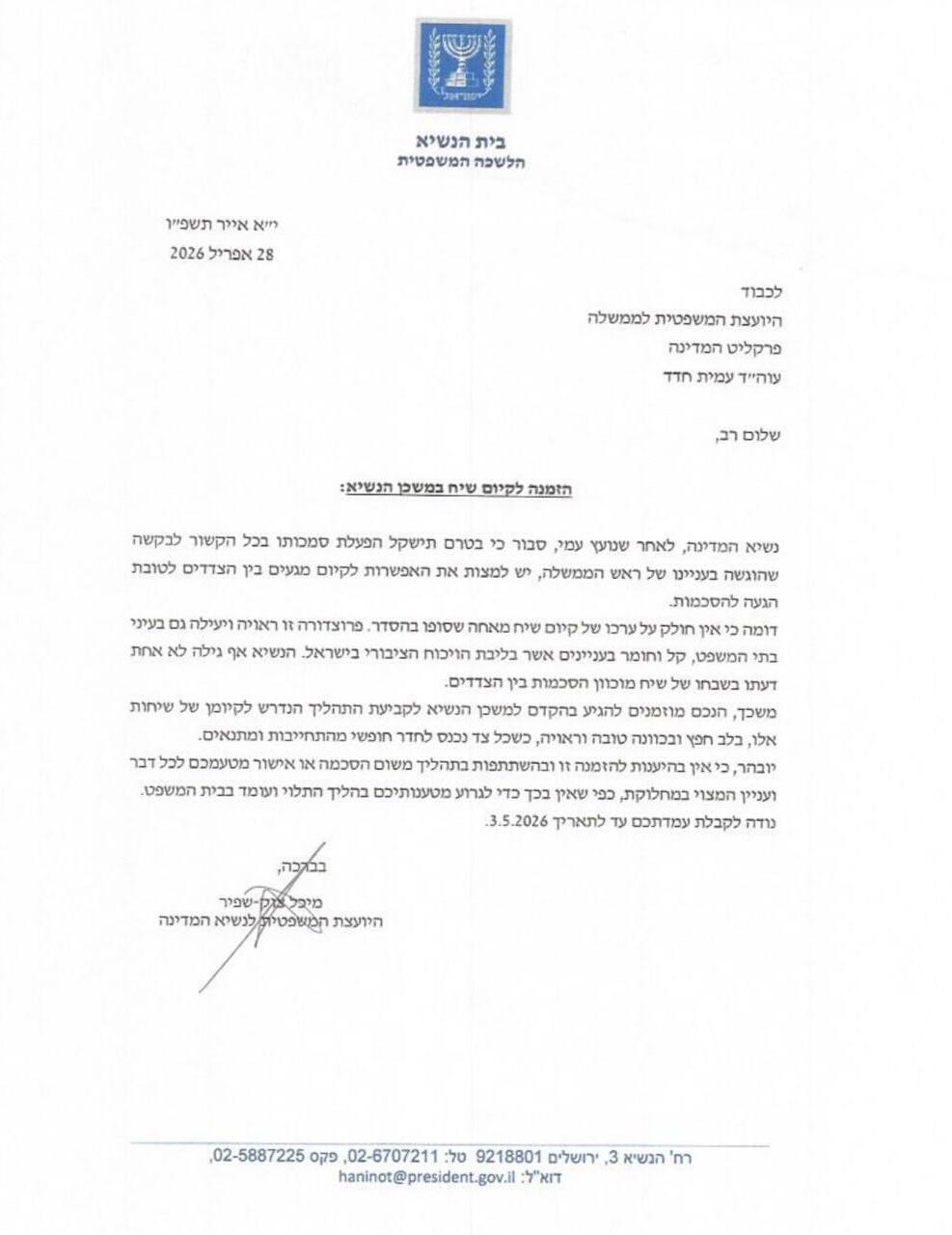
The letter sent by President Isaac Herzog’s legal adviser calling for mediation in Netanyahu's criminal cases
From there, it is also possible to determine which charges could be included in a potential deal.
In Case 4000, known as the Bezeq-Walla affair, Netanyahu is accused of advancing regulatory benefits for Bezeq, Israel’s largest telecommunications company, in exchange for favorable coverage on the Walla news site, which was controlled by Bezeq’s owner. The judges previously hinted that the bribery charge, the most serious count in the case, was weakening.
Prosecutors, however, argue that Netanyahu’s cross-examination over the past year has strengthened key elements of the bribery allegation. Even if the attorney general agrees to drop the bribery charge, she is expected to insist that fraud and breach of trust remain part of any agreement.
The prosecution team views the conduct attributed to Netanyahu as being at the most serious end of the scale and therefore believes any deal must include a finding of moral turpitude.
Baharav-Miara, in any case, is aware of what is happening in the public arena and of the debate over a pardon, a plea deal or the continuation of the trial. She knows the trial is the central driver of the government's controversial judicial reform proposal and of the ongoing rejection by large segments of the public, backed by Netanyahu and his allies on the right, of the legitimacy of the judicial system. In the background, legislation to split the institution she heads is advancing rapidly and threatening her continued tenure.
So far, the attorney general has not expressed a public position on the matter, although she heads the prosecution and is therefore responsible for overseeing Netanyahu’s cases. Her opinion could have been added to the thick file submitted by the Justice Ministry’s Pardons Department. But she is expected to play a central role in the next stages of the process, now ahead of criminal mediation or talks on a plea deal.