


The cost of reserve duty days since the outbreak of the Swords of Iron War accounts for more than one-third of the cost of the entire war. This is what emerges from Defense Ministry data, as the defense establishment, while managing the longest military campaign in the country’s history, is also waging a behind-the-scenes fight over its budget, contending with growing operational wear on equipment and a global arms race that is changing the rules of the game.
In March 2026, the Knesset approved the updated budget law, under which the defense budget was set at the enormous sum of 143 billion shekels (about $46.9 billion) — a dramatic jump from the original plan. By comparison, in the years before the war broke out, the annual defense budget framework stood at about 68.5 billion shekels (about $22.4 billion), less than half the amount approved this year.
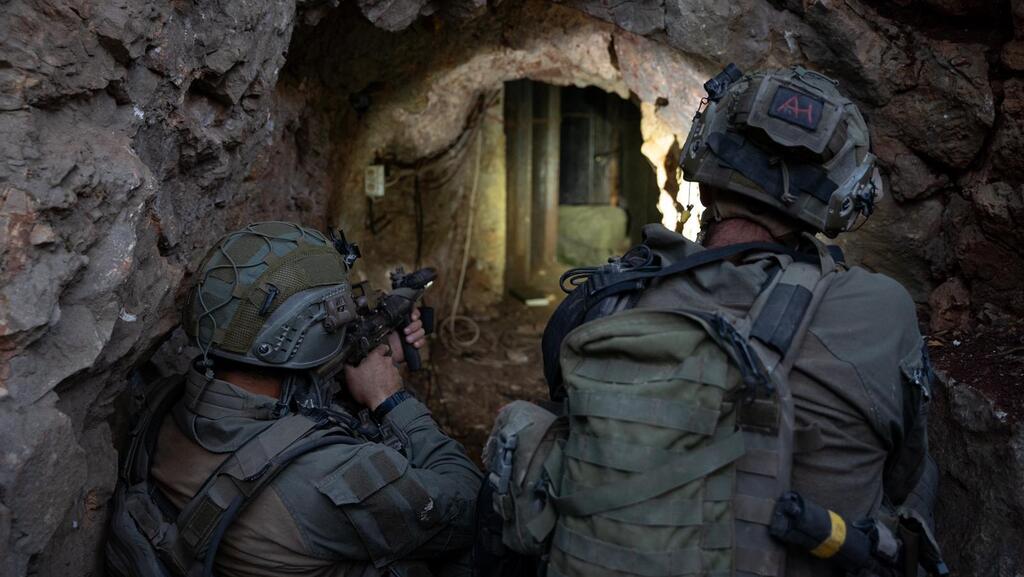
The path to the approved 143 billion shekels was also full of dramatic changes. On budget night, in December 2025, the defense establishment’s original demand stood at 144 billion shekels. The demand was based on the expectation of maintaining 60,000 reservists for readiness for intensive activity on several fronts. Following instructions from the political echelon, the plan was reduced to 40,000 reservists, and the budget was agreed at 112 billion shekels (about $46.7 billion). After a governmentwide cut, it was reduced by another 1 billion shekels and set at 111 billion shekels. But with the launch of Operation Roaring Lion at the end of February, which was carried out earlier than planned, the defense establishment presented an initial estimate of 39 billion shekels (about $12.8 billion) for a 30-day operation in Iran. That calculation did not include intensive action in Lebanon or the estimate of damage to platforms and bases.
Funding will be examined again
After the fighting continued beyond the planned time frame and reached 40 days, Prime Minister Benjamin Netanyahu was presented with the actual needs through the end of the year, estimated at 177 billion shekels ($58 billion). As a result, the political echelon decided to approve 143 billion shekels in the first stage, with an understanding that further funding would be examined in accordance with reserves later in the year.
According to the data, one of the heaviest spending components throughout the war has been reserve service, which has now continued for more than 1,020 days. Defense officials point to unprecedented figures, according to which tens of thousands of reservists are now being held in routine operational service, while at the height of Operation Roaring Lion the number stood at about 145,000 mobilized troops.
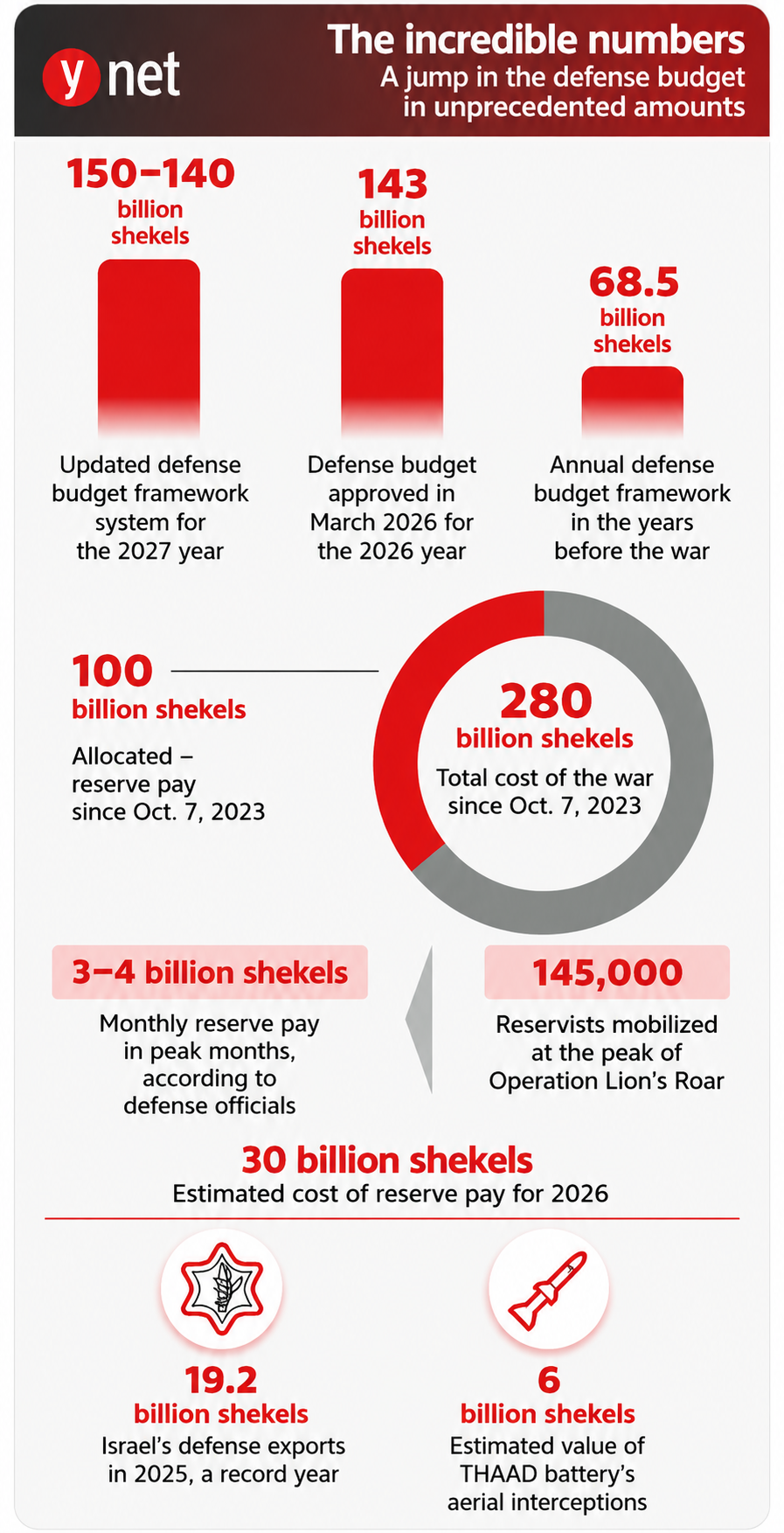
According to the defense establishment’s economic formula, every 10,000 reservists per year cost the economy about 5 billion shekels (about $1.6 billion). But in peak months, the salary cost for reservists alone reaches 3 billion to 4 billion shekels a month. In practice, out of about 280 billion shekels (about $91.8 billion) in war costs since October 7, 2023, about 100 billion shekels has gone to reserve pay. In 2026 alone, the cost of reserve duty is expected to reach about 30 billion shekels.
The prolonged campaign is also taking a heavy toll on operational equipment. An analysis of the ground forces presents a troubling picture, in which the rate of wear from ongoing operational activity exceeds the pace of repairs and procurement. As a result, hundreds of vehicles are currently out of service without engines because of a shortage of spare parts and lengthy repair times, and hundreds of Humvees in the light mobility array have gone out of use, while the pace of delivery of new vehicles is failing to close the gap.
At the same time, the defense establishment is also forced to confront the challenge of a global arms race, which is disrupting supply chains and driving up prices. Rigid demand from Ukraine; NATO countries working to raise defense budgets to 5% of GDP; and Taiwan, which is preparing for a possible confrontation with China in 2027 — all of these are creating enormous excess demand. The U.S. administration’s decision to double the production pace of American defense industries, alongside huge deals such as a $58 billion Patriot missile deal, has led to price increases in nearly every procurement component.
More than 300 interceptions
Despite the rising cost of equipment, defense officials stress the decisive strategic partnership with the United States and describe it as priceless. In Operation Genesis Flight, which opened Operation Roaring Lion, a combination of unprecedented aerial refueling enabled a sortie by about 200 Israeli fighter jets in Iranian skies.
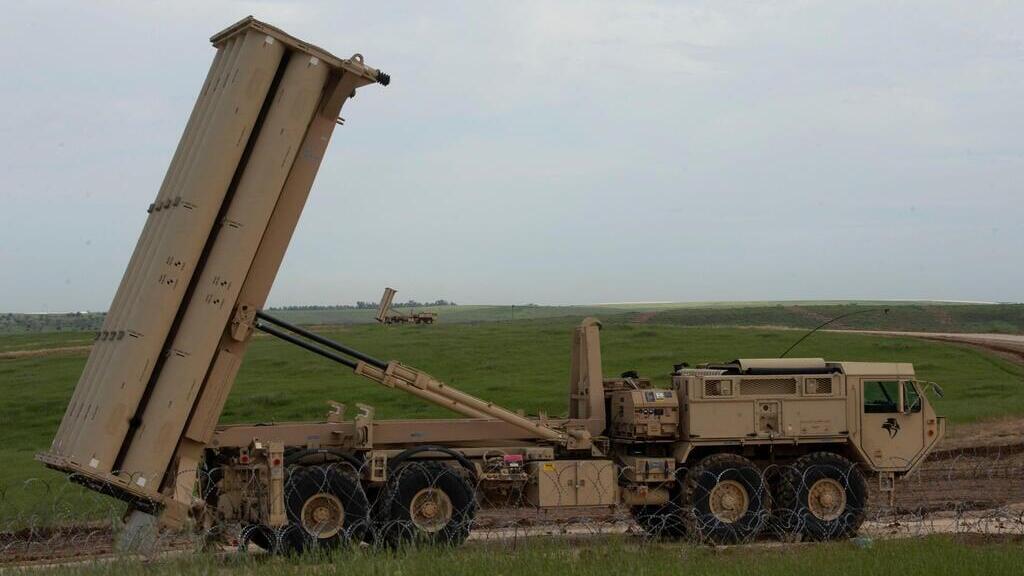
THAAD missile defense system
(Photo: AFP / Handout / DVIDS / US Army)
In the air defense array, the American THAAD battery deployed in Israel carried out, according to foreign reports, more than 300 interceptions of ballistic missiles. Given that each interceptor is estimated to cost $20 million, this amounts to direct defensive aid worth about $6 billion. The cost of hosting American forces in Israel is estimated at hundreds of millions of shekels, a sum largely returned to the local economy through the soldiers’ private consumption.
Looking ahead to 2027 and 2028, defense officials warn that maintaining three security zones — more than 500 square kilometers in Lebanon, more than 220 square kilometers in Gaza and one in Syria, alongside tensions on the eastern border — requires long-term budget planning. To maintain operational stability and high readiness, the defense establishment estimates that the annual budget in the coming years will need to stand at 140 billion to 150 billion shekels (abut $49.2 billion), contrary to the Finance Ministry’s aspiration to return to prewar budget frameworks.
Alongside the challenges, the defense establishment is also pointing to one economic bright spot: In 2025, Israeli defense exports broke a record and reached $19.2 billion. The impressive growth, which took place during intensive fighting, reflects global demand for Israeli technology and marks the defense-tech sector as a central national growth engine for the coming years.