


The smashing of a monument Tuesday in the Palestinian village of Madama by lawmaker Zvi Sukkot is only the latest in a long series of statements, actions and policy decisions by members of Israel’s current governing coalition that have triggered diplomatic and public-relations crises abroad.
Sukkot entered the village on a tour secured by the IDF and Border Police and took part in destroying the monument. According to the military, he did so in violation of the framework that had been coordinated with him. The IDF responded sharply, saying Sukkot and his associates acted “deceptively and manipulatively,” exploited the protection provided by troops, diverted soldiers from operational missions and “needlessly endangered” them.
Knesset member filmed smashing terror memorial in Palestinian village under army guard


Sukkot said he had demanded that the military remove monuments commemorating terrorists and, when that did not happen, decided to act himself. Footage of the incident quickly spread internationally. Foreign Ministry officials said it amounted to “another nail in the coffin of Israeli legitimacy in the West Bank.”
The hammer wielded by Sukkot joins a chronology that already includes calls to “erase” a Palestinian village, a map incorporating Jordan into Israel, talk of using a nuclear bomb in Gaza, calls for “voluntary migration” and renewed Jewish settlement in the Strip, challenges to the Temple Mount status quo and a statement that starving two million Gazans might be “just and moral.” Some of those remarks ultimately contributed to personal sanctions against serving Israeli ministers.
It would be both inaccurate and simplistic to attribute Israel’s deteriorating international standing solely to those statements. The prolonged Gaza war, the death toll, widespread destruction and humanitarian crisis have all played a central role. But time and again, Israel has found itself explaining that comments by senior ministers did not represent official policy, often only after those remarks had already become international headlines or even material cited against Israel at the International Court of Justice.
It began before October 7
One of the first major confrontations came even before the October 7 massacre, over the government’s judicial overhaul in early 2023.
Then-U.S. President Joe Biden publicly expressed unusual concern, saying: “Like many strong supporters of Israel, I’m very concerned. They cannot continue down this road.” He also said he did not plan to invite Prime Minister Benjamin Netanyahu to the White House in the near future and called for broad compromise.
Netanyahu responded that Israel did not make decisions based on “pressure from abroad.” Members of Congress urged Biden to use the tools available to him to prevent harm to Israel’s judiciary, and what began as a domestic political dispute became a recurring source of friction between Jerusalem and Washington over the character of Israeli democracy.
The next major controversy came from Finance Minister Bezalel Smotrich. After the murder of brothers Hallel and Yagel Yaniv and a settler rampage in Huwara, Smotrich said: “I think the village of Huwara needs to be erased. I think the State of Israel should do it.”
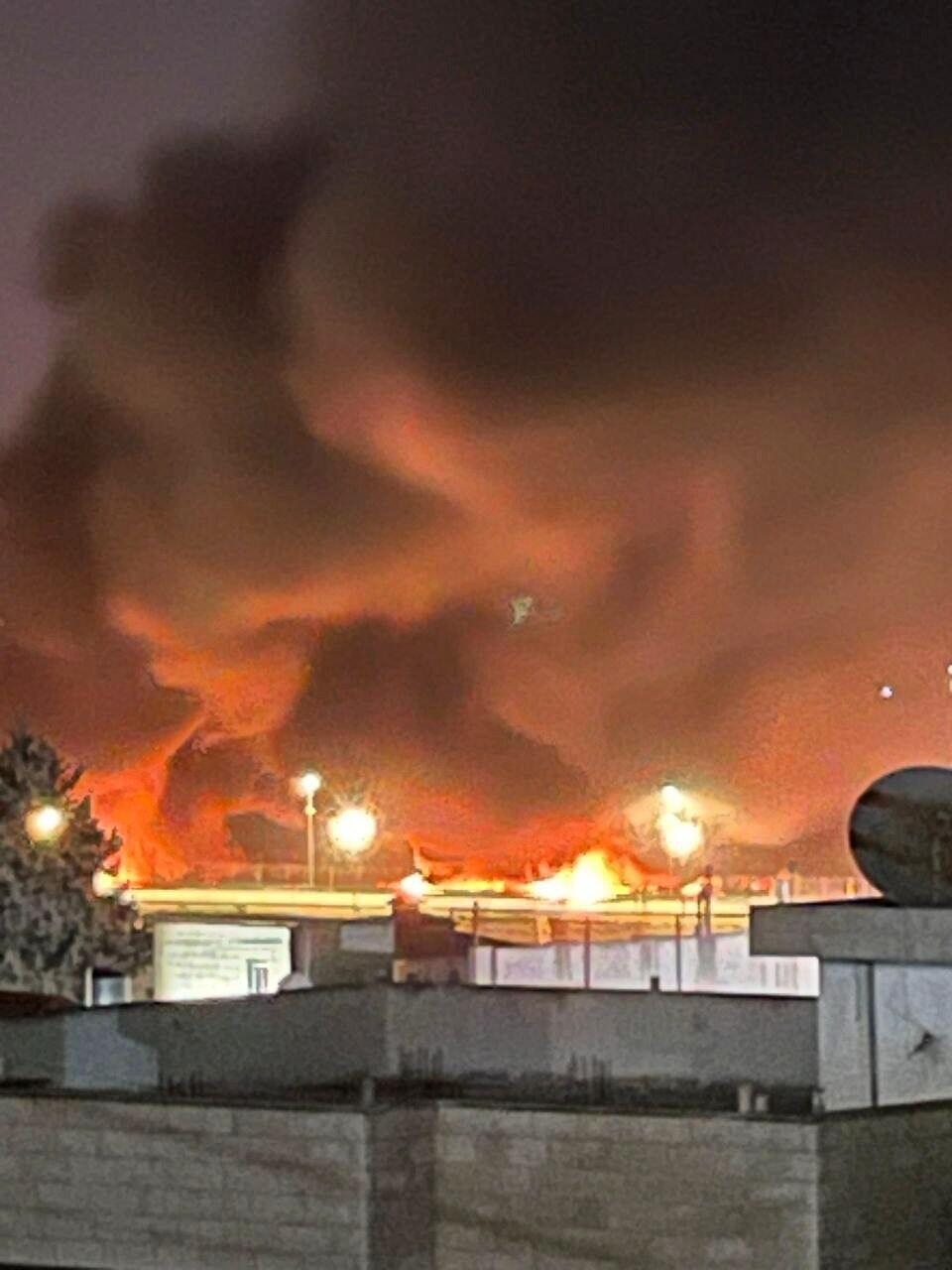
He clarified that civilians should not take such action themselves, but the damage was immediate. U.S. officials sharply condemned the remark, and his visit to Washington became a diplomatic issue in its own right, with administration officials avoiding meetings with him.
Less than three weeks later, Smotrich triggered another crisis. In a speech in Paris, he declared that “there is no such thing as a Palestinian people” and called Palestinian identity an invention less than a century old.
The diplomatic fallout was compounded by the map displayed at the lectern, which showed a vision of “Greater Israel” that included the territory of Jordan, a country with which Israel has a peace treaty. Jordan summoned Israel’s ambassador, the European Union demanded that Israel disavow the remarks, and Israel was forced to issue a formal clarification affirming Jordan’s territorial integrity and its commitment to the peace agreement.
That same month, the Knesset amended the 2005 disengagement law to allow renewed Israeli presence in areas evacuated in the northern West Bank. Washington regarded the step as sufficiently serious to summon Israeli Ambassador Mike Herzog to the State Department, an unusually sharp diplomatic move.
Ben-Gvir and the ‘golden evidence’
In August 2023, National Security Minister Itamar Ben-Gvir created a crisis of his own when he said: “My right, my wife’s right and my children’s right to move around in Judea and Samaria is more important than freedom of movement for Arabs.”
Israeli diplomatic officials described the statement at the time as a “mega public-diplomacy attack,” warning that it offered what they called “golden evidence” to critics accusing Israel of apartheid.
The White House and the European Union condemned the remarks. The U.S. State Department said it opposed racist rhetoric and stressed that both Israelis and Palestinians deserved equal measures of freedom and security.
‘An atom bomb on Gaza’ reaches The Hague
In November 2023, Heritage Minister Amichai Eliyahu was asked whether dropping a nuclear bomb on Gaza was an option.
“That’s one way,” he replied.
Netanyahu quickly distanced himself from the remark, but it had already spread around the world. Its significance grew when South Africa filed its genocide case against Israel at the International Court of Justice.
A full section of the filing cited statements by Israeli officials in an attempt to establish intent, including Eliyahu’s remark. Quotes from other coalition lawmakers and slogans such as “there are no uninvolved civilians” were also cited.
Israel rejected the genocide allegation, arguing that such quotes were taken out of context and that government policy was determined by the security cabinet, not individual comments. The United States and Britain also rejected the genocide accusation.
But the mere fact that ministers’ statements had become evidence in an international legal proceeding prompted Netanyahu, ahead of the hearings, to ask his ministers explicitly to “consider their statements and words.”
Ten ministers at a conference calling for return to Gaza
By January 2024, the issue had moved beyond isolated remarks.
Ten government ministers attended a “Victory Conference” calling for the renewal of Jewish settlement in Gaza and the northern West Bank. Ministers and lawmakers signed a declaration supporting renewed settlement, while a sign in the audience read: “Only transfer will bring peace.”
Ben-Gvir danced with participants and said there should be encouragement for Gazans “to leave voluntarily.”
The event contradicted Netanyahu’s public position that resettling Gaza was not a realistic war objective and complicated Israel’s insistence that its goal was to dismantle Hamas rather than permanently conquer the Strip or expel its population.
Temple Mount visits create repeated regional crises
The Temple Mount has become another recurring source of diplomatic friction during the government’s term.
Ben-Gvir’s visits to the compound drew condemnation from Jordan, Egypt and Saudi Arabia from the beginning of 2023. Jordan called one visit a “provocative step” and a “dangerous escalation.”

Minister Ben-Gvir waves an Israeli flag at the Temple Mount
In August 2024, the controversy deepened when Ben-Gvir said his policy was to permit Jewish prayer at the site, even as Netanyahu’s office insisted that the status quo had not changed.
The United States said unilateral actions that jeopardized the existing arrangements were “unacceptable,” France called the move a “new and unacceptable provocation,” and the European Union joined the condemnations.
‘Maybe just and moral’ to starve two million Gazans
Smotrich caused another global uproar in August 2024 when he said at a conference that the world would not allow Israel “to starve two million civilians,” adding that doing so might be “just and moral until they return our hostages.”
The sentence immediately became an international headline. CNN stressed that deliberate starvation of civilians can constitute a war crime, a Jewish Democratic member of Congress called the remark “sick,” and Hezbollah leader Hassan Nasrallah even quoted it in a speech.
Then-EU foreign policy chief Josep Borrell called for sanctions against both Smotrich and Ben-Gvir over such statements, accusing them of incitement to war crimes.
From statements to policy
At the same time, Smotrich used his role as a minister in the Defense Ministry to promote significant changes in Israeli policy in the West Bank.
In June 2024, the security cabinet approved the legalization of five outposts, additional settlement construction and sanctions against senior Palestinian Authority officials. Smotrich presented the decision as a direct response to countries recognizing a Palestinian state, saying: “For every country that unilaterally recognizes a Palestinian state, we will establish a community in its name.”
The defense establishment opposed some of the measures and warned they could fuel escalation and weaken the Palestinian Authority.
Later, Smotrich advanced additional steps expanding Israeli control in the West Bank through settlement growth, changes to Civil Administration authorities, declarations of state land and intensified enforcement against Palestinian construction.
In February 2026, further cabinet decisions drew a joint condemnation from eight countries, including Egypt, Jordan, Saudi Arabia and the United Arab Emirates, which called them an “unprecedented escalation” and an attempt to impose Israeli sovereignty. The White House also made clear that Trump did not support annexation.
UNRWA laws and another round of international criticism
In October 2024, the Knesset passed legislation restricting UNRWA activity in Israel after evidence emerged that agency employees were suspected of involvement in the October 7 massacre and Israel alleged extensive links between UNRWA and Hamas.
The law passed 92-10 and was not solely a coalition initiative, with opposition lawmakers also supporting it.
Still, the diplomatic reaction was immediate. The foreign ministers of Canada, Australia, France, Germany, Japan, South Korea and Britain called for the legislation to be stopped before the vote. After it passed, the UN secretary-general and European governments condemned it and warned of damage to humanitarian aid operations. Britain even examined whether the legislation could affect future arms-export licenses to Israel.
Nearly two years later, Israeli authorities began clearing an UNRWA compound in Kafr Aqab, Jerusalem. Ben-Gvir arrived personally and published a video from the site, again prompting international criticism.
Sanctions on serving ministers
In June 2025, relations with several Western governments crossed another threshold.
Britain, Canada, Australia, New Zealand and Norway imposed personal sanctions on Smotrich and Ben-Gvir, citing “incitement to violence against Palestinians” and serious violations of Palestinian rights. The measures included travel bans and financial restrictions.
The Trump administration backed Israel. Secretary of State Marco Rubio demanded that the sanctions be lifted, arguing they did not help efforts to return the hostages or end the war.
The practical consequences for the ministers were limited, but the symbolic significance was severe: Western democracies were now sanctioning sitting members of Israel’s government.
France joined the move in June 2026, announcing that Smotrich would not be allowed to enter the country as part of broader sanctions targeting figures linked to West Bank violence.
‘Keep riding camels’
Saudi Arabia was pulled into the growing list of diplomatic controversies in October 2025.
Responding to Riyadh’s demand for progress toward a Palestinian state as part of normalization with Israel, Smotrich said: “No thanks. Keep riding camels in the desert in Saudi Arabia.”
The remark triggered outrage in Saudi and Arab media. One Saudi diplomat said the minister had “exposed his ignorance,” and commentators in Riyadh attacked him sharply.
Within hours, Smotrich apologized, acknowledging that the remark was “unsuccessful” and expressing regret for the offense caused.
The incident came at a time when normalization with Saudi Arabia remained one of Israel’s and the Trump administration’s key strategic objectives, illustrating how a single sentence from a senior minister could create an immediate crisis with the Arab country Israel most wanted to bring into a diplomatic agreement.
E1 and the declaration that a Palestinian state is ‘erased’
Recent weeks provided another example, this time through policy rather than rhetoric alone.
The advancement of a tender for about 1,200 housing units in the E1 area between Jerusalem and Ma’ale Adumim drew condemnation from six major European countries and sparked discussions over additional steps against Israel.

Ma’ale Adumim and the E1 corridor
(Photo: AHMAD GHARABLI / AFP)
Smotrich had previously said the move meant that “the idea of a Palestinian state is being erased.”
A European diplomat said construction in the area was viewed in Europe as severely damaging the possibility of a future Palestinian state and could justify a significant shift in European policy toward Israel. Germany, France, Britain and Italy discussed a joint response, while Britain considered further sanctions.
Ben-Gvir’s Gaza flotilla video
One of the clearest examples of self-inflicted diplomatic damage came in May 2026, not through a foreign report or interpretation, but through a video published by an Israeli minister himself.
After Israeli forces intercepted a Gaza-bound flotilla, Ben-Gvir went to the site where activists were being held at Ashdod Port. He was filmed confronting foreign activists while they were restrained and lying face down, then published the footage himself under the message: “Summer camp is over.”
Foreign Minister Gideon Sa’ar publicly rebuked him, calling the episode a “disgraceful spectacle” and saying: “You caused damage. You are not the face of Israel.”
She approached Ben-Gvir and was restrained by prison guards
Within hours, the video became an international headline. Twenty-four countries condemned Israel, Israeli ambassadors were summoned for reprimands and major outlets including Le Monde, BBC, CNN, NBC and The Guardian prominently featured the footage.
The affair widened when released activists alleged they had been beaten and subjected to abuse and sexual assault in custody, allegations denied by the Israel Prison Service and Israeli authorities. Italy said the claims would be investigated, while Germany demanded explanations regarding injured citizens.
France later announced that Ben-Gvir would not be allowed to enter the country.
Israel’s standing hits historic lows
It is impossible to quantify precisely how much each ministerial statement or action shifts public opinion abroad. Surveys themselves indicate that the Gaza war is a central factor in the deterioration of Israel’s image.
But the cumulative result is difficult to ignore.
In February 2026, Gallup published an unprecedented finding: for the first time since 2001, more Americans expressed sympathy for Palestinians than for Israelis, 41% compared with 36%. Just a year earlier, Israel had led 46% to 33%. Fifty-seven percent of Americans said they supported the creation of a Palestinian state.
Another Gallup poll found that the share of Americans holding a favorable view of Israel had fallen to 54%, a 25-year low. Among Democrats, 60% held an unfavorable view.
A Pew survey later found that around 60% of U.S. adults now viewed Israel negatively, a trend that led the Israeli government to invest tens of millions of dollars in campaigns aimed at changing American public opinion.
It is difficult to determine how much global opinion is shaped specifically by the words and actions of Ben-Gvir, Smotrich, Eliyahu or Sukkot. But as Israel spends diplomatic capital and large sums trying to persuade the world that it acts out of security necessity, every remark about starvation, transfer, erasing Gaza or resettling it works in precisely the opposite direction.