


The U.S. Senate on Wednesday rejected proposals to block arms sales to Israel, but the vote exposed an unprecedented divide within the Democratic Party over American military aid to the Jewish state. A record 40 Democratic senators supported halting the sale of armored bulldozers to Israel, while 36 backed stopping shipments of heavy bombs.
The deals in question are valued at $446.8 million and include the sale of D9 bulldozers worth $295 million and 12,000 heavy bombs, each weighing 450 kilograms, worth $151.8 million.

Vermont Sen. Bernie Sanders, a Jewish Democrat, led the effort to block the arms sales. His proposals were defeated 59-40 on the bulldozers and 63-36 on the bombs. However, the number of Democrats supporting the measures has doubled compared to Sanders’ previous attempts over the past two years.
In a similar vote last summer, only 23 Democrats supported the move, and in 2024 the proposals received backing from as few as 19 senators. Today, roughly three-quarters of the Democratic caucus in the Senate supports restricting arms sales to Israel.
The growing Democratic support for canceling the deals stems from dissatisfaction within the party with the policies of Prime Minister Benjamin Netanyahu’s government, as well as the wars in Gaza, Lebanon and Iran. Supporters of the measures argued that the Senate should halt the transfer of new weapons to Israel, claiming they are intended to support the war against Tehran. They further argued that President Donald Trump launched that war in coordination with Netanyahu without congressional approval, a move they say most Americans oppose. The Trump administration declared a state of emergency to bypass Congress and expedite the transfer of the bombs to Israel.
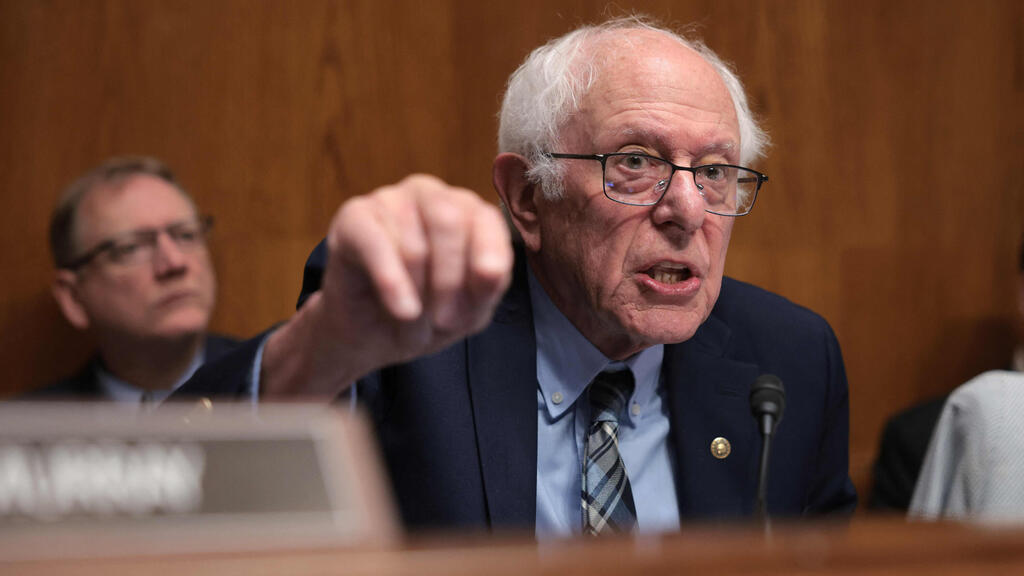
Vermont Sen. Bernie Sanders, a Jewish Democrat, led the effort to block the arms sales
(Photo: Kayla Bartkowski / Getty Images North America/ AFP)
Sen. Chris Van Hollen of Maryland said ahead of the vote that “If we want to rein in a Trump administration that launched an illegal war against Iran, we should also rein in the Netanyahu administration that's doing exactly the same thing with American taxpayer dollars.”
Several Democratic senators who had previously opposed limiting arms sales to Israel shifted their positions and voted in favor of the current measures. Sen. Mark Kelly of Arizona said “reckless decisions” by Trump and Netanyahu led him to change his stance.
“Under Prime Minister Netanyahu’s government, we’ve seen an expanded war in Lebanon that is putting innocent Lebanese civilians at risk, and ongoing violence against Palestinians and their homes being demolished in the West Bank,” Kelly said. “All of this has undermined the path forward for peace.”
Republican senators voted as a bloc against holding the vote on the proposals. They were joined by several Democrats, including Senate Majority Leader Chuck Schumer and Sen. Kirsten Gillibrand, both of New York. On Monday, the group Jewish Voice for Peace led a protest outside the offices of Schumer and Gillibrand, where nearly 100 demonstrators were arrested while demanding the senators support Sanders’ proposals.
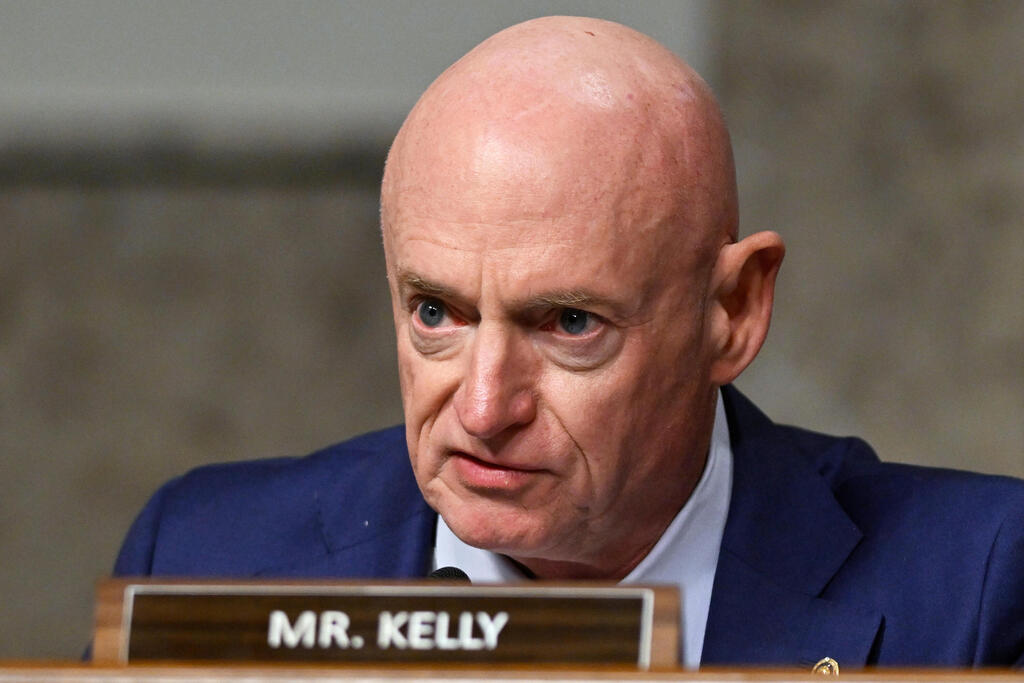
Sen. Mark Kelly of Arizona said 'reckless decisions' by Trump and Netanyahu led him to vote to halt the arms sales
(Photo: John McDonnell/ File/AP)
Sen. Jim Risch of Idaho, the Republican chairman of the Senate Foreign Relations Committee, opposed the legislation and warned it would embolden Iran and raise doubts about U.S. credibility in the Middle East. Risch said the move “would send a message that the United States is prepared to abandon its ally Israel and leave it vulnerable to further Iranian attacks.” He added that delaying the delivery of weapons would endanger tens of thousands of American citizens living in Israel.
Israeli diplomatic officials warned that the vote reflects a historic erosion in support for unconditional U.S. aid to Israel, with opposition that was once confined to the fringes of the Democratic Party now moving into the mainstream.
The left-leaning pro-Israel lobby J Street has also joined the trend, recently changing its official position on military aid to Israel. The organization’s president, Jeremy Ben-Ami, announced that J Street will now advocate a gradual phaseout of all grants for weapons purchases once the current security assistance agreement expires in 2028. Ben-Ami cited government policy regarding the wars in Gaza and Iran, as well as violence by extremist actors in the West Bank.
He said the United States should continue to provide Israel with defensive systems such as Iron Dome, but that the goal is to transition Israel to the status of an ally that purchases all of its military equipment with its own funds, without subsidies. However, Ben-Ami clarified that U.S. candidates who deny Israel’s existence as the nation-state of the Jewish people or support a full arms embargo — meaning a complete ban on weapons sales to Israel even without grants — will not receive the organization’s support in elections.
First published: 09:34, 04.16.26