

U.S. President Donald Trump’s plan to end the war in Gaza could be reached soon, a senior U.S. official told Sky News Arabia on Wednesday.
The officials said that the American mediators were "optimistic about that possibility.” A White House official added that the negotiations are at “a critical stage.”
Hamas official Khalil al-Hayya, Trump advisers Jared Kushner and Steve Witkoff arrive in Sharm el-Sheikh for Gaza ceasefire talks


Meanwhile, an Israeli official familiar with the talks in Sharm el-Sheikh told Ynet that the sides are “moving closer to agreement on the first phase of Trump’s Gaza plan.” While disagreements remain, the official described the mood as “cautiously optimistic” and said “the direction is positive.”
Speaking to Saudi Arabia’s Al Hadath network, another senior Israeli official said Israel is seeking to “revise the withdrawal map in the first phase of the agreement.” He added that “the Arab position carries unprecedented weight in any Gaza agreement” and that Trump is exerting significant pressure to finalize the first phase.
Izzat al-Rishq, a senior Hamas official, welcomed the participation of senior Qatari and Turkish representatives in the Egypt-hosted negotiations. “Their involvement gives the talks strong momentum toward positive results to end the war and achieve a prisoner swap,” he said. Al-Rishq added that their presence also narrows Netanyahu’s room for maneuver to continue the offensive or sabotage the negotiations.
Meanwhile, Politico reported that as American advisers Steve Witkoff and Jared Kushner prepared to join talks on Trump’s plan to end the war, the two held a strategic meeting Tuesday in the Oval Office, according to a senior U.S. official.

An Israeli adviser familiar with the negotiations told Politico: “We are closer to a deal than ever before because President Trump decided to leave Netanyahu no room for maneuver.”
The Sharm el‑Sheikh talks began Wednesday at around 11 a.m. local time, marking a pivotal day in the process. For the first time, all key actors are present — Trump’s advisers Witkoff and Kushner; Strategic Affairs Minister Ron Dermer, who leads Israel’s negotiating team; Qatar’s Prime Minister Mohammed Al Thani; and Turkey’s top intelligence chief Ibrahim Kalin. A participant in the talks called the next 24 hours a central indicator of whether a deal is within reach.
Yet despite optimism, major gaps remain in the negotiations, including the routes and scope of the IDF’s withdrawal from Gaza; whether Hamas will hand over all 48 hostages, including those held by other groups; the schedule for releasing Palestinian prisoners held in Israel; and the agencies through which humanitarian aid will enter Gaza.
A Palestinian official with knowledge of the talks told the BBC that there are “deep gaps” in how each side interprets Trump’s 20‑point plan. According to the official, disputes have emerged over every major issue discussed in Egypt: a permanent ceasefire; hostage exchanges for prisoners; Israeli withdrawal; distribution of humanitarian aid; and governance of Gaza in the war’s aftermath.
Trump: 'Every country in the world has supported' the Gaza ceasefire plan
(Video: Reuters)
Still, the Qatari channel Al Araby reported a “very positive” atmosphere in Sharm el‑Sheikh, with “optimism” that the current round may produce an agreement—especially with the increased participation of delegations from the U.S., Qatar and Turkey. The channel’s diplomatic and security sources said disagreements persist, but “less than in previous rounds.” The report added that “both sides display greater flexibility than before,” as pressure mounts to end the war. It noted that Hamas is seeking written U.S. guarantees that other sections of the plan will be completed after an initial phase.
Also under discussion are other guarantees tied to Gaza’s reconstruction, with some negotiators demanding that it begin immediately upon signing the agreement—not after all clauses are implemented—and without relocating Gaza’s population. Disputes also remain over names Hamas wants freed and the timetable for surrendering living and deceased hostages, though sources say those are “points where agreement is possible.”
Earlier, mediators continued to exchange lists of Palestinian prisoners proposed for release. According to Palestinian sources, the prisoner issue looms large in the talks, partly because Turkey is pushing to advance the lists, and partly because Hamas demands inclusion of militants with heavy sentences.
A senior Palestinian source told Ynet Wednesday that efforts are underway to raise the number of prisoners serving life sentences to be released from 250 to 300. In parallel, senior officials told Ultra Palestine that during the day’s discussions, the number of names Israel sought to veto was reduced. Still, Israel’s withdrawal from Gaza remains a “significant barrier” to progress, the officials said. At the same time, The Wall Street Journal reported that Hamas is demanding not only the release of prominent convicted terrorists, but also the return of the bodies of October 7 attack architects Yahya and Mohammed Sinwar.

The Sharm el-Sheikh venue hosting the talks
(Photo: AP)
Meanwhile, Egyptian President Abdel Fattah el‑Sisi invited Trump to attend the formal signing of the “Gaza agreement” in Egypt once it is reached. “I call on Trump to continue his support in reaching a Gaza agreement,” el‑Sisi said, adding that Trump had sent envoys on a clear mission: “to work to end the war.”
According to Politico, Trump’s team was forced to make “changes” to its approach to the war, a shift that allowed them to move closer to a ceasefire after months of stalled talks. Trump reportedly increased pressure on Netanyahu while showing greater responsiveness to Arab leaders, from whom he expects reciprocal pressure on Hamas to agree to a truce.
The turning point, Politico reported, was last month’s failed Israeli strike in Qatar, which targeted Hamas leadership but missed its mark. The incident galvanized a recalibration in Washington.
Trump has since worked both ends of the diplomatic spectrum — urging Arab states to press Hamas and applying direct pressure on Netanyahu to bring the war to an end. An Israeli adviser familiar with the negotiations said Netanyahu has little choice. “Netanyahu has nowhere else to turn and needs him both internationally and domestically for any slim chance of political survival,” the adviser told Politico on condition of anonymity.
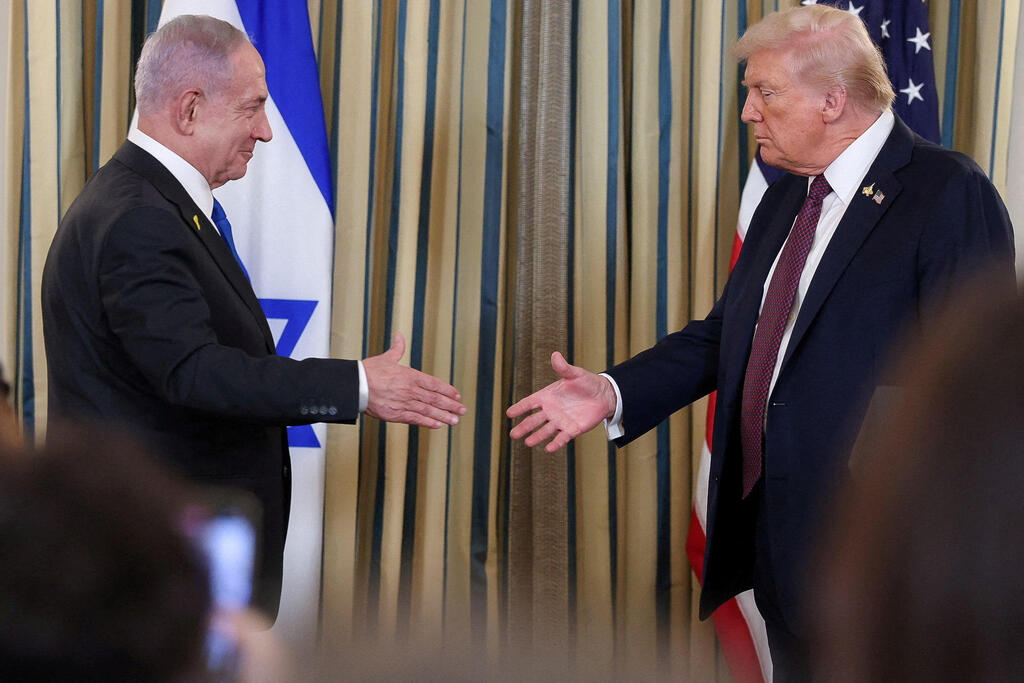
Prime Minister Benjamin Netanyahu and US President Donald Trump
(Photo: REUTERS/Jonathan Ernst)
Trump’s Gaza policy has evolved significantly from his first term in office, which was marked by unilateral moves. This time, he is leaning more on regional partners and displaying patience with behind-the-scenes diplomacy. He has also strategically used Israel’s domestic political calendar to his advantage, as Netanyahu faces mounting pressure ahead of looming elections.
Publicly, Trump has continued to affirm Israel’s right to self-defense. But behind closed doors, he has leveraged warming ties with Arab states to push for a resolution. According to a diplomatic source involved in the negotiations, “From a strength standpoint, Israel has never been in a stronger position. They wiped out Hezbollah in Lebanon, obliterated Hamas in Gaza and convinced the U.S. to strike Iran. But diplomatically, they’ve never been as isolated.”
The source added that European leaders are calling for a Palestinian state, while Arab leaders who signed the Abraham Accords now call Netanyahu “unhinged.” Trump even forced Netanyahu to apologize to the Qataris in his presence at the White House, the source said.
Of all Gulf nations, Trump has relied most heavily on Qatar to advance the Gaza ceasefire effort. Following the strike in Doha, Trump distanced himself from the operation and instructed Netanyahu to call Qatar’s prime minister, Mohammed Al Thani, directly from the White House and apologize. Shortly after the call, Netanyahu publicly announced his support for Trump’s 20-point plan to end the war.
The same source told Politico that Trump used Qatar to open additional channels with Egypt and Saudi Arabia, both of which have since urged Hamas to accept the White House plan. “Trump working with Arab partners, especially Qatar, has helped get things to this point,” the source said.