

A wave of protests is sweeping across Europe, with rising living costs, unaffordable housing and deteriorating public services driving thousands of people into the streets. From violent clashes and mass arrests in France and Italy to tent encampments in Spain and anti-government demonstrations in Albania, public frustration is increasingly spilling into unrest as several European countries approach critical elections.
Young people have emerged as a driving force behind many of the demonstrations, expressing anger over shrinking economic opportunities, struggling schools and the growing difficulty of finding affordable places to live. While hundreds of thousands have participated in peaceful protests, some demonstrations have deteriorated into rioting, looting and confrontations with police.
Riots in France: Limoges City Hall catches fire and collapses
(Video: X)


María Silvestre, a sociology professor at Spain's University of Deusto, told The Associated Press that young Europeans are experiencing "a strong sense of uncertainty and a lack of control." She said individual grievances can combine to create the spark that brings large numbers of people into the streets.
The unrest is unfolding against a politically sensitive backdrop. Major European economies face important electoral contests, while far-right parties are seeking to capitalize on public discontent. Europe is also grappling with uncertainty surrounding the war in Ukraine, growing tensions with Russia and questions about Washington's commitment to its European allies.
France: from school protests to 2,400 arrests
France has witnessed some of the most intense disturbances, with student-led demonstrations expanding into a broader protest movement over the cost of living and the deterioration of public services. High school students have spent more than three weeks organizing blockades and marches, demanding greater funding for schools they say are understaffed and in poor condition, particularly in lower-income neighborhoods.
The movement widened when the CGT labor union and other activists joined the demonstrations, shifting the focus beyond education to economic hardship and government spending priorities. Hundreds of thousands joined largely peaceful marches, but violent groups also took to the streets, setting fires, attacking police and looting businesses.
Gallery
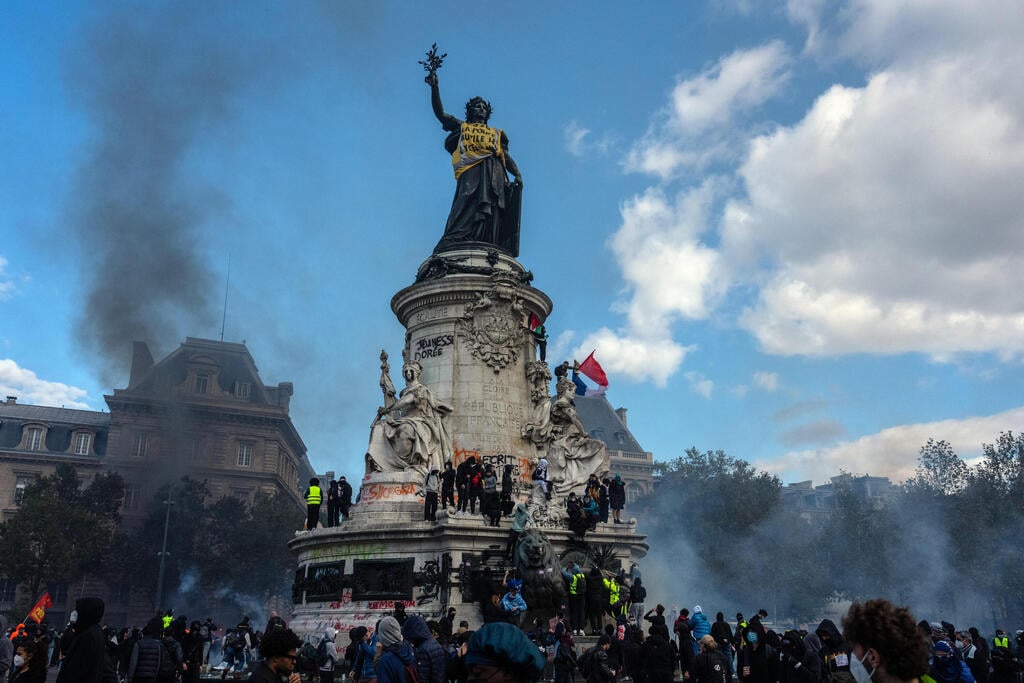
The Marianne statue at Place de la République in Paris, dressed in a yellow vest during the riots in France
(Photo: Carl Court/Getty Images)
The weekend's unrest resulted in approximately 2,400 arrests, with serious disturbances reported in Paris, Marseille, Lyon and Bordeaux. In Limoges, a fire devastated the city's 19th-century City Hall, nearly destroying the historic building. Several schools were also set ablaze, while clashes involving firebombs and police tear gas left hundreds injured.
President Emmanuel Macron condemned the violence, accusing far-left activists of deliberately attacking police and public buildings to create disorder. In a rare televised address Sunday, he pledged to hold those responsible for looting and destruction accountable.
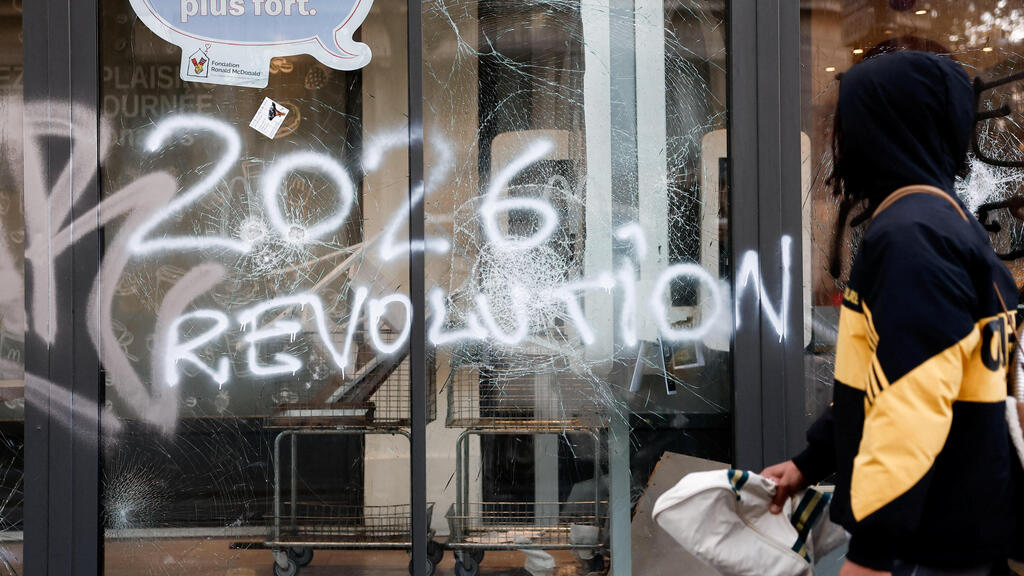
Destruction in Paris after the riots in France
(Photo: REUTERS/Benoit Tessier)
U.S. President Donald Trump also weighed in, blaming immigrants for the disturbances and urging France to close its borders. However, French police and authorities have not identified immigrants as the cause of the unrest, which has involved a broad range of demonstrators alongside masked agitators and people engaged in opportunistic violence.
The violence has intensified pressure on Macron's government as France heads toward its next presidential election, with economic grievances and public frustration providing an increasingly contentious political backdrop.
Spain and Portugal: a housing crisis brings protesters into the streets
In Spain, anger has centered on a housing market that many young people say has made independent living increasingly unaffordable. Protesters have established a sprawling tent encampment in Madrid's Puerta del Sol square, demanding stronger protections for renters and government action to reduce housing costs.
The protest movement gained momentum following the eviction of an 87-year-old woman, who subsequently died while hospitalized. Her case became a rallying point for demonstrators who argue that the housing crisis is pushing vulnerable residents out of their homes while leaving younger generations struggling to afford rent. Similar encampments and demonstrations have appeared in other Spanish cities, including Barcelona, where heavy tourism has compounded pressure on the housing market.
The financial imbalance is stark. Spain's minimum monthly wage stands at 1,221 euros, while the average rent for an 80-square-meter apartment is approximately 1,130 euros, according to an analysis by the business newspaper Expansión. For many workers, that means housing expenses consume nearly an entire minimum-wage income before food, transportation and other essentials are considered.
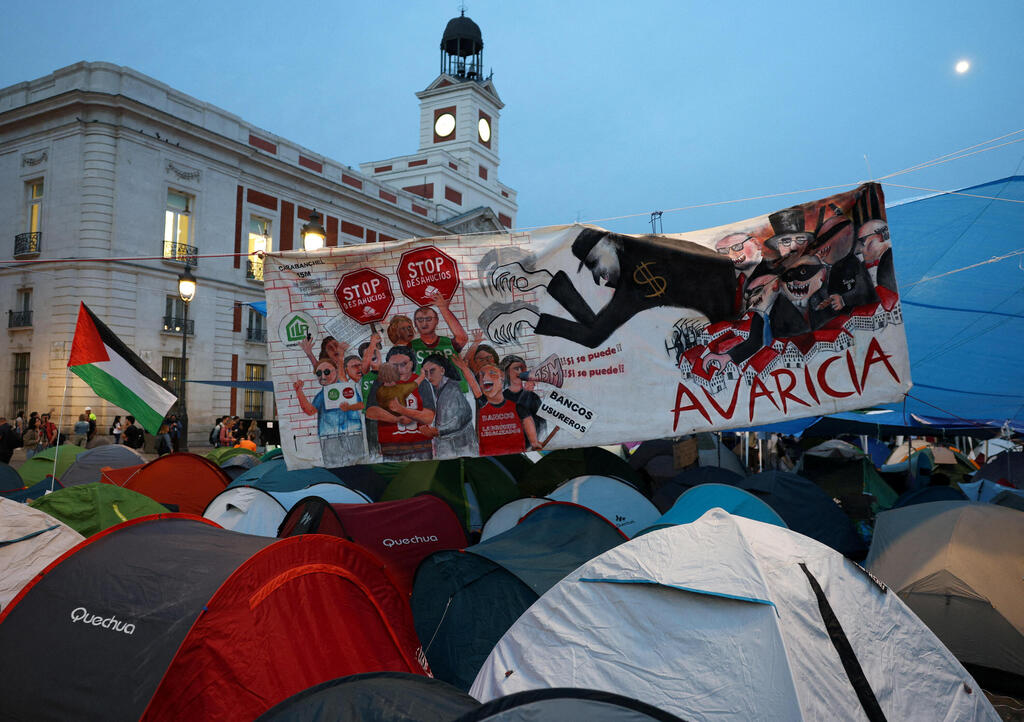
Tent encampment in Madrid's Puerta del Sol square during Spain's housing protest
(Photo: REUTERS/Juan Medina)
Diana Manzanares, a 20-year-old waitress participating in the Madrid encampment, told AP that most of her salary goes toward rent, leaving both her and her roommate struggling to cover basic expenses. She described the situation as representative of what many young people in the Spanish capital face.
The political consequences are already apparent. Spain's Socialist-led government approved measures intended to expand affordable housing, but the proposals failed to secure sufficient parliamentary support, prompting Prime Minister Pedro Sánchez to call an early election in November. Labor unions have also called a general strike for November, the country's first in 14 years.
Education workers have joined the broader wave of discontent. Elementary and secondary schoolteachers in Madrid began an indefinite strike last week, demanding higher pay and improved working conditions. Similar walkouts have taken place elsewhere in Spain during the year.
Neighboring Portugal has experienced comparable protests over housing affordability, with demonstrators gathering in Lisbon and Porto to demand action against rising rents and limited access to affordable homes.
Italy and the Balkans: inflation, riots and corruption
In Italy, the protest movement known as "Italia in Piazza," or Italy in the Streets, has drawn thousands of demonstrators demanding higher wages, better employment opportunities and improvements in healthcare, education and housing. The mobilization comes as inflation reached 4.2% in September, exceeding the eurozone rate of 3.8%, according to government figures.
Although many marches were peaceful, serious violence erupted in several cities, including Turin, Bologna and Milan. In Milan, masked rioters clashed with police, looted stores and set property on fire. Authorities reported 271 arrests over two days, most involving minors, while 14 security officers were injured.
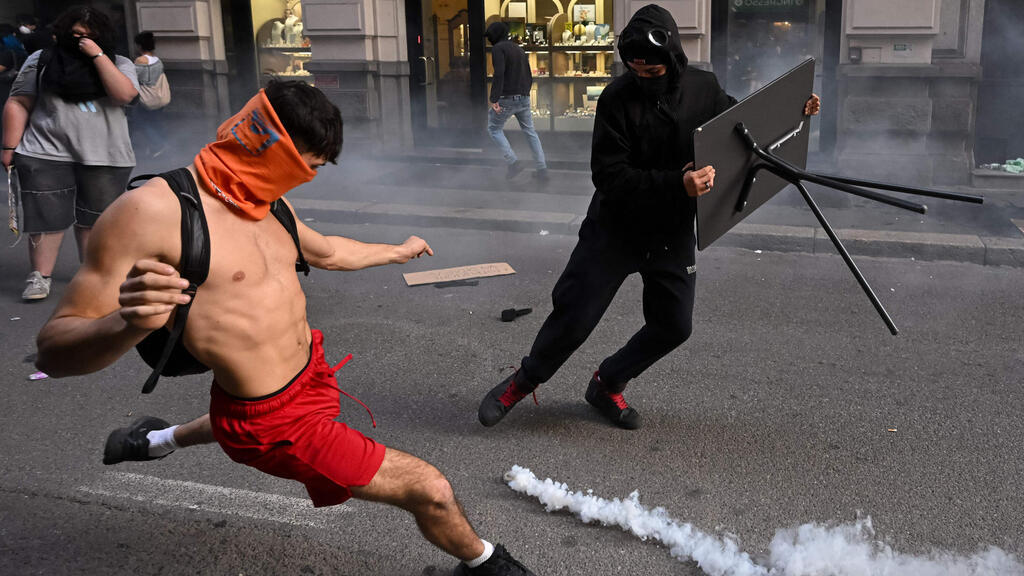
Riots in Milan, Italy, on October 17
(Photo: Piero CRUCIATTI / AFP)
Organizers have signaled that the unrest could continue. A newly established group calling itself the October 17 Movement has announced plans for what it describes as permanent mobilization, with demonstrations scheduled every Saturday afternoon in cities across Italy.
In Albania, protests have taken a more explicitly political direction. Anti-government demonstrations in the capital, Tirana, have continued for more than a week, with tensions escalating after high school and university students joined the "Flamingo" movement demanding the resignation of Socialist Prime Minister Edi Rama.
The protesters accuse the government of corruption and are calling for stronger protections for healthcare, education and public pensions. The movement takes its name from the flamingo habitat in an area where Rama's government approved a major luxury tourism project linked to Jared Kushner, Trump's son-in-law. The development has become a symbol of protesters' concerns about government priorities and accountability.
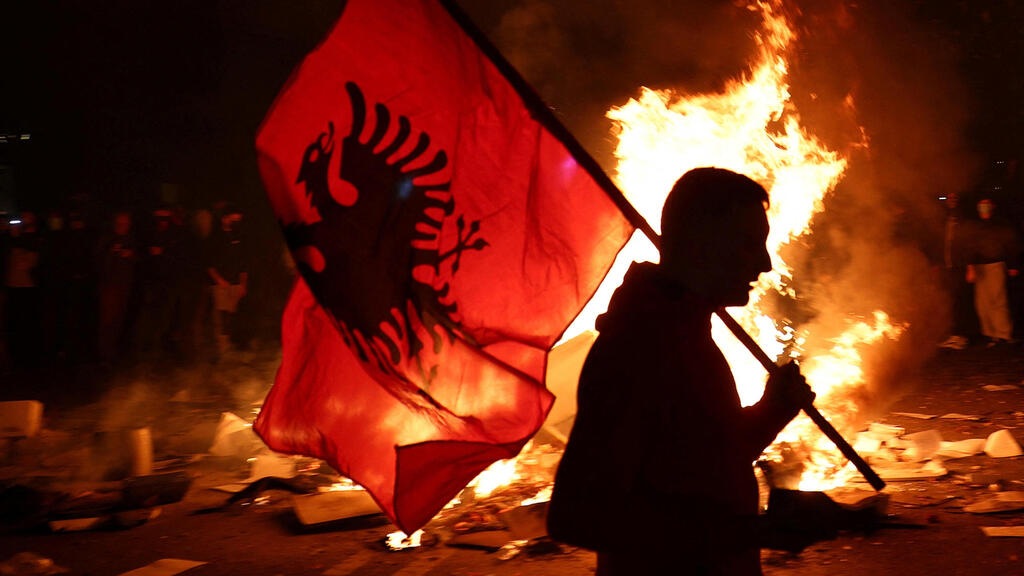
Anti-government protests and riots in Tirana, Albania
(Photo: REUTERS/Florion Goga)
Rama has dismissed the demonstrators as radicalized by antifa, a loosely organized far-left movement. His accusations have done little to calm the confrontation, with clashes between demonstrators and police continuing in Tirana.
In neighboring Serbia, student-led anti-corruption demonstrations have been underway for nearly two years and are now intersecting with a closely watched parliamentary election scheduled for October 25. Former President Aleksandar Vucic is seeking a return to power as prime minister, while the youth-backed Students' List is challenging his party. The competition has heightened concerns about further unrest surrounding the vote.
Across the continent, the immediate grievances differ, from inadequate schools in France to unaffordable housing in Spain, inflation in Italy and corruption in the Balkans. Yet the movements share a deeper frustration among people who feel that governments are failing to address their economic insecurity and declining prospects. With elections approaching and protesters promising to maintain pressure, European leaders face the challenge of responding to those demands while preventing further violence.