


Amid reports of negotiations between the United States and Iran, the Israeli military is preparing for a scenario in which U.S. President Donald Trump halts the campaign. Officially, the IDF says the objectives of the strikes remain unchanged, but alongside attacks on surface-to-surface missiles and launchers, it has in recent days focused strikes on targets tied to the regime’s military industries — as well as the steel industry, which generates billions of dollars for Iran.
“The systematic destruction of Iranian industries will place the terrorist regime at a significant decision point the day after. They will have to mobilize all of the country’s resources to rebuild what we have destroyed. The Iranians still have no idea how militarily exposed they have been left after the operation,” a senior Israeli Air Force official said.
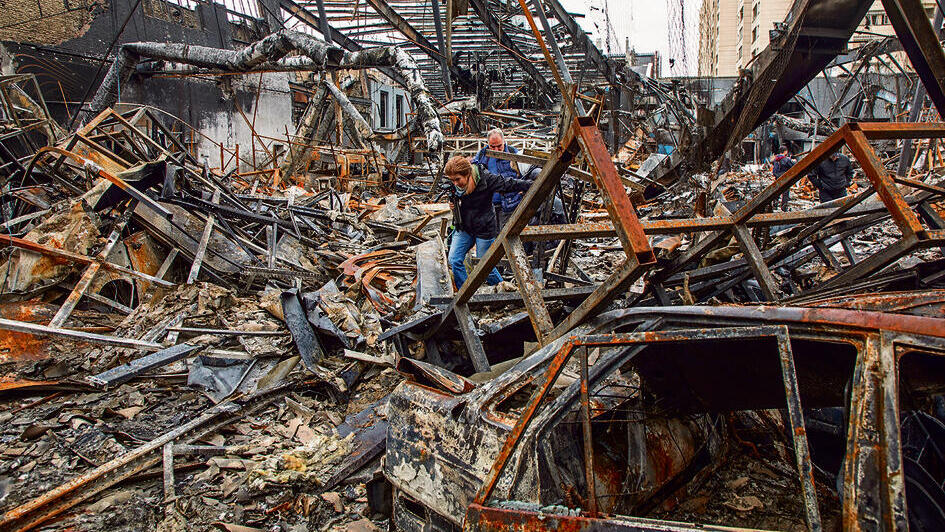
Since the start of the war, the IDF has dropped more than 1,300 munitions on military-industrial targets. Hundreds of factories have been destroyed, and hundreds of commanders within the industrial apparatus have been killed. Among the targets were facilities involved in missile development, optics systems, warhead production, engine manufacturing, solid and liquid fuels — as well as nuclear-related components that the IDF has not detailed.
Unlike Operation Rising Lion, when the air force targeted key components to delay the missile program, the IDF is now destroying entire factories. These industries are comparable to Israel Aerospace Industries, Elbit Systems and Rafael — only about 40 times larger, given the scale of the Islamic Republic.
One of Iran’s demands in the context of ending the war is for financial compensation from the West. Security officials estimate the damage to the regime from the strikes on military industries at tens of billions of dollars.
On Friday afternoon, the IDF struck Iran’s two largest steel plants — a move that, according to the defense establishment, could cause billions of dollars in damage to the Islamic Republic’s economy. Iranian reports identified the targets as the Mobarakeh Steel Company in Isfahan and the Khuzestan Steel Company in Ahvaz, near the Iraqi border. According to Israeli defense officials, these plants are part of Iran’s military-industrial supply chain and are partially owned by the Islamic Revolutionary Guard Corps.
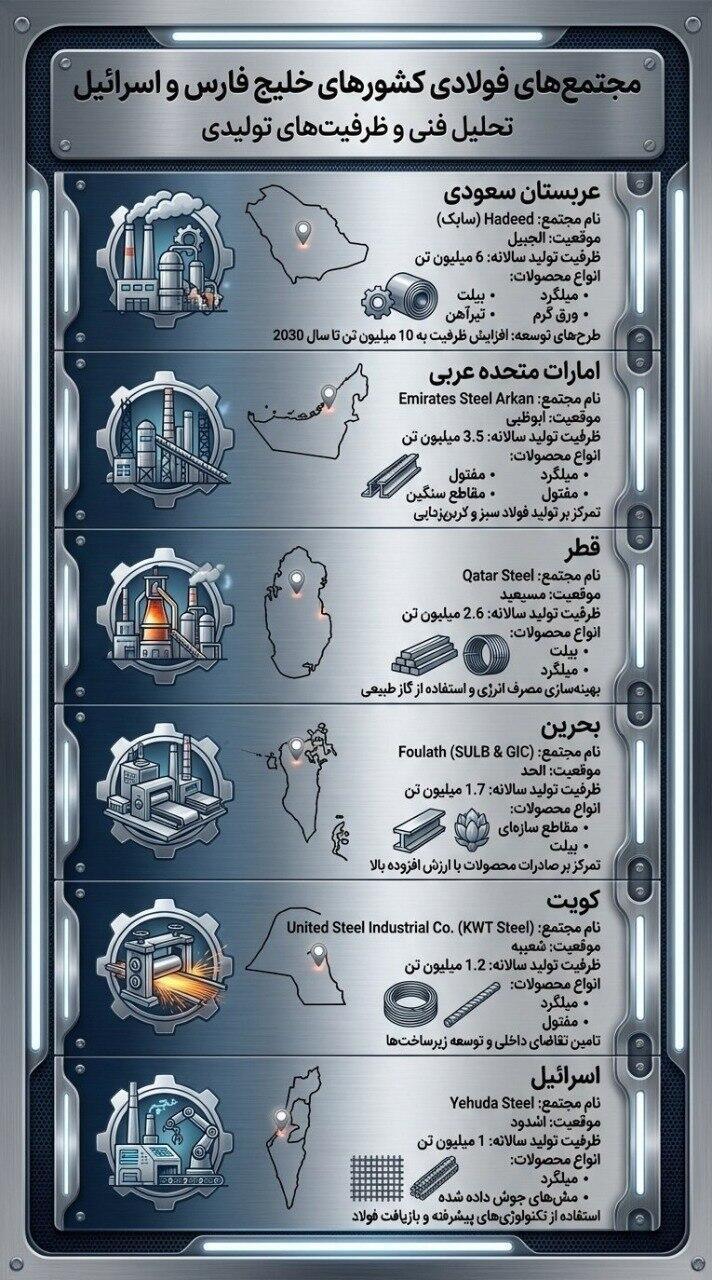
Iran warns of an attack on 6 steel plants in Israel and 5 countries in the region
In response to the strikes, Tehran issued a threat against six steel plants in the Middle East: Hadeed in Jubail, Saudi Arabia; Emirates Steel Arkan in Abu Dhabi; Qatar Steel in Mesaieed; Foulath in Al-Hidd, Bahrain; United Steel Industrial in Shuaiba, Kuwait; and Yehuda Steel in Ashdod, Israel.
The Mobarakeh plant has been under U.S. sanctions since 2018. The U.S. Treasury has described it as the largest steel producer in the Middle East and North Africa, and as a cornerstone of Iran’s economy. According to Washington, it operates as part of a support network for the Basij militia, which is subordinate to the Revolutionary Guards, and is considered a critical source of funding for Iran’s security apparatus.
The sanctions, imposed in 2018, were intended to disrupt the Basij’s “financial empire,” after the plant was found to provide financial support to institutions involved in financing terrorism, internal repression and the recruitment of child soldiers.
In Tehran, steel production is viewed as a vital sector of the economy. Iran is the leading steel producer in the Middle East and ranks among the top 10 globally. In recent years, however, the sector has been hit by Russian involvement, following Western sanctions imposed over the war in Ukraine.