


From the balcony of his lavish palace in Beit Jala, overlooking stone terraces and a tranquil landscape, Nassar Nassar appears far removed from the crisis shaking the Palestinian economy. Yet it is from here that one of the Palestinian Authority's most powerful and influential businessmen has decided to launch a direct legal challenge against Israel: two petitions to Israel's High Court of Justice, one against restrictions at the Allenby Bridge crossing and the other against what he describes as the exclusion of Palestinian manufacturers and traders from the market for supplying goods to the Gaza Strip.
Nassar, who built an empire of quarries, marble and stone that exports to the United States, Europe and the Gulf states, argues that the war and Israeli policy have pushed the Palestinian economy to a breaking point.
Gallery
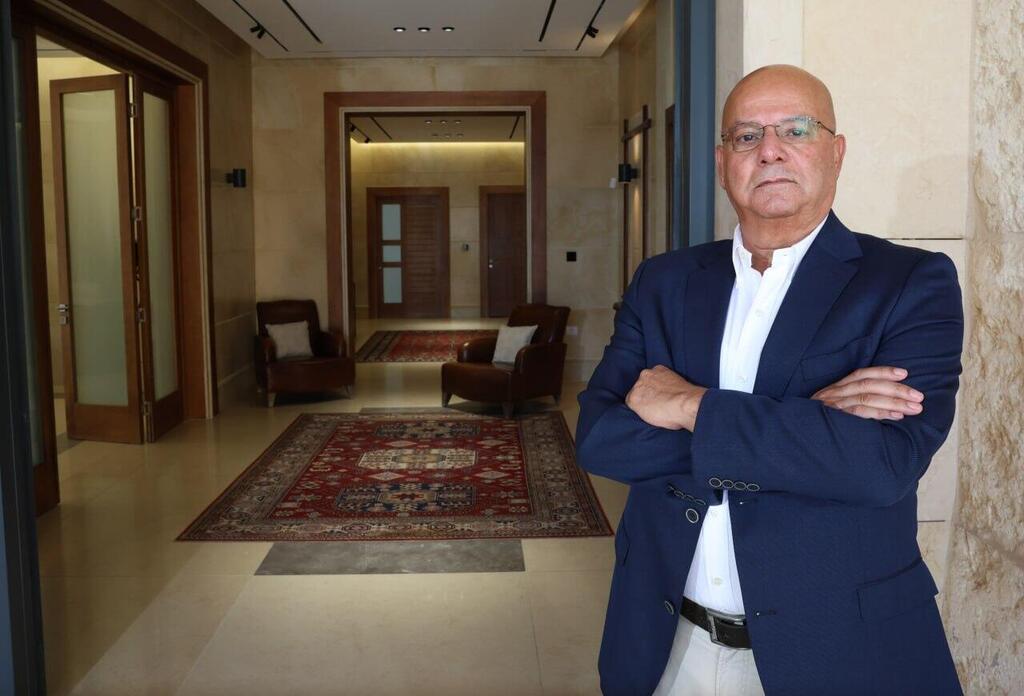
Nassar Nassar, one of the Palestinian Authority's most powerful and influential businessmen
(Photo: Shaul Golan)
"We've lost a market that accounted for between 35% and 40% of the Palestinian economy — the Gaza Strip," he says. "Today, that figure has almost dropped to zero."
From quarry worker to a 'white gold' empire
The view from the palace balcony can easily mislead a first-time visitor. The carefully maintained terraces, striking stonework and quiet surroundings give the estate the appearance of a luxurious European manor, seemingly detached from the bloodshed and tensions of the Middle East. A bowl of seasonal fruit sits on the table.
"It's all from my own fields," he says with a smile. "I love this land. That's where everything begins, and that's where everything comes from."
For Nassar, the word "everything" carries unusual weight, even by regional standards: an empire of quarries, marble and stone factories, real estate holdings and international business ties stretching from the West Bank, through Jordan and Oman, to Europe and the United States.
His company, Nassar Investment Company, exports what the industry calls "white gold" — Palestinian stone. According to Nassar, the stone is now used in skyscrapers in the United States, palaces across the Gulf and public buildings in Germany, meeting stringent American, European and Israeli standards.
But the road to the palace in Beit Jala was far from easy. It was, almost literally, carved out of rock.
Nassar was born into a poor family in the town of Yatta, south of Hebron.
"There was no one to help me. I didn't inherit millions or connections," he says. "I built myself piece by piece, stone by stone."
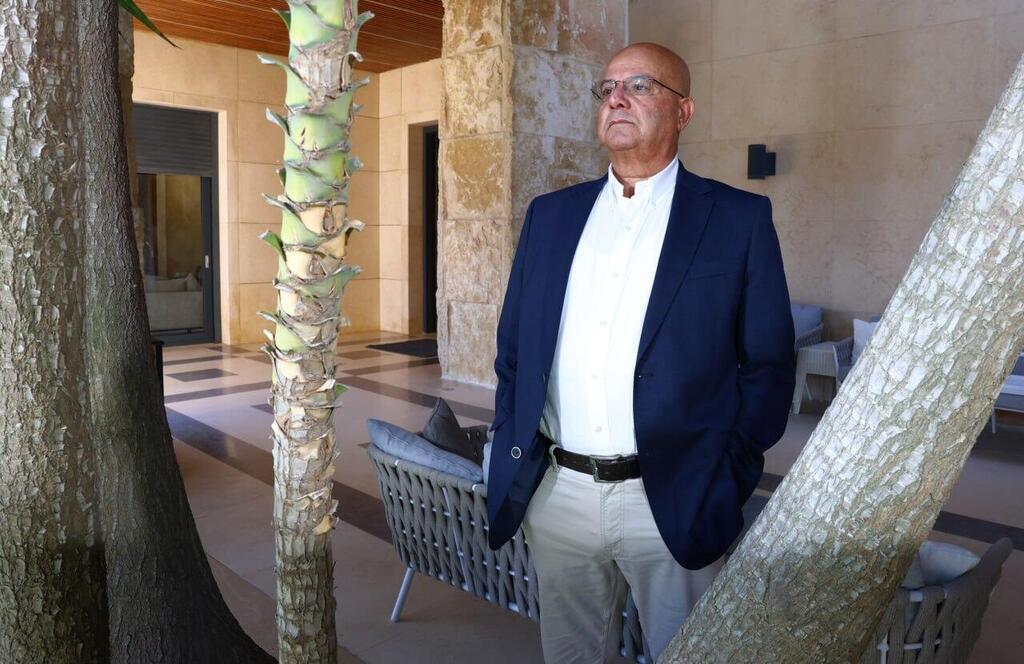
His company, Nassar Investment Company, exports what the industry calls 'white gold' — Palestinian stone
(Photo: Shaul Golan)
He began his career as a laborer in a dusty quarry. There, under the blazing sun and the roar of drilling equipment, he says he learned the secrets of working with stone. He later became a truck driver, hauling goods along the route between Bethlehem and the Gaza Strip. Those long drives, the checkpoints and his day-to-day familiarity with the supply chain shaped his business outlook.
"I learned the market from the ground up," he says.
He eventually purchased his first quarry, invested in advanced technology, obtained international certifications and turned local stone into an export product.
Over the years, Nassar established himself as a relatively unusual figure in the Palestinian arena: an independent businessman with extensive connections who is not clearly identified with any political faction. Associates describe him as someone whose "religion is economics, prosperity and stability." That approach opened doors for him among senior Palestinian Authority officials, across the Arab world and among Israeli businesspeople.
Now, against the backdrop of the war and the economic crisis in the Palestinian territories, Nassar — who serves as head of the Private Sector Coordination Council and chairman of the Palestinian Businessmen Association — has decided to open a direct legal front against Israel.
The Israeli monopoly — and the Gaza petition
According to Nassar, the most severe blow to the Palestinian economy has been the near-total separation of the Gaza Strip from the West Bank.
"We've lost a market that accounted for between 35% and 40% of the Palestinian economy — the Gaza Strip. Today, that figure has almost dropped to zero," he says.
"Before the war, about 38% of the West Bank's products reached the Gaza market, either directly or indirectly. Today, because of restrictions on the movement of goods and trade between the two parts of the land, that trade has nearly disappeared."
Nassar argues that Israel has effectively created a monopoly that cuts Palestinian manufacturers off from the Gaza market.
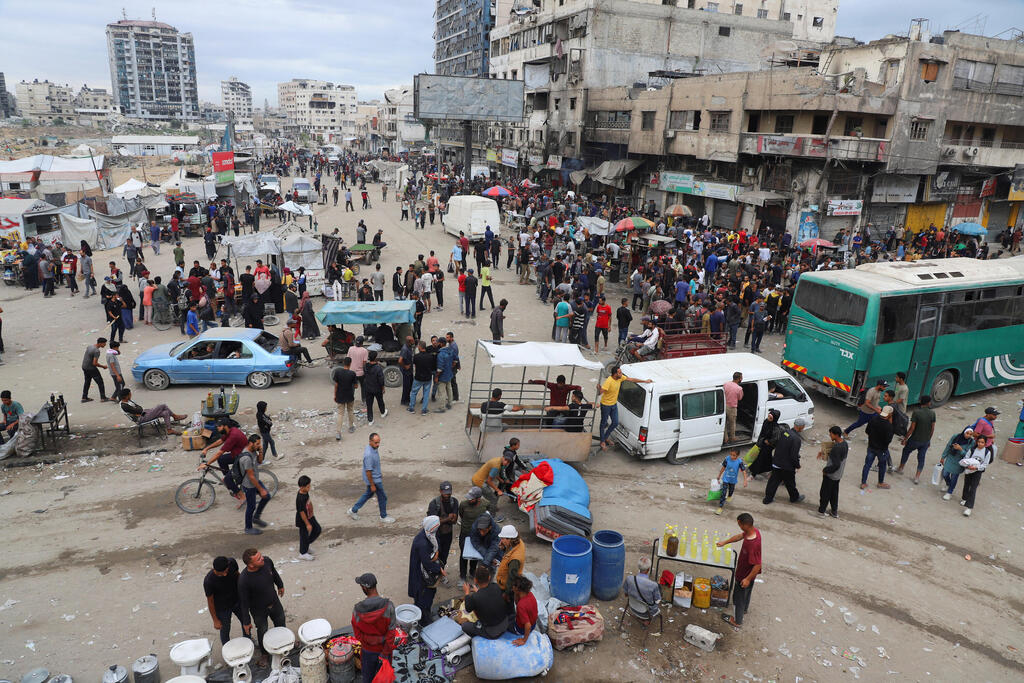
'We view the West Bank and the Gaza Strip as one market and one people'
(Photo: REUTERS/Ebrahim Hajjaj)
"That economic connection has been deliberately undermined by giving four Israeli companies control over supplying goods to the Gaza Strip while preventing direct or indirect Palestinian trade with Gaza," he says. According to him, the policy has caused significant damage to the Palestinian economy and weakened the natural economic ties between the West Bank and Gaza.
"It is unreasonable for a Palestinian manufacturer or trader in the West Bank to be forced to sell goods to an Israeli or Jordanian trader simply so they can be transferred to Gaza," he says. "We view the West Bank and the Gaza Strip as one market and one people. For decades, there was natural trade between them. Forcing a third-party intermediary, with limited quantities, complicated conditions and high costs, directly harms the Palestinian economy."
Ready to help rebuild Gaza
Asked whether the Palestinian private sector is prepared to take part in rebuilding Gaza, Nassar answers without hesitation.
"Yes. We are ready to participate in rebuilding the Gaza Strip as soon as the restrictions preventing the natural economic connection between the West Bank and Gaza are lifted. We have contracting companies, investors and extensive experience in construction, industry and services. There are also hundreds of thousands of Palestinian workers in the West Bank and Gaza who need jobs."
He says rebuilding the Strip could take between 10 and 15 years and become a major engine of growth for the Palestinian economy, provided Palestinians are allowed to participate.
"The body preventing this today is the Israeli authorities, which continue to impose sweeping restrictions on the movement of goods and trade between the West Bank and Gaza," he says. "We reject this completely."
Nassar's legal campaign does not stop with Gaza. The Palestinian Businessmen Association recently filed two petitions with Israel's High Court of Justice: one challenging restrictions at the Allenby Bridge crossing and another challenging restrictions that limit the delivery of goods into Gaza to a small number of Israeli companies.
The Allenby bottleneck
When it comes to the Allenby Bridge crossing, Nassar describes what he calls both an economic and humanitarian bottleneck.
"About 3.5 million Palestinians can leave the Palestinian Authority territories through only one crossing: Allenby Bridge," he says. "After numerous attempts through various channels, and with the assistance of international actors that produced no results, we had no choice but to turn to the Israeli legal system to demand the rights guaranteed under existing agreements and laws."
He argues that the damage extends beyond passenger traffic to Palestinian exports.
"Today, between 170 and 200 trucks carrying goods enter from Jordan every day, while only about 15 trucks leave the West Bank for Jordan. That causes severe damage to the Palestinian economy," he says.
According to Nassar, the problem at Allenby is not infrastructure but management.
He compares the crossing to the Arava and Sheikh Hussein border crossings, which he says operate about 12 hours a day, including on Saturdays, with online fee payments and crossing times of only a few minutes.
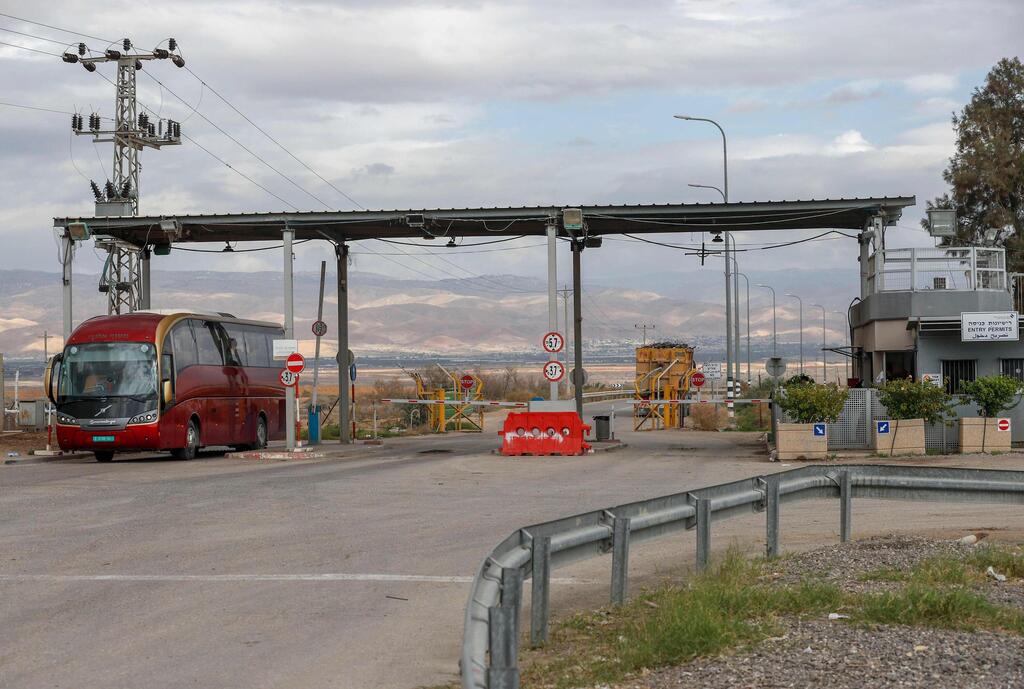
Allenby Crossing. Nassar describes it as both an economic and humanitarian bottleneck
(Photo: AFP)
"Because of the heavy congestion at Allenby, many Jerusalem residents and Palestinian citizens of Israel prefer to cross through Arava or Sheikh Hussein," he says. "That proves the problem is not operational capacity but the way the crossing is managed."
According to Nassar, operating hours at Allenby were extended during the summer months between 2017 and 2019, and the pilot program proved successful.
"The number of travelers increased by about 20%, reaching roughly 18,000 passengers a day in August 2019. That had a positive impact on economic activity and revenues."
Today, he says, Israel has reduced the crossing's operating days and hours.
"It operates only six hours a day, six days a week, even though it should function like an international border crossing — 24 hours a day, seven days a week."
He says the congestion has turned the crossing into a daily nightmare.
During those limited operating hours, regular travelers, VIP pass holders, Jerusalem residents, pilgrims from Israel's Arab community, cargo trucks and cement trucks all compete for access.
"The Israel Airports Authority continues to insist on limited operating hours that are insufficient to handle traffic of between 3,000 and 5,000 passengers a day," he says. "This has created major bottlenecks, increased travel and transportation costs and led to the exploitation of travelers because of the congestion."
Nassar puts it bluntly.
"If the purpose of these restrictions is to apply psychological or political pressure on residents of the West Bank in order to fuel escalation, then they are achieving that goal. And if the intention is to encourage emigration, even those who want to leave are forced to wait for hours at the bridge and pay high costs just to get out. Operating Allenby Bridge around the clock is not only a political demand but also an economic and humanitarian necessity."
Billions in economic interdependence — and the Palestinian economy's 'shekel time bomb'
Nassar stresses that, from Israel's perspective as well, the economic relationship with the Palestinians is far from insignificant.
According to him, annual imports from Israel — including goods, services, fuel, electricity, water and other services — total between $4.5 billion and $5.5 billion.
"That's a significant figure for Israeli exports," he says, "especially when total annual Palestinian imports amount to about $8.5 billion. The rest comes from several Arab countries, China and Turkey."
One of the issues he considers most urgent is the clearance revenues — tax funds that Israel collects on behalf of the Palestinian Authority and that have repeatedly been withheld by decisions of the Israeli government.
Nassar says the policy directly harms the Palestinian private sector.
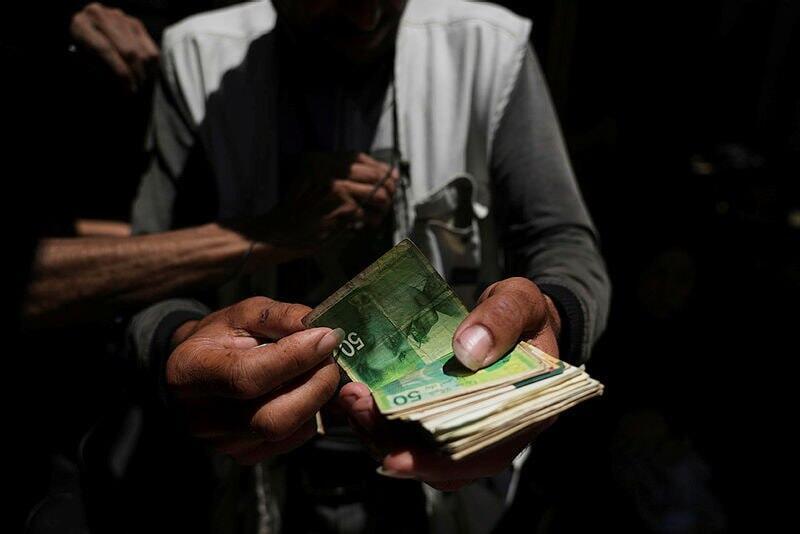
Another problem Nassar points to is the flood of Israeli shekels in the Palestinian market
(Photo: AP Photo/Jehad Alshrafi)
"A large portion of the clearance revenues consists of value-added tax paid by the Palestinian private sector when importing goods," he explains. "Under the law, those funds are supposed to be transferred back within about 40 days. When Israel delays or confiscates the money, the Palestinian Authority cannot return it to the private sector. The result is a liquidity crisis, and the business sector is the first to suffer."
Another problem Nassar points to is the flood of Israeli shekels in the Palestinian market. According to him, restrictions on returning the currency to Israeli banks have left the Palestinian economy struggling to cope with excess cash.
"The market is flooded with shekels, whether through the purchase of dollars, gold, real estate or land, and not only through the banking system," he says.
The solution he proposes is a return to a mechanism that he says was tried in the past: appointing an independent international company, acceptable to both sides and working in coordination with the Palestinian Monetary Authority and Israel's central bank, to assess the actual volume of shekels circulating in the Palestinian market.
"Whatever that body determines, we are prepared to commit to," Nassar says.
According to him, Israel is still adhering to a ceiling set in 2019 of about 18 billion shekels, while Palestinian estimates put the amount of shekels in circulation at roughly 35 billion and rising.
"This can be resolved by raising the ceiling to between 30 billion and 35 billion shekels," he says. "It's important to emphasize that the shekel is an Israeli currency, so Israel bears responsibility for taking it back. It is not an international currency that Palestinians can exchange or sell on global markets."
A warning to Israel: poverty will hurt you too
Despite his sharp criticism, Nassar continues to portray himself as a pragmatist.
He says the Palestinian private sector is still trying to stay afloat despite the absence of direct government communication channels with Israel. But he warns that conditions are becoming increasingly dire.
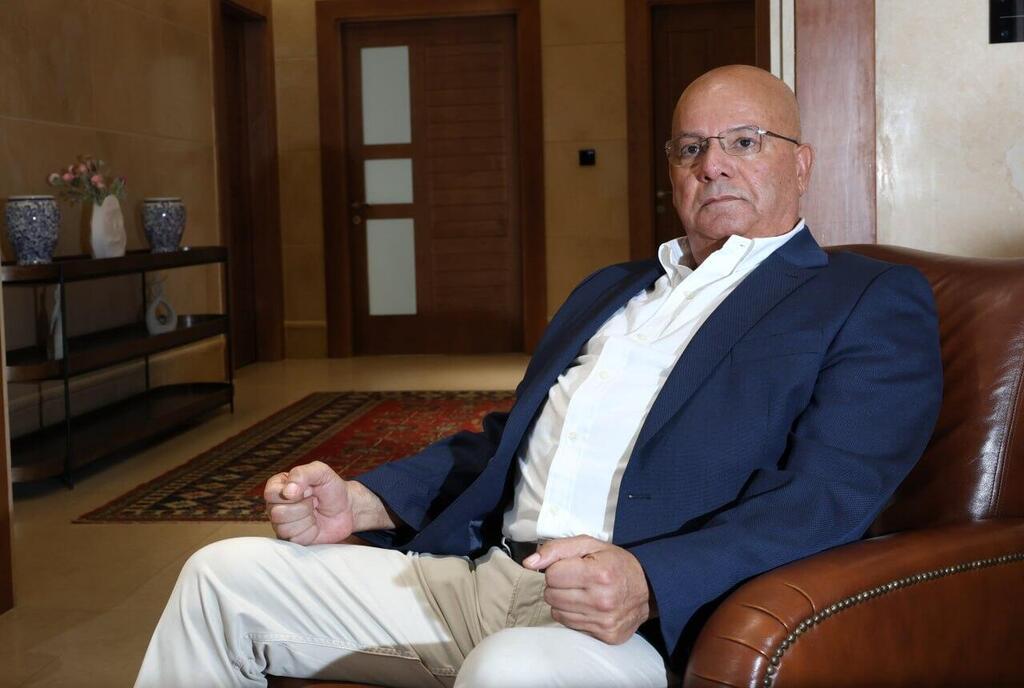
Despite his sharp criticism, Nassar continues to portray himself as a pragmatist
(Photo: Shaul Golan)
"Tens of thousands of workers who were employed in Israel have lost their jobs, leading to a contraction in the labor market and a decline in economic activity. The Palestinian private sector will continue to work and produce, but conditions have become more difficult than ever."
His warning is directed not only at Ramallah but also at Jerusalem.
"The spread of poverty and the decline in economic opportunities create fertile ground for violence and instability," he says. "That harms Palestinians and Israelis alike. The decline in economic cooperation between businesspeople is damaging both sides, and the current policy serves neither our shared economic interests nor regional stability."
As the interview draws to a close, with the sweeping terraces of Beit Jala once again visible from the palace balcony, Nassar returns to the principles he says have guided him throughout his life: economics, work and the land.
"Israel has also suffered significant damage because Palestinian workers have not been allowed to work there, and because Israeli businesspeople have been unable to continue cooperating with businesspeople in the West Bank and Gaza," he says. "In my opinion, this ideological government is not acting in the interests of either side, especially not the agricultural and construction sectors."
The man who began as a quarry laborer, learning the secrets of stone with his bare hands, knows that even the hardest rock can crack under the wrong kind of pressure.
The question now is whether Israel's High Court will heed the voice of one of the Palestinian private sector's most pragmatic figures, or whether the economic crisis will continue to deepen until it fractures the stability of the entire region.