

As the IDF completed its withdrawal from deep inside Gaza over the weekend and Israel rejoiced at the prospect of the hostages’ release, some of the country’s defense factories continued production through the Sabbath. The rush to supply weapons that began on the afternoon of October 7 two years ago is far from over.
“We’re still working around the clock on some projects,” a senior executive at one of Israel’s major defense companies said. “The army consumed massive quantities of munitions, and demand continues — both to replenish vital stockpiles and to fill the warehouses.”
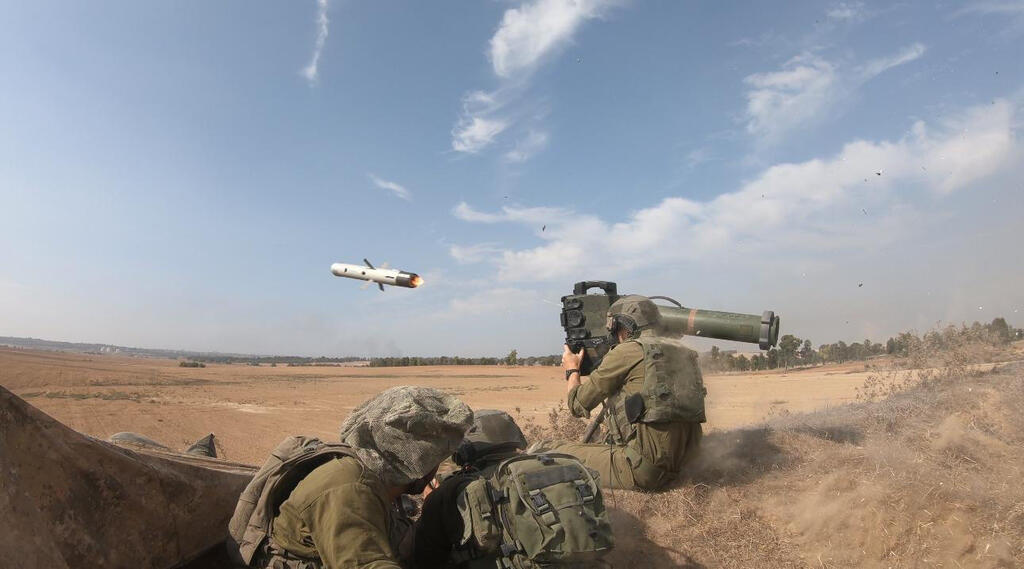
Production includes tank and artillery shells, loitering munitions, drones, interceptor missiles for air-defense systems and other advanced equipment ordered by the Defense Ministry in contracts worth tens of billions of shekels.
Despite the surge in domestic demand, Israel’s defense industry still depends heavily on exports. Executives are now hoping the end of the Gaza war will ease tensions with European countries that had grown increasingly critical of Israel’s actions and had responded by canceling or freezing arms deals.
It began with the exclusion of Israeli companies from prestigious weapons expos in France, followed by similar restrictions elsewhere. Spain’s government canceled contracts with Elbit Systems and Rafael worth a combined 600 million euros, and other countries imposed unprecedented embargoes that disrupted access to raw materials and production components.
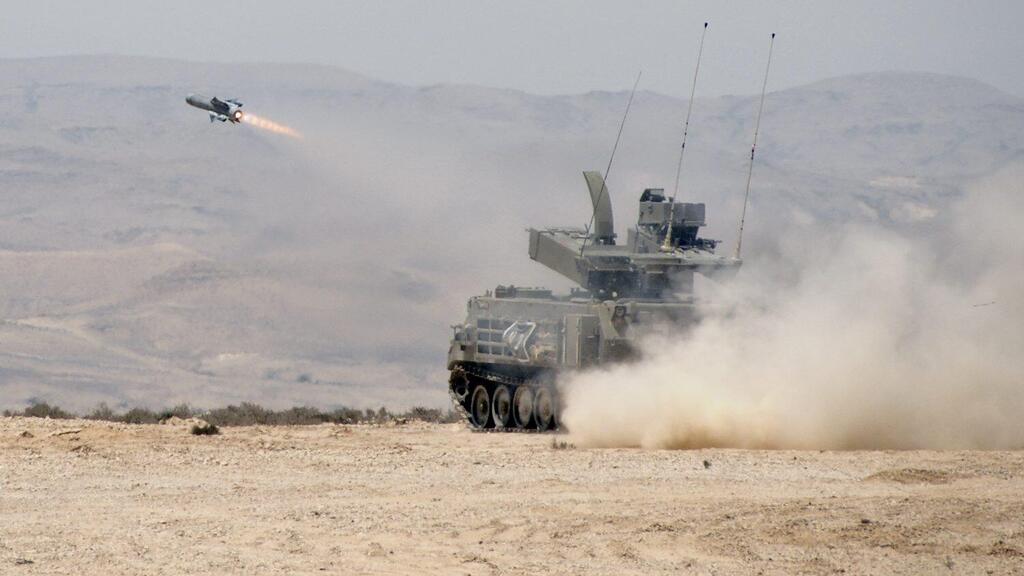
Spike missile manufactured by Rafael
(Photo: Rafael Advanced Defense Systems)
Europe has been in the midst of an arms buildup since Russia’s 2022 invasion of Ukraine — a development that initially benefited Israel’s defense sector. In 2024, Israel’s defense exports reached an all-time record of $14.8 billion, half of it to Europe. But as the war in Gaza dragged on, European public opinion turned sharply against Israel, fueled by the destruction in Gaza and inflammatory statements by Israeli politicians about resettling the Strip.
Countries that once praised Israeli defense technology began questioning whether to continue doing business with it, with some accusing Israel of war crimes. In recent months, Israeli defense executives have reported an unusual slowdown in talks for new deals, as potential buyers opted to wait for the war’s end.
“We can only hope this dark wave will pass,” said a marketing director at a major defense firm. “If the war is truly behind us, many obstacles will be lifted, and within a few months we’ll see renewed openness — a green light for new billion-dollar contracts. We expect France to change its approach toward us, but no one thinks it’ll happen overnight.”
While Israel’s war appears to be winding down, Europe’s own arms race — driven by the ongoing conflict between Russia and Ukraine — continues to grow, offering renewed potential for Israeli defense exports.
“We have the best technologies in the world, and over the past two years they’ve proven themselves,” said another senior marketing executive. “Europe knows it. Once Gaza is off the global agenda, we’ll be able to resume negotiations for major deals. I’m optimistic.”
Israel’s three largest defense firms — Rafael, Elbit Systems and Israel Aerospace Industries — currently hold a combined order backlog of about 250 billion shekels, both domestically and abroad. The strong flow of orders during the past two years has led them to expand production capacity to meet deadlines for both the IDF and foreign armies. These expansions are also designed to strengthen Israel’s self-sufficiency in munitions and reduce future dependence on imports.
“About 90% of our operations are for the Israeli market, but we’re gradually increasing exports, mainly to NATO countries,” said Lior Segal, CEO of Ein Shlishit. “The end of the war in Israel doesn’t mean world peace. We have multi-year orders worth 35 to 40 million shekels, and that’s still growing.”
Alongside the hectic production pace, Israel’s defense firms are investing heavily in research and development of next-generation weapons systems — many of them based on lessons learned from the war.