


Last week, Yedidya “Didi” Stein, 33, found himself climbing onto the roof of a house in a Shiite village in southern Lebanon, opposite the communities of Avivim and Yir’on. Stein, a combat medic in an armored battalion, took cover beneath a solar water heater to avoid enemy surveillance and managed to get a cellular signal while trying to resolve yet another crisis at the family business.
Since the war began, he has been called up for six reserve duty tours and accumulated more than 400 days of active combat service. After the holiday, he is expected to return to his unit across the border, while his wife Naomi and the staff continue trying to keep Rom Farm GVINAGE on Mount Kamon in the heart of the Upper Galilee running.
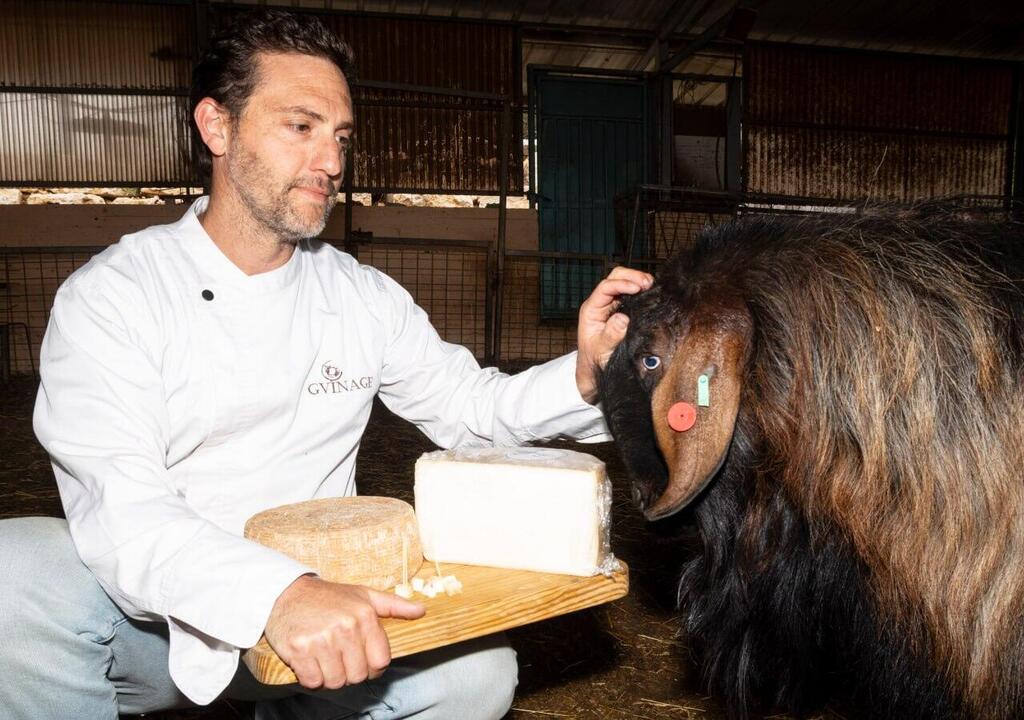
“At the start of 2023, we launched the business and it began to flourish,” Stein said. “A month before October 7, Naomi and I got married, and I represented Israel at the World Cheese Awards competition held every two years in France’s Loire Valley. The competition focuses both on the cheeses themselves and on the title of ‘World Cheese Expert,’ and I made it into the global top 10. We had so many plans for ‘after the holidays,’ and we’re still waiting to fulfill them.”
The couple’s main dairy sits on Mount Kamon, serving as an aging house for boutique cheeses and producing more than 30 varieties. Naomi Stein, who was born and raised in the Alps, brings more than 15 years of international experience and is one of only 37 certified master cheesemakers in the world.
“After October 7, there was a lot of solidarity, but amid everything the country is going through, unfortunately, it became little more than a slogan,” Stein said. “Beyond the empathy and the ‘well done,’ when a delivery is late and the customer needs the cheese, they don’t care that I’m in reserve duty answering the phone under fire.”
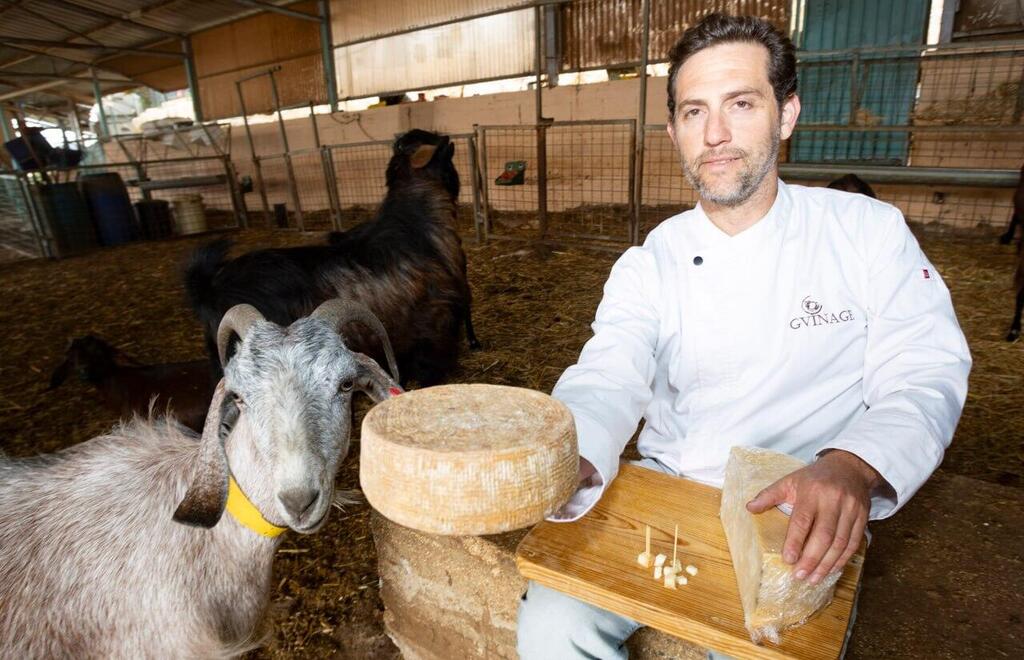
Rom Farm GVINAGE
(Photo: Gil Nechushtan)
Their dairy operates as part of Rom Farm, an agricultural, rehabilitation and tourism farm. Alongside cheese production, the farm serves as a vocational rehabilitation center for dozens of people coping with psychological and social challenges, some referred by the Defense Ministry for post-trauma treatment through working with animals and among the cheese shelves.
“People struggling with mental health challenges and post-traumatic soldiers come to work with us, and we are here for them,” Stein explained. “I’m full of respect and appreciation for what they sacrificed.”
That delicate balance has been badly damaged by the continuing security situation.
“The farm offers a range of activities: lodging, a spa, shepherding workshops, cheese-making workshops, ceramics and cooking,” said Edan Shir, the farm’s CEO. “During the war, tourism was simply wiped out and there were no guests here. Very few diners came to the restaurant, and naturally that hurt the rehabilitation efforts in the various programs for soldiers.”
Among those arriving at the farm are reserve soldiers participating in the Shavim program after long periods of service. The program gives them practical tools for returning to routine life and a safe space to process their experiences through a series of nature-based meetings.
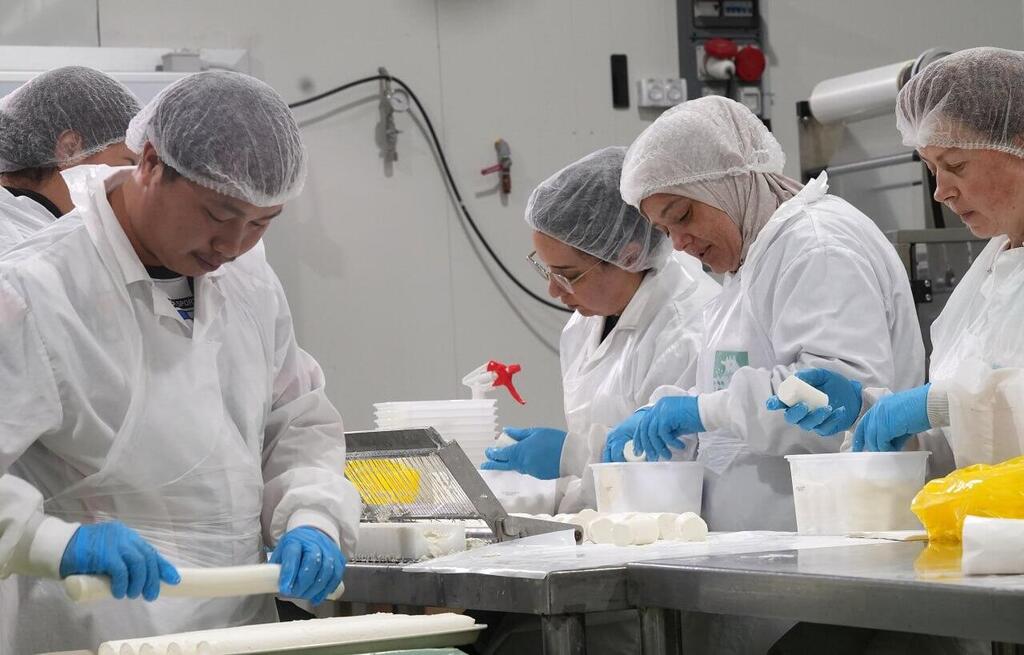
Teva Oz Dairy
(Photo: Efi Sharir)
In Moshav Ben Ami, less than nine kilometers from the Lebanese border, stands Teva Az Dairy, operating for 30 years. The family dairy, which runs a large goat farm, produces goat, sheep and cow cheeses mainly for large dairies as well as restaurants and hotels. Here too, Shavuot — usually the peak of the financial season — looks completely different this year.
“Every time you start getting back on your feet, you get hit over the head again. We took loans just to survive, and now we have to start repaying them,” said dairy owner Dror Boker, describing the roller coaster the family business has endured since October 2023.
“There are drones constantly flying above us, occasional sirens and huge explosions from IDF operations across the border. Shavuot has been our holiday since the 1990s, but we’ve never had such a weak holiday season. You can feel people’s uncertainty — they aren’t buying. Our sales are down around 32 percent.”
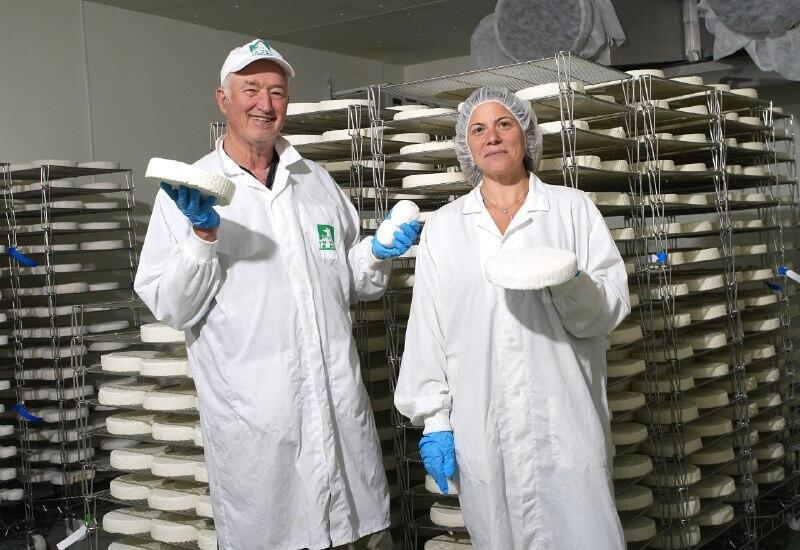
Dror Boker and Yifat Ben Dror of Teva Oz Dairy
(Photo: Efi Sharir)
The upheaval of war has been compounded by another severe blow: opening the market to imports.
“This reform came at the worst possible time. There’s a massive flood of imports. Anyone with a little money in their pocket is bringing containers of cheese from Latvia and Poland, and unfortunately, even the Badatz Beit Yosef kosher certification (certification mainly for the Sephardic community) is approving them now,” Boker said. “I can’t even begin to fight that battle, because prices from Eastern Europe are less than half our prices.”
Oded Schwartz, owner of Schwartz Farm in Moshav Sde Eliezer, has also accumulated more than 400 days of reserve duty so far. The farm’s story began in 1954, when a pair of Satmar Hasidic Holocaust survivors arrived in Sde Eliezer and decided to enter the sheep farming business. The farm began with 10 sheep the grandparents received from the Jewish Agency.
Zvi, Oded’s father, joined the farm in 1974 after the Yom Kippur War, and Oded, the third generation, joined in 1996 after completing his military service. Today, the sheepfold is one of the largest in Israel, housing 1,500 dairy sheep. Production itself takes place at a dairy near the Lebanese border.
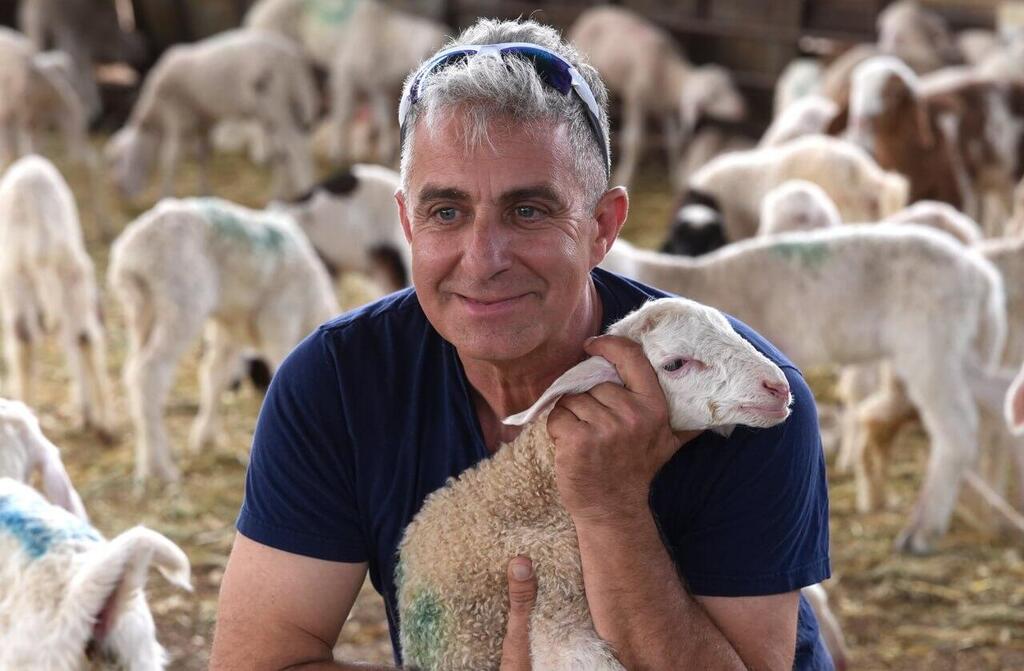
Oded Schwartz
(Photo: Efi Sharir)
“Our dairy is located in Kibbutz Yiftah. We never stopped working, even when the kibbutz was evacuated,” Schwartz said. “At our factory store in Sde Eliezer, which carries all 60 of the dairy’s brands, we’re experiencing a severe decline because aside from local customers from the region, there’s no tourism at all here.”
“It feels like these days are everything except the days leading up to Shavuot. What’s keeping us going are workers’ committees and high-tech companies that bought cheeses for gift packages. Fortunately, we’re receiving expressions of love from Israelis who understand the importance of supporting a quality dairy operating under wartime conditions and are buying our cheeses.”
“They’re literally giving us air to breathe. Some companies bought the cheeses, but I didn’t have enough staff to pack the gift boxes they ordered. They asked me to send the cheeses and they packed the boxes themselves. It’s incredibly moving. They’re helping keep our heads above water.”