

The mysterious and largest sale deal in the history of Elbit Systems, which the company reported about a month ago, was concluded with a foreign country and centers on a strategic defense system based on unique, groundbreaking technology, Calcalist has learned.
The deal is valued at about $2.3 billion and is considered one of the largest and most significant transactions ever carried out by Israel’s defense industries. It was signed with the mediation and full involvement of the Defense Ministry and is expected to span roughly a decade.
The identity of the country involved, as well as the type of system at the heart of the deal, are under a publication ban. Among the reasons are conditions set by the foreign state stipulating that disclosure of its details would lead to the immediate cancellation of the agreement. In a vague and sparse notice submitted to the stock exchange shortly after the deal was signed, Elbit described it as a “strategic solution with an international customer.”
The unusual engagement by Elbit and the Defense Ministry with a foreign country raises pointed questions about preserving Israel’s military advantage in the Middle East in the coming years. Such questions have surfaced in recent weeks amid concerns within the IDF and the Israeli Air Force over the implications of a potential sale of 48 U.S.-made F-35 stealth fighter jets to Saudi Arabia. In this case, however, the sale was approved by the State of Israel itself and centers on a strategic defense system based on unique, groundbreaking technology.
The military has recently warned that supplying the aircraft to Saudi Arabia under understandings reached between U.S. President Donald Trump and Saudi Crown Prince Mohammed bin Salman would strip the Israeli Air Force of its absolute air superiority in the Middle East. At present, the Israeli Air Force is the only force in the region operating F-35 jets. It has already fielded nearly two squadrons of the fifth-generation aircraft and is expected to receive additional jets in the coming years toward establishing a third squadron. Defense planners are also considering the future acquisition of a fourth squadron during the next decade.
Against the backdrop of these warnings, Elbit’s mysterious deal places Israel in an awkward and uncomfortable position, as such an advanced system is being sold by Israel to a foreign country. Elbit and the Defense Ministry declined to answer questions or provide comment, citing the sensitivity and classified nature of the matter.
Development of advanced systems
Elbit Systems is one of the IDF’s main weapons suppliers and leads a wide range of development programs for advanced systems, from loitering munitions and unmanned aerial vehicles to intelligence, electro-optical and artillery systems.
About a month ago, Elbit published its third-quarter results, reporting a 12% increase in revenue and a surge in its order backlog to a record $25.2 billion, against the backdrop of unprecedented global demand for weapons. Addressing a question posed by Calcalist at the time about normalization between Israel and Saudi Arabia and its possible impact on Elbit, company president and CEO Bezhalel Machlis said: “The Abraham Accords opened additional opportunities for Elbit. Any country that joins this framework, including Saudi Arabia, which has very large defense expenditures, certainly opens new opportunities for Elbit.”
Against this backdrop, it remains unclear what mechanisms are meant to safeguard Israel’s security interests in the advanced system at the center of Elbit’s mysterious deal, particularly given the intense global interest in the capabilities it is expected to provide.
A new balance of power in the Middle East
Elbit’s deal with a country whose identity cannot be disclosed, with the involvement of the Defense Ministry, did not take place in a vacuum. Israel is encouraging new defense engagements as a means of financing adjustments required by the defense industries ahead of the next war, with a particular focus on Iran. These efforts include funding the fortification of defense production infrastructure, purchasing machinery to expand manufacturing lines and making large-scale investments in research and development to deliver future capabilities to the IDF.
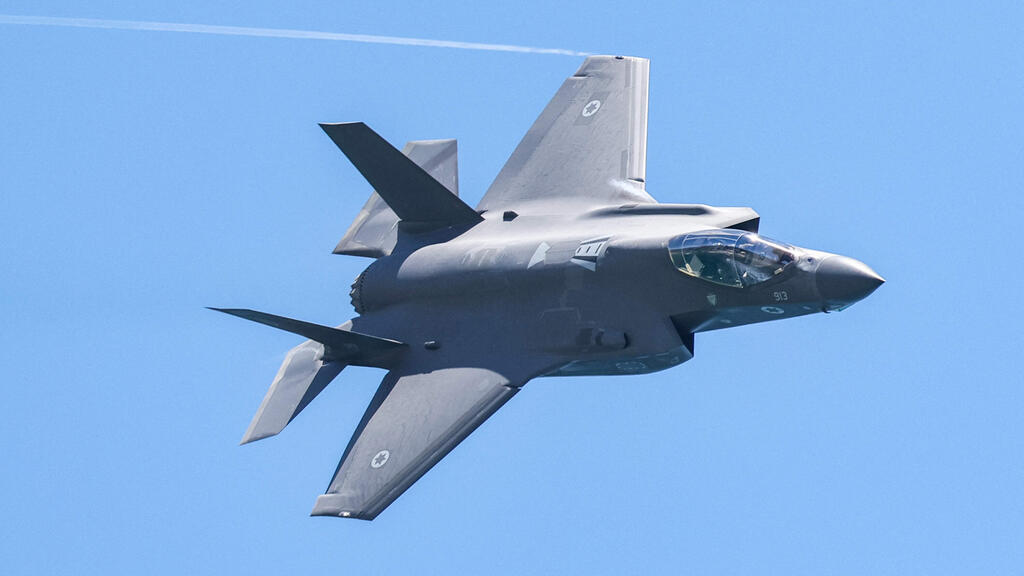
An F-35 flies over Tel Aviv
(Photo: AFP)
The state plans to significantly expand the volume of defense deals conducted through government-to-government agreements in the coming years. In the past year alone, 21 Israeli arms deals were carried out under this model. A reform being led by the Defense Ministry in defense exports and oversight, slated to take effect next year, is also expected to substantially ease arms transactions.
In effect, Israel is seeking to channel the required funding into its defense industries through arms sales rather than financing production and development directly from state coffers depleted after two years of regional war.
This marks a fundamental shift in thinking. Against the backdrop of a new balance of power emerging in the Middle East following the war, Trump’s plans and the rising influence of countries such as Turkey, Qatar and Saudi Arabia, Israel finds itself in an unprecedented geopolitical reality. Still, even if budgetary resources are insufficient to meet growing defense needs, there is serious doubt as to whether selling unique strategic assets without transparency and under a veil of secrecy is the right solution.
Discomfort with Trump’s push for deals totaling around $1 trillion with Saudi Arabia has been voiced not only within Israel’s defense establishment but also at the U.S. Department of Defense, amid concerns about potential leaks of classified information related to the F-35 to China. These concerns are based, among other factors, on the close military ties between Saudi Arabia and China.
By advancing the planned supply of F-35s to Saudi Arabia, Trump is disregarding multiple warning signs, including the principle enshrined in U.S. law aimed at preserving Israel’s qualitative military edge. This comes as Israel does not appear poised to receive new U.S. capabilities that would ensure its clear military superiority in the region in the coming years, even as normalization with Saudi Arabia remains elusive. Crown Prince bin Salman has conditioned normalization with Israel on concrete steps toward the establishment of a Palestinian state.
At the same time, amid his rapprochement with Trump, Turkish President Recep Tayyip Erdogan is seeking to revive Turkey’s bid to acquire F-35 jets, a move that could further erode Israel’s military advantage. Turkey was previously a partner in the multinational consortium that financed the F-35 development project but was expelled in 2019 after acquiring Russian air defense systems, including the S-400. The warming ties between Trump and Erdogan, alongside Turkey’s growing regional power and deep involvement in Gaza’s reconstruction, have once again put the F-35 deal back on the table.