


Since its debut, ALL CAPS has carved out a distinct voice, unapologetic, fast-paced and rooted in the fight over narrative. Led by Nitsana Darshan-Leitner alongside a regular panel of Sarai Givaty, Titi Ayanaw and India Naftali, the show blends legal, cultural and media perspectives into a sharp, opinion-driven format. Earlier episodes saw the panel take on life under fire, misinformation and global narratives surrounding Israel, with guests including former IDF spokesperson Lt. Col. Jonathan Conricus and Iran expert Beni Sabti, while also examining Gen Z discourse, Iran’s influence and what they describe as media double standards. Episode 5 keeps that structure but shifts its weight toward two powerful, deeply human interviews.
Watch ALL CAPS full episode 5


The episode opens with the panel’s familiar rapid-fire analysis, questioning foreign media coverage of Iran and arguing that reporting under regime restrictions risks presenting a distorted reality. A field segment led by panelist India Naftali then brings a different dimension. Reporting from the “March of the Living” in Poland, Naftali follows thousands walking from Auschwitz to Birkenau, capturing voices from across communities, including members of an Arab delegation speaking about Holocaust denial and the importance of education.

The episode’s first major interview centers on Eliya Cohen, a hostage survivor abducted during the October 7 attacks. Cohen spent 505 days in captivity, much of it underground. His account is steady and direct, describing violence, uncertainty and the daily reality of survival, but it is his description of starvation that stands out most. “You can imagine after 24 hours we got just pita bread… and again, 24 hours, day by day, week by week, month by month,” he says, recalling how hostages weakened over time.
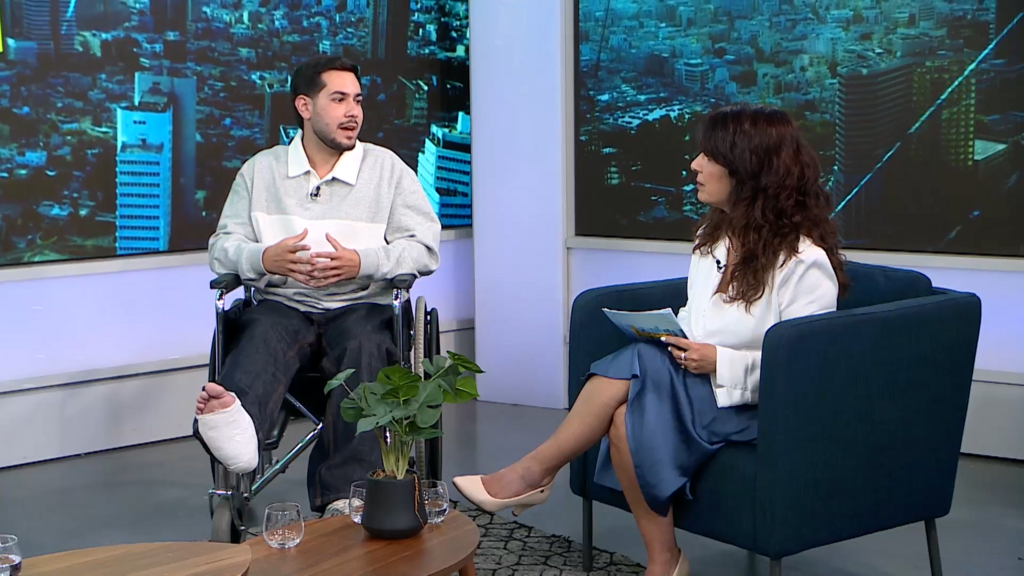
Hostage survivor, Eliya Cohen with Nitsana Darshan-Leitner
(Photo:Screengrab)
He also speaks about the shock of encountering people abroad who were unaware of what happened on October 7, or who believed a different version of events. “People don’t know,” he says simply.
During captivity, Cohen learned English from fellow hostages, using a book to pass time and maintain focus. Since his release, he has taken on a public role, sharing his story as part of what he describes as a mission to tell the truth.
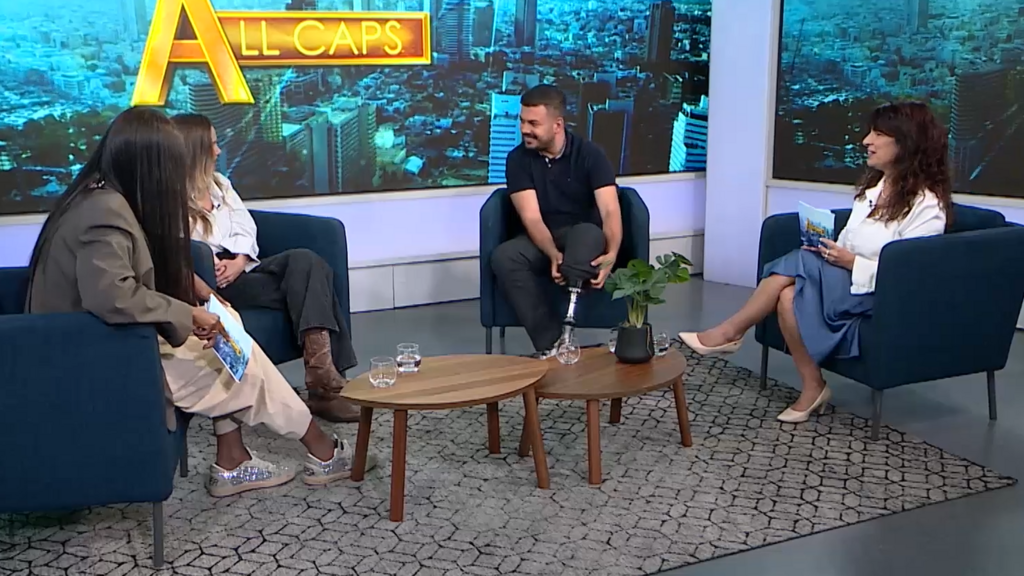
“I told them, cancel everything, I want my leg back,” Lt. Jonathan Ben Hamo
(Photo:Screengrab)
The episode then turns to Lt. Jonathan Ben Hamo, whose story unfolds with a mix of blunt honesty and unexpected humor. A combat engineering officer in the IDF, Ben Hamo lost a leg after being hit by an RPG in Gaza. When doctors informed him of the amputation, he focused on what would happen next. “I told them, cancel everything, I want my leg back,” he says, describing how he refused to let it be discarded and instead arranged for it to be buried in his hometown.
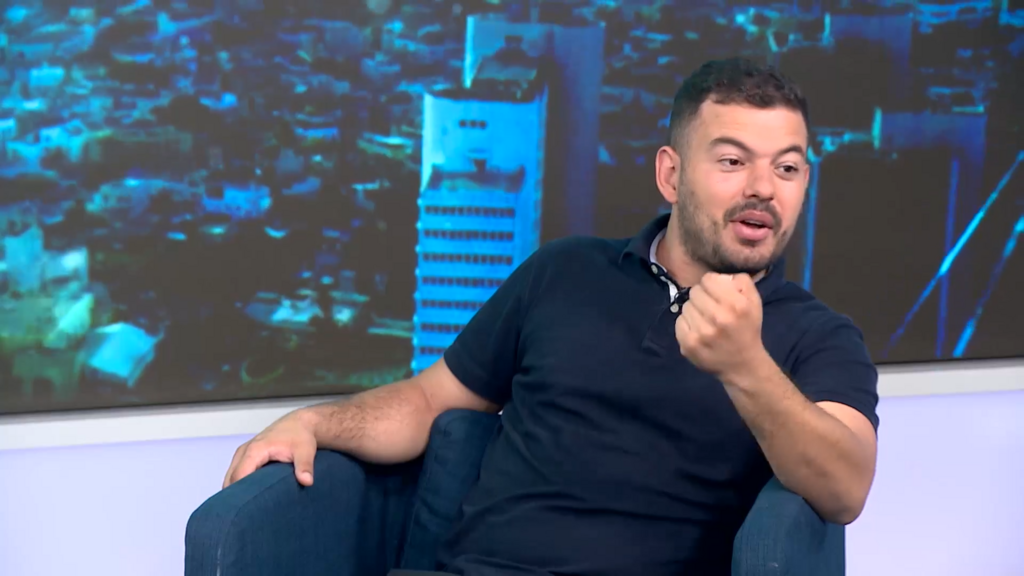
'A mix of blunt honesty and unexpected humor' Lt. Jonathan Ben Hamo
(Photo:Screengrab)

Sarai Givaty, Titi Ayanaw reacting to Lt. Jonathan Ben Hamo
(Photo:Screengrab)
His recovery, however, did not stop there. After being told in Israel that little more could be done, Ben Hamo sought treatment in the United States, where doctors addressed nerve damage and significantly improved his mobility. “I thought this was my life,” he says, recalling the moment he was told to accept his condition before deciding otherwise. He has since turned that experience into action, helping bring wounded soldiers abroad for advanced treatment while working to establish similar prosthetics and rehabilitation capabilities in Israel.
The episode closes with the panel returning to its signature commentary, addressing online misinformation and high-profile figures before shifting to a segment highlighting Israeli achievements ahead of Independence Day.
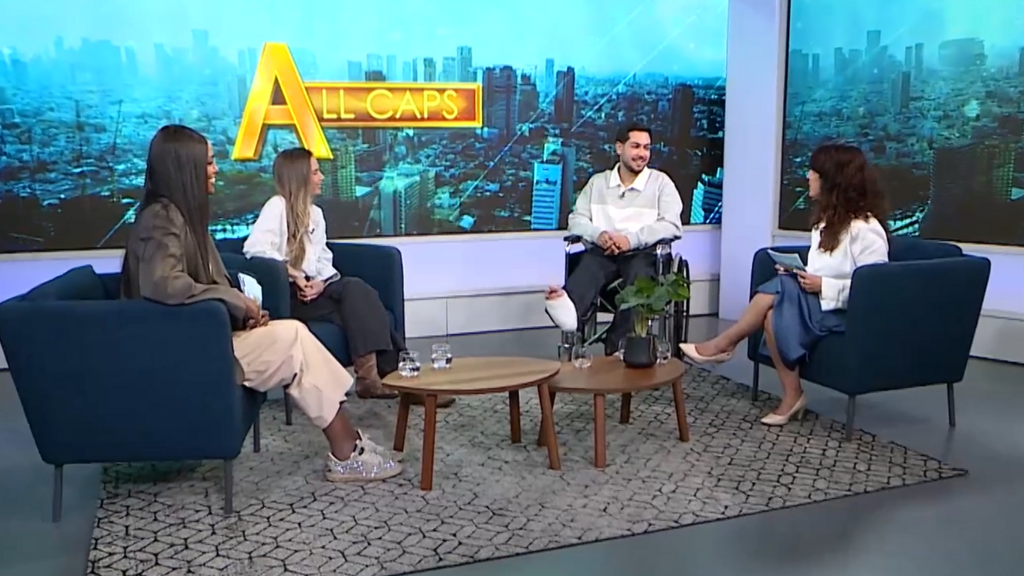
'505 days in captivity, much of it underground', Hostage survivor, Eliya Cohen in the studio
(Photo:Screengrab)
But it is the contrast between its two central voices that defines this installment, one shaped by captivity, the other by recovery, both grounded in lived experience. Aired in the shadow of Holocaust Remembrance Day, Memorial Day and Independence Day, the episode reflects the arc that defines this period in Israel’s calendar, from memory of destruction, through loss and sacrifice, to the persistence of life and renewal. In that sense, the stories at its center are not just personal, but part of a broader continuum, one that connects past trauma, present struggle and the enduring drive to move forward.
First published: 15:59, 04.19.26