

Security planners for the World Cup are preparing for drones to pose one of the tournament's most complicated threats, as officials seek to protect stadiums, fan zones, team hotels, training sites and transit routes across multiple U.S. cities and jurisdictions.
Industry executives and U.S. officials said the threat ranges from careless spectators seeking social media footage to operators conducting surveillance or attempting to disrupt matches.
Gallery
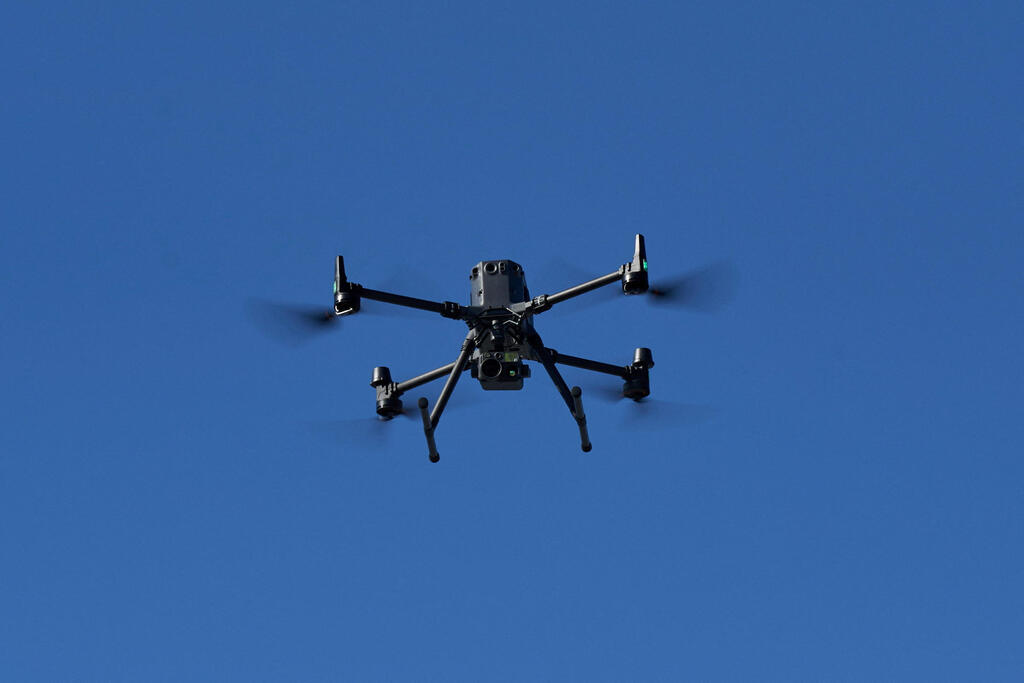
Drone operated by NJ Transit, flies over an Emergency Response Drill and training exercise ahead of the FIFA World Cup 2026
(Photo: Bing Guan/File Photo/Reuters)
Melissa Swisher, chief revenue officer of SkySafe, a drone-detection and airspace security company, said inexpensive aircraft have "fundamentally changed" security planning for major sporting events because they can enter restricted areas before authorities can react.
"A $1,000 drone that's going 40 to 45 miles per hour could cross two miles in under three minutes," Swisher said. "By the time somebody sees it, that's already over."
Swisher said the most likely use around the World Cup may be surveillance rather than an aircraft carrying a payload. Drones could be used to study security patterns, monitor team movements or obtain unauthorized footage. Others may be flown by hobbyists, media or fans who do not understand temporary flight restrictions, she said.
Bypasses traditional security systems
Drones can bypass conventional stadium security such as bollards, magnetometers and expanded pedestrian perimeters, said Tom Adams, director of public safety at counter-drone company DroneShield and a retired FBI agent.
"You have something that can overcome all those traditional security measures and get right over everything," Adams said. "In a lot of cases, it's just a careless and clueless person who wants to get a cool picture to put on their social media page."
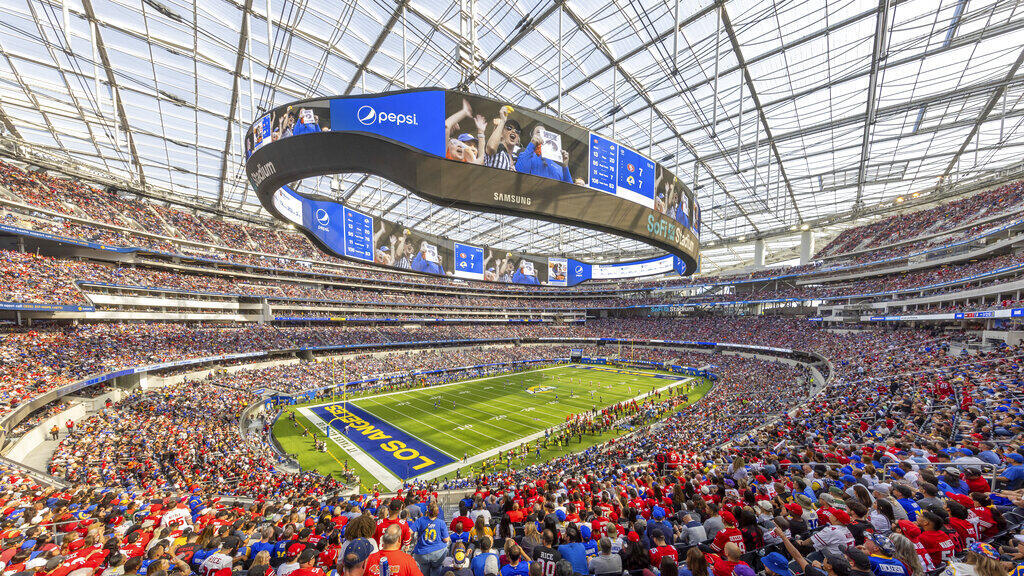
SoFi stadium in California is on e of the venues, and this is practice for the 2028 Olympics in LA
(Photo: Jeff Lewis/AP)
Counter-drone companies are working with law enforcement and public safety agencies to build detection networks around tournament sites. SkySafe said its sensors can identify drone signals, track flight paths and, where possible, locate the operator.
DroneShield is supporting a Kansas City-area deployment led by police and regional partners to help detect drones across multiple jurisdictions.
Executives said shooting drones down is rarely a simple option over crowds because debris could endanger spectators. Instead, identifying the operator may be the safest response when a drone appears to be collecting information rather than posing an immediate physical threat.
World Cup's wide footprint
The Trump administration has reportedly spent $250 million since December to help U.S. host cities address drone threats.
The funding, distributed through the Federal Emergency Management Agency to 11 host states and Washington, D.C., is intended to help track and mitigate unauthorized aircraft. On match days, planes and drones will be barred within 3.5 miles of stadiums and below 3,000 feet under Federal Aviation Administration restrictions.
The tournament's wide footprint adds to the challenge. In regions such as New York-New Jersey, Boston, Kansas City and Los Angeles, security operations may span city, county and state lines. California, where SoFi Stadium in Inglewood and Santa Clara will host matches, received the largest FEMA grant, nearly $34.6 million.
Swisher said lessons from the World Cup are likely to shape security planning for the 2028 Los Angeles Olympics in two years' time.
"They're not going away," she said of drones. "Tech continues to get more and more sophisticated."