


It is still unclear when the algae crisis affecting Israel’s desalination plants will end, despite a statement by Energy Minister Eli Cohen, and it is also unclear exactly how to deal with it. The Water Authority and Israel Oceanographic and Limnological Research, the government company that studies seas and lakes, are trying to identify the algae clogging the systems and, in a way that sounds almost counterintuitive, to make it grow so that it gets trapped in filters instead of penetrating the desalination plants.
At the same time, the algae are moving northward, raising concern that they could also affect the Hadera desalination plant, the only Mediterranean facility that has been operating normally in recent days.
The algae on Palmachim Beach
(Video: Photo: Courtesy of the IAF)


The Energy Ministry and Water Authority said that, after continuous operation by some desalination facilities and the approval of thousands of cubic meters of water from wells across the country, water reserves are trending upward. They also said water supplies to households and agriculture are proceeding normally. Local authorities also have been allowed to use water for public landscaping, alongside a request to reduce overall municipal water use by 10%.
Since Sunday, Israel has been dealing with an unprecedented event that, at its peak, completely shut down five of the six desalination plants along the Mediterranean coast.
The Hadera plant, which the contamination has not yet reached, is operating normally around the clock, while Sorek B and Palmachim are operating partially despite the contamination. Sorek A, which was restarted for several hours and then shut down again, as well as the Ashdod and Ashkelon plants, have been offline for several days. Meanwhile, the algae are moving northward, raising concern that they could also reach Hadera, the only Mediterranean desalination plant operating normally in recent days.
At the same time, the state has been forced to improvise. Mekorot received Health Ministry approval to pump water from wells that had previously been barred from use as a precaution. After about two days in which water supplies to farmers, mainly in the Negev, were halted, pumping for agriculture resumed.
Efforts to identify the algae
The micron-sized algae, which likely arrived from the Nile region in Egypt, are classified as pico-phytoplankton, but experts still do not know which species, or species, are responsible for the bloom. Once they identify them, they will develop a treatment protocol.
“Because these are tiny algae, about one micron in size, we are trying to develop protocols that will help treat them," Alon Zask, CEO of Israel Oceanographic and Limnological Research, said. "Ultimately, we will try to tailor a treatment that will cause them to stick to one another and form a larger cluster of this microscopic algae, so that it will not be able to pass through the filters at desalination plants.”
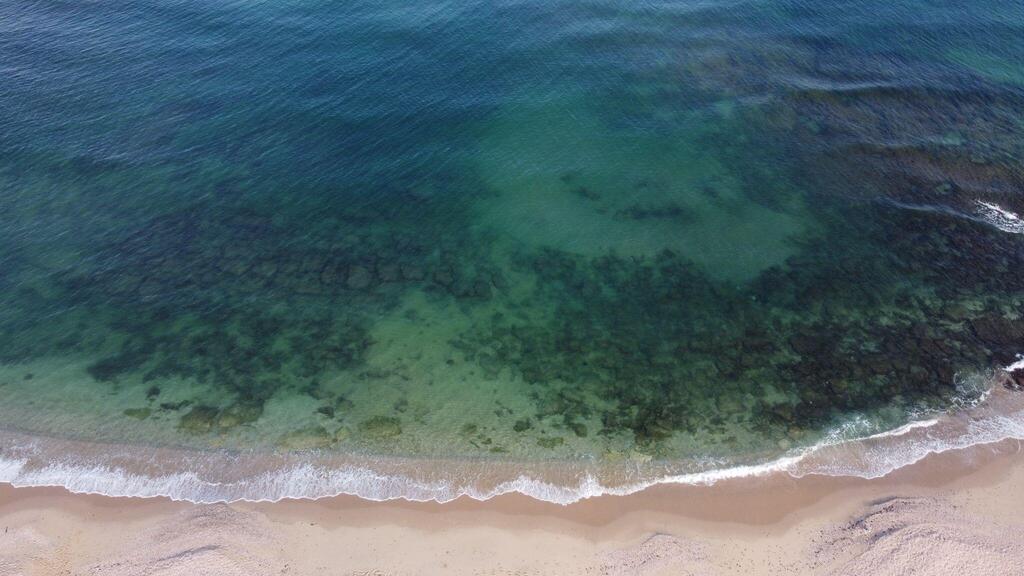
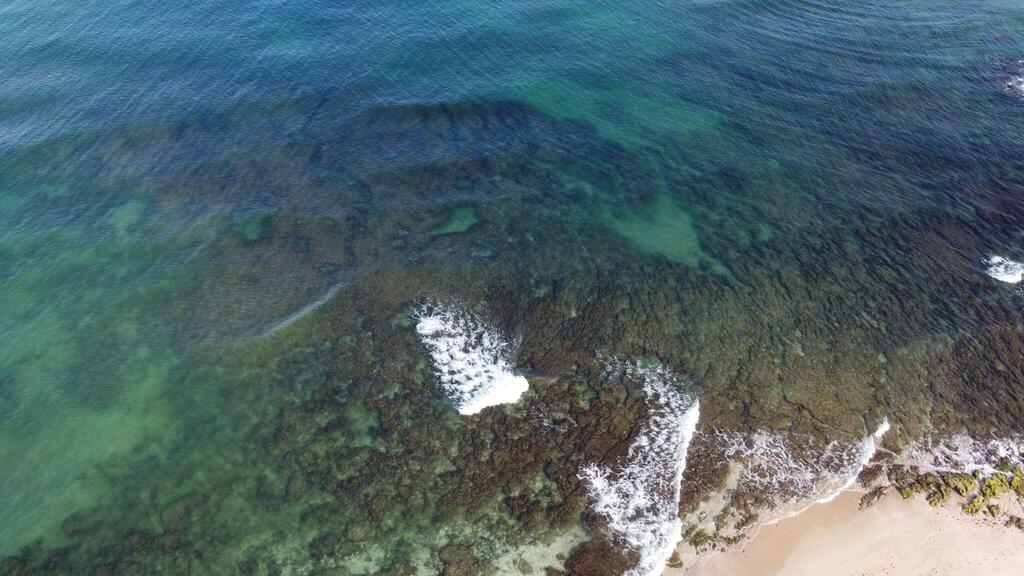
(Photo: IAF)
Zask acknowledged that researchers do not know how long the algae will remain off Israel’s coast. According to estimates, fertilizers or sewage, apparently arriving from the Gaza Strip, are feeding the algae and contributing to renewed blooms. “These are conditions that simply allow the algae to survive,” he said.
Leehu Hacohen, CEO of BlueGen, which owns the Palmachim desalination plant together with Migdal, said the decision was made to operate the facility despite the fact that seawater turbidity had not declined.
“The main reason was the growing distress in Israel’s water sector. Without Palmachim operating, Hadera would effectively have been the only plant left. Running only one facility would have had very severe consequences for the water system. Farmers cannot irrigate their crops. It could even lead to a shortage of drinking water. The decision by the Water Authority to operate the plant, even partially and despite the potential damage, was simply risk management.”
Sorek B desalination plant is partioally operational
(Video: Meir Turgeman)
Palmachim began operating at about 50% of its capacity, producing between 120,000 and 150,000 cubic meters of water a day, compared with 300,000 cubic meters at full capacity. According to Hacohen, there is close cooperation with the state, which understands both the need to support the water system and the costs involved in operating the plant under these conditions.
“Everyone understands the scale of the crisis we have found ourselves in,” he said. “Looking ahead, especially in light of the war the country has gone through, the missile threat, the potential for cyber incidents and natural disasters, it is right to make sure that the country has sufficient surplus water capacity.”
He added: “This was an event that emerged unexpectedly. Algae can appear within hours or days. With advances in science and AI, we will be able to develop better forecasting tools.”
Hacohen also pointed to climate change, including rain in August, storms and heavy hail. “Climate phenomena are becoming more extreme, and we need to understand that the climate is becoming more violent, know how to respond to it and prepare better,” he said.
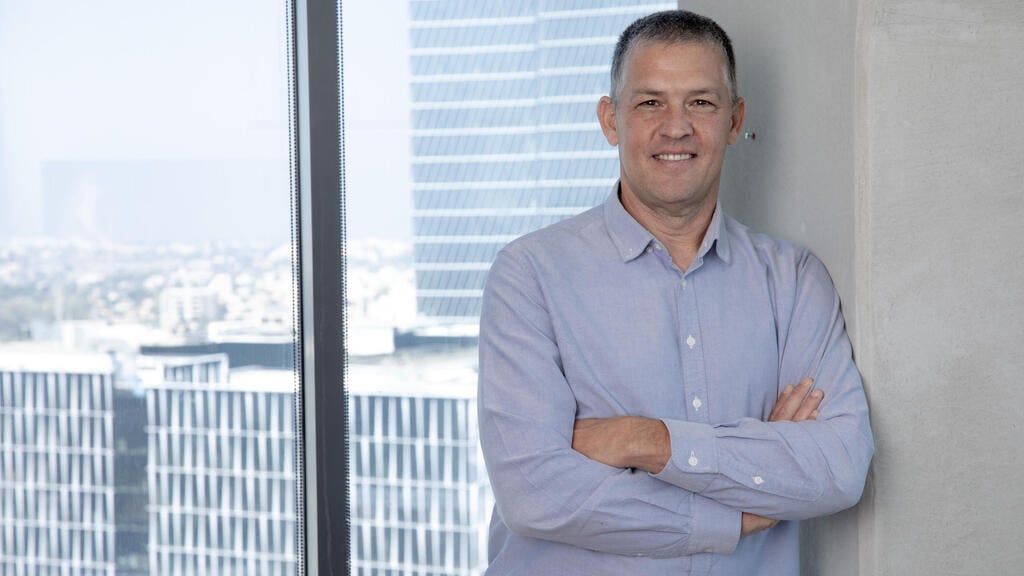
Leehu Hacohen, CEO of BlueGen, which owns the Palmachim desalination plant together with Migdal
(Photo: Sivan Farage)
Asked whether it might be possible in the future to draw water from deeper offshore, Hacohen said: “It makes construction of a desalination plant much more expensive, on the order of hundreds of millions of shekels. That would immediately raise the price of water. In the end, everything has a cost, and it is all a question of balancing.”
Meanwhile, Mekorot received Health Ministry approval to pump water from wells that had previously not been approved for use as a precaution, in order to ease pressure on the system. “We approached the Health Ministry and they understood the magnitude of the event. You take risks, but this is good water that meets all health standards," a water-sector official explained.
There is also some good news from the weather. According to the Meteorological Service, temperatures are expected to drop slightly, which could help with the algae situation. Even so, there is no forecast for when the event will end.
The Water Authority has allowed desalination plant operators to stock up on membranes, since the algae damage these delicate components. Sorek B and Palmachim are operating despite the contamination, which is expected to shorten the lifespan of the membranes. That way, if the situation continues, the other plants will still be able to operate at least partially.