

Experts in Israel and around the world are asking one major question: Can artificial intelligence replace doctors? For Prof. Ido Wolf, who is completing four years as head of Tel Aviv University’s School of Medicine, the question is not whether it will happen, but when.
“The average, worn-out doctor who doesn’t really know the material, who doesn’t really innovate, will not be needed in 10 years because they will be replaced by AI,” he says in an interview with ynet.
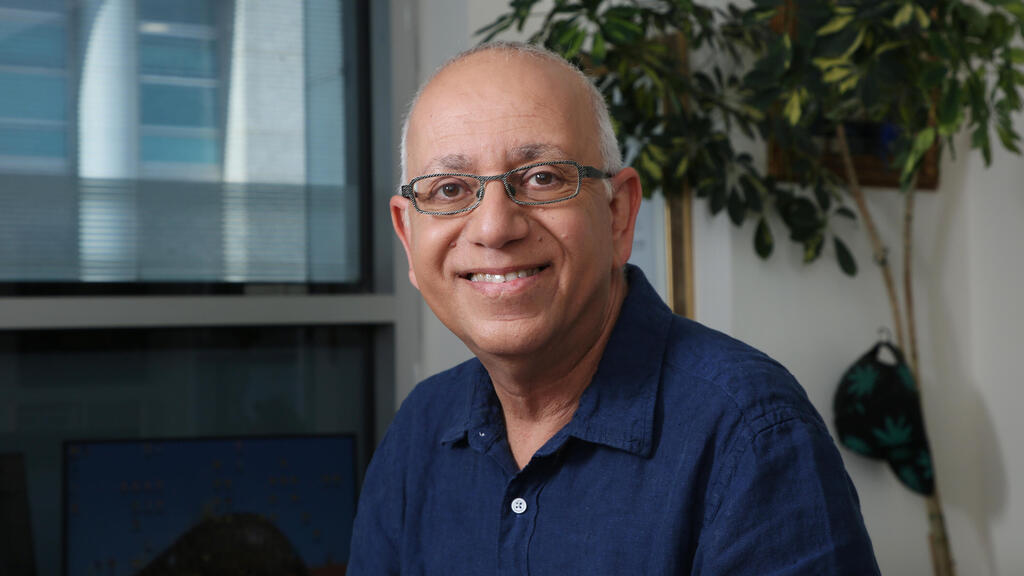
The four years behind him were anything but routine: from the debate surrounding the judicial overhaul to October 7 and the ongoing war and its consequences — hundreds of students were called up for hundreds of days of reserve duty, medical schools were forced to adapt to changing circumstances and concerns grew over an academic boycott of Israel.
“These were four crazy years, a roller coaster — there is no other way to describe it,” he says.
When he took office, two major challenges stood before him: successfully completing the international accreditation process, a necessary condition for Israeli medical graduates to integrate into the U.S. medical system, and increasing the number of students in the faculty in line with Health Ministry demands, in an effort to address the consequences of the “Yatziv Reform,” which removed a number of academic institutions, mainly in Eastern Europe, from the list of recognized medical schools for Israeli students.
Wolf emphasizes that the changes were carried out through teamwork: Prof. Karen Avraham, dean of the faculty; Prof. Michal Chowers, head of the four-year program and leader of changes to the new preclinical curriculum; and Prof. Noa Eliakim Raz, head of the six-year program and leader of the new clinical curriculum.
“We received, like all faculties, a huge report listing things that needed to be implemented, including changes to the teaching curriculum and the nature of instruction,” Prof. Wolf explains.
As part of the process, about 25% of the study material in the preclinical years was cut. “For years we have been teaching mountains of material, and the material keeps growing, but it’s impossible — the brain remains the same size. The reduction did not harm the content of studies, on the contrary.”
At the same time, the clinical curriculum was also changed. In December 2025, Israel’s Council for Higher Education received full recognition from the World Federation for Medical Education (WFME). The practical significance: Graduates of Israeli medical schools will continue to be eligible to take U.S. medical licensing exams and advance to residency programs and fellowships in the United States without a regulatory barrier.
At the same time, efforts were focused on preparing for the Yatziv Reform, which regulated the training standards for Israeli medical students studying abroad.

'For years we have been teaching mountains of material, and the material keeps growing, but it’s impossible'
(Photo: shutterstock)
“The Yatziv Reform was announced in 2019, but Israel only began preparing for it around 2022-2023. Then there was major pressure to add more students and accordingly organize the clinical training sites” — the practical training alongside patients’ beds.
A difficult decision — for the sake of reservists
Against this backdrop, the October 7 war broke out, and medical schools were forced to deal with its impact inside their faculties as well — from students who lost family members to many who were drafted into reserve duty and sent to the front lines.
“When the war began, we had to absorb dozens of students who were studying abroad, were called up for reserve duty and could not return to where they were studying. We also made the decision to accept reservists without psychometric exam scores. It was a difficult decision, but we had no choice, and we used another measure,” Prof. Wolf says.
“The fact that all the reservists completed their studies, and did so in an excellent way, is a tremendous achievement.”
At the same time, Tel Aviv University’s School of Medicine sought to continue expanding access to medical studies for diverse populations, including Ethiopian Israelis, high-achieving students from the periphery and ultra-Orthodox Jews.
“These are populations that the psychometric exam does not serve well. I don’t know whether to call it leniency — the admission criteria are simply somewhat different. The more multicultural the atmosphere, the better doctors the students will become,” Prof. Wolf says.
Recently, the integration of ultra-Orthodox Jews into higher education has become a subject of public debate, particularly following approval of a bill proposed by Knesset member Limor Son Har-Melech of the Otzma Yehudit (Jewish Power) party that would allow gender separation in graduate academic programs.
“Students would dissect only male bodies and study only male anatomy, and women would study only female anatomy, and you would study according to gender even if those lecturers are less qualified. Then in the department, a male doctor would treat only men and vice versa — and where does it end? Where does it stop? It is impossible. I don’t think there is a single country in the world with such separation, not even Iran,” Wolf says.
According to him, Tel Aviv University successfully represents all sectors of Israeli society.
“Ultimately, male and female doctors treat everyone. It is clear to everyone that this is an absurd law. It only inflames tensions and makes the work more difficult.”
Regarding the integration of ultra-Orthodox students into medical schools, he says the main challenge is not acceptance itself but expanding the pool of candidates.
“More ultra-Orthodox students need to arrive with full matriculation certificates and core curriculum studies. If there are 50 outstanding ultra-Orthodox candidates, all 50 will be accepted. They simply need to meet the threshold requirements. Today there are far fewer ultra-Orthodox candidates — meaning the problem is not with us, the problem is much earlier.”
'My 88-year-old mother also asks ChatGPT'
In recent years, as artificial intelligence has entered our lives and been integrated into a wide range of fields, the question of how medical education should change has also emerged. Alongside those who support incorporating the technology, there are also warnings against relying on it too heavily and concerns that it could harm the quality of medical care.
“I am not for or against AI. I am not fighting something that will be here anyway,” Prof. Wolf says. “My mother, who is 88, asks ChatGPT about anything that interests her. It could be a recipe for cheesecake, and it could also be a medical problem. My mother, at 88, does this all the time, and everyone around her does it too.
“I even posted a question on Twitter asking what people do when they have a medical problem, and the distribution was identical between medical staff and those who are not. So I am not for or against it — it is like saying, ‘stop the sun.’ It does not make sense.”
“How can I stop a doctor from using ChatGPT? There is no way. The only thing I can do is make sure there are tools available,” he adds.

'How can I stop a doctor from using ChatGPT? There is no way'
(Photo: shutterstock)
Hospitals are working intensively to integrate artificial intelligence tools into their internal systems to assist doctors. At Tel Aviv Sourasky Medical Center (Ichilov), where Prof. Wolf serves as head of the oncology division, work is currently underway on a new tool that provides medical recommendations based on a patient’s medical record.
“There is an advantage in the fact that these tools are secure in terms of patient privacy and cyberattacks — at least a doctor will not photograph a patient’s documents and upload them to ChatGPT.”
Regarding the quality of recommendations produced by artificial intelligence tools, Wolf says the picture is more complex.
“It is possible that these tools will provide recommendations with 80% accuracy. I am not sure that an average doctor in the middle of the night has 80% accuracy. It is very possible they have less. And if the tool reaches 90% because the models continue to develop, then all the more so — we have a tool that may be stronger than a tired doctor at 2 a.m.”
Prof. Wolf believes that within 10 years artificial intelligence will become an inseparable part of medicine in Israel.
“The average, worn-out doctor who does not really know the material, who does not really innovate, will not be needed in 10 years because they will be replaced by AI,” he says.
“On the other hand, the doctor who innovates, who researches, who pushes boundaries and provides added value alongside artificial intelligence, will be essential. Doctors in 10 years will have to be much stronger, or they will not be here.”
According to him, while artificial intelligence can solve complex questions within seconds, doctors are still required to invest many years in learning.
“AI takes a second and a half to complete second-stage medical exams, while for us doctors it takes 10 years. I believe this will create enormous frustration among doctors in the future. There will clearly be a thought of, ‘Why do I need to memorize something when I can quickly check what the AI writes while standing with the patient?’
“But ultimately, to develop experience, skills and intuition, you need to treat a million patients — not have artificial intelligence tell you what to do.”
Alongside this, Prof. Wolf believes further changes are needed in the medical curriculum, including additional reductions in study material and a reassessment of the internship year.
“There are many countries in the world that do not have an internship year. If you are going to become an internist and deal only with adults, how does spending two months in pediatrics help you? All the old assumptions from the past, about the general physician, are no longer relevant.”
The strongest doctors are the ones leaving
The consequences of the war cannot be ignored when discussing the departure of Israeli doctors abroad, driven by security instability and political events.
“Doctors talk about this all the time. Some are here or abroad and say they are waiting to see the election results before making a decision. I am worried because the ones who ultimately leave abroad are the strongest doctors — those who are supposed to return and run units and departments here. Every person who does not return becomes a model for others like them.”
According to him, not everything is connected to the political situation, since, similar to Israel, there is currently a major shortage of doctors in the United States as well. In some states, officials have already announced they are willing to accept doctors who have completed residency without additional exams.
“In these states, they offer salaries that people here can only dream about. Can Israel compete with very prestigious positions in other countries? I am not sure. This means that at some point there will be a need to seriously think about doctors’ salaries as well.”
Despite the concerns, there have not yet been major waves of doctors leaving.
“You always see the department head in front of you, but if 2,000 highly skilled doctors leave, the level will eventually decline. Training a top-tier doctor, an expert in their field, takes about 20 years. If you lose someone like that, there is truly no replacement.”
“The struggle needs to be over the strongest people,” he adds. “Every doctor we send for a fellowship who excels abroad is someone others want to take.”
'Training a top-tier doctor, an expert in their field, takes about 20 years'
(Photo: shutterstock)
“I have doctors who are being offered very senior positions abroad, and to bring them back here we need to see what we can offer them. I succeed in bringing some back — not all. We need to give them roles that meet their challenges, opportunities for personal and professional advancement and invest money in research. The money does not necessarily have to be salary. We can build excellent packages here.”
'We are defending the country'
One issue that has occupied both the higher education system and the health system since the outbreak of the war is the fear of an academic boycott.
“It is very frightening. There are several medical organizations calling for a boycott against us, even now, and our situation is not improving,” Prof. Wolf says.
He says the current controversy is connected to the case of Dr. Hussam Abu Safiya, director of a hospital in Gaza, who has been detained in Israel for more than a year and a half.
“His medical condition is not completely clear, and I am not sure Israeli citizens understand the enormous media impact this is having.”
About a month and a half ago, the medical journal The Lancet, one of the two most influential medical journals in the world, published a call to suspend the Israel Medical Association from the World Medical Association. Several letters on the issue were also published in the BMJ.
“Hundreds of thousands of doctors around the world, if not more, see these letters, and these things seep in — there is no way around it.”
According to Prof. Wolf, after October 7 there was an unprecedented wave of support for Israel, but later the trend reversed and has remained that way.
“These calls are gaining momentum day by day,” he says. “People say, ‘So what, they will boycott the medical association?’ But they do not understand — this means boycotting all of Israeli medicine.
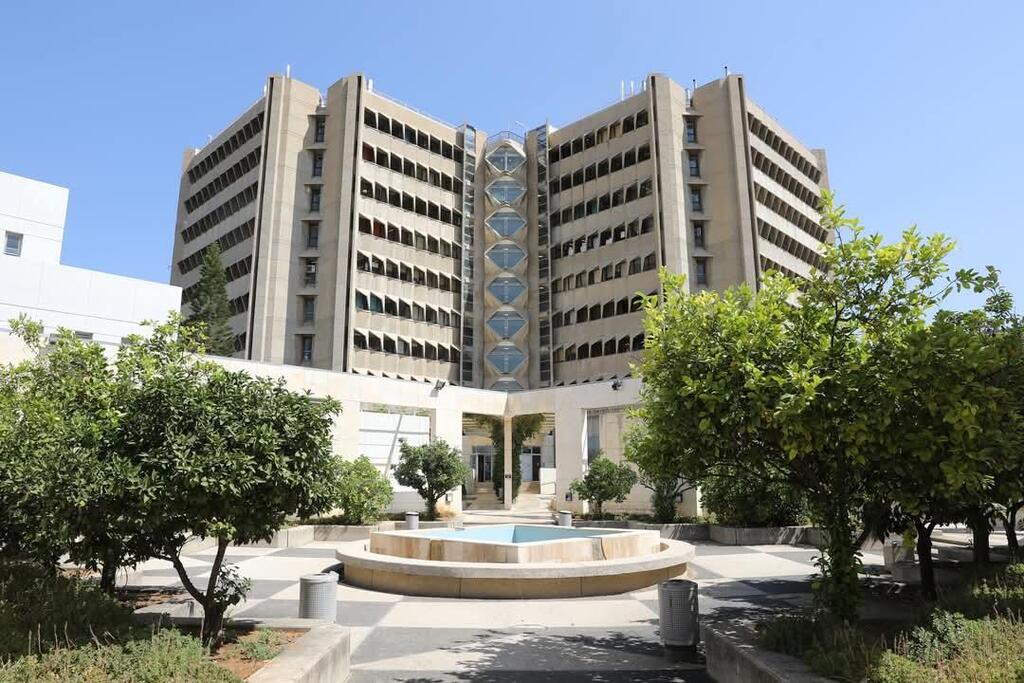
Tel Aviv University. 'Making sure our students are the best in the country — that is the goal'
(Photo: Tel Aviv University Spokesperson)
“What will happen to clinical research, new medicines for patients, collaborations, sending people to outstanding centers abroad? Ultimately, we are part of the international medical community, and losing that would be extremely dangerous.”
“Israel must take a series of basic steps to improve its visibility in the eyes of the world,” he adds. “Right now we are trying to reduce the noise surrounding Dr. Abu Safiya. If, for example, he were transferred to a general hospital and the whole world knew he received treatment at Ichilov or Sheba, or was at least examined there, it would certainly make a difference.”
Wolf also addresses a petition submitted to Israel’s Supreme Court by several human rights organizations demanding that the humanitarian medical corridor be reopened and that patients and wounded people from Gaza receive access to treatments unavailable in the Strip, in hospitals in the West Bank and East Jerusalem.
The Supreme Court decided not to intervene and recommended that the petitioners focus their efforts on encouraging other countries to accept them.
“Over time there have been stories of children who died of cancer in Gaza. It is not published in the Israeli media, but abroad it has already come out. People are angry at us for raising this, but they do not understand that we are trying to defend the country.”
'Now we need to take it to the next level — there is still a lot of work to do'
(Photo: shutterstock)
'We need to build the medical leadership of the country'
Ahead of Prof. Anat Gafter-Gvili taking over the position, Prof. Wolf says that many structural changes were made during his tenure and that the next stage requires deeper reforms.
“Making sure our students are the best in the country — that is the goal. After all, this is Tel Aviv University’s School of Medicine. We cannot not be the best. We need to make sure we are building the country’s medical leadership.”
He says he is not sad about ending his term.
“I am not sad about finishing the role. It was exhausting, I need to breathe a little,” he says with a smile. “Being in such a position during these four years in the State of Israel was not simple. We met every challenge and I think we excelled at them.
“Now we need to take it to the next level — there is still a lot of work to do.”