

Days after the dramatic evacuation of passengers from the MV Hondius — the “hantavirus ship” where three people died from the Andes strain — comes a report of a new health incident aboard a cruise ship. A 90-year-old passenger died aboard Ambassador Cruise Line’s cruise ship Ambition, and 48 passengers and one crew member developed symptoms of vomiting and diarrhea.
French authorities on Wednesday confined more than 1,700 passengers and crew on the British cruise ship docked in Bordeaux after the death of the passenger, said officials, who played down any links to the hantavirus scare.
Gallery
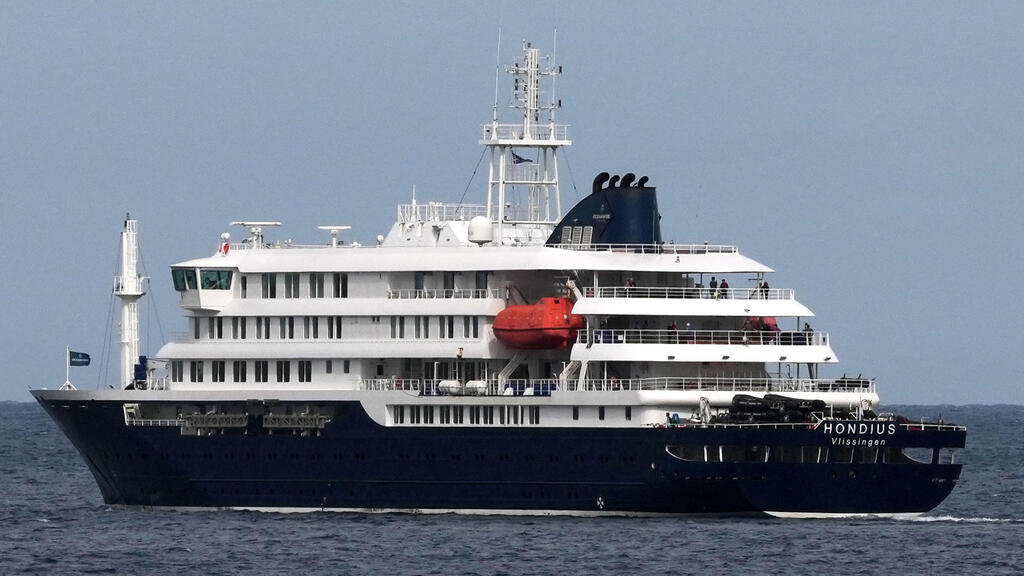
The MV Hondius ship where three passengers died after contracting hantavirus
(Photo: Misper Apawu/AP)
Dozens also suffered from upset stomachs aboard the Ambition - most of whose 1,233 passengers are from Britain or Ireland - which arrived in the western port of Bordeaux on Tuesday, with 514 Indian crew members also on board.
But health officials said there was no connection with the hantavirus outbreak, suspected of killing three passengers on the Dutch MV Hondius cruise ship that set sail from Argentina.
One 90-year-old passenger on the Ambition, run by the Ambassador Cruise Line company, had died and about 50 people have shown symptoms of stomach issues, the officials said.
Initial tests ruled out an outbreak of norovirus, a highly contagious form of gastroenteritis which causes vomiting and diarrhea, but secondary tests were still underway, they added.
Food poisoning had not been excluded.
Passengers on board the Ambition showed peak symptoms on Monday when the ship was docked in Brest, the officials said. The 90-year-old died before they arrived at the port in France's northwestern Brittany region.
No security measures were in place around the ship as it was docked in Bordeaux on Wednesday, an AFP reporter said. Passengers were taking pictures of the French city from the deck.
The current incident on a cruise ship comes after May 2, 2026, when the World Health Organization was notified of an outbreak of severe respiratory illness aboard the MV Hondius, which was carrying passengers and crew from 23 countries. The cause was the Andes strain of hantavirus — the only strain capable of human-to-human transmission, usually through prolonged close contact. The total number of cases rose to 11, including two confirmed deaths and another victim who also likely died from the virus.
On May 10, the ship docked in Tenerife in the Canary Islands, and an international evacuation operation began. Sixteen American passengers were transferred to the University of Nebraska Medical Center — 15 of them in isolation and one, who tested positive, in a biocontainment unit.
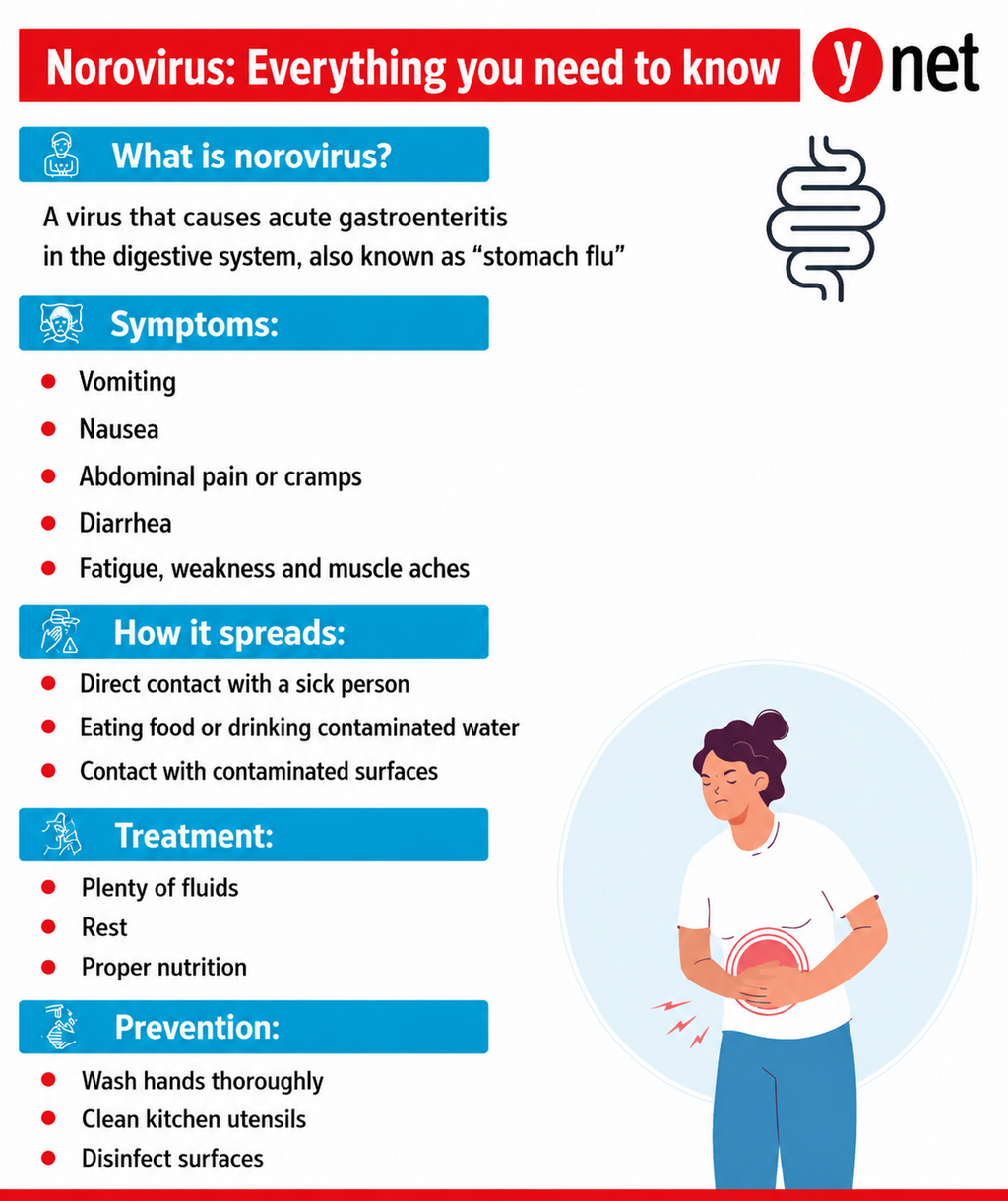
What is norovirus?
Norovirus, sometimes called the “winter vomiting bug,” is a highly contagious virus that causes inflammation of the stomach and intestines. Its main symptoms are vomiting and diarrhea, and it is resistant to heat, cold and many disinfectants. The virus spreads through contaminated food or water, infected surfaces or direct contact with a sick person — and alcohol-based hand sanitizer is not effective against it. Hands should be washed with soap and water.
Symptoms usually appear 12 to 48 hours after exposure, and most patients recover within one to three days — but they can continue infecting others for up to two weeks after recovery. There is no vaccine or dedicated treatment for the virus, and care focuses on maintaining fluid balance. The virus is especially dangerous for older adults and young children, who may suffer severe dehydration.
Dr. Roy Zucker, an infectious disease specialist with Clalit, explains that “only a very small viral load is needed to contract norovirus. It is characterized by a high ability to survive on surfaces and resistance to standard disinfectants, making it one of the world’s leading causes of gastrointestinal infections. In a closed and confined environment such as a ship, for example a cruise ship, infections can spread much more intensely and rapidly.”
 Dr. Roy ZuckerPhoto: Sourasky Medical Center
According to Zucker, “the combination of high density, shared spaces and the use of central food facilities creates optimal conditions for widespread transmission in a short time. At the same time, it is important to stress that this is a virus well known to health systems. Its epidemiological characteristics have been known and documented for years, and based on what appears now, there is ‘nothing new under the sun’ — this is not an outbreak of an unknown pathogen, but a pattern of behavior associated with the virus for decades.”
Cruise ships are particularly prone to norovirus outbreaks because of crowding and contact among large numbers of people. In 2026 alone, two outbreaks have already been documented on cruise ships — on the Star Princess between March and April, and on the Caribbean Princess in late April, where more than 100 passengers and crew members became ill. In the United States, norovirus causes an average of 19 million to 21 million infections, 109,000 hospitalizations and 900 deaths a year, according to data from the CDC, the Centers for Disease Control and Prevention.