

“I told them that the plasma used by the army is purchased and imported by the IDF from Germany. In other words, the blood from which the plasma is produced is blood donated by German citizens. Many soldiers wounded in the field were saved thanks to German blood,” Lt. Dr. Y says of the unforgettable conversation he held with members of the German parliament as part of the Jewish Agency’s “Shlichim in Uniform” program. “They were very surprised. They were in shock.”
Y later spoke proudly about the ability of medical forces in the field to give wounded soldiers units of blood. “Until October 7, plasma was the main treatment we gave soldiers in shock. Today, we can already administer blood units in the field. We are the only army in the world that does this,” he said, referring to footage he revealed of blood units being airdropped in the heart of the Gaza Strip.
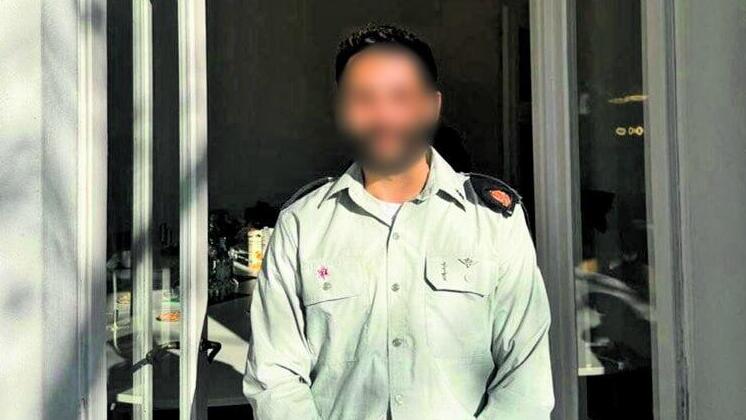
Airdropping blood units in the Gaza Strip by drone during the war


“A month before the ceasefire, a commander was fighting in the first tank that opened the offensive on Gaza City. He took a direct hit from an anti-tank missile while standing in the tank’s hatch, was critically wounded and lost a great deal of blood. We gave him the airdropped blood directly into his bones to increase his chances of survival. After he was evacuated, we continued the attack. There was still a threat, terrorists in the area, and we had to keep fighting. That evening we found out he had been killed,” he said sadly. “He received the best possible chances during evacuation from the field, in the helicopter and all the way to the hospital in Israel, thanks to the blood we gave him.”
Lt. Dr. Y, 28, from Tel Aviv, enlisted in March 2017 as a medic in the Search and Rescue Brigade and then went to medical school as part of the military’s academic track. About a year ago, he was assigned as the physician of the 77th Battalion. “I was with the battalion in Gaza. I joined them when they were in Khan Younis. After that we continued operations in the southern Strip, and in Operation Roaring Lion, we moved north,” he said.
During the complex days between Holocaust Remembrance Day and Independence Day, Y joined a delegation as part of the “Kiruv Levavot” project, in cooperation with the IDF Ground Forces, the Defense Ministry’s Families, Commemoration and Heritage Department and the Class Action Fund. The initiative was conceived by Jewish Agency Chairman Maj. Gen. (res.) Doron Almog to give IDF commanders and soldiers a platform to share their personal stories from the war and strengthen ties with Jews in the Diaspora, who are facing rising antisemitism. The delegation, now in its fourth year, included 130 male and female soldiers, among them 10 doctors and four paramedics, with the overwhelming majority of participants wounded in the latest war.
'A month before the ceasefire, a commander was fighting in the first tank that opened the offensive on Gaza City. He took a direct hit from an anti-tank missile while standing in the tank’s hatch, was critically wounded and lost a great deal of blood. We gave him the airdropped blood directly into his bones to increase his chances of survival'
Just before the Memorial Day ceremony for Israel’s fallen soldiers and victims of terror, Lt. Y took part in a meeting with Israel’s ambassador to Germany and bereaved families. “I met Anat, an IDF widow and orphan who has lived in Berlin for 50 years and still comes to meetings and ceremonies,” he said. “Her husband was a tank commander in my battalion, and now my platoon is fighting not far from the place where he fell. She told me what happened there, who evacuated him and who was with him in his final moments. There is an unbelievable similarity between the events then and what we are experiencing today.”
‘They hide their Star of David’
For the next meetings, with a wide range of audiences, Y arrived with a computer containing footage from the front. “During the operation in Jabaliya, a D9 bulldozer from the force was hit by an RPG fired by terrorists who emerged from a tunnel shaft. The driver and commander were seriously wounded, suffering penetrating injuries to the head and spine, and needed urgent evacuation. I arrived there with a battalion medical officer and a medic. We put the wounded into a Namer armored personnel carrier, treated them and drove to the landing zone, from where they were evacuated by helicopter to the hospital,” he said.
“My goal was to connect them to what we are doing in the field. I wanted to show them an authentic moment and make them feel comfortable asking the questions that were most pressing for them,” he said of the meeting with Jewish teenagers in Berlin. “Some of them were stunned. They tried to understand exactly what happened there, what equipment is used, how the evacuation is carried out and what combat looks like a few kilometers from Israel.”
Treating and evacuating wounded soldiers from Jabaliya in the Gaza Strip
Alongside their professional curiosity, participants asked about the mental health care given to those serving in the IDF. “Everyone asked about it because it is hard to understand how a society lives through three consecutive years of war. I explained to them that as fighters there is a drive, that you cannot stop operating. I explained that the difficulty is not only on the front but also on the home front. Their experiences as Jews in the Diaspora are also complex. No one walks around outside with a kippah. They hide their Star of David as if during the Holocaust. There is constant violence and alerts about attacks against them. To my mind, it is no less complex than living in Israel.”
Upon his return to Israel, before he had even rejoined the force, a severe incident occurred in which a soldier in the battalion, Sgt. Idan Fooks, was killed. “In an incident like that, you work to evacuate as quickly as possible, but there was massive blood loss. Paramedic T and the team with her are very professional, and I know the best possible care was given. Four wounded soldiers from the incident survived the injury.”
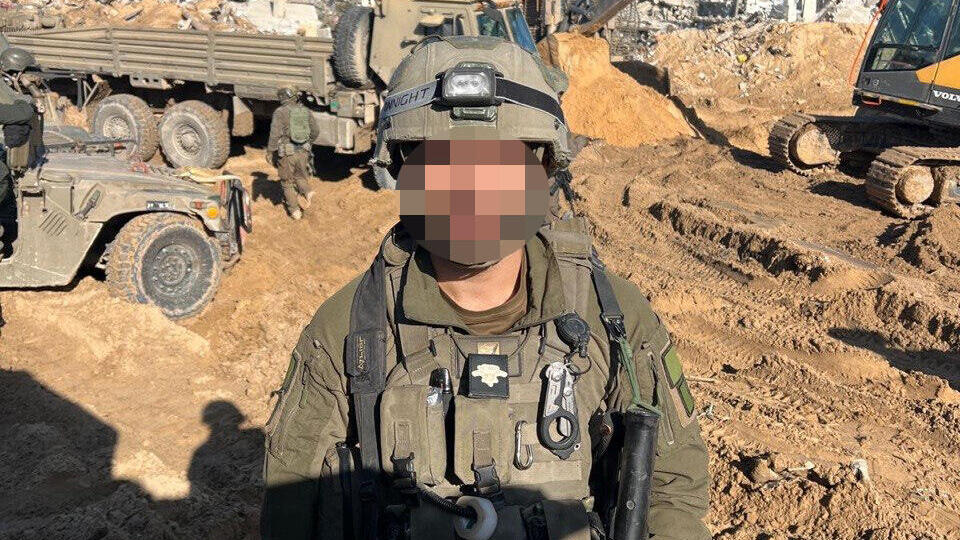
'You work to evacuate as quickly as possible': Lt. Dr. Y
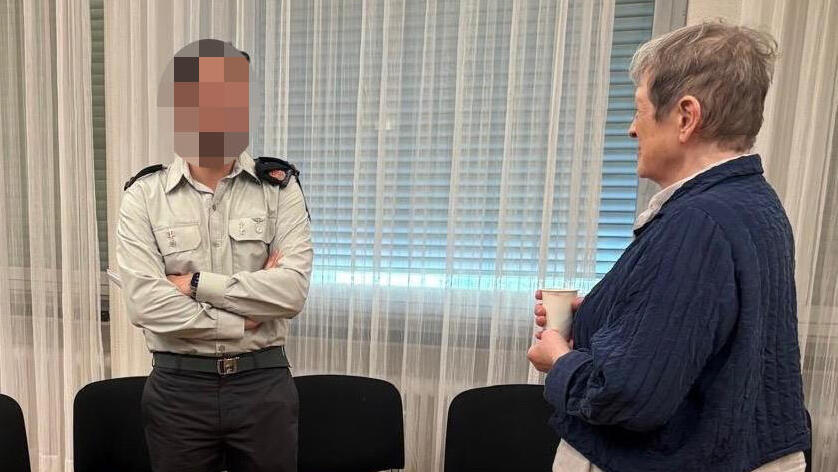
Lt. Y and Anat, an IDF orphan and widow, during the delegation’s visit to Berlin ahead of Memorial Day
Today, Y has already returned to the force’s activity in the northern sector and continues providing medical care in the field, alongside paramedics T and A, a career-service medic, and seven medics. “The paramedics are unusual in the landscape because they are the only women in the force. They deal with complexities we cannot understand, serve at the same intensity as combat soldiers and are sometimes with them for weeks in the same vehicle,” he said.
Another challenge the female medical personnel sometimes face in the field is joining a force of religious combat soldiers. “In one incident, T, the paramedic, joined a team of strictly observant religious soldiers. She herself comes from a religious home, observes the laws of negiah and keeps the commandments. There was complexity there. They are not used to being with a woman in a closed space.” A consultation was later held with the rabbi, who ruled that “there is no prohibition; it is a matter of saving lives.” Y said: “I am proud to say the right thing was done, and in the end, she was with them in the Namer for a month.”