


My family made aliyah when I was 13. We left London for Tel Aviv and, almost immediately, I understood that I had crossed not just a border, but an entire dimension of reality.
In London, the Holocaust was history, filed carefully under The Past. We had lessons about it. We lit candles. We moved on.
In Israel, the Holocaust was the woman across the street who screamed every night. Not metaphorically. Every night, the sound of somewhere she had never fully left.
It was the math teacher. Big head, tiny body, shorter than all his pupils. If anyone dared to mock him, someone would hiss: “You know why he’s like that? He’s one of Mengele’s twins. His brother didn’t survive.”
The laughter would die instantly.
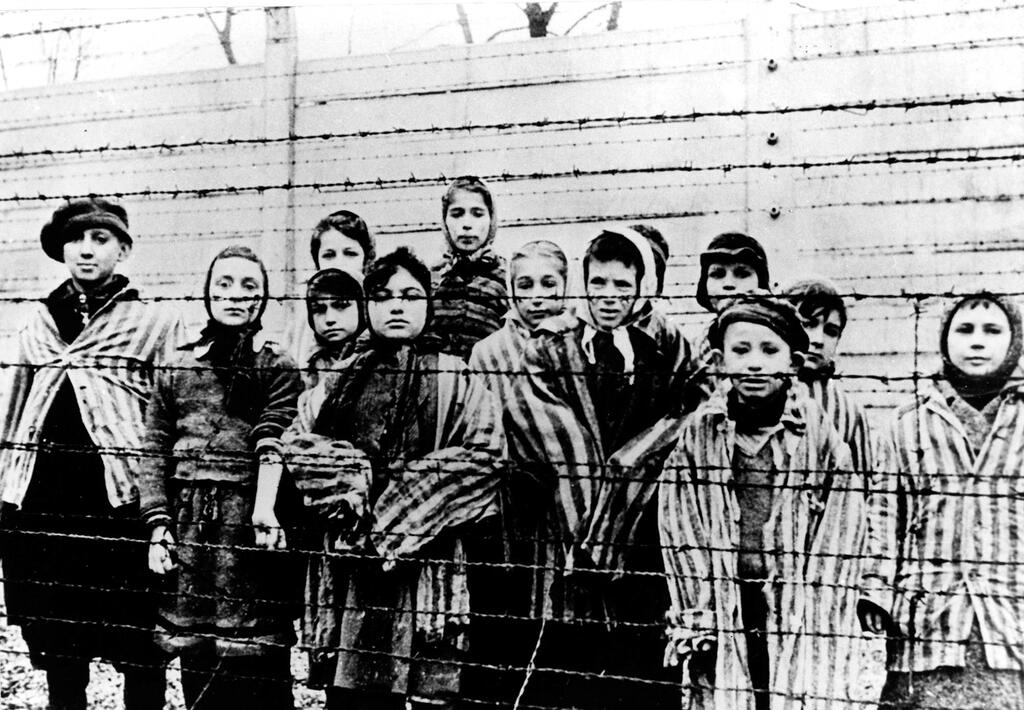
It was the man outside the optometrist’s clinic when I was 16. I asked him what number he was in the queue. He pulled up his sleeve, showed me the number on his arm, and said quietly, “I am not a number.”
I ran away, giving up my appointment, ashamed of myself for asking.
Israel gave Holocaust survivors a container for their wounds. Without it, they might have remained broken people scattered across the globe. Israel made them witnesses. Gave their wounds meaning. Gave them a legacy. Never Again.
So when Iran, ancient Persia, (Haman’s address), looked into a camera and said "Death to Israel, annihilation of the Jews" - and yes, annihilation was the word they chose - it did not land here the way it landed elsewhere. Elsewhere, people heard bluster. In Israel, we heard the woman’s scream.
We heard it in a register that bypasses analysis and goes straight to the oldest place in Jewish memory, the place that knows that when people announce their intention to annihilate Jews they have historically meant it.
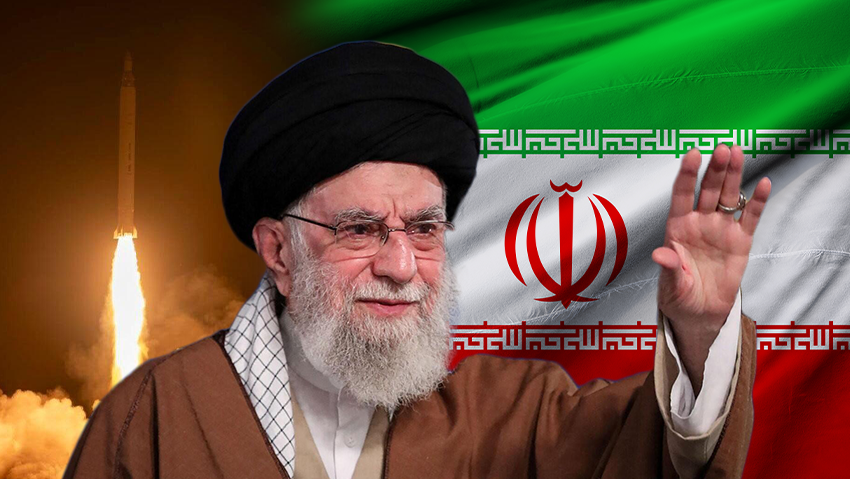
Iran’s Supreme Leader Ayatollah Ali Khamenei
(Photos: AFP, Shutterstock)
But we did not live in fear. Fear is what you feel when you are powerless. We were not powerless. When you have a place of your own, somewhere to stand and something to stand for, it sits in the spine. In the soul. Jews in the diaspora look over their shoulder. Israeli Jews look forward, in readiness.
We have an army. A flag. A state that said Never Again and meant it with jets and intelligence services, not (only) prayers and good luck charms.
For the first time in 2,000 years, we were not dependent on the goodwill of others.
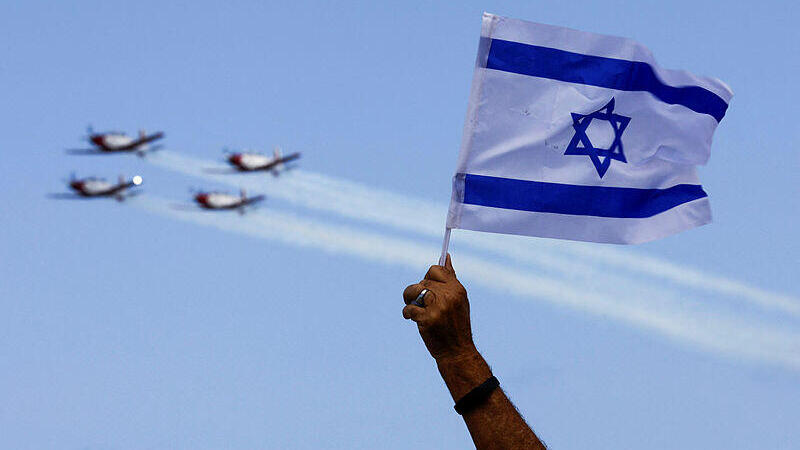
(Photo: Reuters)
Iran has been shouting its intentions for years. We noted them, upgraded our missile defense systems, and went to the beach. But that was never the full picture.
Underneath the confidence ran a quiet, cold fear. Iran’s nuclear ambitions have never been abstract to us. We always knew the target had our name on it. A tiny country. One button. No second chance.
I raised my children carrying both truths at once. The unshakeable pride of a people who built something from nothing. And the knowledge that a regime in Tehran has spent decades planning, funding, arming, and orchestrating our elimination.
Hezbollah in the north. Hamas in the south. Antisemitism exported and financed across Western campuses and capitals.
The West watched Iran enrich uranium and found reasons not to act. Diplomacy. Engagement. Strategic patience. Above all, money. Iranian money flowing into Western universities, institutions, politics. Buying influence. Underwriting the new antisemitism with petrodollars while the West looks politely away.
We were not naïve. We were the least naïve people on earth. But we had Israel. And Israel meant we would never again be what we were in Europe. That belief held.
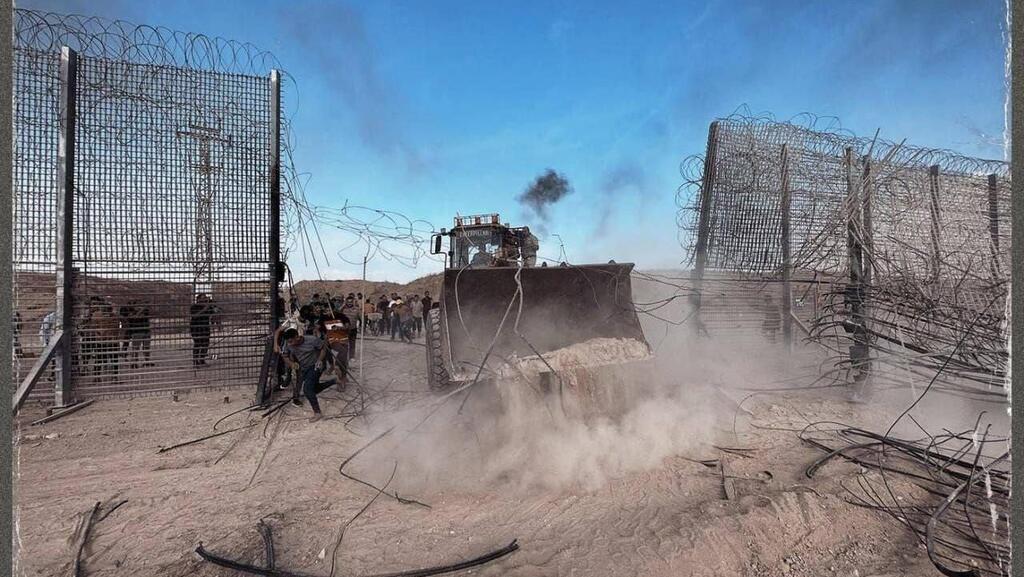
Hamas crashes through the Gaza border fence on October 7, 2023
On October 7, Iran was serving in a leadership role within the United Nations Human Rights Council framework. A regime that imprisons women for showing their hair, that shoots protesters in the streets, that hangs dissidents from cranes, was sitting inside the architecture of global human rights. Kafka couldn’t have written it better.
October 7 felt less like a war than a prelude. It was never 'Israel versus Palestine', that's just the narrative. Its Iran versus Israel. And don't get me wrong - Palestinians are victims in this conflict too.
Khamenei, the new Haman, was convinced he was writing history’s defining chapter. He was. Just not the chapter he had in mind.
What may one day be studied as the most catastrophic miscalculation since someone at Chernobyl said "one more test," Iran's grand design to destroy Israel has left Israel stronger, and the regime staring into an ending it never scripted.
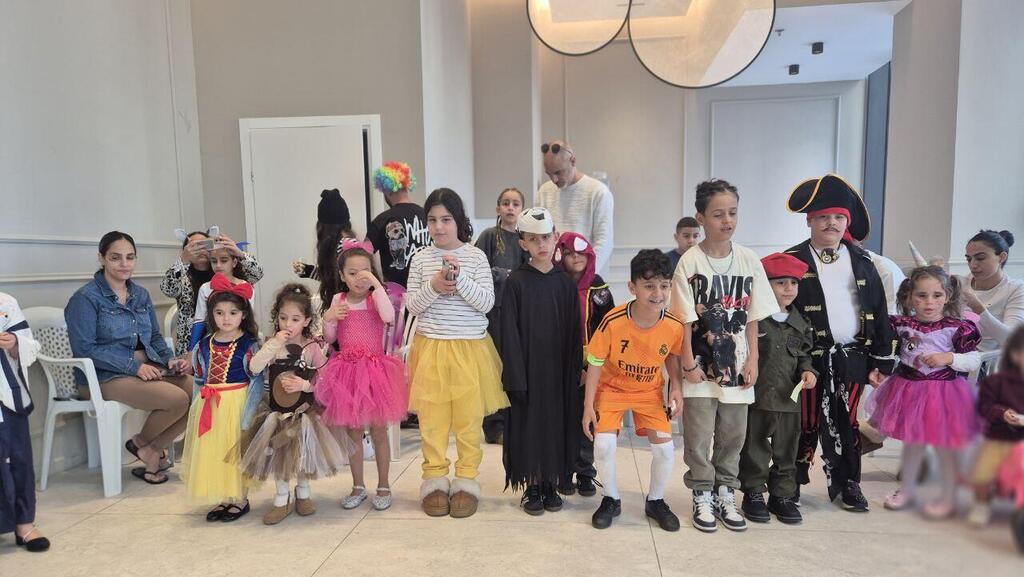
A costume party for Purim held in an apartment building as schools closed due to war with Iran
(Photo: Meir Turgeman)
Here is where I reach for Purim.
Because old stories have a way of knowing what we keep being surprised to relearn.
Haman was certain of himself too. Vizier of the most powerful empire on earth, he built gallows for Mordecai, the Jew who refused to bow. The machinery of annihilation set and ticking.
He walked toward triumph and discovered, with the swiftness the Book of Esther clearly relishes, that the gallows had his own name on them.
Haman was Persian. The empire was Persian. The gallows stood on Persian soil.
The regime in Tehran that has chanted "Death to Israel" since 1979 did not invent this story. It is this story, running again on modern hardware, with better weapons and worse judgment.
Instead of Mordecai hanging, precision munitions arriving in daylight. Intelligence so exact it felt almost intimate. Not approximately. Precisely. Where. When. Who.
In the Book of Esther, the reversal is captured in two Hebrew words.

Celebrating Purim in Rechovot
(Photo: Rehovot Studios)
V’nahafoch hu = Tables Turn.
The machinery built to destroy turns and faces its architect.
The 30,000 plus protesters who died in Iran’s streets did not die in vain. Their deaths have a meaning and a legacy. This is what resistance costs.
The girl who arrived from London at 13, who learned outside an optometrist’s clinic that the Holocaust is not history, is now a mother with children of her own.
We are not driving to school or work this morning. We are once again in safe rooms and shelters. Sirens blaring, as they have been for days.
But the fear following October 7 is not what I feel today. Outside in Tehran, Iranians are dancing in the streets.
And we know, in the way Jews have always known how to read history sideways, that this moment is larger than the moment.
 Hadar GalronPhoto: Roni Tarnovsky
Purim begins tonight.
The ancient feast that celebrates the day Haman’s gallows found their rightful owner.
The day the decree of annihilation turned against the man who wrote it.
The day the Jews of Persia discovered that the machinery of their destruction had quietly become the machinery of their survival.
V’nahafoch hu. Tables turned.
Let's pray this will cost no more innocent lives.