

An unusual meeting at the White House: President Donald Trump hosted prominent rabbis from across the United States on Thursday in an unusual meeting ahead of Rosh Hashanah that the White House described as the first of its kind since 1979. In addition to holiday greetings, the discussion covered a range of issues affecting Haredi communities in the U.S., including the housing shortage for large families, leniency for Jewish prisoners and expanding tax benefits for families with more than three children.
But even before the rabbis arrived at the Oval Office, the meeting drew criticism from some of Trump's pro-Israel allies, primarily because of the participation of leaders of the Satmar Hasidic movement, which opposes Zionism and the establishment of a Jewish state before the coming of the Messiah.
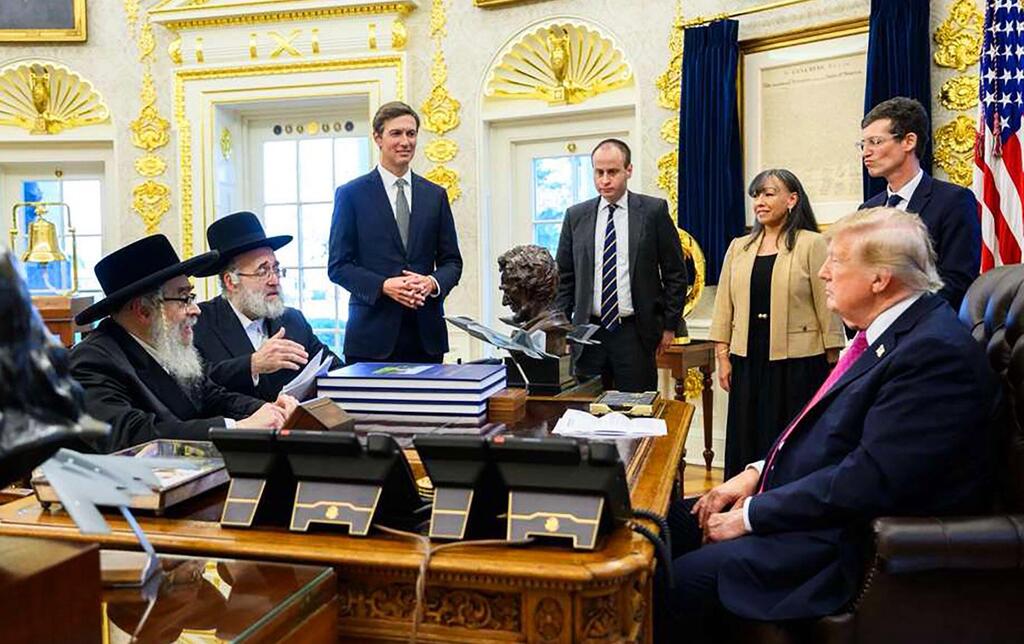
Among those attending were the two rival Satmar rebbes, brothers Rabbi Aharon Teitelbaum of Kiryas Joel and Rabbi Zalman Leib Teitelbaum of Williamsburg, as well as the rebbes of Bobov and Vizhnitz, a representative of the Skver Hasidic movement and Rabbi Malkiel Kotler, head of the Lakewood yeshiva. Trump's son-in-law and adviser Jared Kushner, Vice President JD Vance and Republican Rep. Mike Lawler, whose district includes the Hasidic village of New Square, also attended.
According to people present at the meeting, Vance joked with the rabbis that "Hasidim are the only ones who have larger families than him." Vance is the father of four. Vance also asked why the rebbes wear bekishes — Hasidic coats — in different colors. One attendee jokingly replied that the color is determined "according to the balance in the bank account," prompting laughter in the room.
Rabbi Aaron Teitelbaum blessed the president with the traditional blessing "He who grants salvation to kings," which one of his aides translated into English. He then handed Trump a note listing issues that had come up during the discussion. According to one report, the president placed the note in a drawer of his desk and appeared deeply moved.
The criticism of the meeting focused primarily on Satmar. Conservative activist Laura Loomer, who is close to Trump, claimed before the meeting that the White House was giving a platform to "anti-Israel rabbis and Mamdani supporters" and warned that the move would anger Republican Jews who support the president.
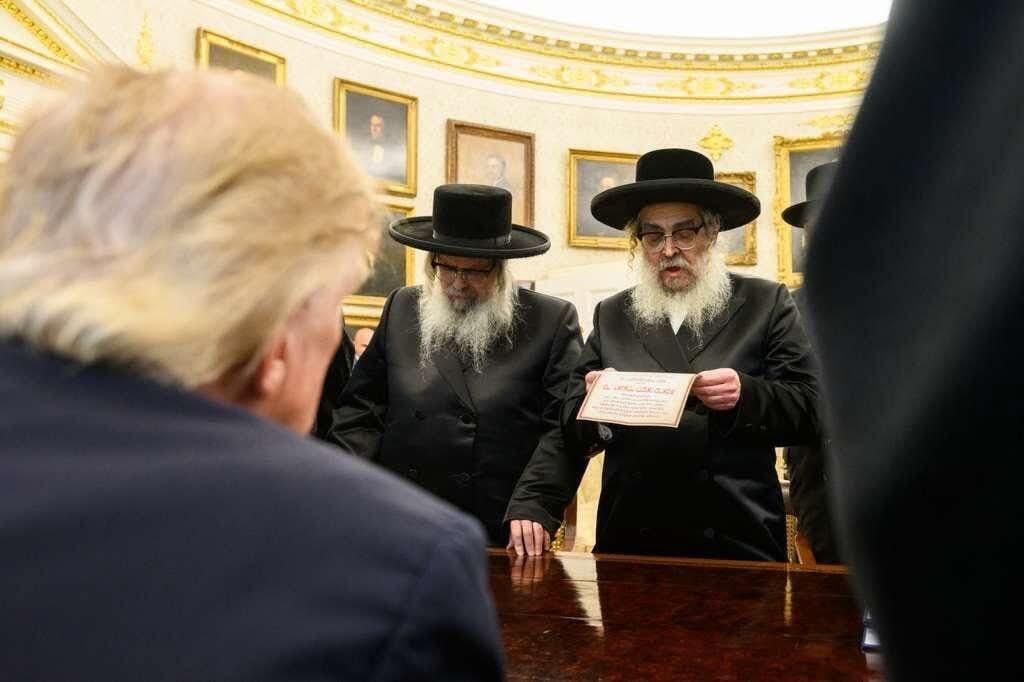
An unusual White House meeting
(Photo: Social media)
Conservative radio host Sid Rosenberg, whom Trump frequently appears with, called the invitation to Rabbi Aaron Teitelbaum "a huge mistake" and claimed that "he has no right to be next to the president." However, neither of the two rebbes supported Zohran Mamdani in the New York City mayoral election.
The meeting also took place against the backdrop of the dispute in Israel over the military draft for yeshiva students. Before traveling to Washington, Rabbi Aaron Teitelbaum told his followers that he intended to ask Trump to help "tens of thousands of Jews in the Land of Israel" who, he said, were facing a draft decree. However, no official statement following the meeting indicated that the issue was actually raised. People who attended said the discussion "focused primarily on domestic American issues affecting the haredi community."
The meeting also provided an unusual moment within the Haredi world: The two Satmar rebbes, brothers who have led rival factions for two decades and have been estranged for many years, shook hands and spoke face-to-face, apparently for the first time in decades. Rabbi Aharon also congratulated his brother on the engagement of his grandson.
From the White House's perspective, the meeting also reflected a straightforward political reality. These Hasidic communities give Trump particularly strong support at the polls and often vote almost as a bloc. An administration official said the rabbis thanked the president for his fight against antisemitism, his support for religious freedom and parental choice in education and his tax policies for families. Trump, for his part, also spoke about pardons for Jewish prisoners and mentioned Sholom Rubashkin, whose prison sentence he commuted in 2017.