

“I need to get back home to my daughter soon,” Brandi Gin tells me at this point in the evening, when the alcohol and carbohydrates blend together into that elusive thing called happiness. She has just finished moving between diners’ tables, lip-syncing to “Be My Baby” by The Ronettes, dressed in a gold corset, a metallic maxi skirt and an abundance of feathers. The number was a success. After all, people do not stop eating dishes like “Octopus in Flames,” “A Deep Journey Into the Mind of the Grouper” and “Peach Hurt by Black Pepper” for a mediocre performance.
Soon Brandi will shed the corset, feathers and heavy makeup and switch into the uniform of a new mother to a seven-month-old baby. “What can you do?” she laughs just before heading into her final number of the shift, her wig perfectly styled. “At Eyal Shani’s, there is a drag queen who needs to breastfeed.”
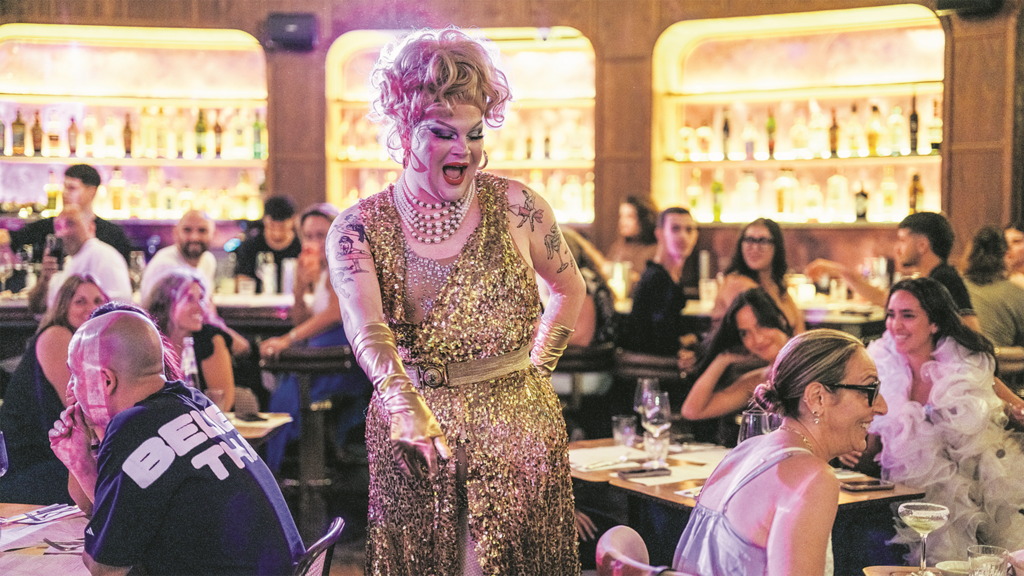
For two years, Gila & Nancy — named after Gila Goldstein and Nancy Schneider, pioneers in the fight for visibility and rights of Israel’s transgender community and LGBTQ icons — has been an oasis. A place offering far more than the food of its renowned chef. Here, alongside the focaccia, they plate a queer culture that has always been pushed to the margins and basements, and even more so under the current government.
Outside the restaurant’s walls, the Knesset had just ended its session with a legislative blitz that included a law limiting the powers of the attorney general, freezing arrests of ultra-Orthodox draft evaders, a Basic Law: Torah Study, gender separation in academia and the Karhi communications reform law. It is unclear whether this is an archival exhibit of old Israel or a futuristic vision. Time will tell.
For now, the waiter in a crop top serves us “leek cooked in its own juices.” The leek is not alone.
“When Roi came to me and told me about the idea for Gila & Nancy, I had a very simple graphic image in my head,” Eyal Shani says the next day. “All that was needed was to move them from the edge to the center and lift them from the underground onto the most beautiful stage in the city.”
“We spent many years underground — the community, the queers, the trans people,” says Eitan Tal, a fashion photographer and partner in the restaurant from the Fag group. “And this place isn’t only about drag queens, but about all our nighttime characters. Its location in Gan HaHashmal is not accidental. The community has a history with this place, not to mention Gila & Nancy, who made money from this garden. How many clients did Gila have in Gan HaHashmal? She bought houses with that money.”
“We and Eyal’s group come from the same place — to make people dizzy,” says Roi Raz, a commercial director and partner from the queer nightlife group. “While there is the service and the magic of what Eyal Shani and his crew know how to create, we bring the DNA of the night. A drag queen stands at the center and provides real escapism.”
Shani: “She also gives herself escapism.”
True, because ultimately the queer community, particularly transgender women, struggles with things that are trivial for most of us, such as finding a workplace.
Shani: “Right. So we said we would bring them proper employment with an accountant. But we were also afraid it would become Disney. I can’t arrange your life as a drag queen, as a queer person, and then bring an audience of voyeurs who look at you. That’s something we cannot do as human beings. It looks terrible, as if we opened a circus.”
How do you actually control that?
Shani: “I think we discovered something fascinating. Because it is more complex. Everyone who comes here measures their own height against the measuring stick of what happens here. I’m a straight man, that’s how life turned out. In my head I tried all kinds of things, it didn’t work. When I come to a place like this, I cannot hold onto all the preconceived thoughts I had about my life. I look at them and measure myself again. It is no longer voyeurism but an encounter with a much broader world, full of pain and suffering, and we — those of us fixed within our gender identity — suddenly feel poor in comparison. Like maybe we haven’t expanded. I think that’s what Gila & Nancy does to people.”
Meaning cisgender people also need to examine their own boundaries.
Raz: “We’re talking about liberation that gives legitimacy to everyone to live more freely. It must not be associated with sexual orientation. I don’t control why someone enters this place. I’m not here to educate anyone, but I want to believe we succeed in instilling our vision in people.”
Amira Torathi, the restaurant’s manager who performs as a drag queen under the name “Tzameret,” breaks the vision down into practice:
“When someone enters here, they get a glimpse and a warm welcome into this crazy world. Then they are forced to remove their defenses at the door. The place is not only about performance, it is about encounters. In the end, the queen does not only perform, she comes to your table, hosts you during the most intimate moment with food, wipes the tahini that spilled on you. And suddenly the defenses come down.
“One of our queens told me that a few days ago a group of guys came in and she felt they were laughing at her. Then she approached them, spoke with them, and the walls came down. Then she told them: ‘You see? At first you laughed at me and now you’re laughing with me.’ How wonderful that is. Their world changed. They met someone different from them but so similar.”
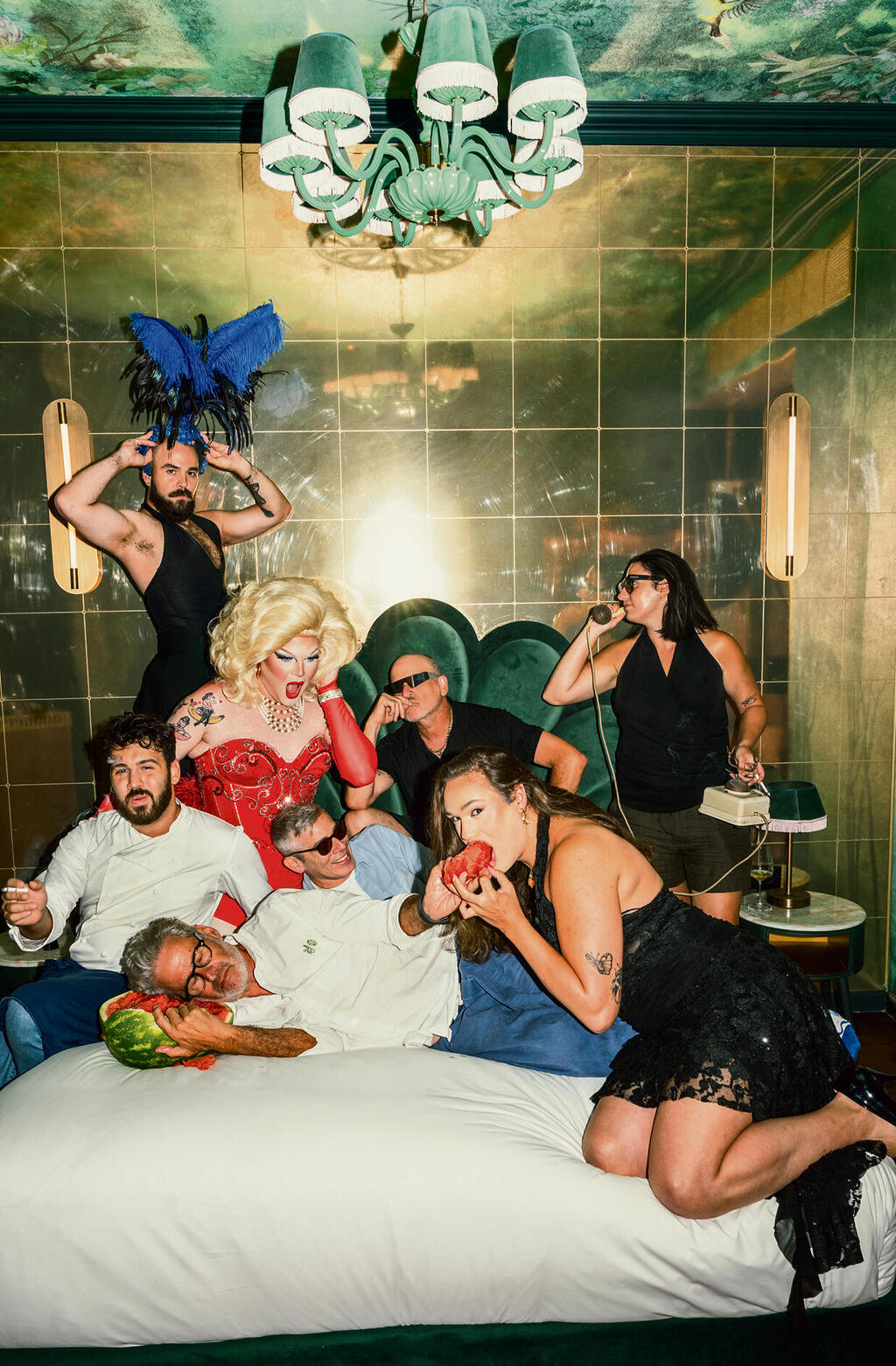
Eyal Shani, Eitan Tal (second from right), Amira Torathi (next to Shani) and Roi Raz (in the light blue shirt in the back). 'The government has complicated us for generations. Here at the restaurant we find comfort'
I assume there are also other experiences here.
Shani: “There are. I’ve seen several times a queen touch some man and the man gets electrified because it shakes everything inside him. You feel he can’t handle it. I think at that moment we started a process in that person that will not leave him. Where he will end up, I don’t know, but it won’t leave him.”
Will he return to the restaurant?
Torathi: “No. And that’s also okay. Listen, I worked in the restaurant industry before I came here but I never felt as safe as I do here. Here I don’t have to be afraid to correct a guest who addresses me in a way that makes me uncomfortable.
“I worked in a place where it was difficult to break the mold. I started working there as a man and went through the process while inside the workplace, but I constantly felt a force pushing against me. Here they gave me momentum to flourish personally and professionally.”
Shani: “This place opened from an internal survival instinct, from the feeling that the air here had become narrow and suffocating. I learned that if our first intention is to give them a stage at the center of the show, we actually isolate them and cause them distress. The point is to mix them into every aspect of this restaurant. They are our hosts, our waiters, our cooks, our managers.”
Raz: “There is no doubt the country has experienced difficult years when it comes to being liberal, and that only sharpens the necessity of this place and how much it is a safe haven in every sense. I feel we are creating something the country needs now more than ever.”
Do religious people come here?
Shani: “People come, put their kippahs in their pockets and then enter.”
Raz: “The place isn’t kosher, so people don’t come for reasons of kashrut. It’s all good.”
Torathi: “There are lightly traditional people who come and we make kosher options for them. So it doesn’t meet them on the level of gender, the LGBTQ community. It doesn’t sit on that. There are no clashes here like there are outside.”
Raz: “On the other hand, Caitlyn Jenner was here the night before the war began.”
Torathi: “Six hours later the sirens started, and they ran to hide in the safe room in the queens’ room.”
Tal: “She had a great time.”
Did LGBTQ community member Amir Ohana sit here?
Torathi: “No. Other politicians haven’t been here either.”
Shani: “The Likud announced that 70% of party members support the LGBTQ community. It became a kind of accessory. Like a bracelet you wear to show liberalism where it doesn’t exist. If Ohana was willing to come here? I’m not sure that man is made of courage. He would have to be brave to come because it would mean actively supporting this. In the Knesset he says, ‘Even though I’m gay, I’m a nice guy.’ But that’s easy.”
What would you say to him if he came?
Shani: “I would give him a kiss on his bald head and say, ‘What a king you are.’”
Torathi: “We would be very happy to host him.”
Really?
Shani: “Anyone receives love here in exchange for support.”
Raz: “On our door is engraved Gila Goldstein’s sentence: ‘I was who I wanted to be, now it’s your turn to be.’ If I don’t stand by the original essence of that, I’ll be a hypocrite on another level.”
What else did you learn here?
Raz: “That adding the expenses of drag queens to a restaurant budget is very expensive. Putting 10,000 shekels into the budget for tights is not something I thought would happen.”
Eyal, did you get into drag over these two years?
Shani: “On the restaurant’s opening night I sang Frank Sinatra’s ‘My Way’ in a pink dress. That’s how I came out of the kitchen.”
Raz: “We brought a makeup artist, filmed it and Eyal was disappointed. He said it wasn’t beautiful enough. We filmed it again a week later.”
Shani: “It was devastating for me. God, if I had been born a woman, would this be how I looked?”
Tal: “The second time we already put breasts on him.”
Shani: “And I was turned on by myself. Understand that a queen spends three and a half hours putting on makeup for a five-minute number. Three and a half hours to sing one song and then disappear.”
Were you disappointed to take off the dress?
Shani: “Yes, emptiness spread through me.”
Torathi: “I know the feeling. That’s why I don’t take off the dress.”
But not everything is gold and glitter.
In September 2025, after two postponements due to pro-Palestinian protests and threats against Shani and his team, the group opened a branch of Gila & Nancy in Berlin. On paper, the world’s queer capital. In practice, tomatoes were thrown at those representing the liberal side of the Israeli map. After eight dramatic months, the lights went out on the Berlin adventure.
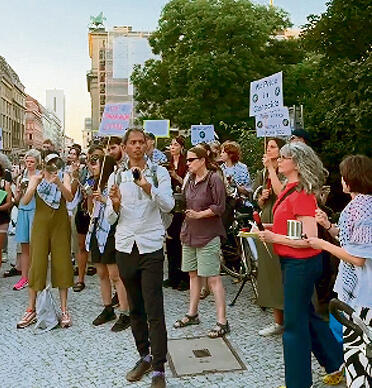
In September 2025, after two postponements due to pro-Palestinian protests and threats against Shani and his team, the group opened a branch of Gila & Nancy in Berlin
“We fought against an entire city,” Shani recalls. “They put terrible pressure on both the queens and the staff to stop working with us. The staff stopped coming because they were afraid. There were moments when they created human blockades and wouldn’t let people enter the place. They threw so many crates of tomatoes at us, and not for cooking. I think the Hilton is still dotted like Barbie’s house. On the day we started operating the kitchen, there was a large protest, so we went outside with trays and handed out food to the protesters. They took the food and continued throwing tomatoes. That’s when we understood this was a serious game. That they would kill us.”
“Really?”
“Yes. I felt my life was threatened. I understood I was a target whose location was known, and I was afraid. There were explicit threats. They wrote to me: ‘Don’t come to Berlin, this will be your last time.’”
Raz: “Precisely in the place that most represents liberalism and Israeli openness, and precisely in Berlin, where the queer community is extreme, instead of being open and holding a dialogue, it became very one-dimensional toward us. I don’t want to expand on it too much, but my closest friends who live there, people who played at Fag for decades, refused to come to the opening of the restaurant because of fear of what it would do to them.”
Shani: “They did a story about us and sent a photographer. I had to walk with him for a while to take pictures and we started talking. He was 55, born in Berlin, and I asked him, ‘How is Berlin today compared with what you remember from your childhood?’ He answered, ‘It was quiet and very pleasant. It isn’t anymore.’ I asked why. He answered me in the simplest way: ‘Because of people like you.’ I was hurt. It was as if he told me: Go away, you ruined my city.”
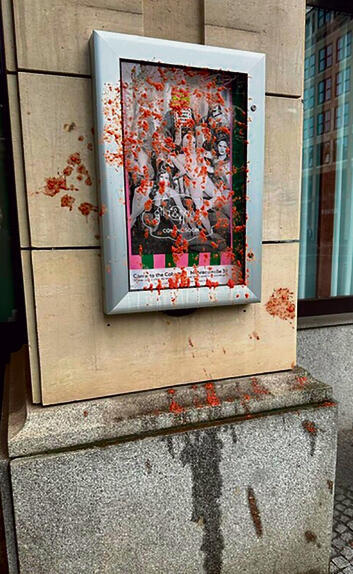
('After they throw tomatoes at you, they go silent')
Raz: “I was exhausted too. I never thought this was something I would have to deal with.”
What led you to the decision to close?
Raz: “Because, sorry for the cliché, but we come from a place of love, and when the struggles are so connected to hatred, it affects you. Instead of dealing with cooking and hospitality, we were dealing with a drag performer who refused to come, with staff being threatened and afraid, day after day, month after month. Eventually it affects you mentally.”
Shani: “There is something else you need to experience to know it, and that is quiet antisemitism. After they throw tomatoes at you, they go silent. Then they simply walk past the space and point at you. They say, ‘That belongs to Jews.’ I saw it countless times.
“I encountered it with sound. One night I was sitting and smoking a cigarette with my chef at 1 a.m., freezing cold, the entire window covered in condensation. I saw an American couple arrive, 35 years old, looking like the best of New Yorkers, this intelligent elite. The woman was curious, approached the window and looked through it. The man came from behind, grabbed her firmly by the arm, pulled her away and I heard him say, ‘Leave it, it belongs to Jews.’ You understand the entire history of the Jewish people in that moment, and it is all on you.”
That is a devastating experience.
Shani: “It activates both my survival genes as a Jew and my masculine genes, and I say, OK, we’ll break through even harder, we’ll do more. Does that make sense? Maybe it does, maybe it doesn’t.”
Is there anger about this? In the end, we are talking about what happened in Berlin, but you also have other restaurants overseas that are affected by what is happening in and around Israel in these years.
Shani: “The government has complicated us for generations around the world. When there is anger toward Israel globally, and we have known this throughout our journey, that anger rises and then fades. But there is a certain level of anger that immediately becomes antisemitism. Antisemitism is not hatred of Israel. It is the final stage of hatred toward Israel. Antisemitism is like a demon that comes out of the bottle and cannot be put back.
“That is why people talk about antisemitism and see it. Israel will be forgotten in people’s minds, but antisemitism will continue creating itself for a very long time.”
So what do you do?
Shani: “We try to build another room and another room, hoping someone will hear.”
Raz: “Surrender is not in our nature.”
So are you optimistic?
Raz: “I have to be. I have a four-and-a-half-year-old daughter. If I’m not optimistic, God help me.”
Shani: “We retreat into small worlds where we try to multiply goodness. It’s based on some belief in crystals, that once you create one pure crystal, the environment will immediately imitate it. That’s how the world is created.
“Is that optimistic? I don’t think it’s optimism. I think Israelis don’t understand how we are seen, how the world sees us. Not as part of the human community. We are excluded, ostracized, despised.
“I remember in fourth grade they taught me about the Hundred Years’ War, and I had my first realization in life. I understood that 100 years is four generations. Meaning four generations lived under war, in the suffering of war. Then that realization disappeared and I forgot about it. When all the wars here began, it returned to me and I understood that we as human beings are victims of history.
“There will be very long processes of rejection toward us in the world now, and this will be a very large part of our lives. We were born into the wrong period.”
So at least we can drink and eat something in front of a drag performance.
Shani: “Absolutely. Here we find comfort.”