

It became one of the most memorable images from the first months of the war. Rimon Buchshtab-Kirsht, one of nine women released during the fifth round of the first hostage deal, stepped out of the vehicle carrying her toward the Red Cross and confronted one of her captors in front of the cameras.
For many Israelis watching during those dark days, the moment briefly restored a sense of pride and defiance.
Rimon Buchshtab-Kirsht’s release from captivity in Gaza


For more than 1,000 days, Buchshtab-Kirsht avoided speaking publicly about what had happened to her. Now, for the first time, she is ready to tell the story of her captivity, of her husband and great love, Yagev Buchshtab, and of the life they briefly imagined they might still share. She calls it “taking a deliberate flashback to Gaza.”
The confrontation with the terrorist, whom she identifies as Mustafa, began during the drive to the handover point. “The entire way, he kept teasing me about Yagev,” she said. “‘Yagev will come in two days.’ ‘Yagev will come in four days.’ The moment he started talking about Yagev, he was pushing every one of my buttons, and I could not take it.”
During the journey, she also began hearing from other released hostages that there might be no kibbutz Magen, Nirim or Nir Oz to return to. “I suddenly thought, damn, what about our dogs and cats? Where is everyone?” she said. The terrorists then instructed the women to smile and wave when they emerged. “When you come out into that crowd, with everyone barking, screaming and going wild, they start telling you not to be afraid,” she said.
“By that point, you are so hungry and exhausted that nothing moves you or scares you anymore. I cursed him in Arabic so everyone would understand.” She said the confrontation did not feel extraordinary at the time. “I simply spoke to him the way people like that deserve to be spoken to,” she said.
She shouted that his being masked "doesn't mean I can't see you", and would not prevent her from recognizing him, his voice or what he had done to her. Then she used an Arabic saying Kul Kalb Biji Yomo, meaning that every dog eventually has its day, or in other words, every bad person will be punished eventually.
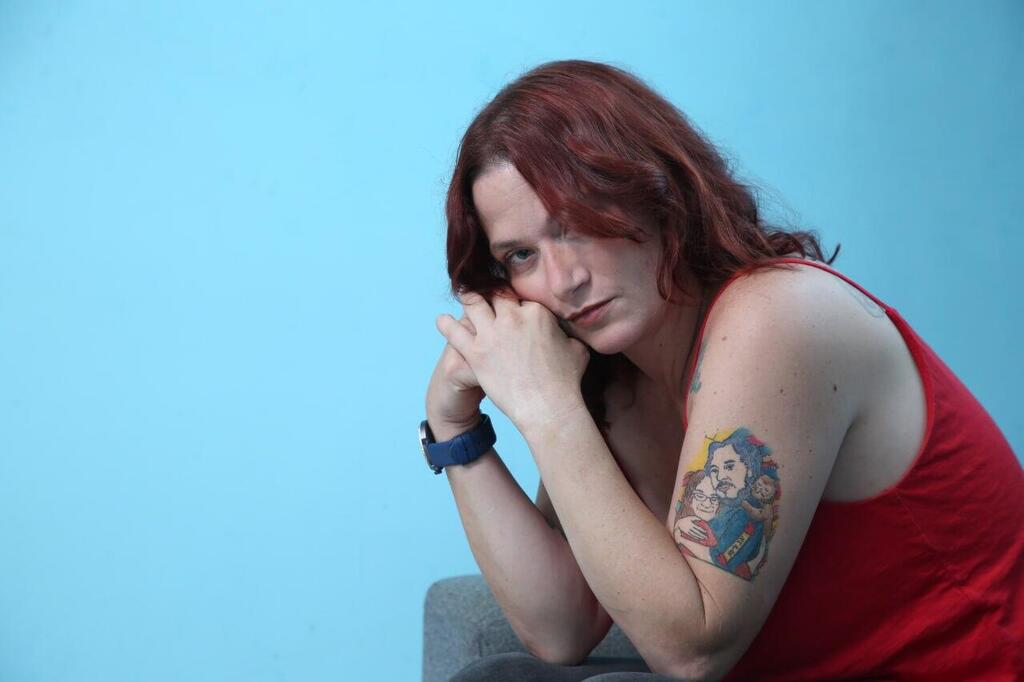
She also remembers placing a hand behind fellow hostage Merav Tal, who was released alongside her. “I told her, ‘All the screaming and whistling is because we are incredibly hot and amazing, and now we are going to give them one hell of a walk. We are lifting our heads and walking like two strong women doing this together.’”
Only after arriving at Tel Aviv Sourasky Medical Center(Ichilov) did Buchshtab-Kirsht realize how unusual her release had appeared. “My sister told me, ‘Listen, the way you came out was something else,’” she said. “Until then, I had not understood. I remembered walking out because it had just happened, but then she showed me footage of how the other hostages had been released.”
Buchshtab-Kirsht, now 39, was born and raised in Kibbutz Magen near the Gaza border. Yagev was born and raised only minutes away in Kibbutz Nirim. They first met at the regional elementary school. She was in third grade and he was in first. They were friendly for a time, then lost touch before reconnecting when she was 16.
“There was an event organized by Hashomer HaTzair(an Israeli youth movement), and I noticed this enormous head of curls sitting alone in a far corner,” she recalled. “I had to find out who it was.” For years afterward, Yagev remained her best friend. Growing up in the Gaza border communities meant that children from Nirim, Nir Oz, Nir Yitzhak, Kerem Shalom, Holit, Be’eri and Re’im all attended school together.
On October 7, Buchshtab-Kirsht lost teachers and childhood friends, including English teacher Judi Weinstein, educator Ravid Katz, sports teacher Rotem Calderon and close high school friend Johnny Siman Tov.
“When I think back to that time, I say, ‘What carefree children we were,’” she said. “My nieces and nephews already know that Aunt Rimon was kidnapped and Uncle Yagev was murdered. They know there is such a thing as Hamas, which can come at night and take you.” She remembers lying on the grass with Johnny, never imagining anything like October 7 could happen.
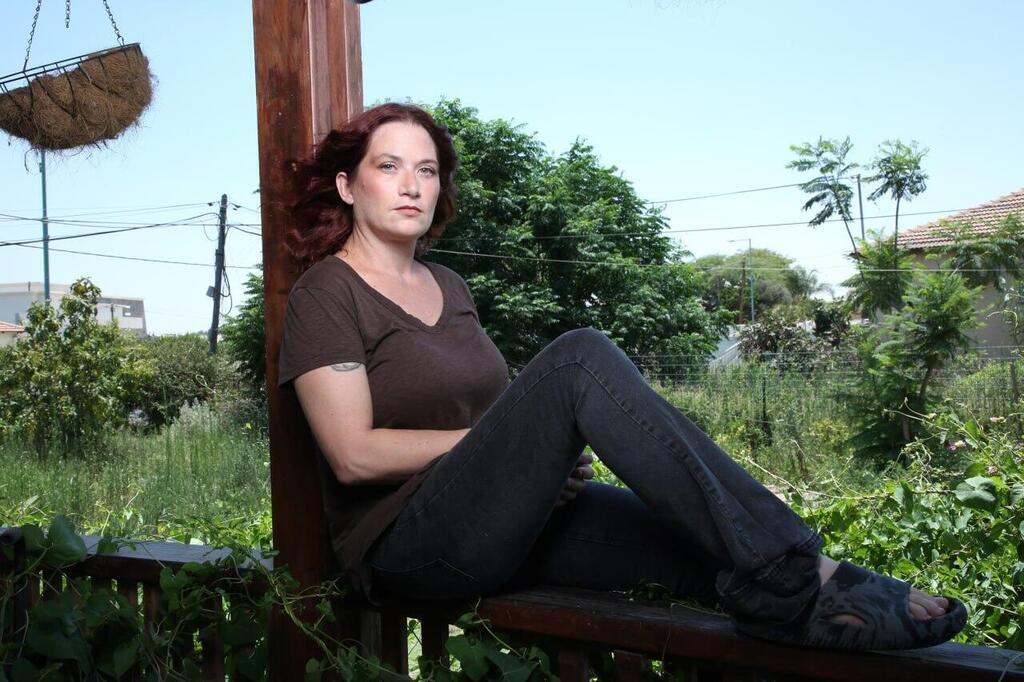
Buchshtab-Kirsht; 'The moment Yagev hugged me I felt at home'
(Photo: Reyan Preuss)
After high school, Buchshtab-Kirsht enlisted in the IDF but was released after a short period. Yagev later joined the Armored Corps and served as a tank gunner during Operation Cast Lead. The scenes he witnessed in combat stayed with him, she said, and he later suffered from PTSD, depression and anxiety attacks.
“He rarely left home,” she said. “Israel’s National Insurance Institute recognized his condition, but the Defense Ministry did not because he lacked the strength to endure its lengthy review process.”
Their friendship became romantic in 2020. “Yagev came to visit carrying only a small bag with his phone, keys and enough medication for two days,” she said. “The moment he hugged me, everything fell into place. For the first time in my life, I felt at home, even though home had come to me.” Two weeks later, she tattooed his name on her body, proposed marriage and called a jeweler to discuss rings.
They married on March 12, 2021, on the lawn in Kibbutz Nirim behind his parents’ house. “It was a date that would be easy for us to remember,” she said. “Luckily, it was during COVID and there was a limit on the number of guests.”
Their relationship was intensely close. “We never slept or showered apart. The longest we were ever separated was when I drove to Sderot to do the shopping,” she said. “Yagev studied sound engineering, taught music, built instruments and set up his own recording studio, while I worked as a massage therapist.
“We had five dogs and four cats, and we called them our children. We grew hot peppers in the garden and had this ridiculous, incredibly cumbersome tandem bicycle. While we were being abducted, we saw someone trying to push it through the sand toward Gaza. Honestly, I felt sorry for him.”
On October 6, 2023, Kibbutz Nirim celebrated its annual community festival. “We skipped dinner with his grandmother and did what we loved most: stayed home, just the two of us, and made something delicious,” she said. “Yagev was an incredible cook. That night, he prepared goose breast with root-vegetable puree, and we had a quiet, romantic dinner with Braveheart playing in the background. At some point, he fell asleep on the couch and I went to bed.”
“At 6:29 a.m., I woke to the rocket sirens just as all five dogs came rushing into the bedroom,” she said. “They were usually always barking and making noise, but on October 7 they were silent. They were terrified. I pushed them under the bed, pulled Yagev into the room and grabbed a knife from the kitchen.”
The handle on the safe-room door was broken, while the dogs were hiding in the bedroom, so they stayed there with them. “Between rocket sirens, we lied to everyone and said we were in the safe room. I called people to tell them, ‘I love you. They are shooting at me.’”
At one point, they opened the front door and found a terrorist outside, lifting Yagev's guitar, which he had found outdoors, in an attempt to defend himself. "I slashed the attacker’s hand with the knife, we pushed him outside, locked the door and leaned our bodies against it.
“We could hear more and more noise outside, and we felt the door coming off its hinges. We understood that no matter what we did, it was going to collapse inward.”
She told Yagev: “Baby, leave everything. Lock your arms around me and do not let go.” The last thing he did before the attackers broke through was look into her eyes and say, “I am sorry. I immediately started telling him, ‘Do not dare apologize. This is not your fault. Everything is all right. The important thing is that we stay together.’
"Yagev later told me that he had been certain they were about to kill us and believed that if the terrorists had reached me, he had failed. I did not initially think they had come to murder or abduct us.
“At 8:40 a.m., they broke into the house and tried to pull us apart,” she said. “Our shirts tore, but we refused to let go. When they could not lift us, they dragged us across the pavement and beat us severely. That is how I suffered burns, broke several teeth, injured my jaw and fractured my hand.
“They put us on a small utility vehicle, with me sitting on the body of a dead terrorist, and drove us to the kibbutz gate. From there, they ordered us to walk, and we crossed the fields barefoot and in our pajamas.
“Yagev later told me he had been waiting for the Hannibal Directive (an Israeli military protocol designed to prevent the capture of soldiers by the enemy) because he was thinking like a soldier. I saw it differently. I thought that if someone was dragging me away while I was resisting and screaming, and still had not shot me in the head, then they wanted me alive.”
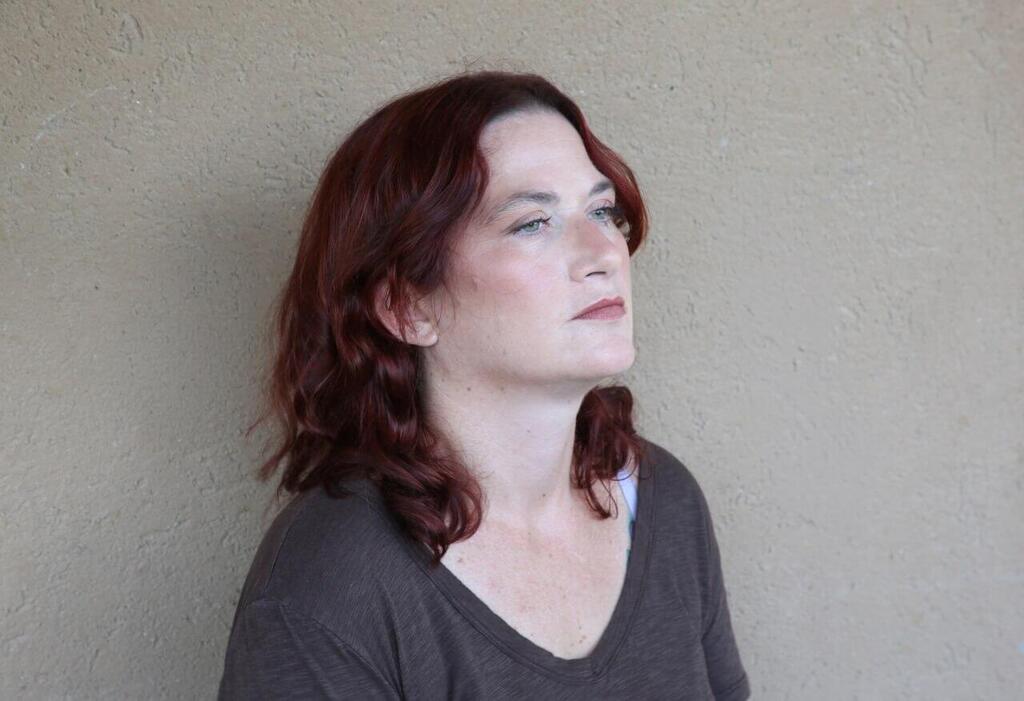
'They first took us on a victory lap through Gaza'
(Photo: Reyan Preuss)
A white Toyota eventually arrived and the two were forced inside. “They first took us on a victory lap through Gaza. I covered Yagev’s eyes to shield him from the bloodshed outside. Among the scenes, I saw a partially undressed woman being held on a motorcycle while the lower half of her body dragged along the pavement.
“I looked at every corpse along the way so I could remember whatever I could. Even if the person was clearly no longer alive, I thought the information might be useful to someone.”
After the Toyota crashed, they were transferred to another vehicle and then taken into a tunnel, where they encountered other hostages. “The first person I met in Gaza was Edan Alexander.
“Soon, elderly hostages and children covered in soot and coughing from smoke inhalation began pouring into the cramped tunnel space. The terrorists kept mixing us, separating us and moving people from one place to another. Then, suddenly, out of a group of 14 hostages, Yagev and I found ourselves alone in an unfamiliar house.”
Buchshtab-Kirsht realized they were in Khan Younis, in the home of a Hamas member named Osama, a man around 60 who had previously worked in Israel and served time in an Israeli prison. He recruited his sons, Ahmed and Hamoudi, to help guard the hostages. Buchshtab-Kirsht could also hear a young girl named Laila speaking with her mother on the other side of a wall.
“The sons were in middle school and high school,” she said. “One supported Barcelona and the other supported another team. They brought me two kittens, Tamtam and Koko, because they understood how much I loved animals.”
Buchshtab-Kirsht was badly injured during the first days of captivity. “Half my mouth was broken from the beating, and I had a tooth that had to come out. I was moaning from pain, and they had almost nothing to give me besides acetaminophen.”
Several days later, two terrorists appeared. One carried pliers and the other a weapon. “It was obvious they had come to pull out my tooth.
“I was horrified by the thought of them pulling it out, so I demanded the pliers. The terrorist looked at me and asked in English, ‘You crazy?’ I told him in Arabic, ‘I am crazy. Give me the pliers.’ Then I told Yagev, ‘Go into the bathroom, close the door and put your fingers in your ears,’ and I pulled the tooth out myself.
“I remember it like a flash of light, like being struck in the face,” she said. “I screamed, which was forbidden because we were above ground and could not make noise. But when you pull out your own tooth, a scream comes out whether you want it to or not.” She spat on the floor in an effort to project strength. “I straightened my back, spat again and only then sat down,” she said.
Did it bring you any relief?
“I felt relieved that I had done it myself instead of letting them do it. Eventually, they gave me a little pain medication, but I was still dealing with burns from being dragged, injuries to my feet and a broken hand. Yagev was short of breath and needed an inhaler. Some days, Osama sent one of his sons out with a list I had written, and he came back with whatever medicines he could find.”
What happened to him?
“Osama is no longer alive, and neither is the house, which contained a shaft leading into a Hamas facility where hostages were constantly moved in and out. I was able to help identify the house because I had seen the postal code on a pile of old mail.
“They had prepared to hold us for a few days, not for months. At first, every woman received a brand-new pair of pajamas and a hair clip. They had basic first-aid supplies for the initial wounds, but no long-term medication. They had plenty of clonazepam (Clonex) to sedate people, but certainly no mood stabilizers, anti-anxiety or antidepressant medication, or inhalers.”
Did you consider escaping?
“There was nowhere to go, and you knew it was dangerous, because the IDF had destroyed the house next door. “At first, I still felt a little sorry for Osama when he cried because children he knew from the neighborhood had been killed. It was sad.
“In those first days, Yagev and I watched Al Jazeera, and there they didn't show the hostages or the people who had been murdered. When they told us they had abducted more than 250 people, we laughed because we were sure they were exaggerating.
“But as I was moved from place to place and kept seeing new faces, each person told me about the other hostages they had met. That is when I understood it was not as small as we had thought, and that we were not as powerful as we had believed.”
"I met elderly residents of Nirim, including Hannah Perry, Alex Dancyg and Chaim Peri. “Every person you met carried a story you wanted to remember and pass on. You quickly learned that people could appear and disappear at any moment, as the terrorists constantly separated us and moved everyone around.”
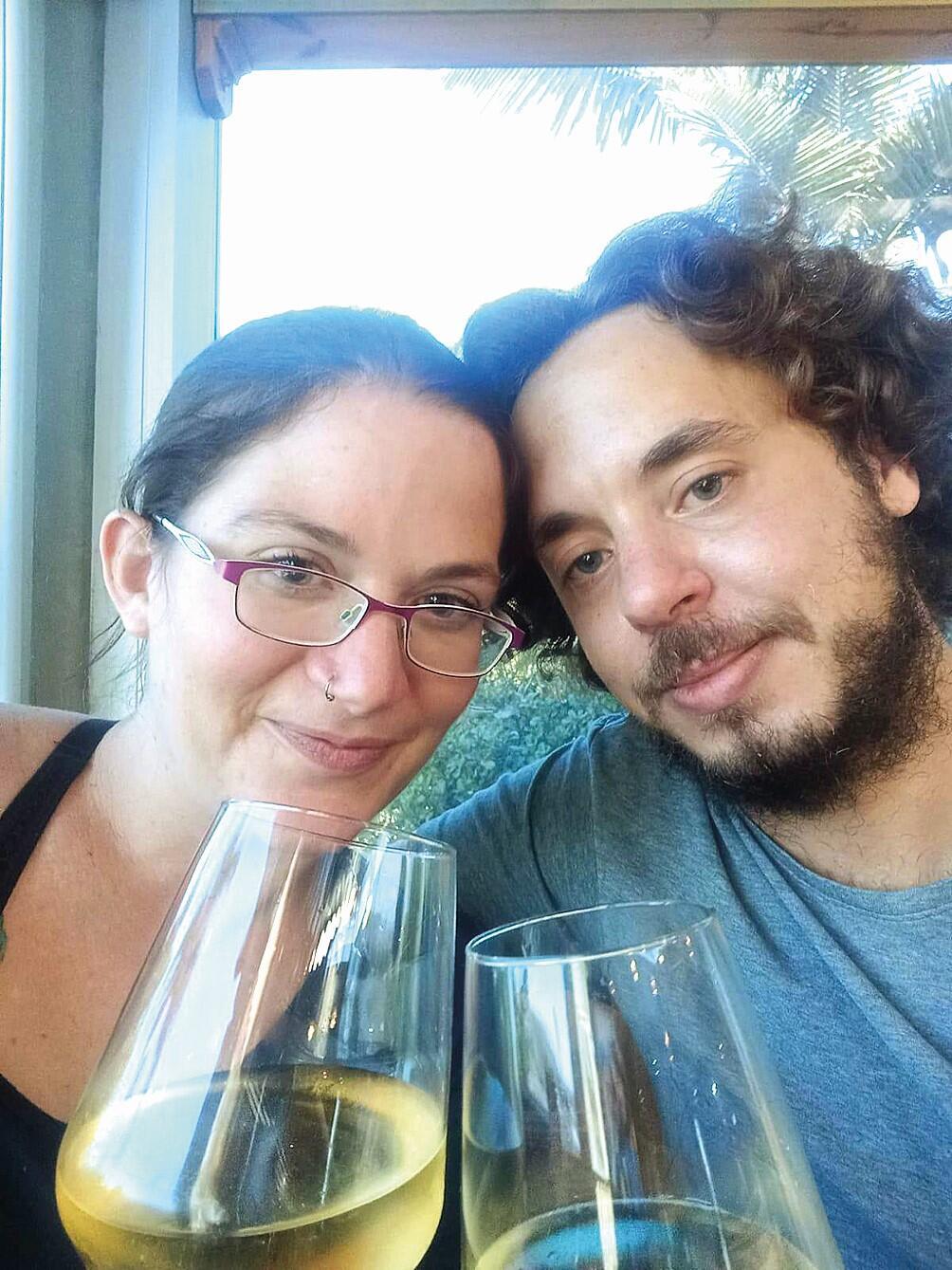
Rimon and Yagev
(Photo: Courtesy of the family)
You and Yagev were not separated.
“At first, they did not mind that Yagev and I came as a package because they understood we were calmer together. But we quickly discovered that Hamas terrorists are not great romantics. They did not care that he was my husband, that he was sick or that I refused to sleep on a mattress across the room.
“Everything became a negotiation: whether we were allowed to touch, whether I could hold his hand during the day or hug him at night.
“From the beginning, I made sure to keep something nearby that I could use to defend myself. One night, I woke to movement and realized they were about to beat Yagev because his snoring was keeping them awake. I grabbed a fork and stabbed the captor in the hand. It was Mustafa, the same man I later confronted during my release.”
You've got some nerves.
“In captivity, there are things you do not remember and things you cannot forget, like trying to stop an elderly hostage’s bleeding, fighting to get a young girl a shower and demanding medication for a woman who could not speak or was too embarrassed to ask.
“So sometimes raising your head and becoming the crazy one helps. Sometimes it gets you into trouble, and sometimes it stops them from targeting you in the first place. I realized I could not pretend to be submissive. If someone cursed me, I cursed back. If someone hit me, I defended myself and hit back. When you are a girl named Rimon (which in Hebrew means pomegranate, and is an unusual name for a girl) who wears glasses and spends recess reading instead of playing, you get picked on a lot and learn that you have to defend yourself.”
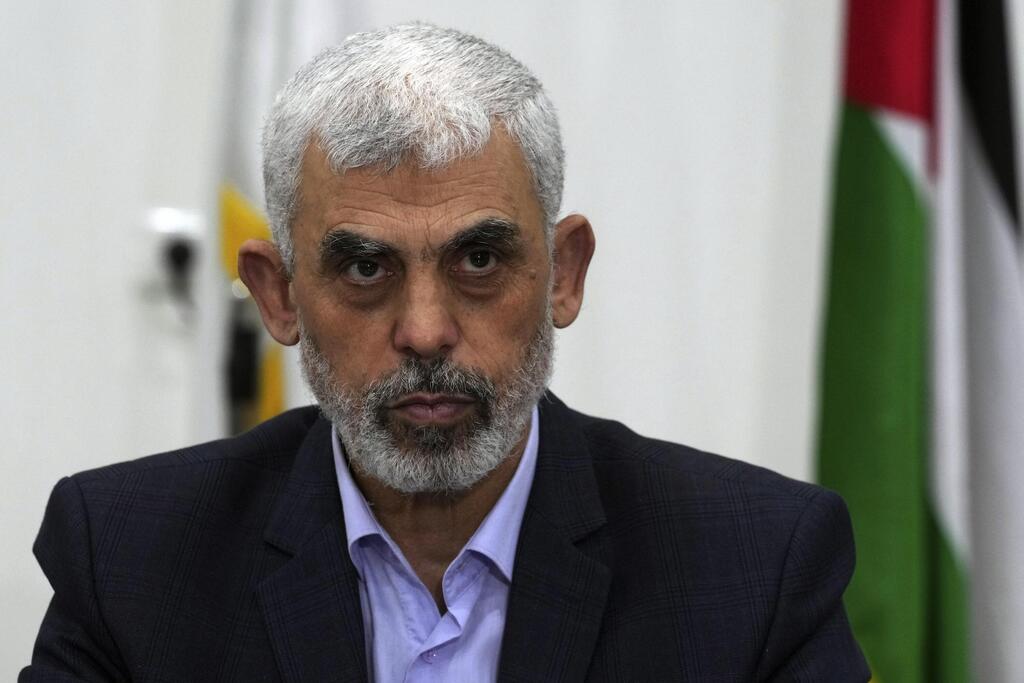
Sinwar arrived and demanded the hostages’ personal details in Hebrew
(Photo: Adel Hana, AP)
At one stage, Buchshtab-Kirsht was being held with Yagev and four other hostages when an important man entered the space. Only later did she learn that he was Hamas leader Yahya Sinwar. “At the time, I understood only that he was a very senior figure. He arrived carrying a notebook and asked me to write down the hostages’ details in block Hebrew letters, because that was the form of Hebrew he could read, and in English.
"He wanted the hostages to appear in a video stating their names, ages, hometowns and identification numbers. Sinwar talked to me in English and said I appeared to have a good head on my shoulders. He said, ‘Let's talk’."
"He asked about our conditions and how we were treated. I told him, ‘Great that you asked. I have a lot to tell you. But first, I want to ask for something. Promise me that after I finish, you will take Yagev and me down into the tunnels and put us with other captors, because these are treating us very cruelly.’
“Sinwar shook my hand and later kept his promise. After we were given hot tea and Yagev received an inhaler, they moved us underground. I hid the inhaler in my bra. I quickly learned that underwear was the safest place to conceal things in Gaza. I also used the inhaler cap to hide tiny folded notes and drawings that children had given me.”
What about asking Sinwar to release Yagev?
“It was clear that it was not realistic. It was also clear that if Hamas was producing political propaganda, we were unlikely to be freed soon. That was like a punch in the stomach. In the first days, we would look toward every window, expecting an undercover Israeli commando to burst in and extract us, like an episode of Fauda.
"But once the captors began compiling lists, asking about foreign citizenship and preparing for a prolonged stay, hope changed. You realize nothing is happening the way you imagined it would."
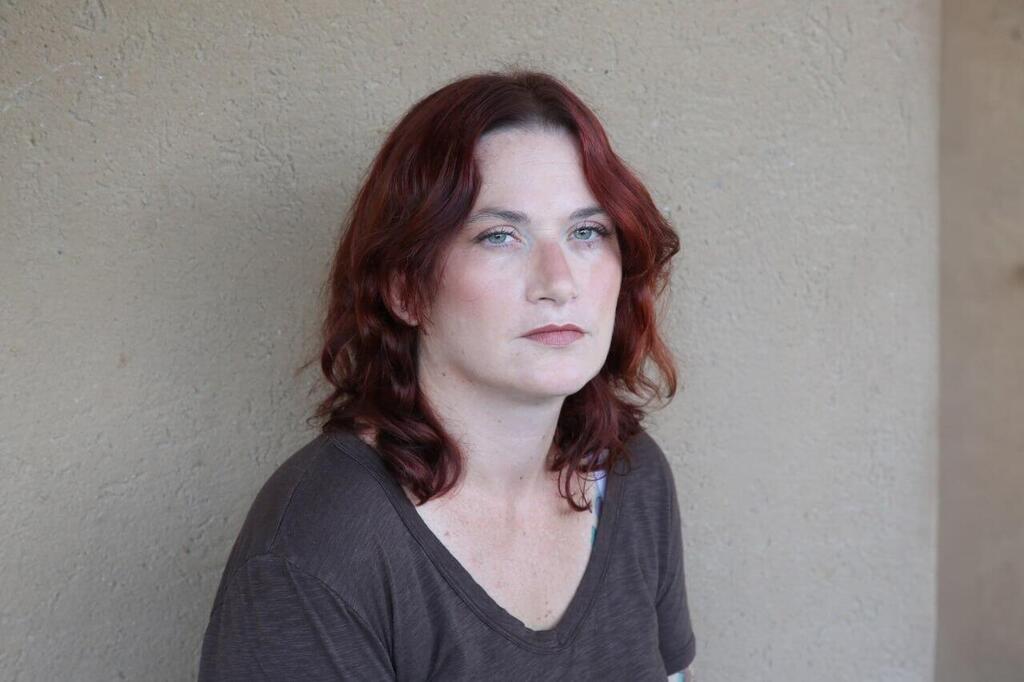
Rimon Buchshtab-Kirsht
(Photo: Reyan Preuss)
Buchshtab-Kirsht and Yagev’s closeness became a constant source of tension for their captors. The ensuing power struggles ended with the couple locked inside a cage in a tunnel beneath Khan Younis and subjected to severe abuse, particularly Buchshtab-Kirsht.
“I think we were a real problem for them,” she said. “We were always holding hands, hugging and talking to each other. We were writing in a notebook, playing word games and kept ourselves occupied. We refused to adapt to the situation.
“And whenever we fell asleep, Yagev would start snoring, which made noise at night and infuriated them. That was when I realized we had to sleep in shifts. It was also why I wanted Sinwar to move us into the tunnels, because underground we could at least talk.
“We talked about everything: who and what we missed, and what frightened us. On the first or second page of our notebook, we wrote a list of everything we would do once we left Gaza. Number one was changing our surname. Yagev wanted Kirsht-Buchshtab, while I wanted Buchshtab-Kirsht. Since I came out first, and came out alive, I won.”
“The second was to continue trying to have the daughter we had already named Dalia Aza Buchshtab-Kirsht. Throughout the second month of captivity, I did not shower, and my period stopped. Deep down, I knew it was probably because I had lost so much weight that my bones were beginning to protrude. But we chose to believe I was pregnant, and that if we came out with a daughter, then somehow it would all have been worth it. We imagined she was a girl and had already begun composing messages for her.
"The third item on the list was to move to a rural community, something we discussed before the abduction. We also promised each other that we would not allow the state to evade responsibility. I already understood that I was inside an extremely traumatic experience and would emerge more wounded than when I entered."
Around that time, the first rounds of hostage releases began. Buchshtab-Kirsht knew she was unlikely to be included immediately because she was in her 30s, was neither a mother nor a minor, and her parents had even been told not to expect her release.
Then something changed. Hostages who had been freed began describing the abuse she and Yagev were enduring, and Israeli officials concluded that it was urgent to bring out whichever one of them could be released, even if it meant leaving the other behind.
During the days of the releases, Buchshtab-Kirsht watched hostages pass her cage as they were moved toward freedom. She told each of them to report what was being done to her and Yagev. Still, she believed a husband and wife would never be separated. Then a hostage passed the cage and told them he had just been separated from his own wife.
“I remember Yagev saying, ‘Shit,’” she said. “We both folded in on ourselves, started crying and collapsed.” Yarden Bibas was permitted to try to calm them. “He told me, ‘Rimon, believe me, if anyone knows how hard it is to be torn away from the person you love inside this horrific hell called Gaza, it is me.’ and he was holding my hand. We held one another’s hands there sometimes, to remember there was another person at the other end."
"I pleaded with the captors to release other hostages instead. I told them ‘Take Haim, take Alex, take Yoram. Release Yarden and Nadav’. I told them I was not asking for much. I did not need medicine or toilet paper. I was willing to stay in the cage with the fleas, the broken tooth and my battered face. But they insisted it had to be me to be released.”
The farewell was devastating. “I told Yagev, ‘Baby, I love you,’ and he said, ‘I love you,’ and we kissed. I asked Yarden to watch over him, make sure he ate and ensure he urinated. I told them to protect one another. Then I saw Yagev standing outside the cage with the other male hostages. He told me how much he loved me and that as long as I was all right, he would be all right too. I turned right into the tunnel and kept shouting back to him, ‘Baby, I love you.’”
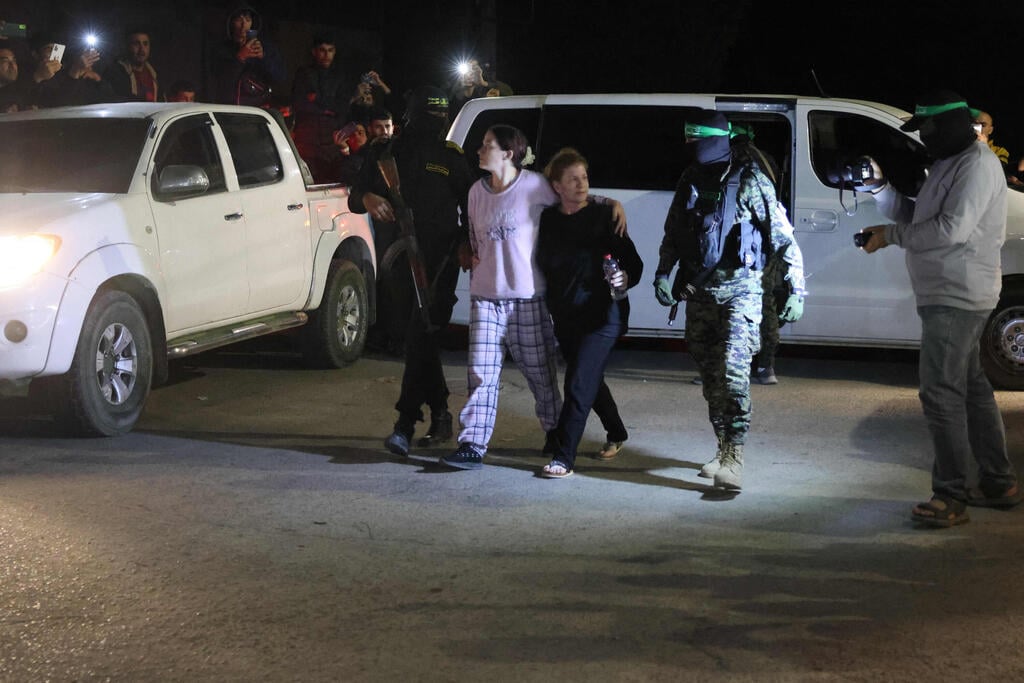
Buchshtab-Kirsht and Merav Tal are released from captivity
(Photo: AFP)
Buchshtab-Kirsht returned from the tunnels on November 28, 2023. “A Red Cross woman ran toward me smiling, and I asked her, ‘Where the hell were you?’ We had waited for them on October 7, 8 and 9, and through every injury that followed, when a torn fingernail fell off, when a burn began to peel, when we had to reset the hand they had broken. They never came.
“Later, at a meeting at the President’s Residence, that same representative tried to speak to me about uninvolved civilians in Gaza. I showed her a scar and told her it had been caused by a 4-year-old who threw a brick at my head as I was taken into Gaza, because parents there bring even very young children to throw stones at hostages.”
Do you believe in peace or normalization?
“I had the opportunity to become familiar with the people on the other side of the fence, and I would not count on peace with them anytime soon. I saw how they treated adults, children and the elderly, and how people on the street behaved simply because you were a hostage. “I would not count on a large group of peace-seeking people waiting across the border to live shoulder to shoulder with me.”
When you returned, people saw you as a hero, someone who had stood up to the terrorists.
“I do not feel like a hero at any stage. I mostly feel guilt and anxiety. I live with constant flashbacks, recurring panic attacks and triggers everywhere. I am constantly looking for escape routes and ways out, something I never did before. Whenever I am with someone I love, I am always planning how to protect them and how, this time, I might make the situation end differently.
“There were mornings when I could not lift my head from the pillow without bursting into tears or having a panic attack. I can wake up in a soaked bed with all the sheets thrown off because I have reenacted some battle scene in my head. There was a cat-food container in the cage in Gaza, so every morning when I feed my cats, it triggers a flashback.
“I have three refrigerators at home packed with food, and there is food or some weapon in every room. Instead of keeping one box of sleeping pills, I have around 60 spare tablets.
“The first thing I did when I moved to the moshav was build a fence with concrete extending a meter into the ground. I told everyone it was because my dogs dig, but I know it is really my way of making sure no one unexpected can get in. Today, a reinforced door and security cameras are essential for me.”
After her release, she kept the promise she had made to herself and delivered messages from people she had met in the tunnels. One message, however, never reached its intended recipient. “I carried a message from our good friend Yarden to Shiri because we believed she was still alive,” she said painfully.
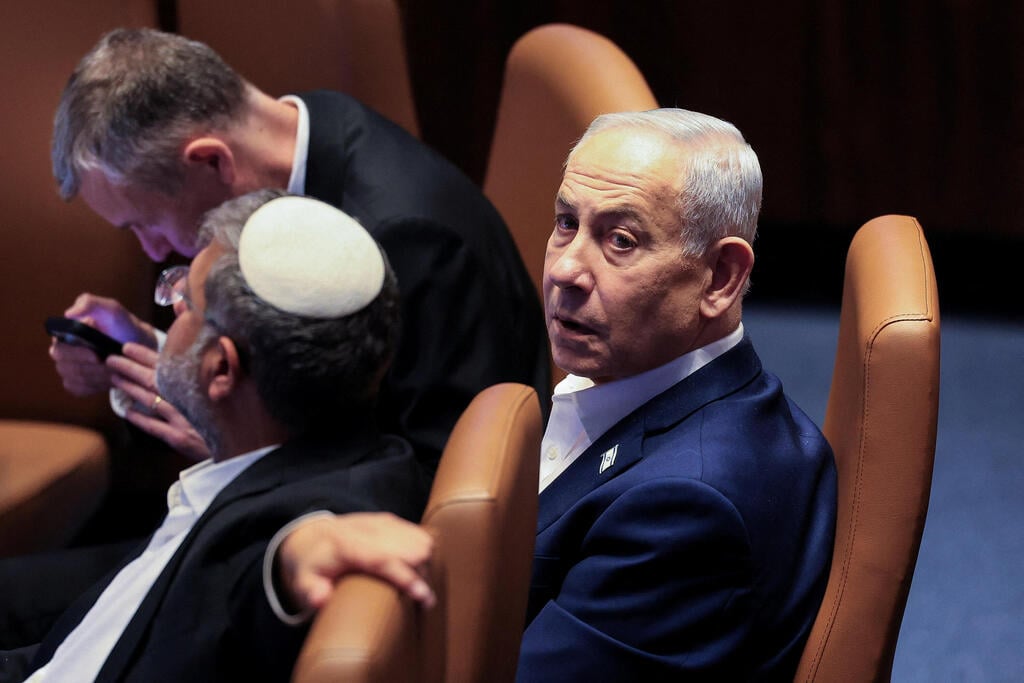
'When I returned, I discovered the beautiful side of Israeli society. At the same time, I thought Netanyahu would come and apologize to me'
(Photo: Reuters/Ronen Zvulun)
There was also a message she never received. "When I returned, I discovered the beautiful side of Israeli society, how people rallied and committed themselves to bringing back our friends and family. But at the same time, I truly believed the prime minister would come to my hospital room and apologize for the fact that we had been abducted and that my husband was still there. Later, I expected he would apologize after my husband was murdered in captivity due to the decisions this government had made.
“You imagine returning to a country transformed by something so radical and devastating. Instead, we came back to the same country, with the same leaders, the same people somehow still holding the reins, and nothing had changed.”
Buchshtab-Kirsht spent a week in Tel Aviv Sourasky (Ichilov) Medical Center’s hostage ward and then moved to nearby accommodation to remain close to her father, who was receiving cancer treatment, as well as to her medical team. She later moved with her parents and sister into an apartment for evacuees in Tel Aviv and began searching for a home in a rural community, as she had promised Yagev.
At the house she found in Moshav Tidhar, Yagev's dogs and cats were waiting, along with whisky and champagne. Then, in July 2024, worrying signs began to arrive. We started receiving the kinds of messages we knew families often heard before the worst news. We knew that a video was a bad sign, and that phrases like ‘contact has been lost’ or ‘there is grave concern’ almost always meant something terrible.
“But none of that changed anything for me. Every time someone came with another warning, I felt I had to hold even more tightly to the belief that Yagev would return. I spoke to him: ‘Hold on. I know it is awful. I know your stomach hurts, your whole body itches, your soul is burning and time is standing still. But I am waiting for you at the end of this. You have already survived hell once and made it out.’”
When Hamas released a video claiming Yagev had died from a lack of food and medicine, most people believed he was dead. But I said, 'I left him at a healthy weight. He needed medicine, but not life-saving medication. I kept telling myself to believe that he would come home.”
According to information later provided to the family, Yagev was murdered on February 14, 2024, alongside five elderly hostages. Buchshtab-Kirsht received definitive confirmation of his death in July, and his body was returned to Israel in August. “At his funeral and afterward, I performed the role of a rational person who understood the news and its consequences.
“But inside, a little Rimon was clinging to the thought: ‘You did not open the coffin. You did not see the remains with your own eyes. Maybe it was someone else who looked like Yagev, had the same blood type, and there had been some terrible mistake.’
"We loved stories like that, those one-in-a-million twists. In Gaza, we would say, ‘Just imagine the stories we will have to tell our children and grandchildren’, stories like washing your partner’s hair over a toilet because there was no shower and his hair was full of lice, while Yarden Bibas smuggled us a bottle cap with a little liquid soap and passed it through the bars.”
What do you know about how Yagev died?
“I know he was shot, and I know where the bullet struck him. From the position in which he was found, curled into a fetal position, I understand that he knew he was about to be shot. And if five elderly hostages were lying beside him, you can imagine what he probably had to witness.
“There are moments when I feel fortunate. And there are moments when I want to be back underground in Khan Younis, curled up with Yagev in the fetal position, with me as the larger spoon and the bullet passing through both of us. And there are days when I am glad I came back alive."
For most of her life, Buchshtab-Kirsht never publicly asked for anything. From her former life, she retained the animals, some of which have since died, and one surviving pepper plant grown from the plants she and Yagev cultivated in Nirim.
Four weeks ago, overwhelmed by the cost and demands of rebuilding her life, she asked for help for the first time. In a candid Facebook post, she wrote that in addition to financial assistance, she needed homes for two of the four dogs she and Yagev had left because she could no longer manage a full pack. The post reached the producers of an Israeli TV program (HaTzinor), which launched a fundraising campaign that collected about 800,000 shekels. A separate Giveback campaign is expected to seek about 2.5 million shekels, with the initial funds transferred into it.
“People mistakenly think that once you leave the tunnel, you have left the tunnel. They think returned hostages are sitting on millions, fully taken care of, perfectly fine and in need of nothing. But there is still so much healing left to do. You do not simply return to being an ordinary person, whether 1,000 days have passed, your captor has been killed or someone prepared a carefully designed rehabilitation plan for you when you came home. Life since then has involved getting up, falling again and fighting for every day, breath and step.
Did the state not help?
“At first, we received an extraordinary level of support, but it began to fall away very quickly. The system is built to forget trauma, to remove us from public consciousness as fast as possible and return to images of victory, recovery and new beginnings.
“I am not ashamed to say that despite all the time that has passed, and despite the psychologists, psychiatrists, medications and treatments, I still feel under attack every day. I live with anxiety, flashbacks and nightmares, and sometimes I struggle just to open the door in the morning, let alone leave the gate and take out the trash.”
“At first, I cut corners in my rehabilitation and skipped steps because I did not care what happened to me. Seeing couples who had been reunited was painful, and part of me was angry. Yagev was the best person on earth. How could other people come home alive while he did not?
“Now I care. I care about myself, about my life and about the fact that I survived. If I am alive, I have to make use of every moment. But I still have a long road ahead.”
Her fundraising post brought compassionate people into her life who wanted only to help. One was Reut Tzuk, an animal welfare activist from northern Israel who was shocked by what she saw as the lack of government support for returned hostages generally and for Buchshtab-Kirsht in particular.
Since meeting her, Tzuk has devoted much of her time to helping Buchshtab-Kirsht, connecting her with the Giveback fundraising platform and finding dentist Dr. Netanel Yusupov, who decided that restoring the smile she so badly needs would become his “life mission,” free of charge.
An art therapist also volunteered to assist her, even as the Health Ministry reduced some of the resources allocated to her care.
Packers were expected to help her move to Moshav Avshalom, closer to her childhood home in Magen. As in every house she enters, one room will contain the drums Yagev bought her as a wedding gift, the guitars he built and the colorful, optimistic posters artist Zeev Engelmayer created for her during and after captivity.
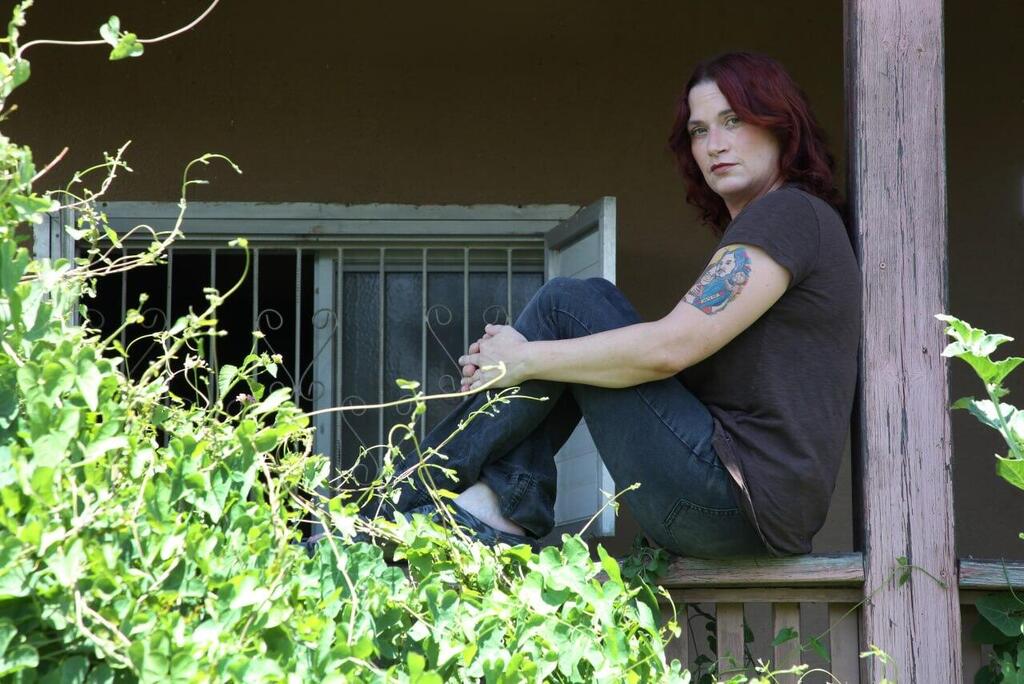
'I still have not smiled the way I did before Gaza, and I probably never will'
(Photo: Reyan Preuss)
Despite everything, Buchshtab-Kirsht would not erase the most painful period of her life. “To erase the kidnapping would be to erase Yagev from my life. It was the last adventure we had together, just as there is not a single scar on my body that I would want to erase.”
You call it an adventure? That sounds like a positive term.
“That is who we were. We had dark jokes that began 30 meters underground, in that tunnel chamber. Even there, we found things to be hopeful about. We protected our love, marked our anniversary and, when no one was watching, found small moments to love each other.”
Despite everything, she is now in a new relationship. Like Yagev once was, her new partner is a longtime friend who also lives with PTSD. This time, however, so does she. “Being with me is a lot to carry,” she said. “A very serious burden. But I keep going because that is what Yagev would have wanted for me, and because survival is in my DNA.
“I am a third-generation Holocaust survivor. My late grandfather Moshe lost everyone and everything in the Holocaust, and then he met my grandmother and rebuilt his life. My partner understands that Yagev is sacred to me, and that the memory of our life together is sacred. He honors that. I am very fortunate.”
Are there moments when you feel happy?
“There are moments when I am happy, but the happiness is always qualified. I still have not smiled the way I did before Gaza, and I probably never will. Even when I do smile, I immediately feel a knot in my stomach because I have learned that I am not allowed to be happy. The moment you feel joy, your body goes into panic: Why are you happy?
“Even on the most stable day, the breakdown eventually comes. Then night falls, the nightmares begin, and you have no control over them. Everything is present again and replayed, sometimes differently and sometimes exactly the same.”
“I am very different from who I was before October 7. I learned things that cannot be erased. I learned that there is no happy ending. Not all our wishes come true, not everything works out for the best and not everyone returns home alive, waving and ready to be put back together.”
“I am a different person today, for better and for worse. I am tougher in some ways and more vulnerable in others. Even when you reach a high point and think, ‘I am finally doing this right, I am moving forward,’ I can still fall and lose months of progress. I was never easy, and I was never a 'walk in the park, ' but now I am definitely a lot to carry.”